


Ray Tigerman’s Bold, Textured Paintings and Bronzes Fuse Southwestern Spirit with Contemporary Expression

Ray Tigerman has never been interested in doing just one thing. Painter, sculptor, musician, writer, entrepreneur—each discipline feeds the others, not as a balancing act but as a single, relentless creative current. “I’ve never believed in balance,” he says. “If you want to achieve things, you have to tip the scale.”
Raised in Northern Nevada near Carson City, Tigerman grew up in the high desert beneath the Sierra Nevada Mountains, just across from the Washoe Indian Colony. Many of his childhood friends were Native American, and the proximity left a lasting imprint. “I became obsessed with the culture,” he says. “Something just drew me to their mythology and civilization.”
His great-great-grandmother was Oklahoma Choctaw, with ancestors connected to the Trail of Tears, a lineage he didn’t fully understand until an aunt uncovered and transcribed a handwritten family journal.
As a child, drawing became Tigerman’s refuge. An introvert by nature, he was rarely without a binder and sketchpad. He began with drafting and watercolor, moved into photo-realistic oil painting as a teenager, and eventually studied graphic design at Watkins College of Art in Nashville. That training sharpened his understanding of tonality, construction and visual communication—tools that continue to shape how he builds a painting today.
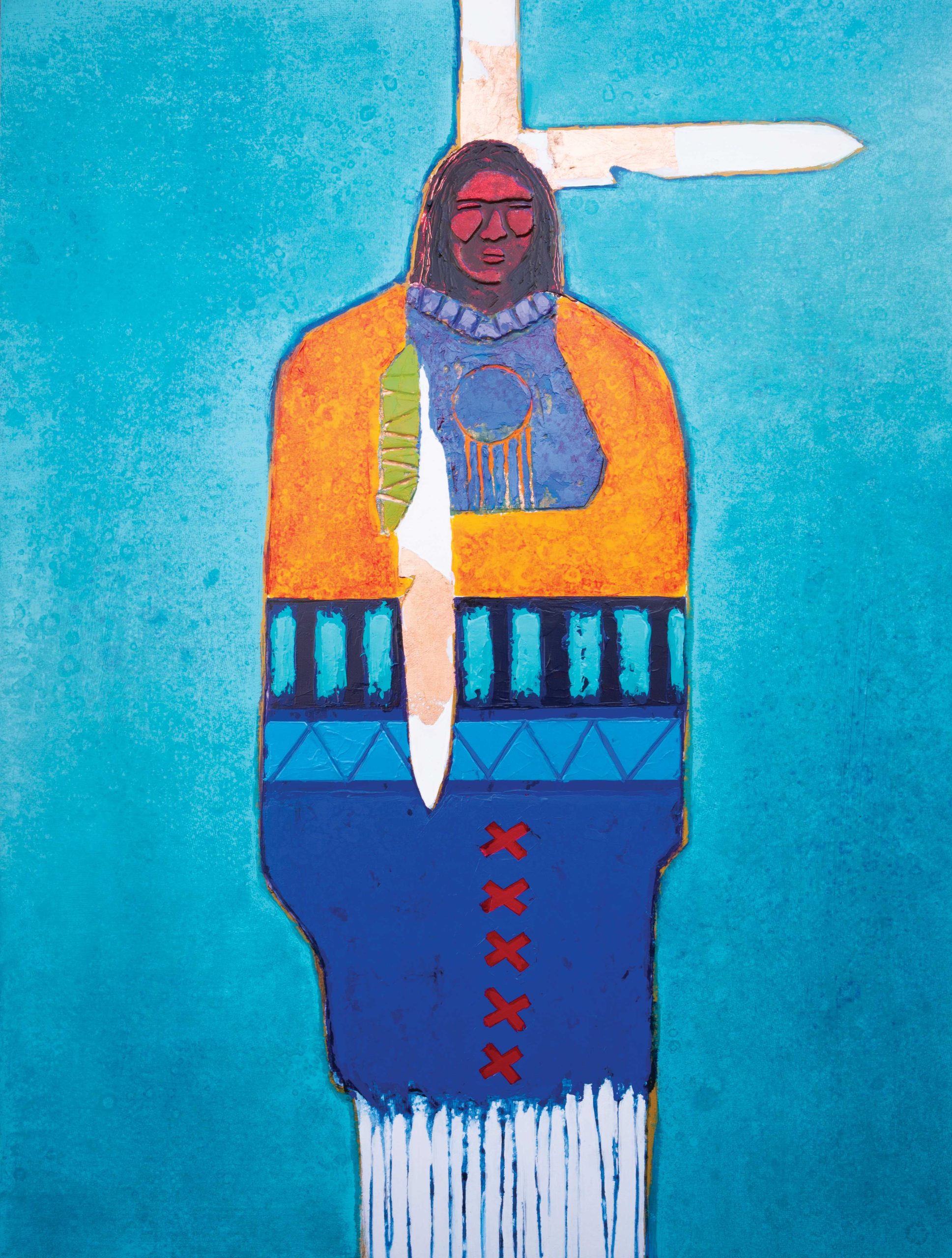
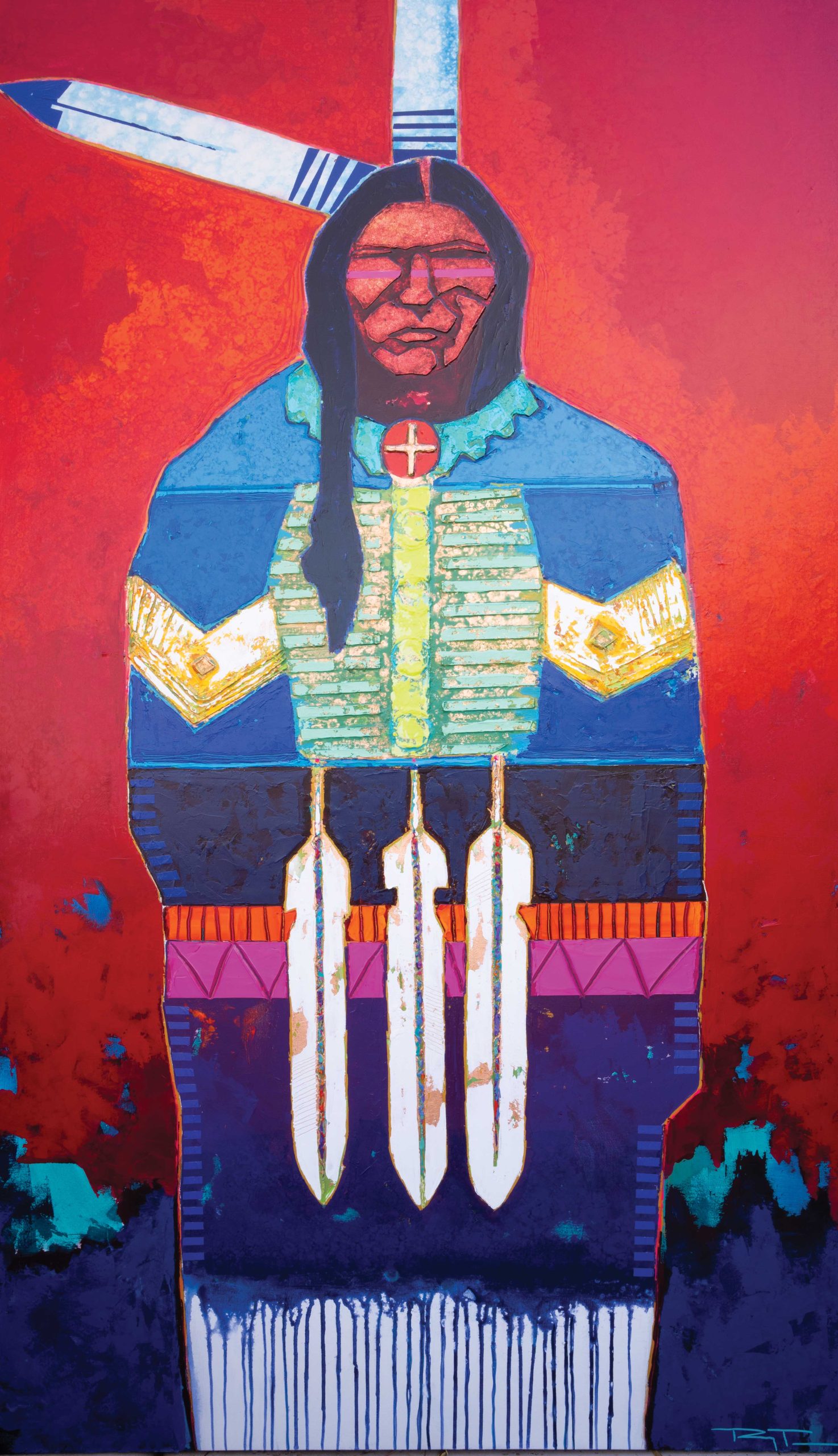
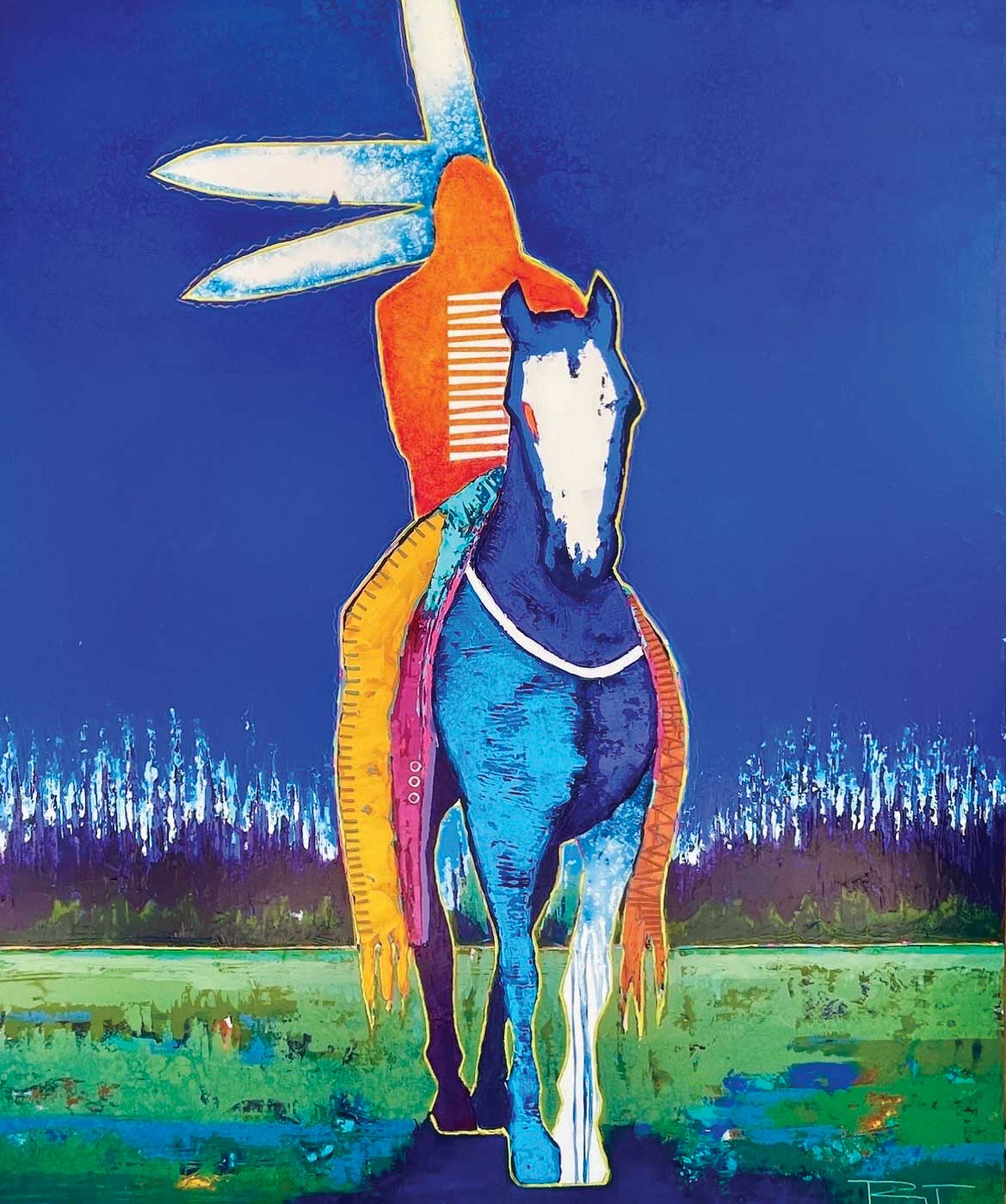
Music ran parallel. Tigerman spent years playing guitar and singing, eventually landing a record deal in Nashville and touring as a professional musician. Even then, visual art never disappeared. He opened Endeavor Fine Art while living in Nashville and later owned galleries in Miami and Las Vegas. “It taught me everything about business and client satisfaction,” he says. “But it felt like a job.”
At the same time, he was completing large-scale commercial commissions, an experience that sharpened his technical range and adaptability. All the while, he continued creating deeply personal Native American-inspired work—often pieces he gave as gifts. Those paintings eventually caught the attention of Linda Goldenstein, owner of Goldenstein Gallery in Sedona, who tracked him down. “I liked his work right away,” Goldenstein recalls. “Even when he was working small, the expression was there. You could tell there was more story, more to see.”
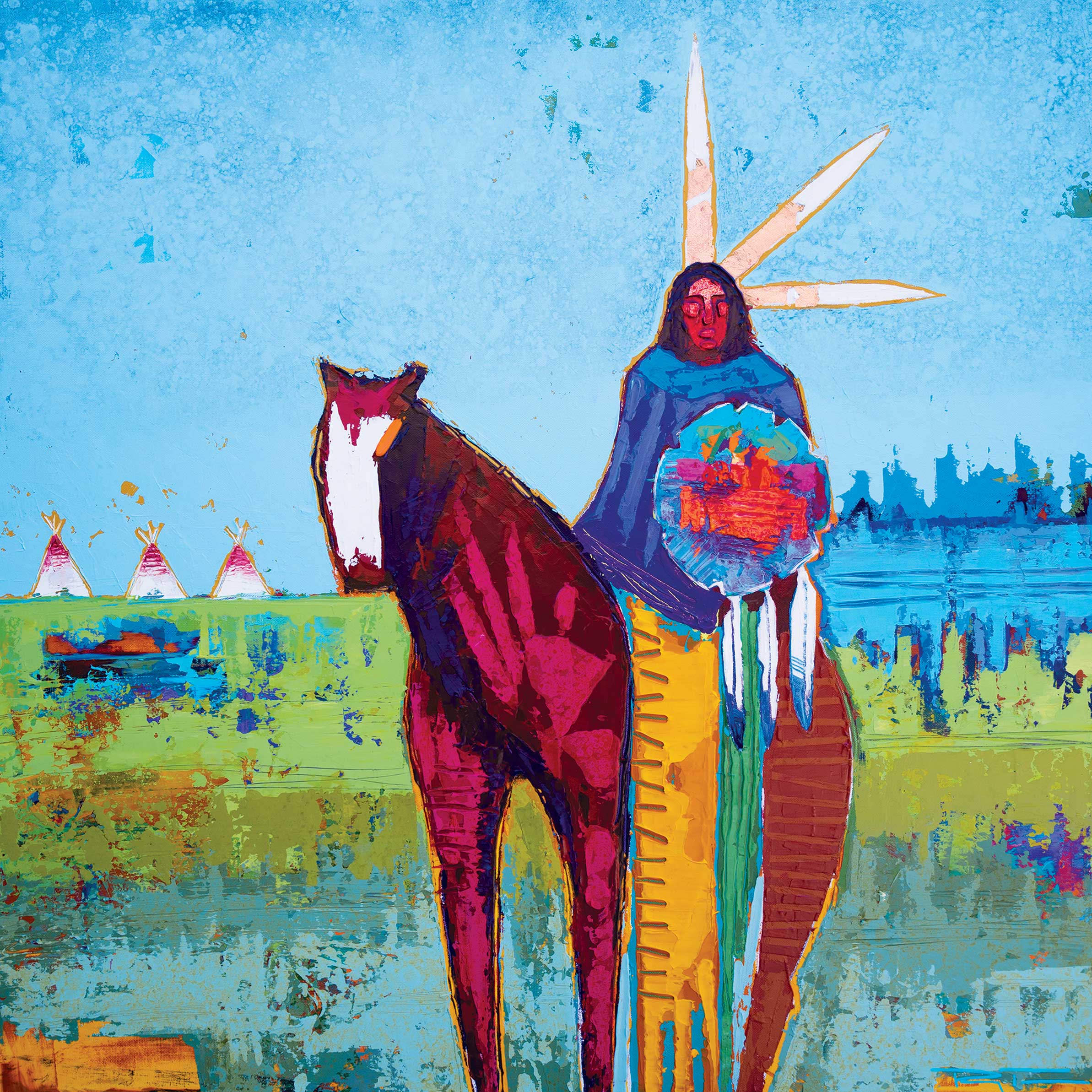
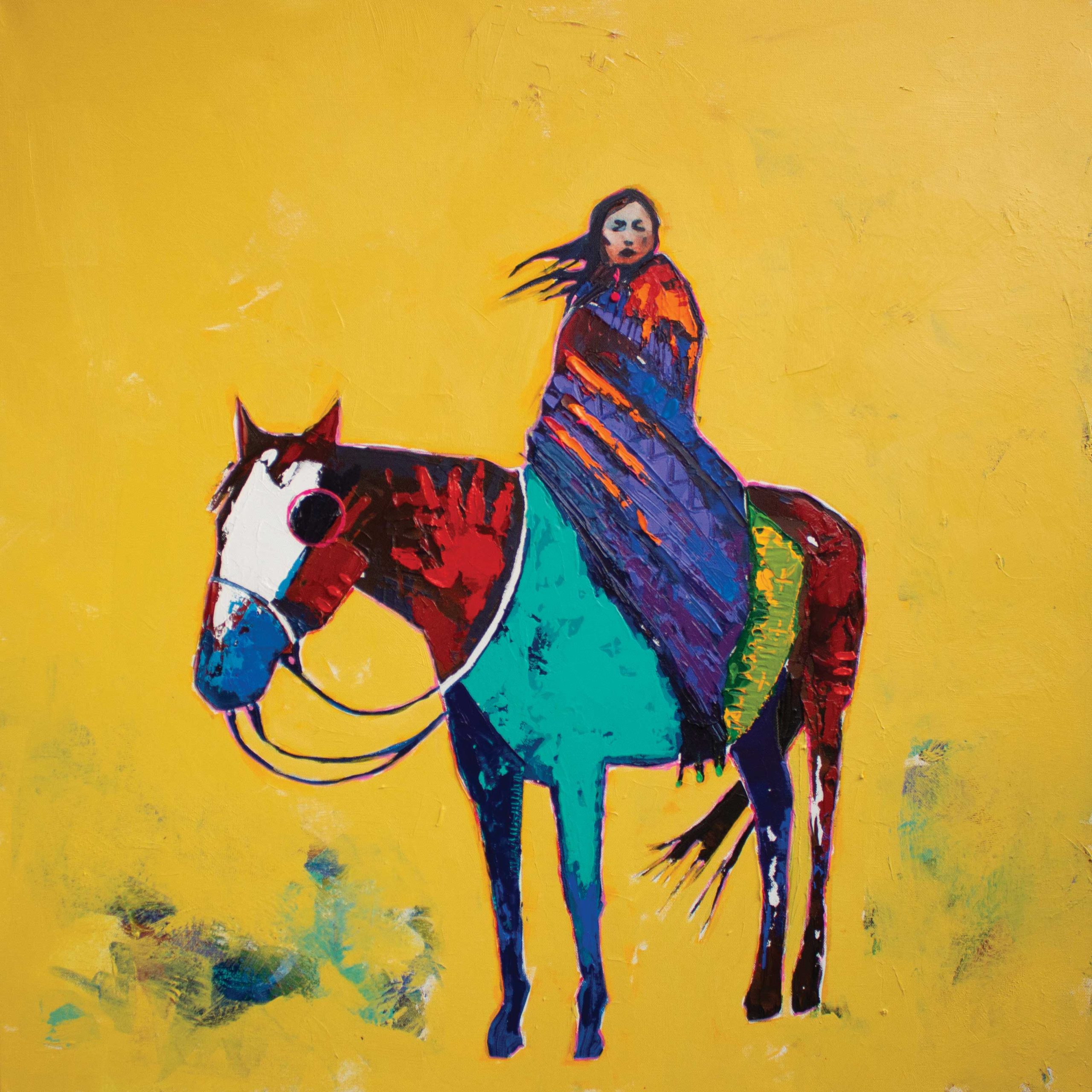
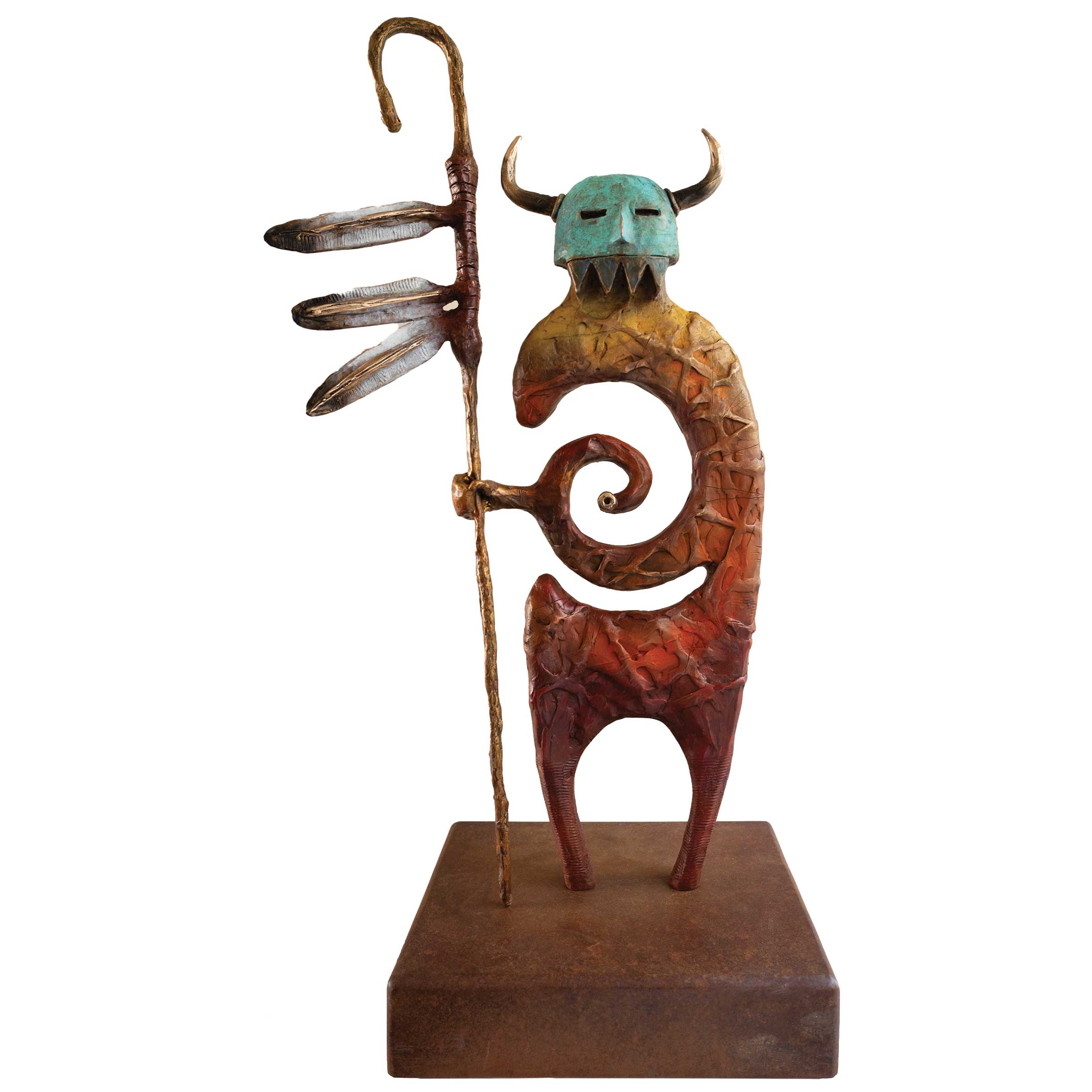
Goldenstein encouraged Tigerman to scale up. As his work became larger, it became more immersive, layered with color, texture and movement. “Real artists create from the heart,” she says. “Ray paints from an intuitive place, and that authenticity is in his work.” The longer you spend with his paintings, she adds, the more they reveal. “They continue to unfold and give over time.”
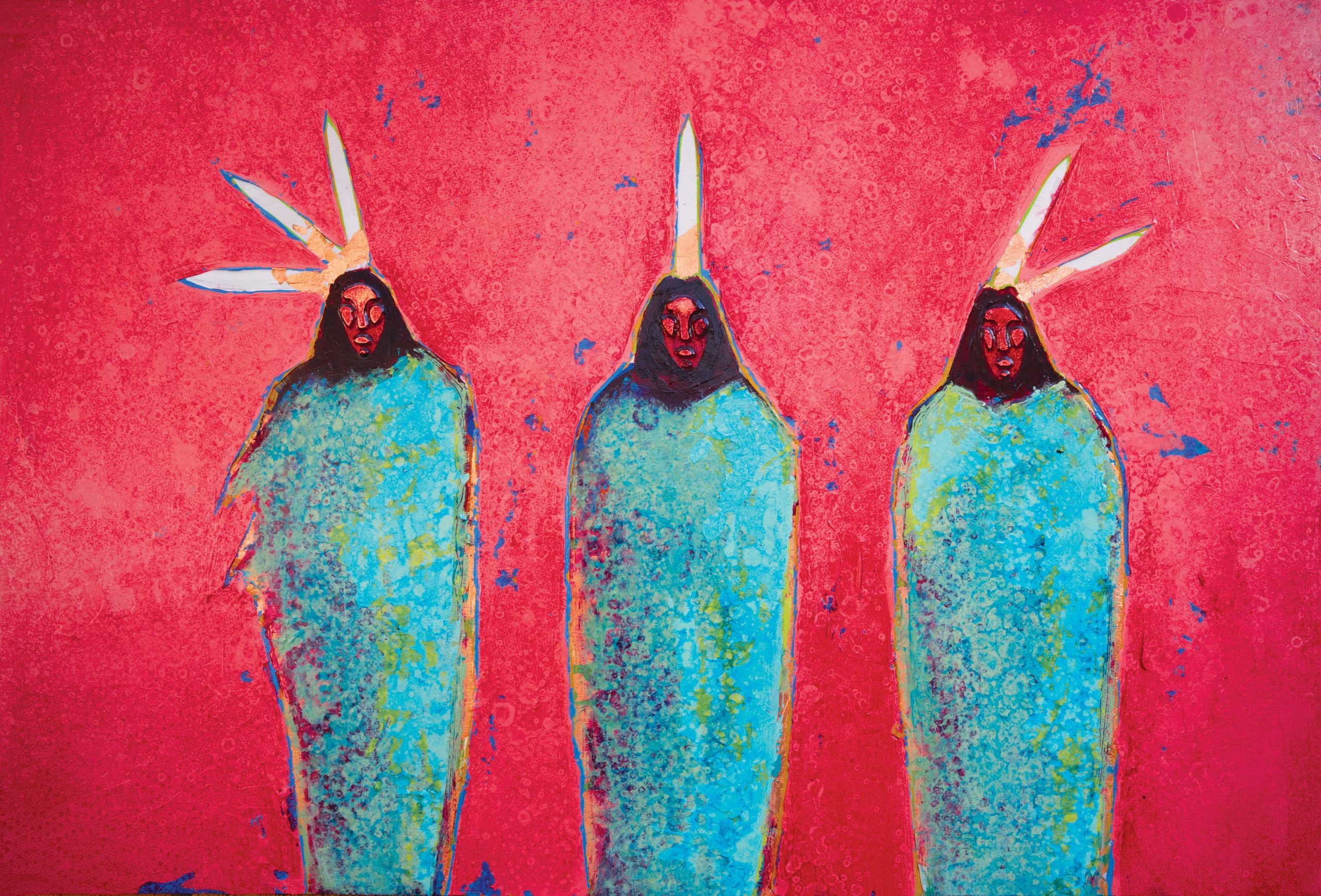
Today, Tigerman’s work—best described as Southwestern abstract figurative—is immediately recognizable. His paintings are richly layered and sculptural, created with acrylics applied by palette rather than brush. “It’s more carving than painting,” he explains. “Chunks, layers, texture.” He uses high-end acrylics and oil-painting techniques including glazes and washes, often prompting viewers to ask whether the work is encaustic or oil.
Tigerman, who is represented by seven galleries across the Southwest and Mountain West, spends most of his time in the studio, working six days a week, often 12 to 13 hours a day. About 30% of his work is commission-based, though he insists on creative freedom. “We decide on size, subject, maybe some color preferences,” he says. “Then I go for it. Even I don’t know what it’s going to be until it’s done.”
That sense of discovery resonates with collectors such as Gayle Calhoun, who, along with her husband, Steve, owns six of Tigerman’s paintings and one of his sculptures. “They’re bold, but calming and protective,” Calhoun says. A work titled “The Guardians,” depicting several Lakota chiefs on horseback, hangs above the couple’s bed. “I look up and they’re watching over us,” she says. “I can get emotional about it.”
In recent years, Tigerman has expanded into sculpture, translating his painterly forms into solid bronze. His newest series, “Fire Spirit, Wind Spirit, and Earth Spirit,” echoes the figures and energy of his canvases. He spent hours refining the patina, working closely with the foundry to achieve colors that mirror his paintings so the sculptures would feel like a natural extension of his work. Calhoun was immediately struck by them. “The one we bought, called ‘The Wild One,’” looks like it walked right out of one of Ray’s paintings,” she says.
Giving back, particularly to the Indigenous cultures that have so inspired him, remains central to Tigerman’s practice. He works closely with the Navajo Water Project, which brings water to families in the Navajo Nation, where an estimated 30% of homes lack running water. He has also published a coffee-table book, “Sacred Spirits,” with proceeds benefiting the Navajo Water Project. “Ray has a good heart, and his work reflects his good energy,” Goldenstein says.
For Tigerman, the work is never finished—it simply keeps unfolding, one layer at a time.
Learn more about artist Ray Tigerman at raytigerman.com. Learn more about Goldenstein Gallery in Sedona at goldensteinart.com