


Hedge Fun: Favorite Picks for Landscape Privacy and Beauty
Valley landscapers choose their favorite flora for privacy and beauty.
Jeremy McVicars, landscape designer at Refined Gardens

Green Hopseed
One of the fastest-growing plants in the Southwest, green hopseed delivers excellent screening in a short period of time. Its bright green leaves provide a nice counterpoint to darker foliage. While some gardeners shear it for a tailored, formal look, this plant also has a pleasing natural form. Its tropical vibe makes it an attractive accent around pools or patios.
- Plant name: Green hopseed (Dodonaea viscosa)
- Elevations: Low and middle
- Size: 12’H by 10’W
- Soil: Well-drained
- Light: Full sun to partial shade
- Water needs: Drought-tolerant once established
- Flowers: Tiny yellow-green blooms throughout the year
Donna Winters, landscape architect at Enchanted Garden Landscapes

Arizona Rosewood
The Arizona rosewood is an evergreen shrub that does very well in the desert’s extreme temperatures. It can be trained as either a hedge or a tree and is a favorite low-water alternative to oleander for living walls and privacy screens. Homeowners will also appreciate that there is very little cleanup, other than retrieving the small brown fruit that drops in autumn.
- Plant name: Arizona rosewood (Vauquelinia californica)
- Elevations: All
- Size: 12′-15’H by 10′-15’W
- Soil: Well-drained
- Light: Full sun to partial shade
- Water needs: Low
- Flowers: Small white clusters in early summer
Sal Bracale, landscape designer at Moon Valley Nurseries

Carolina Cherry
Native to the Southwest, the Carolina cherry can handle the heat and requires minimal watering once established. The versatility of this evergreen shrub allows it to flourish almost anywhere in your landscape, and its dense canopy makes a picturesque privacy hedge. It can also be trimmed as a low hedge to create barriers throughout a yard or line property borders. Flowers drop, so avoid planting near swimming pools or water features.
- Plant name: Carolina cherry (Prunus caroliniana ‘Compacta’)
- Elevations: All
- Size: 8′-10’H by 6′-8’W
- Soil: Well-drained
- Light: Full sun to partial shade
- Water needs: Minimal
- Flowers: Small, white fragrant blossoms in spring
Russell Greey, landscape architect at Greey|Pickett
Sour Orange
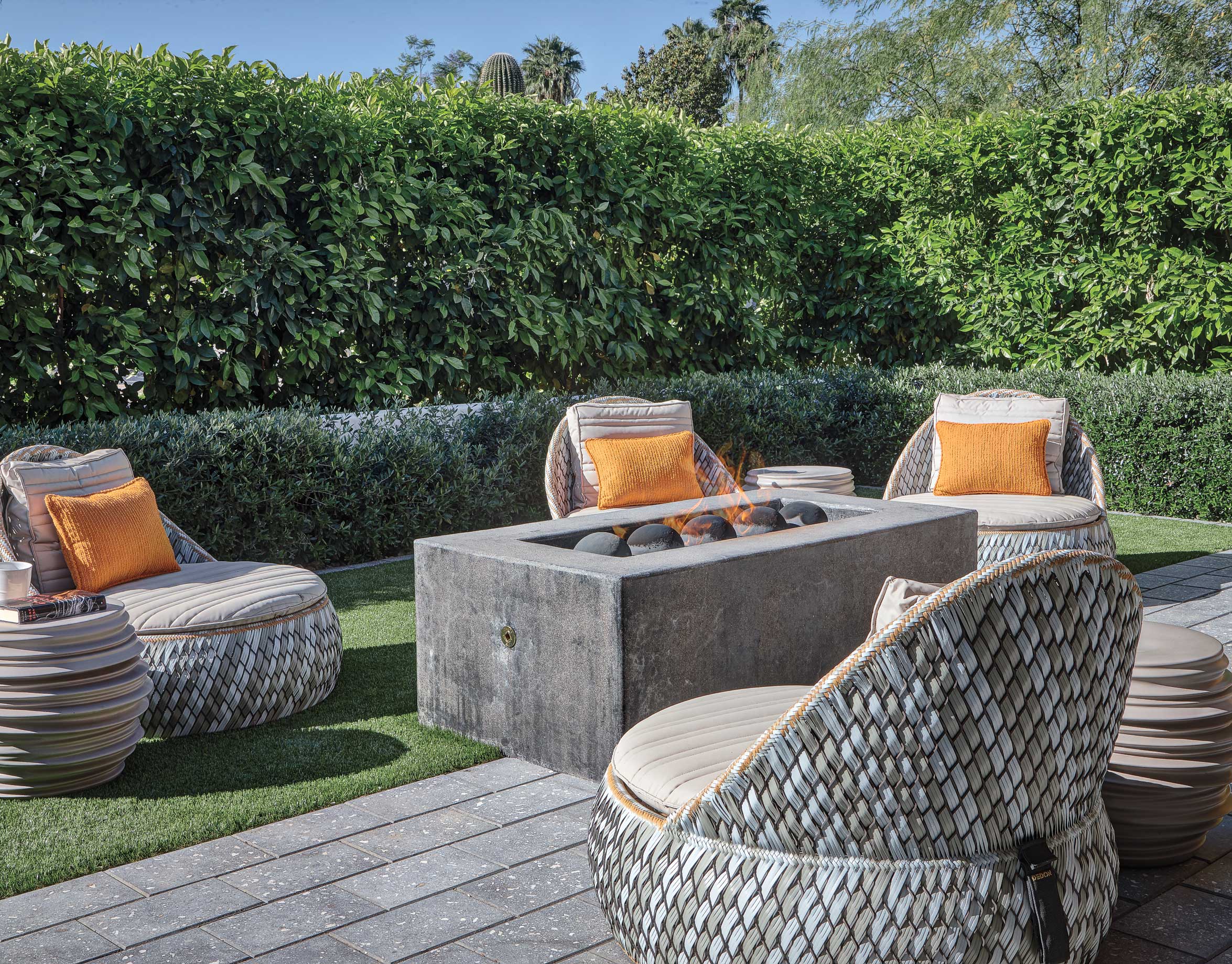
Sour orange is an excellent choice for both traditional and modern-style homes in the Valley. The fast-growing, dense shrub boasts glossy dark leaves and thorny branches that provide an extra layer of security for perimeter walls. It is a myth that this plant attracts roof rats; vermin do not care for the tart taste of the fruit. Due to its evergreen nature, sour orange has a weekly leaf drop. Fruit collection and removal is also required.
- Plant name: Sour orange (Citrus aurantium)
- Elevations: Low and middle
- Size: 10′-20’H by 10′-15’W
- Soil: Well-drained
- Light: Full sun
- Water needs: Moderate
- Flowers: Petite fragrant white blossoms, late winter to midspring