


Building Character
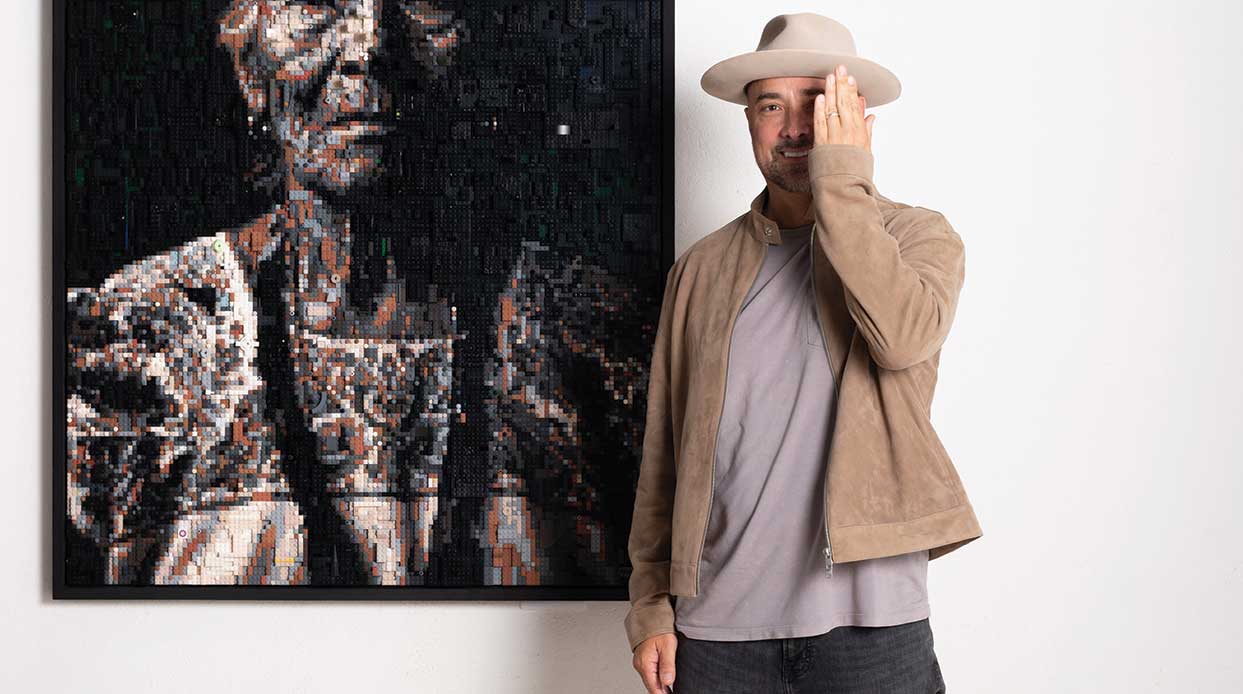
Using an unexpected medium, Scottsdale multimedia artist Greg Mayer creates
powerful, dimensional portraits that reveal more the closer you look.
by Paula M. Bodah
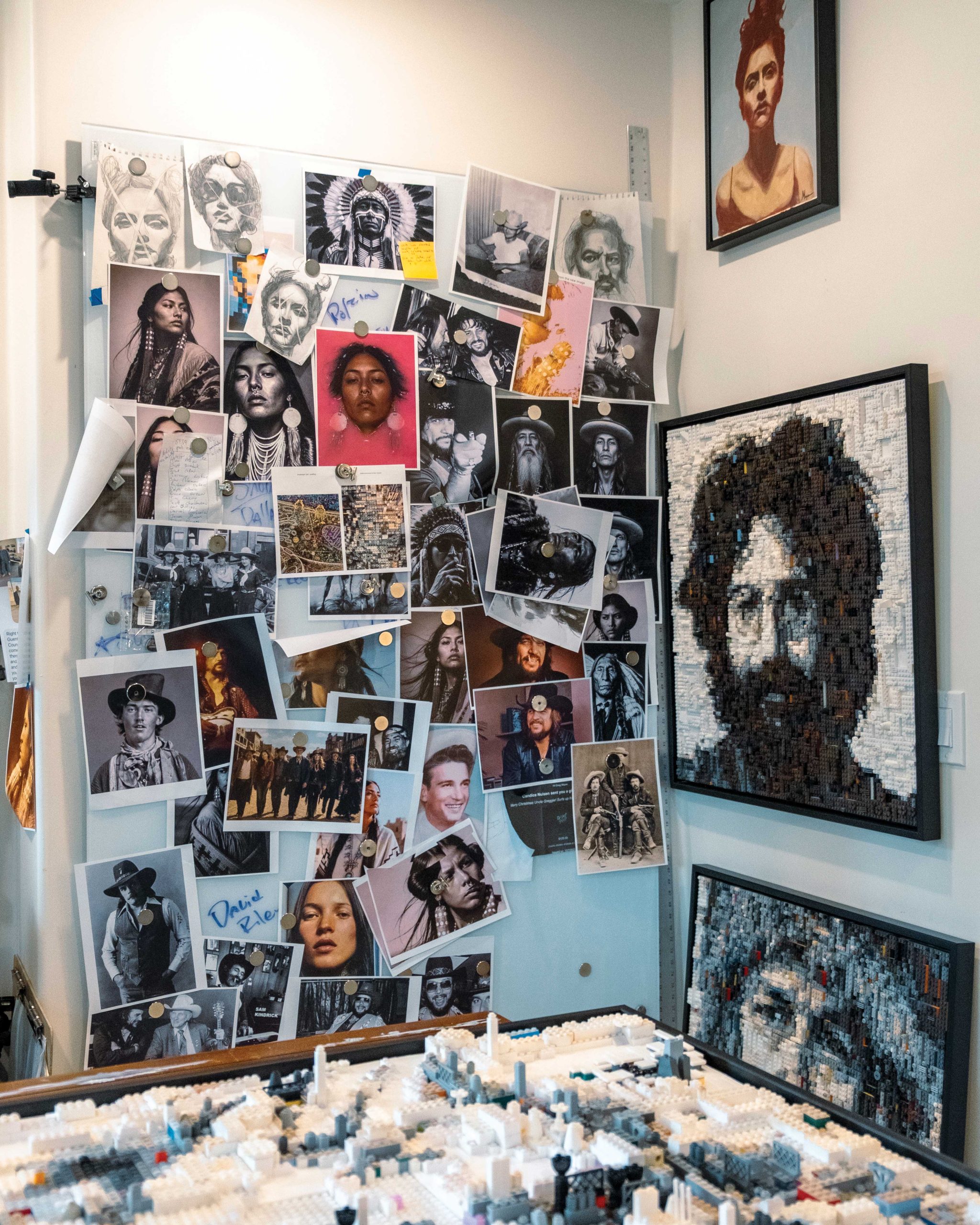
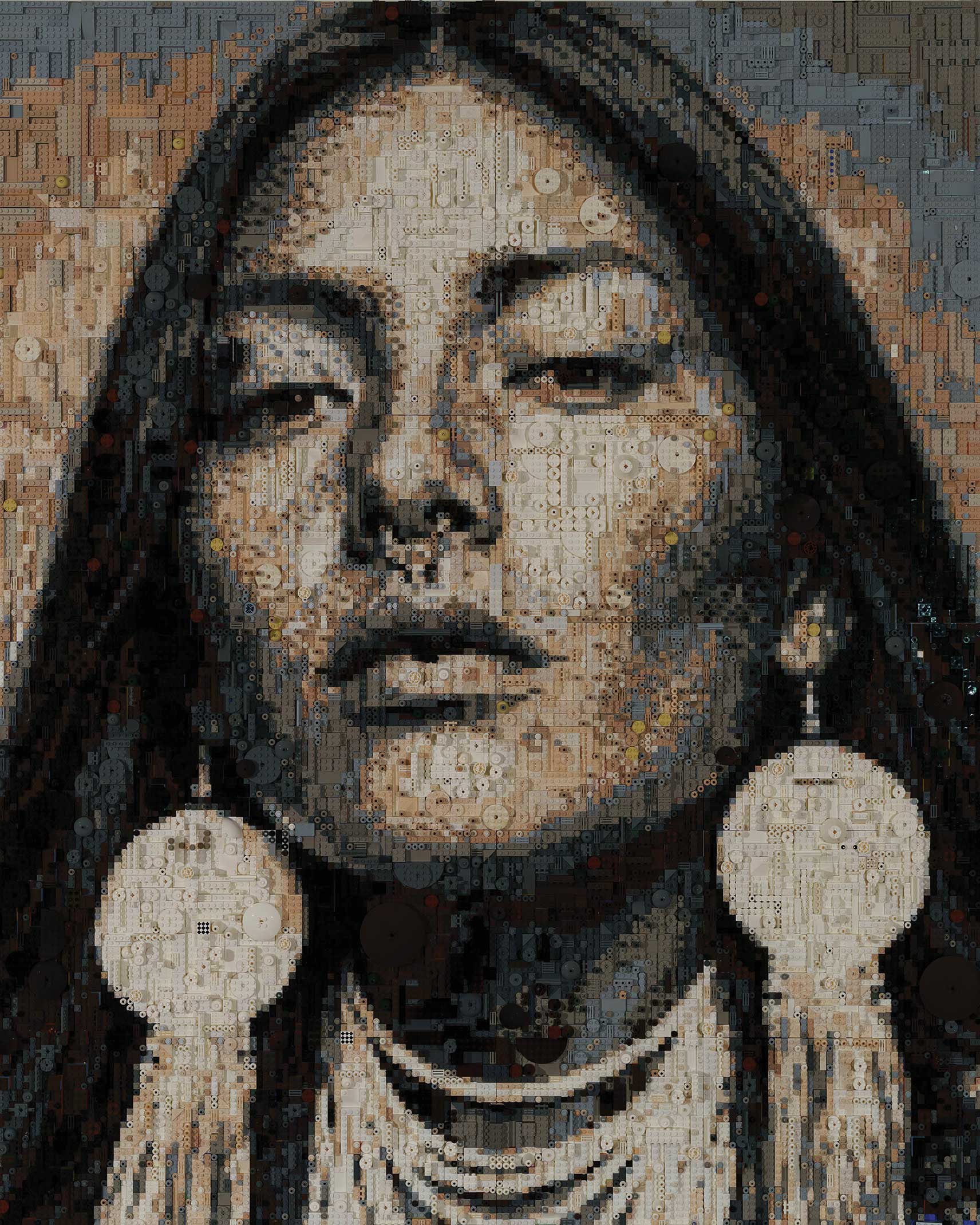
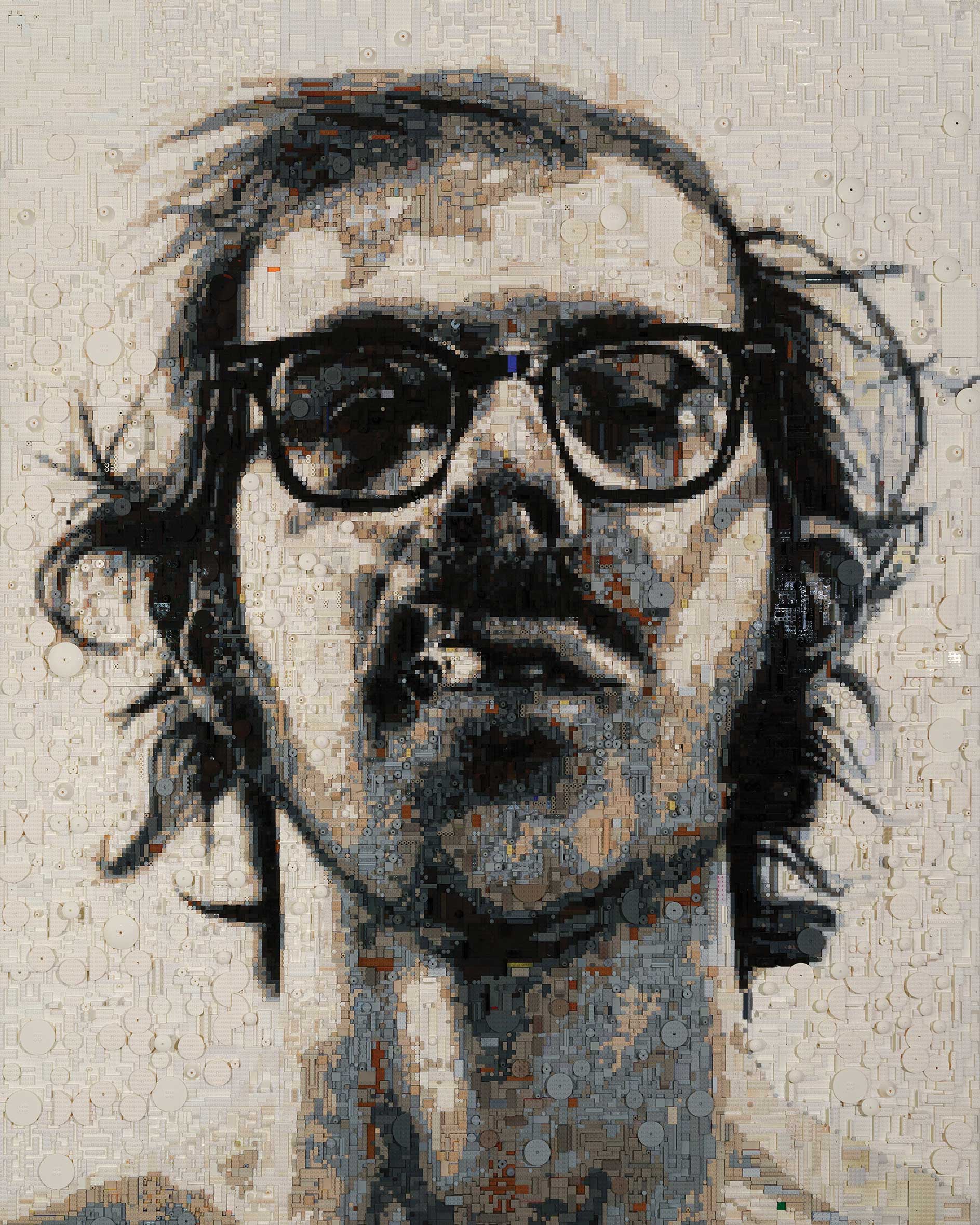
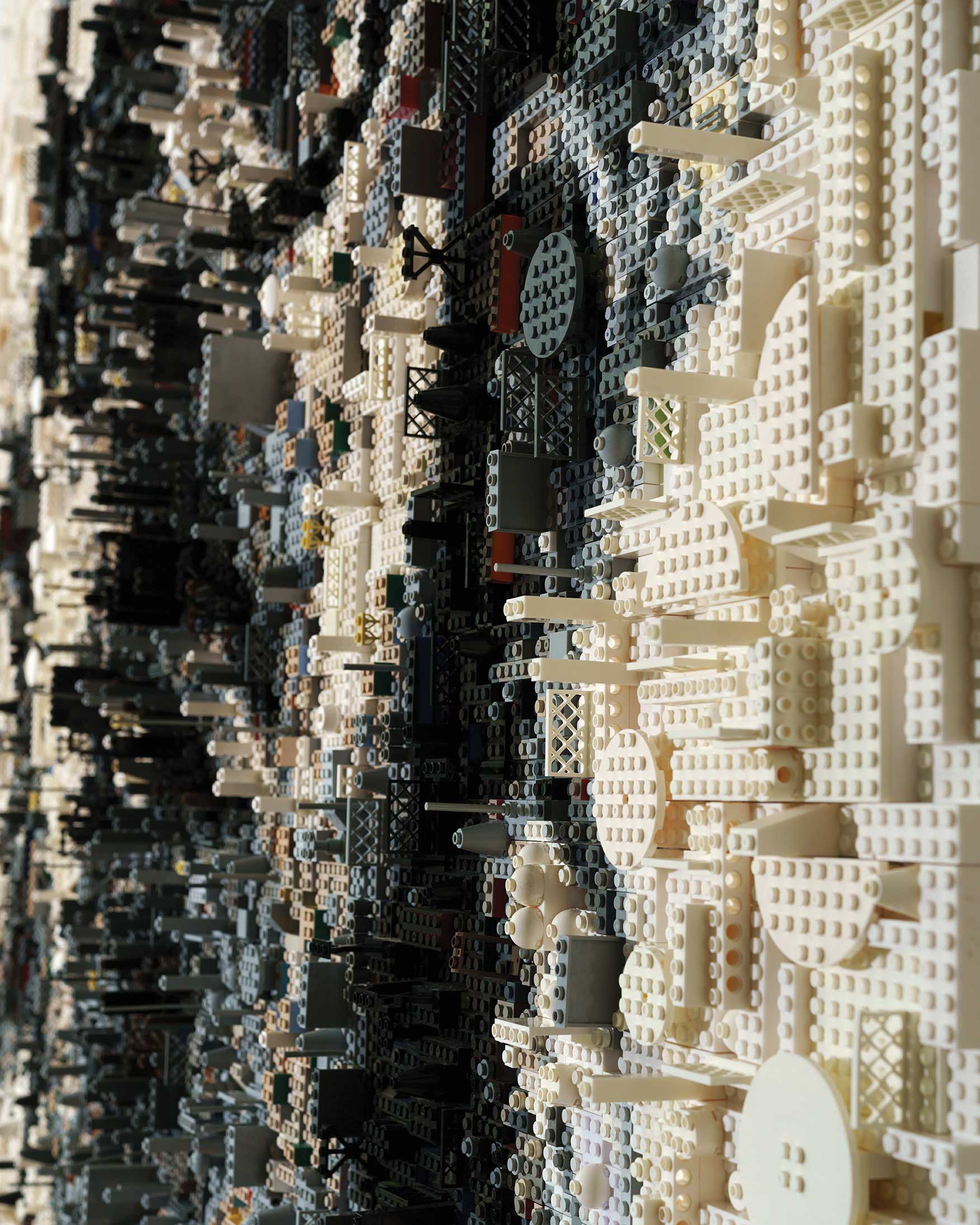
A face emerges from a field of black and white: strong features, expressive eyes, the suggestion of a life lived behind them. The closer you get, though, the less conventional the portrait becomes. Shadows separate into shapes. Smooth passages turn dimensional. Eventually you realize that what appeared almost photographic from a distance is made of thousands of LEGO bricks.
For Scottsdale artist Greg Mayer, that moment of discovery is part of the point. “My work, when you look from far away, is basically black and white,” he says. Up close, flashes of red, blue, green and yellow appear along the sides of the bricks. He sees a parallel with the way we see one another. From a distance, he says, “you see a person in black and white, but if you get to know them, you see the color of their soul.”
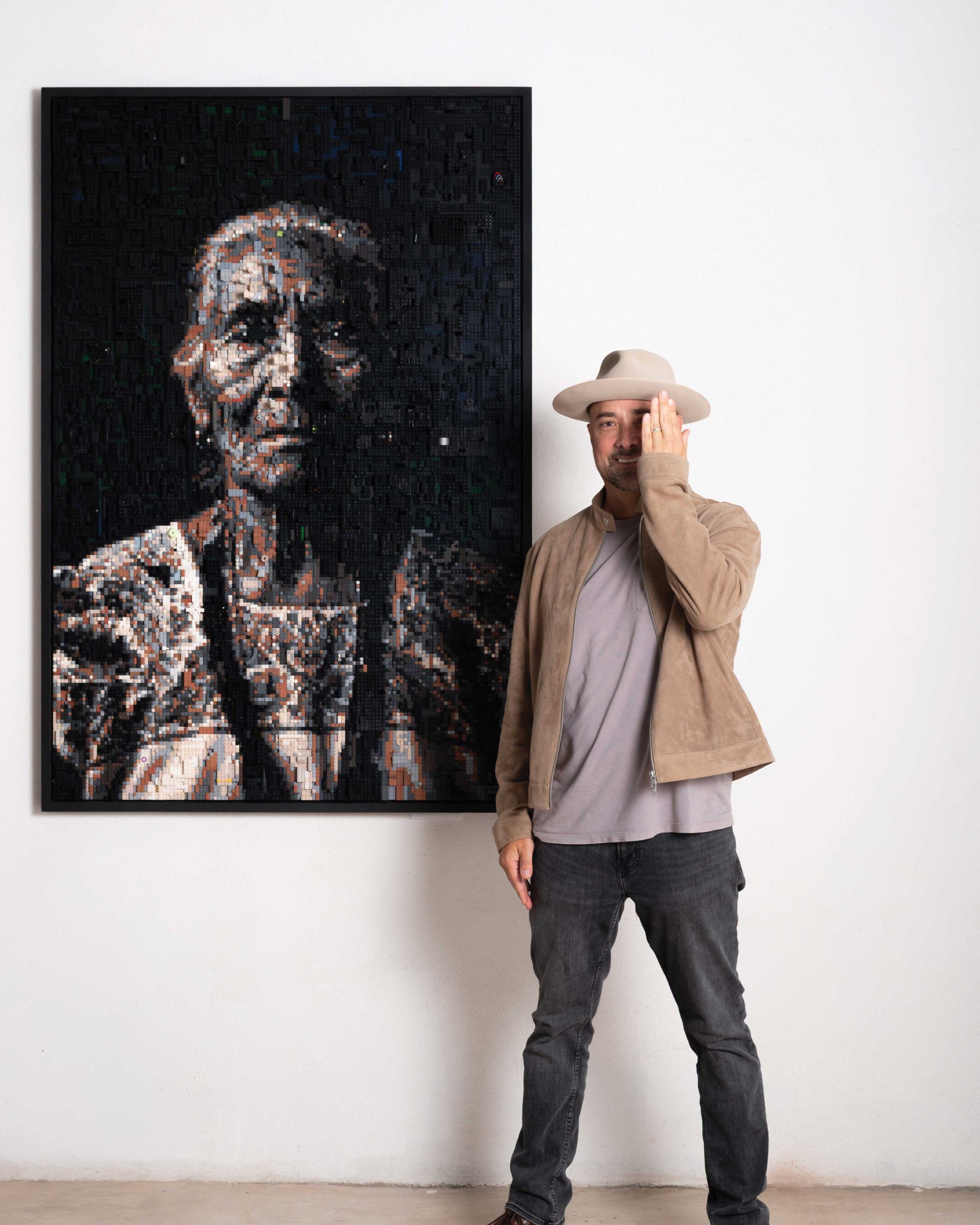
Mayer studied art at the Academy of Art University in San Francisco and later at Arizona State University, but ultimately built a successful career in commercial real estate. Art remained something he did for himself. “I never made any art that I didn’t make just because I wanted it,” he recalls.
During the pandemic, the urge to create tugged at him again. He took a sabbatical, headed to San Miguel de Allende, Mexico, and enrolled in painting classes at the Instituto Allende. By November, he had left real estate altogether.
LEGO came later. He had experimented with repetitive materials—he once made a portrait of Pancho Villa from plastic toy soldiers—and was intrigued by the idea that enough small, ordinary objects could resolve into an image. On an airplane in 2022, it occurred to him that the interlocking toy bricks might be ideal.
Mayer, who is red-green colorblind, works primarily in black, white and eight values of gray, a tonal range LEGO bricks don’t provide. So he began spray-painting the tops of the bricks, leaving their colorful sides untouched.
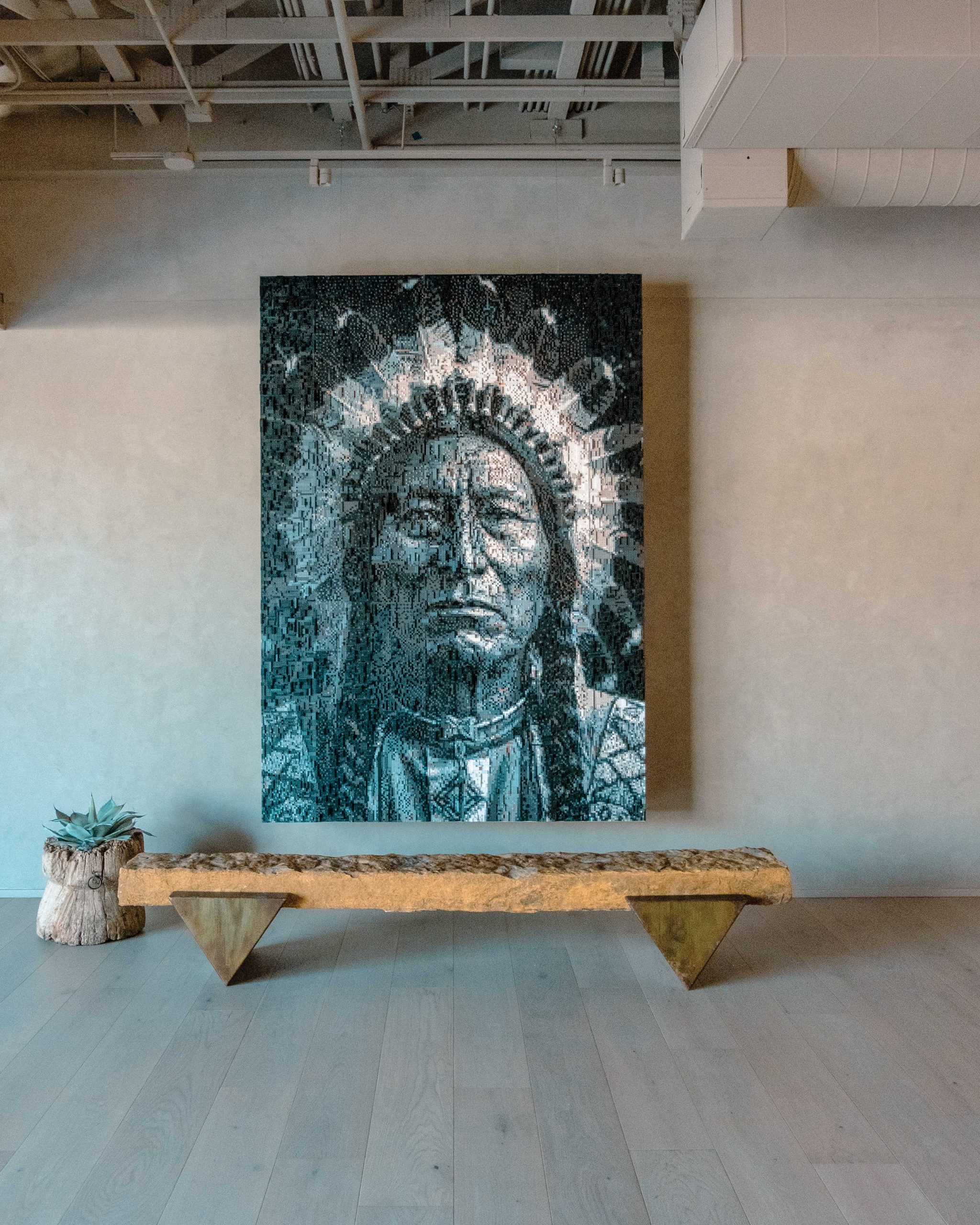

He builds on LEGO base plates, sometimes stacking bricks several inches deep to create a surface that changes as the viewer moves past it. “I’m basically painting with them,” he says. “But it’s more akin to mosaic tile work or glass mosaic than it is painting.”
That dimensionality struck Scottsdale architect Don Ziebell the first time he saw Mayer’s work. Ziebell was fascinated by the use of an unconventional medium for the traditional art of portraiture. “Greg’s portraits are powerful,” he says.
Mayer’s first LEGO piece depicted a Porsche 911, a car he associated with freedom and success. He posted it on Instagram, and within hours someone asked to buy it. His first portrait, of singer Willie Nelson, sold, too. “No one contacted me about my paintings,” he says. “But they started reaching out with the LEGOs.”
Scottsdale artist Dale Terbush was another early believer. “I got about three feet into this house,” he recalls of his first visit to the Mayer household. “I saw his artwork and I got chills. I said, ‘Greg, you’re going to be famous.’” Terbush became mentor, cheerleader and connector, introducing Mayer to galleries and collectors.
Today, Mayer concentrates on portraiture, particularly images of Indigenous people, both historical and contemporary. Raised by a single mother in affluent Carmel, California, he remembers feeling overlooked himself. “I want to do artwork that makes those people feel seen, feel their dignity,” he says.
Celebrated Santa Fe artist Kim Wiggins sees the same intention in the work, describing a world centered on “people and cultures that have been left behind and not pursued by a lot of artists.” Wiggins and his wife bought a Mayer portrait based on an early 20th-century Edward Curtis photograph of an Indigenous woman. “We have a large art collection, but when people walk into our house, that’s the first piece they gravitate to,” he says.
“I’m basically painting with them, but it’s more akin to mosaic tile work or glass mosaic than it is painting.”
Greg Mayer, Artist
Wiggins is particularly taken with the artwork’s appeal to children and families. He has watched teenagers call their parents over to look at something they’ve grown up with but have never seen used this way. “His work grabs the children, their hearts, their wonder,” he says. “It opens their eyes to a totally new world.”
Now represented by Santa Fe’s Manitou Galleries, Mayer faces a welcome challenge: Demand is outpacing what his hands can produce. Manipulating hundreds of thousands of tiny bricks has left his fingers calloused and his back and elbows protesting. He has begun hiring assistants to sort and paint bricks, and imagines eventually building a small team of artisans in Mexico.
What he doesn’t want is for success to change the reason he returned to art.
“The challenge will be to stay authentic to myself,” he says. “It’s not about making money. It’s about finishing what I started at art school and pursuing what I really want to do.”