


Beyond Red Rock
Sedona artists translate the landscape into color, material and abstraction, redefining what it means to paint place.
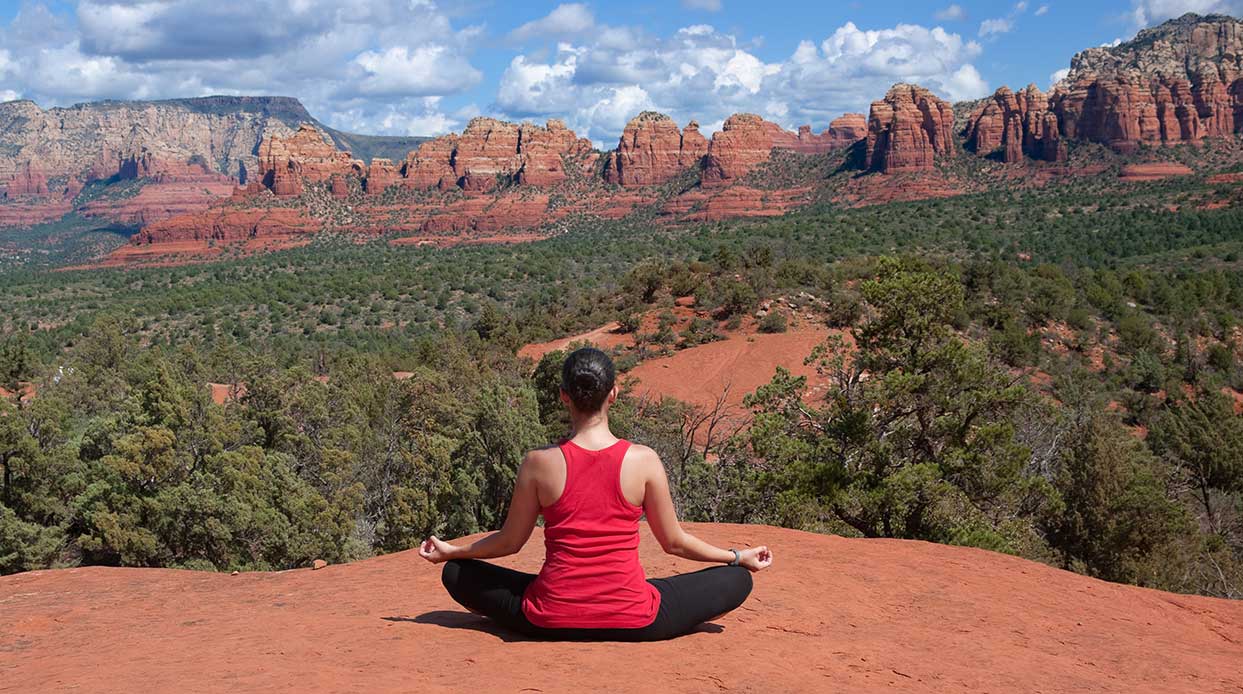
Sedona’s landscape is so iconic it can feel inescapable—its towering monoliths and dramatic valleys, vast skies and shifting light rendered endlessly. But a number of artists working across red rock country are approaching it in less literal ways. Rather than depicting the landscape, they absorb it, translating its color, energy and sense of openness into work that is abstract, material-driven and deeply personal. The result is a quieter, more expansive vision of Sedona: one rooted not in what is seen, but in what is felt.
Denize Katzen
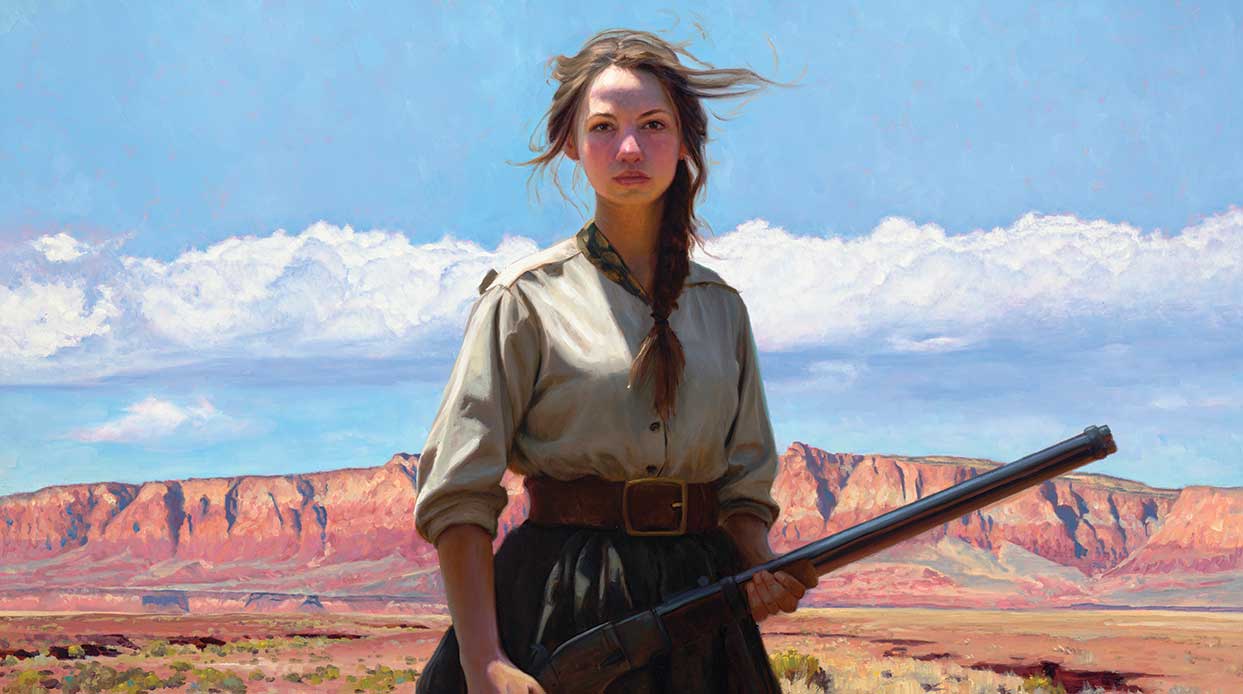
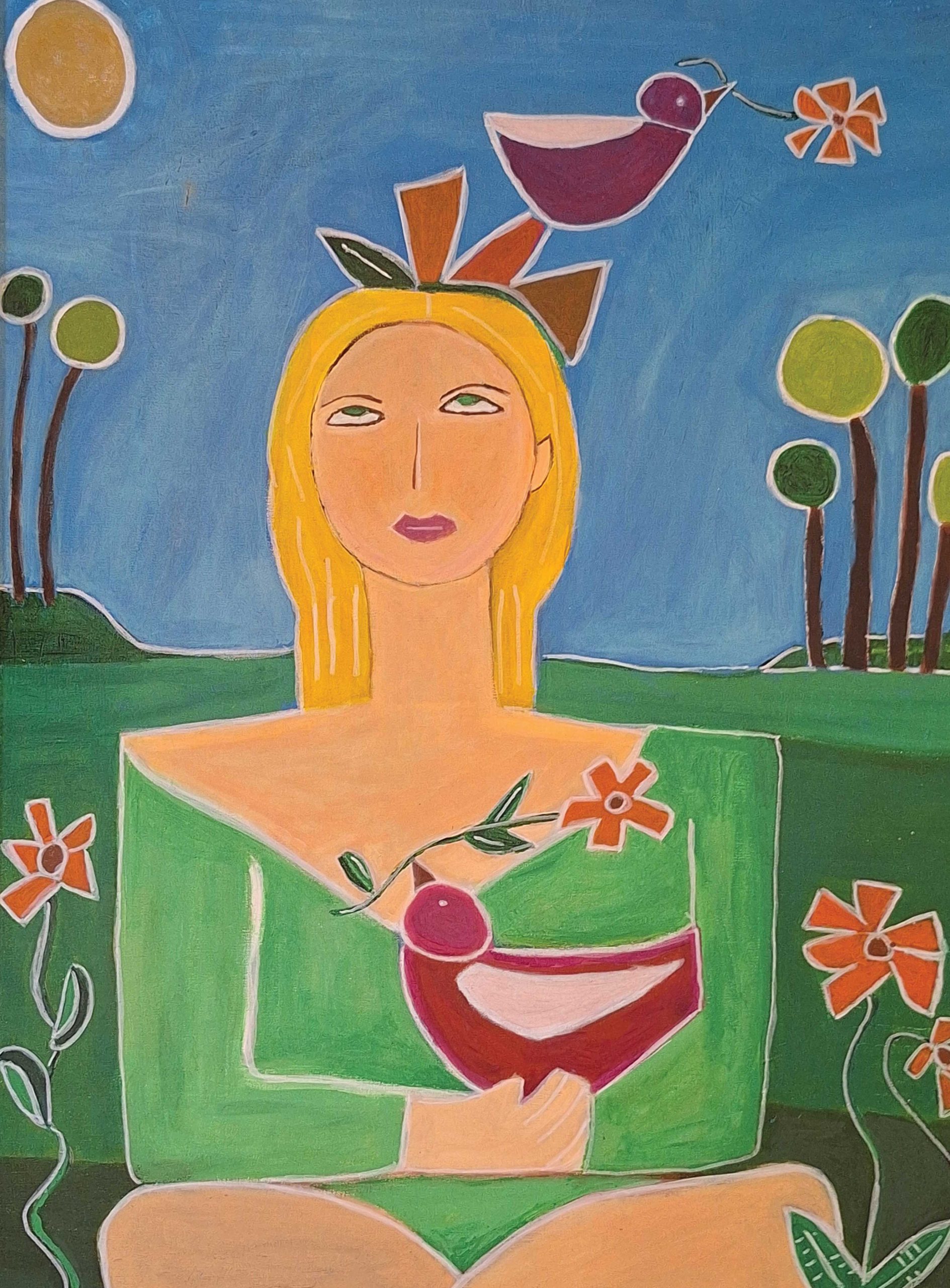
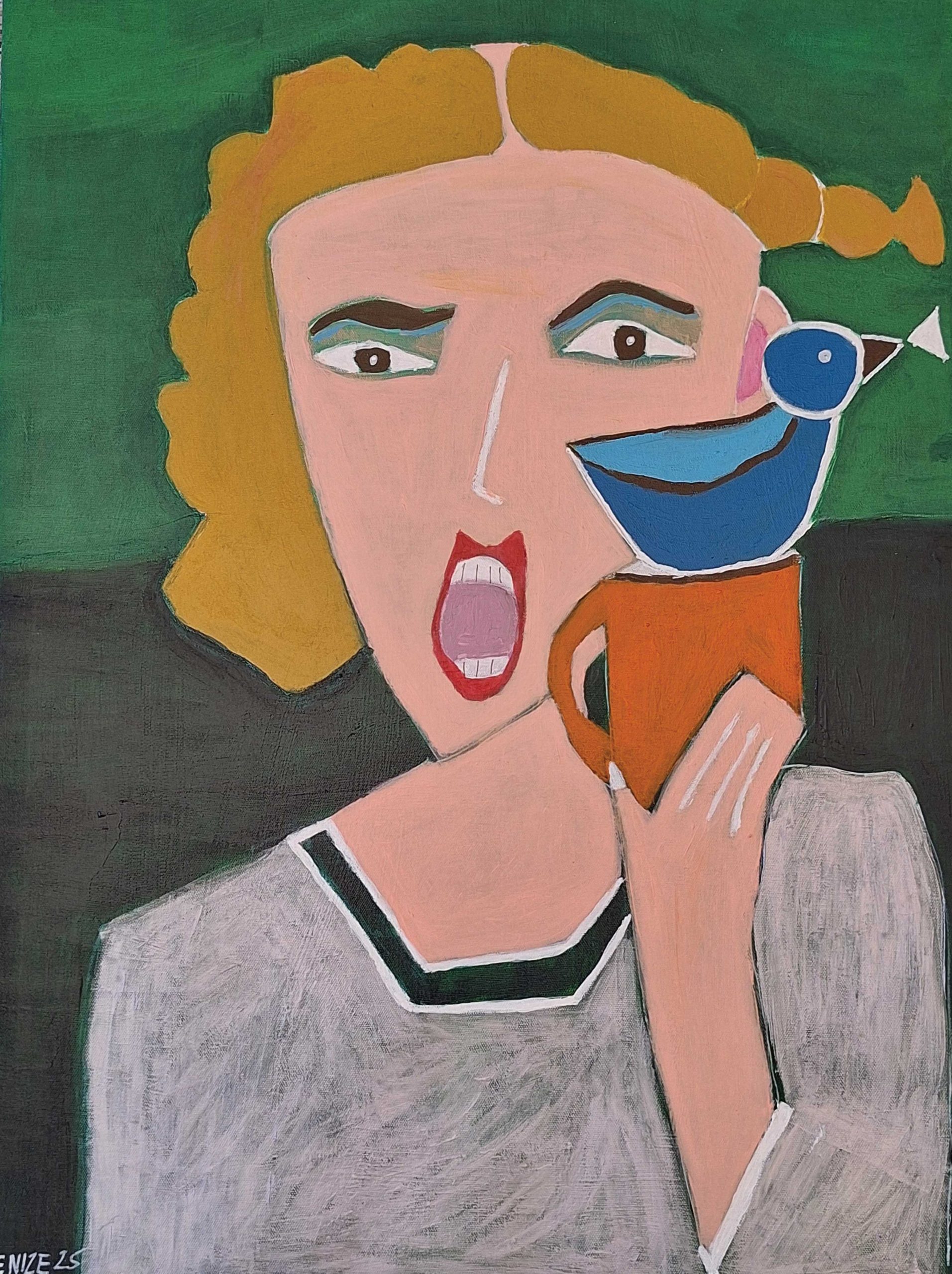
In the work of Denize Katzen, the human figure returns, not as narrative, but as presence. Her paintings, composed with a careful sense of balance and repetition, center on women whose stylized forms exist in quiet dialogue with the natural world.
Birds appear again and again, perched, circling or hovering nearby. For Katzen, they are more than motifs. “They’ve always represented freedom for me,” she says, “freedom to move, to explore, to exist without constraint.”
During the isolation of the COVID pandemic, that idea took on new resonance, as she watched birds outside her window move freely through a suddenly restricted world.
That connection carries through her figures. With a background in acting and dance, Katzen approaches the body with an awareness of gesture and movement. “I love the female form—the curves and the way women move,” she says. “My work really deals with women’s relationships to the nature around them.”
The figures she paints are not portraits so much as embodiments: of presence, rhythm and a kind of quiet, internal freedom.
Sedona enters her work through color. Turquoise, orange and red, drawn from the surrounding landscape, anchor her compositions, alongside expanses of blue that echo the region’s open skies.
As with the other artists, place is less a subject than a vocabulary. In Katzen’s work, abstraction resolves into something more grounded: a reminder that even in its most distilled form, the experience of place remains deeply human.
Julie Bernstein Engelmann
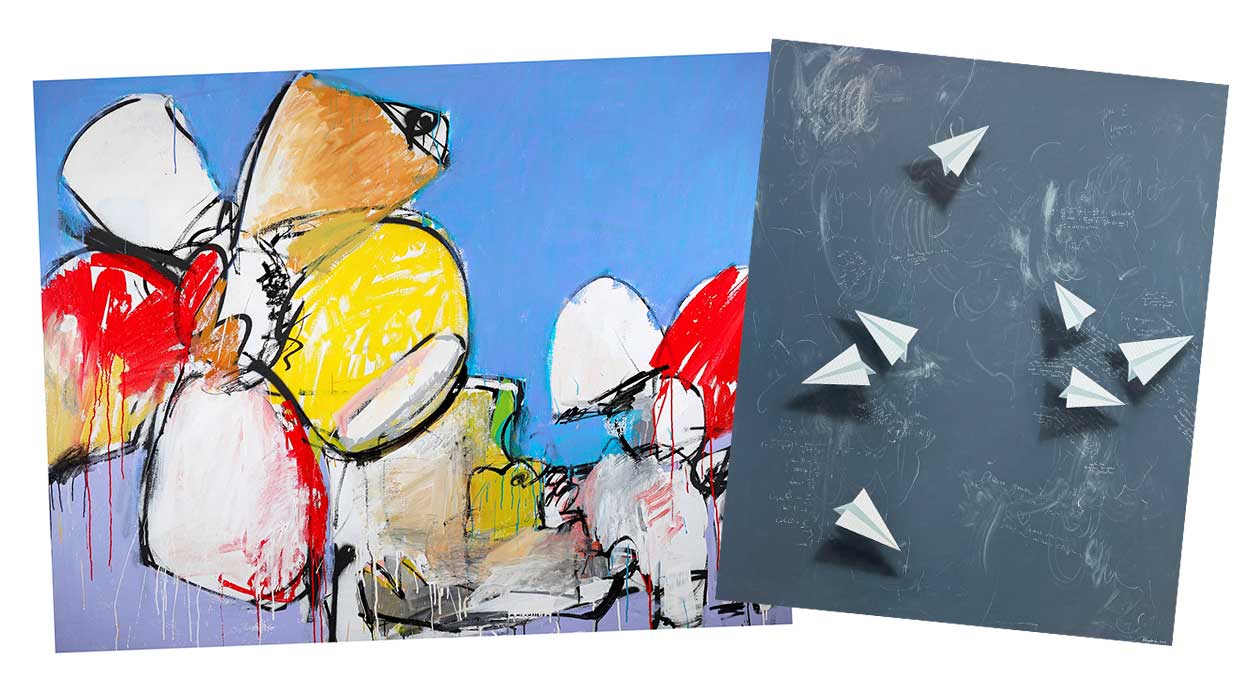
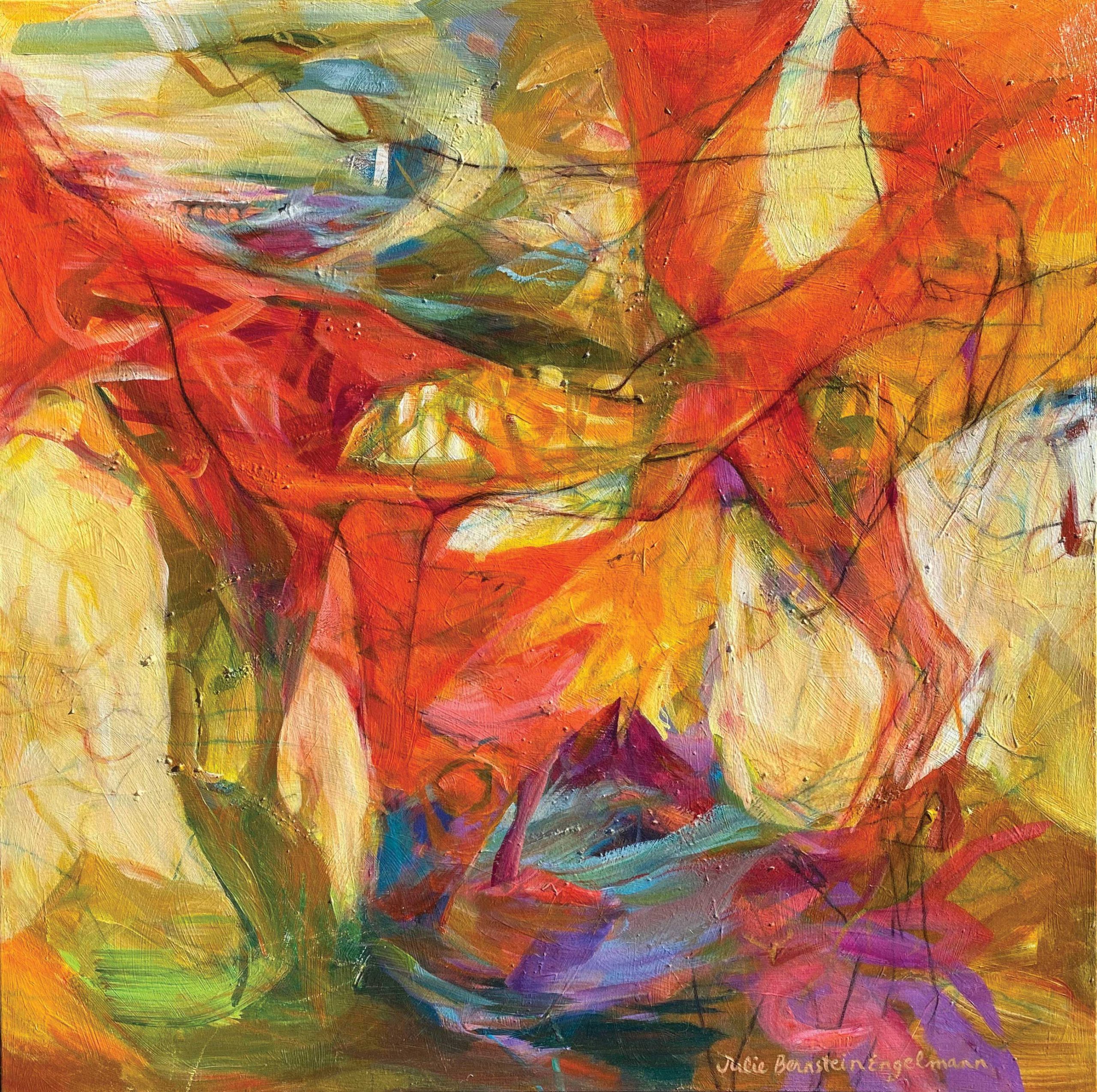
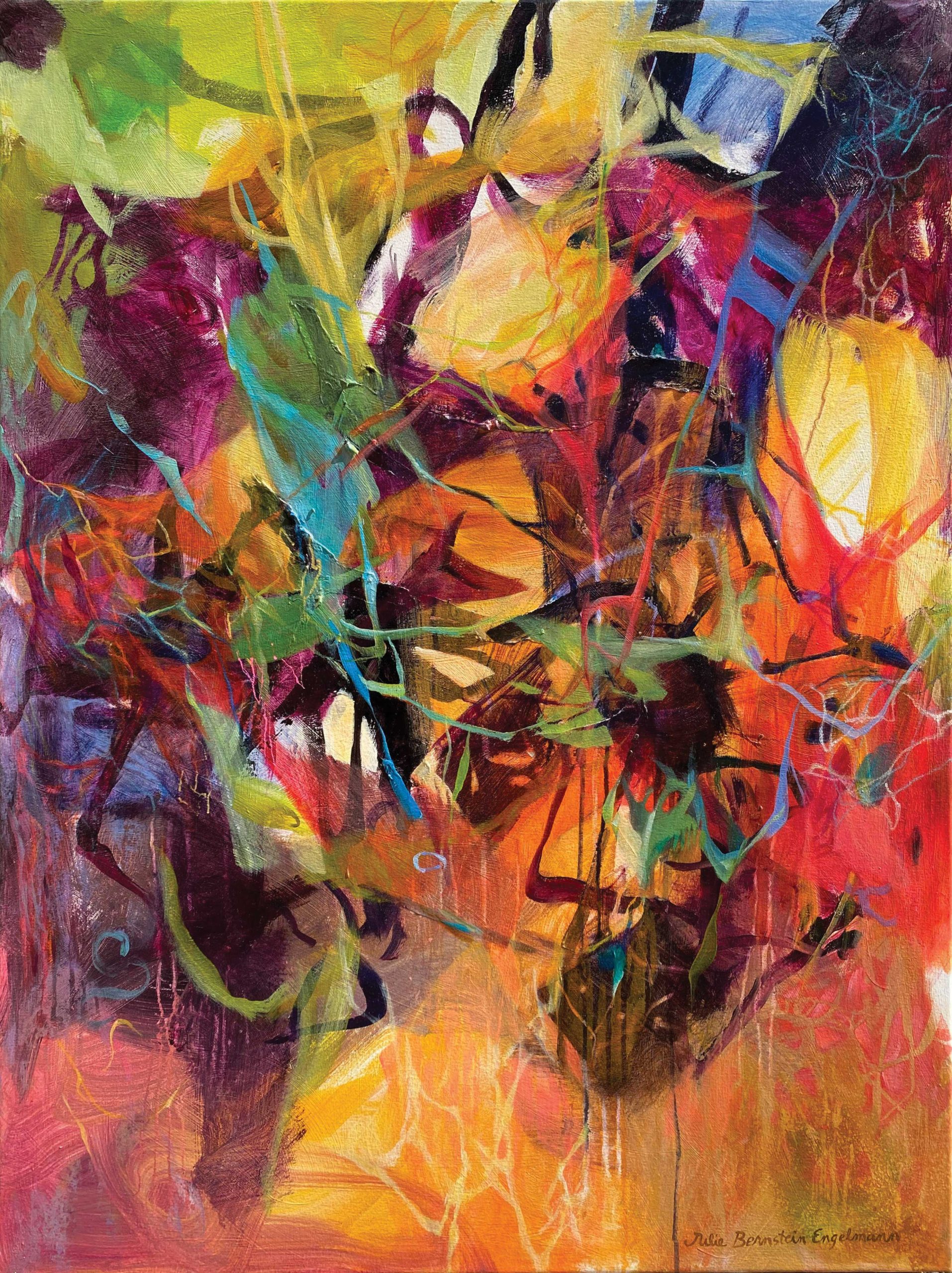
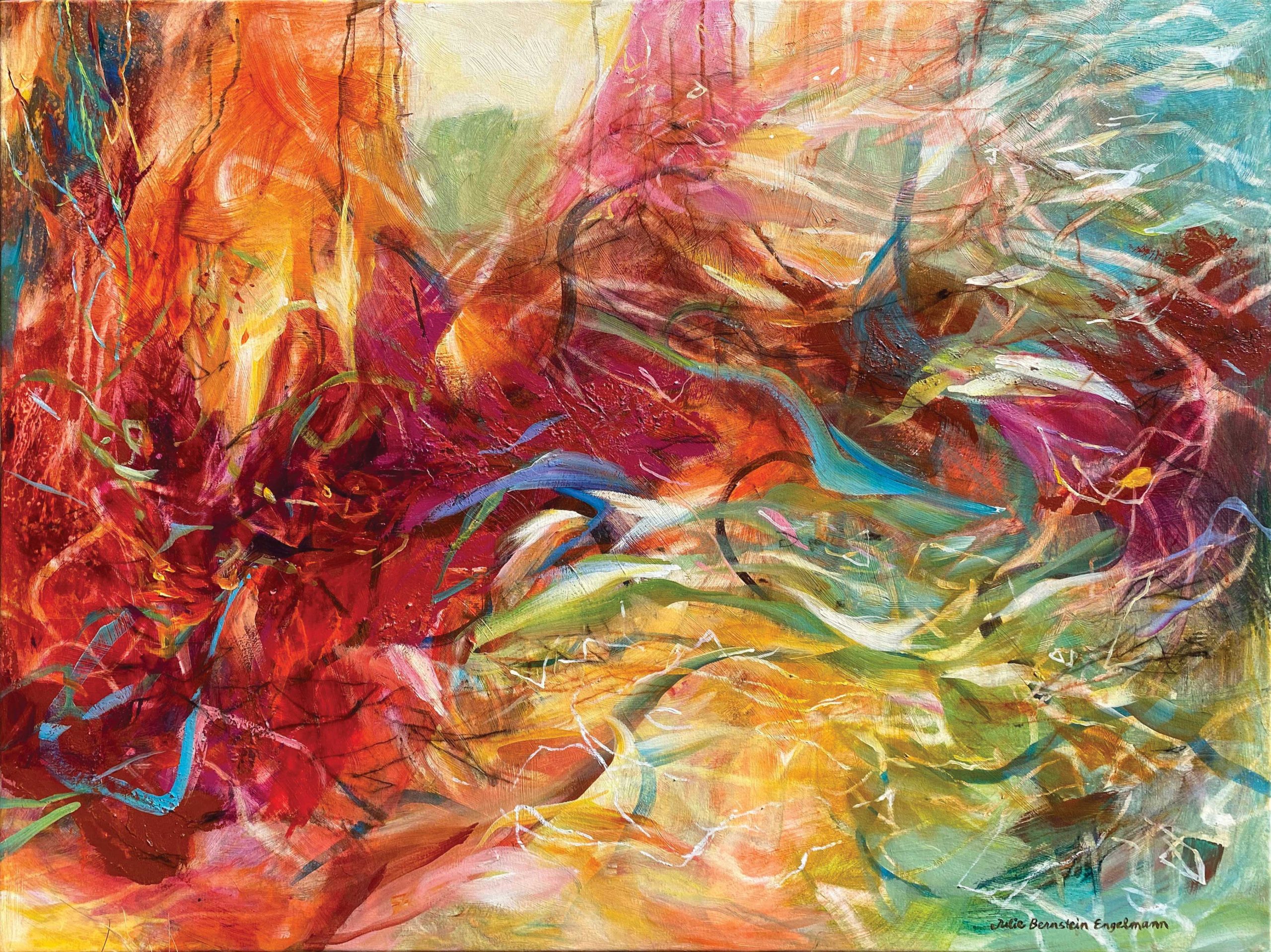
Julie Bernstein Engelmann paints less what she sees than what she experiences—an interior landscape shaped by memory, dream and the shifting rhythms of the desert around her. Her luminous abstractions, built in layers of acrylic, Conté crayon and intuitive mark-making, unfold slowly, revealing depth and movement over time.
“I make a lot of complications, then resolve them in my paintings,” Engelmann says. “It takes time for a viewer to understand the depth and flow.” Her compositions feel at once spontaneous and resolved, gestures looping and colliding before settling into balance.
Place enters the work obliquely. After nearly two decades in Pennsylvania, she arrived in Arizona craving color. “My eyes got so tired of gray and green,” she says. “I was longing for the pinks and beiges of the Southwest.” Today, flashes of salmon, carnation and sun-warmed ochre pulse through her canvases, echoing the surrounding hills without describing them directly.
“Much of my work is inspired by my dreams,” Engelmann says. “My spiritual quest is at full play.” From there, she works intuitively, layering, wiping away and rebuilding until, as she describes it, “the whole painting opens up like a hologram.”
The result feels less like a view than an atmosphere: immersive, shifting and attuned to the expansive qualities of the desert.
Khrystyna Kozyuk
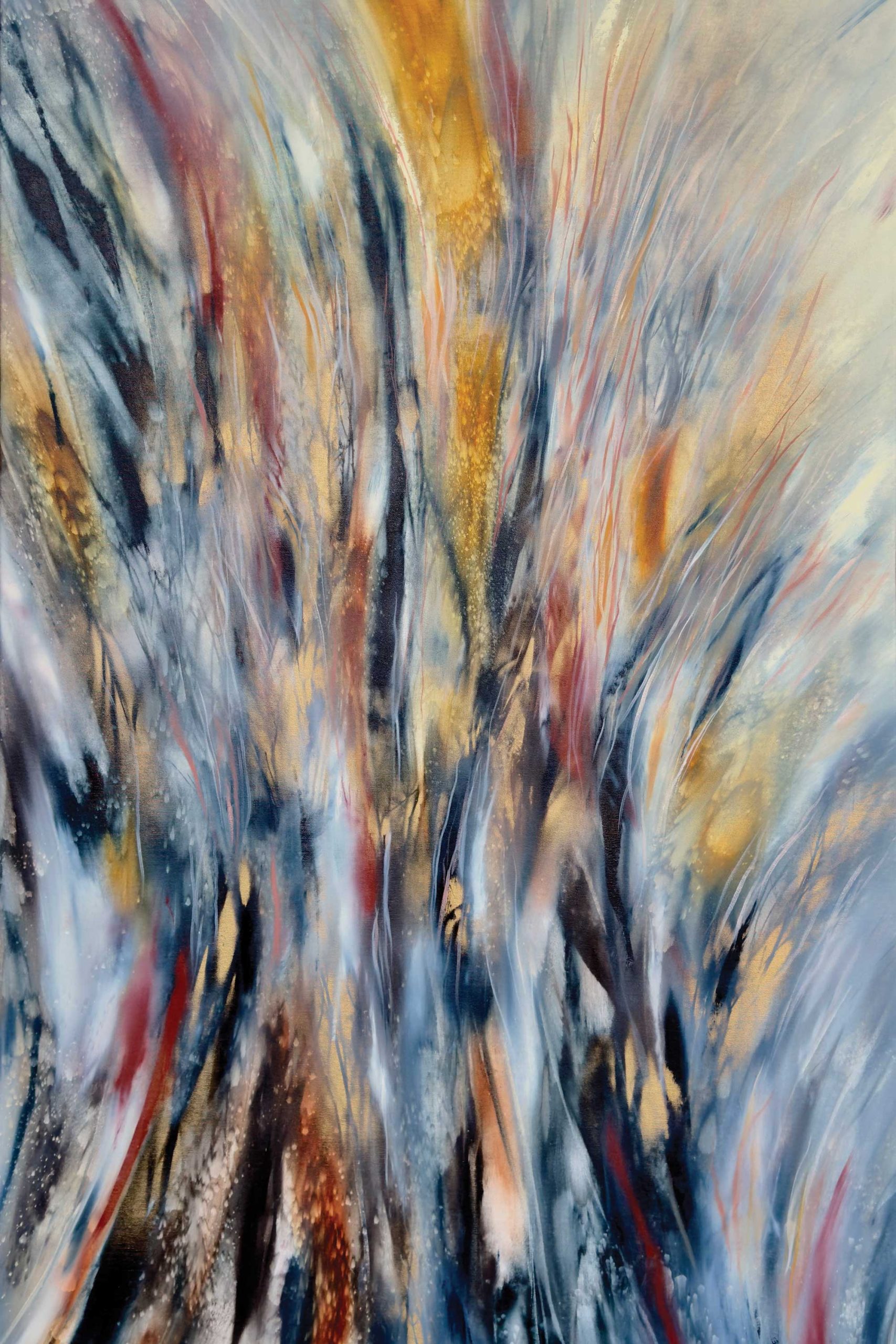
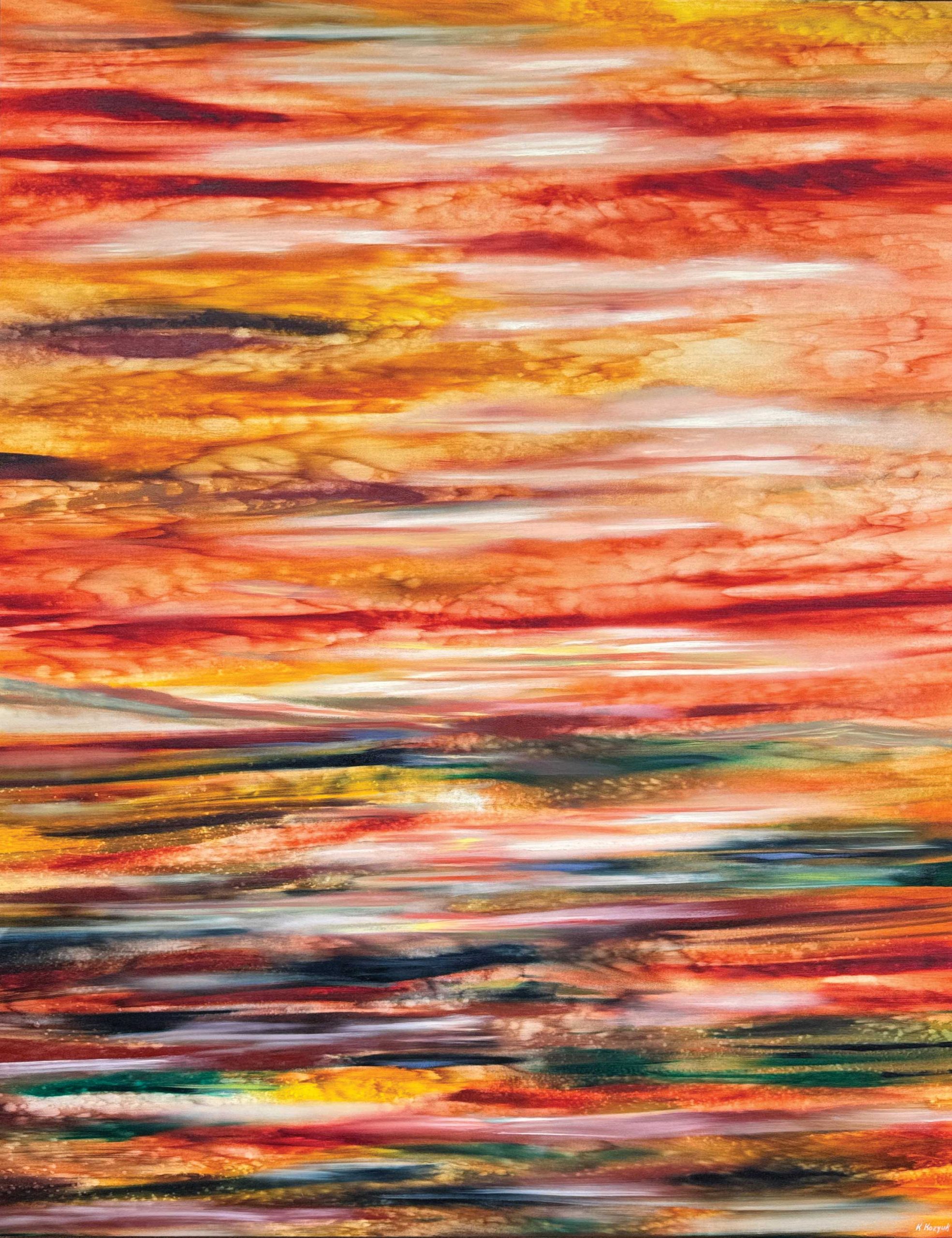
If Julie Engelmann’s work invites a slow unfolding, Khrystyna Kozyuk’s begins with movement. The Ukrainian-born painter builds her large-scale canvases through layers of diluted oil paint poured, spread and lifted in a process that is as physical as it is intuitive. Working flat at first, she applies paint with one hand while removing it with the other, allowing forms to emerge and dissolve in a continuous exchange.
“I absorb what I see and work from scratch,” she says. “I don’t know what’s going to happen.” That openness is central to her practice: a painting might begin with a loose intention—boats, perhaps—only to shift unexpectedly into something more floral or atmospheric as layers accumulate.
Place enters through light and color rather than representation. After years in Chicago, where her palette leaned toward cooler blues, Kozyuk recalibrated in Arizona. The desert’s intensity—its brightness, its heat—prompted a shift toward warmer, more saturated hues, echoing Sedona without describing it directly.
Thin, translucent layers create depth and motion, pulling the viewer into fields of color that feel fluid and expansive. The paintings suggest landscape without defining it, shaped more by experience and memory than by observation.
Lynn Haygood Lee
For Lynn Haygood Lee, painting arrived as both surprise and inevitability. After years of drawing and a life that moved through multiple careers and cities, she didn’t begin painting seriously until settling in Sedona. “The desire came over me so mysteriously,” she says, and once it did, it quickly became all-consuming.
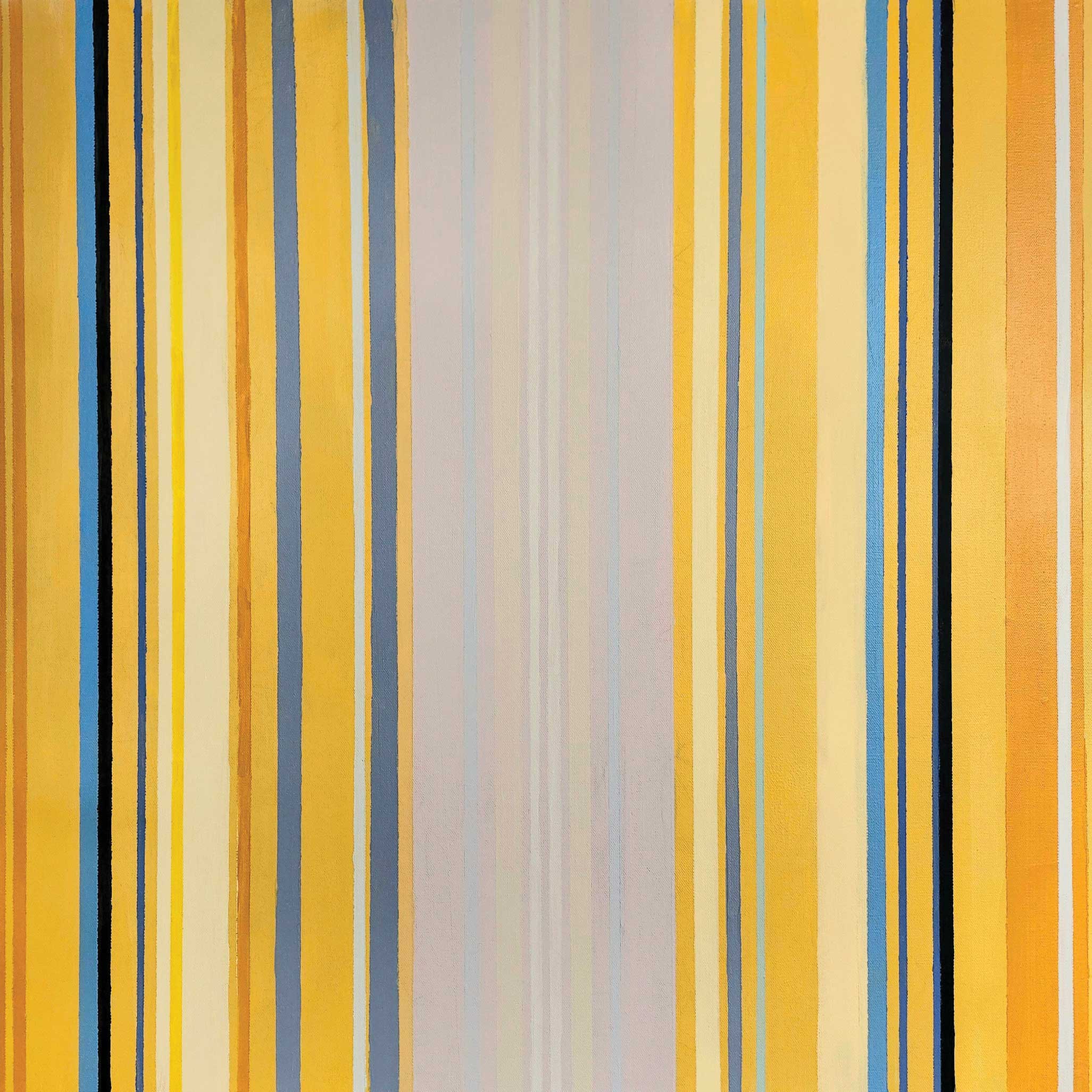
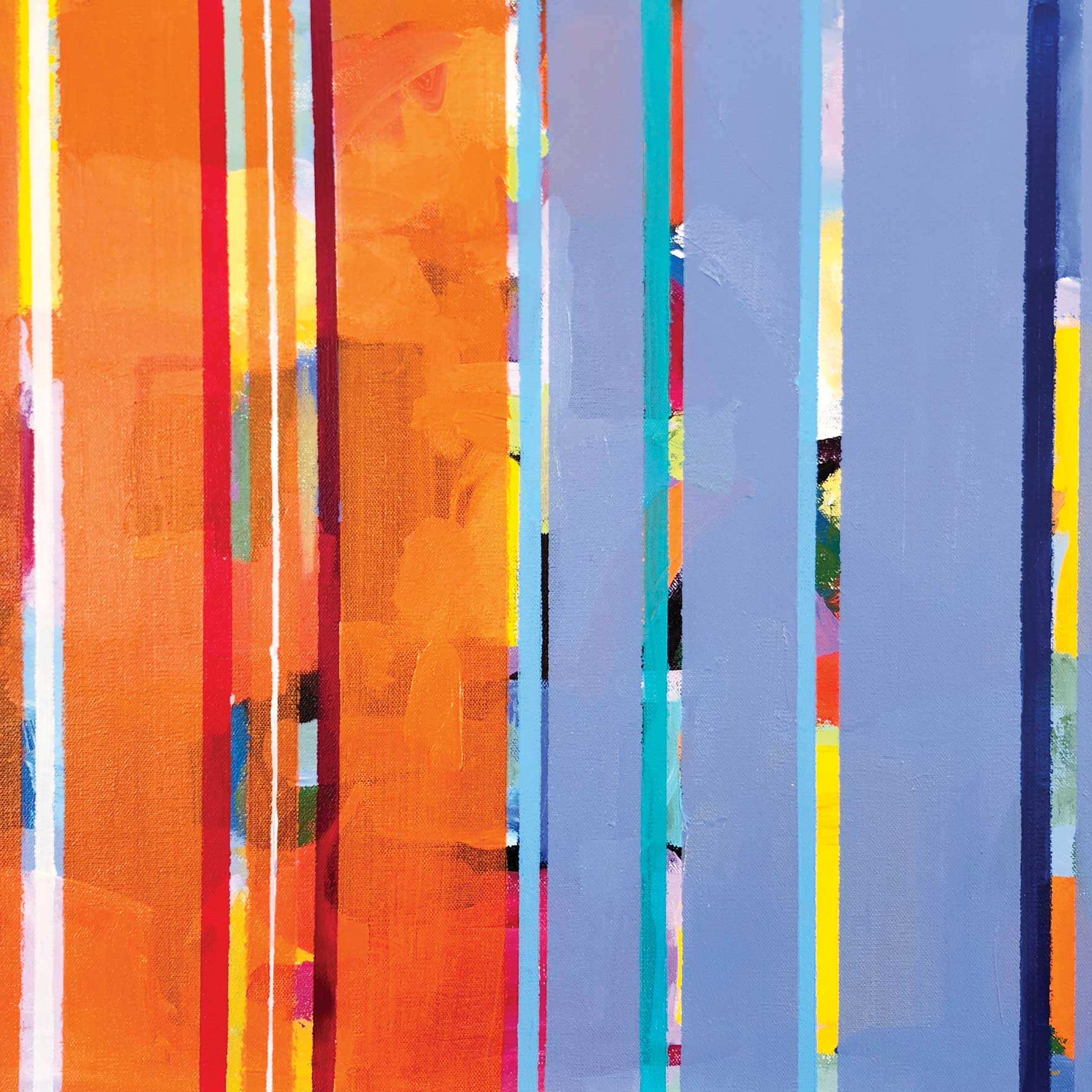
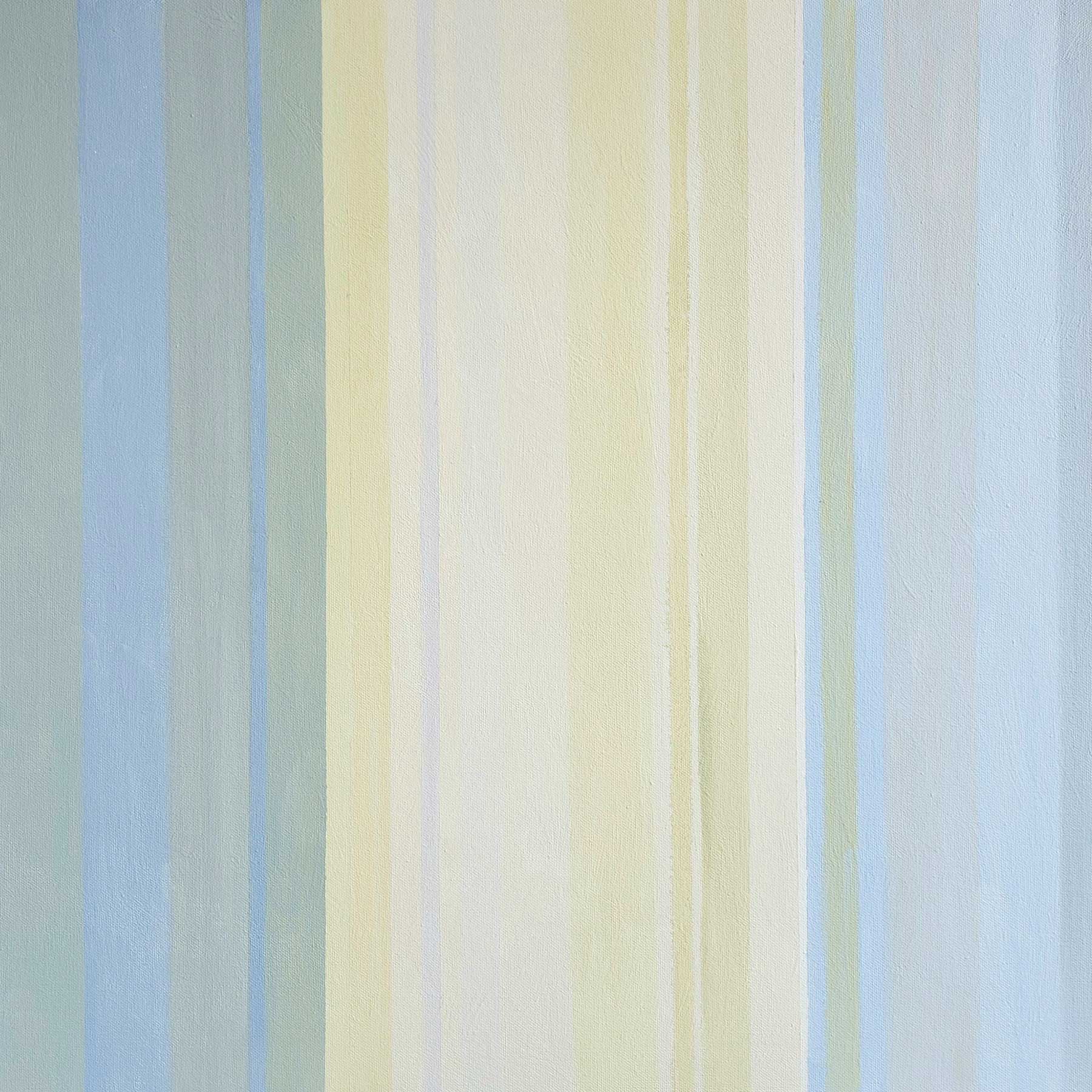
Her early works were loosely representational landscapes, a way of entering the local art community. Over time, those images gave way to something more distilled. Today, her compositions are largely nonobjective: vertical bands of color that suggest canyon walls, roads or remembered horizons without describing any one place directly.
Here, the connection to place becomes tangible. Lee incorporates finely sifted red earth from her Sedona backyard into her underpaintings, allowing the pigment to surface through layers of acrylic and tape-defined stripes. The land is present not as image, but as material.
Her process is both methodical and intuitive. Using what she calls “miles and miles of tape,” she builds compositions of varied-width bands, then paints, reworks and often paints over again, leaving traces of earlier decisions beneath the surface. Many pieces are named for places—Marfa, Canyon Dusk—but read as meditations on solitude, scale and the quiet resonance of the desert.
“I don’t want to capture it literally,” she says. “It’s how it feels to me.”
SOURCES
- Denize Katzen, Sedona, @denize__diletante_in_sedona_
- Julie Bernstein Engelmann, Sedona, julieengelmann.com
- Khrystyna Kozyuk, Sedona, kozyukgallery.com
- Lynn Haygood Lee, Sedona, lynnhaygoodlee.com