


Blueprint for Beauty
2019 MASTERS of the SOUTHWEST Award Winners
A Water-Thirsty Garden Becomes a Showcase for Desert-Friendly Flora.
By Nancy Erdmann | Photography by Marion Brenner
Situated at the foot of Camelback Mountain and surrounded by indigenous greenery, this 6.6-acre estate once flourished with lush lawns, water-loving shrubs and non-native plants—a garden design typical of the neighborhood’s many Mediterranean-style residences. Beautiful as it was, the high-maintenance setting and its owners, who are big advocates of sustainability and conservation, didn’t quite go together.
“We had lived here for several years before deciding it was time to transform our existing landscape away from a manicured, high-water-use one to a garden filled with native and desert-adapted flora,” says the wife. “My husband and I have a deep love of natural desert plants, yet we hadn’t followed this path at our own home. We wanted something more representative of where we live. If you’re going to talk the talk, you’ve got to walk the walk.”
The couple initially wanted to introduce desert-appropriate plants in just a few areas, so they asked landscape architects Allison Colwell and Michele Shelor to create overlay renderings that could be placed atop images of the existing landscape so that they could easily see what it would look like without the water-intensive plants and with the addition of cacti and succulents. “Once we started the project and procured specimen cacti to implement into the design, the homeowners really liked the direction in which we were going,” says Colwell, “and the project expanded to nearly the entire property.”
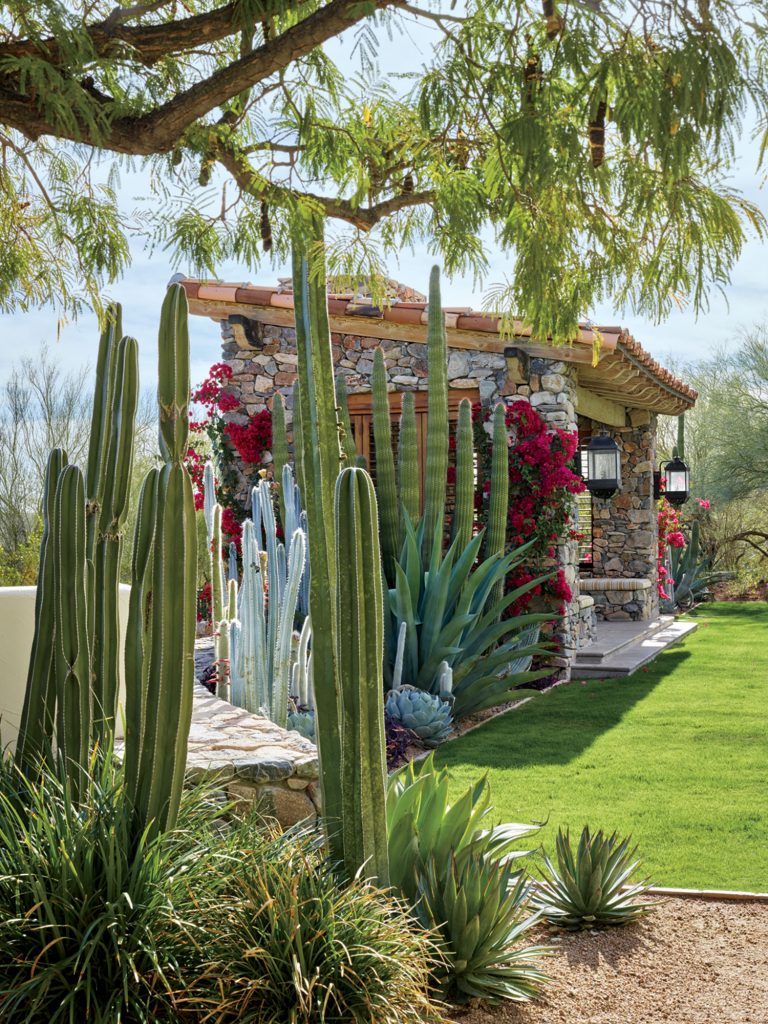
Situated at the foot of Camelback Mountain and surrounded by indigenous greenery, this 6.6-acre estate once flourished with lush lawns, water-loving shrubs and non-native plants—a garden design typical of the neighborhood’s many Mediterranean-style residences. Beautiful as it was, the high-maintenance setting and its owners, who are big advocates of sustainability and conservation, didn’t quite go together.
The renovation was fairly complex and required both intervention and restoration, the designers recall. “The vision was to create a xeric landscape that was full of drama and wonder, to transform the site into a spectacular celebration of our region’s incredible and diverse plant life,” Shelor remarks.
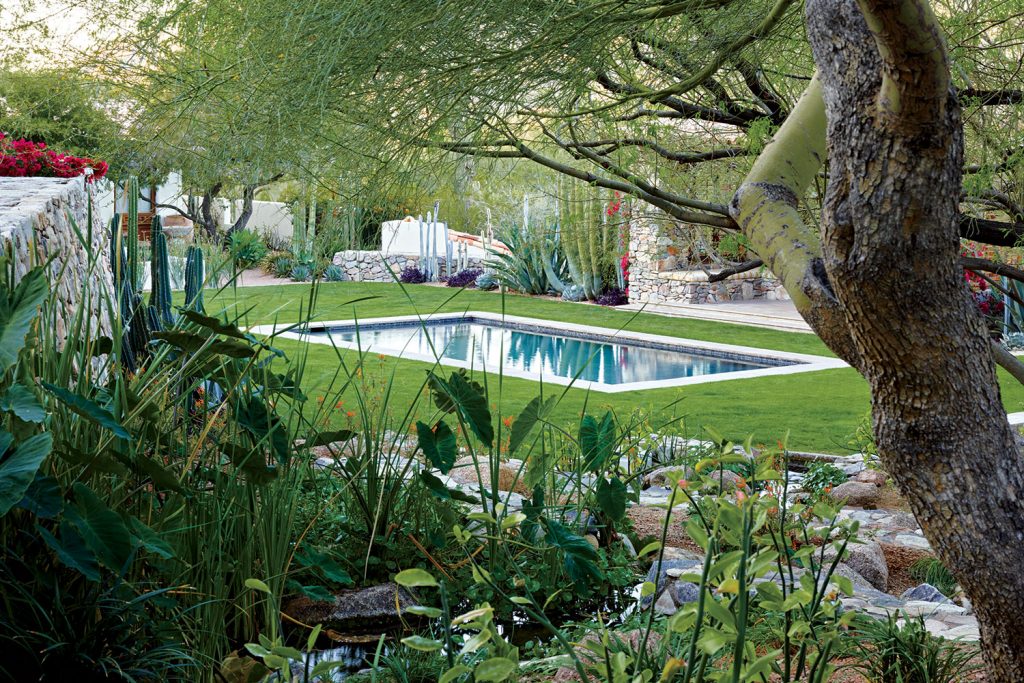
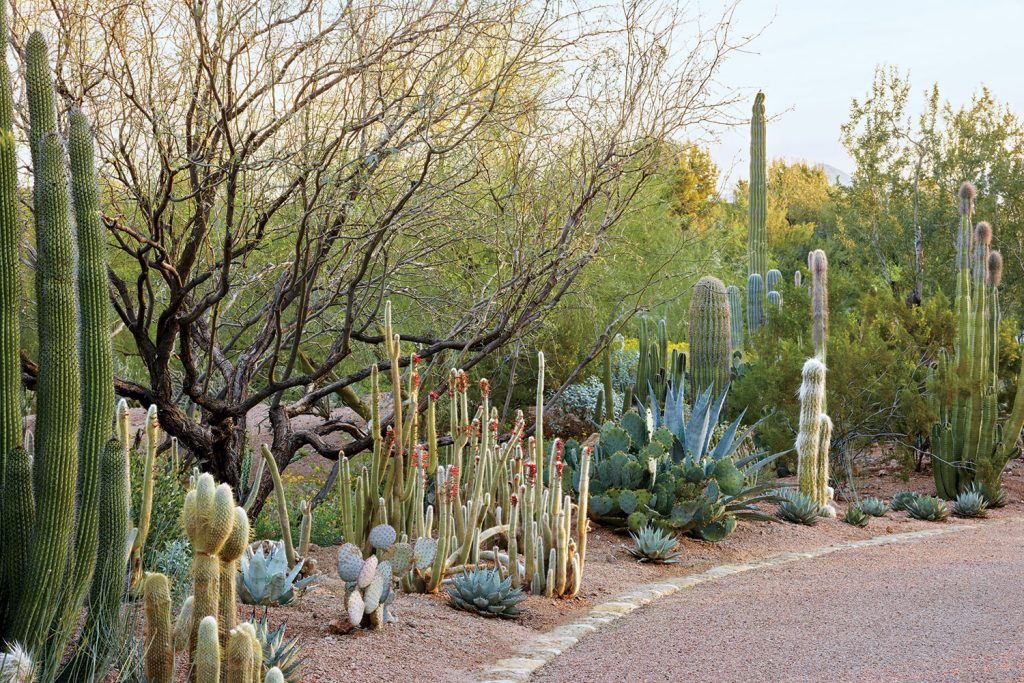
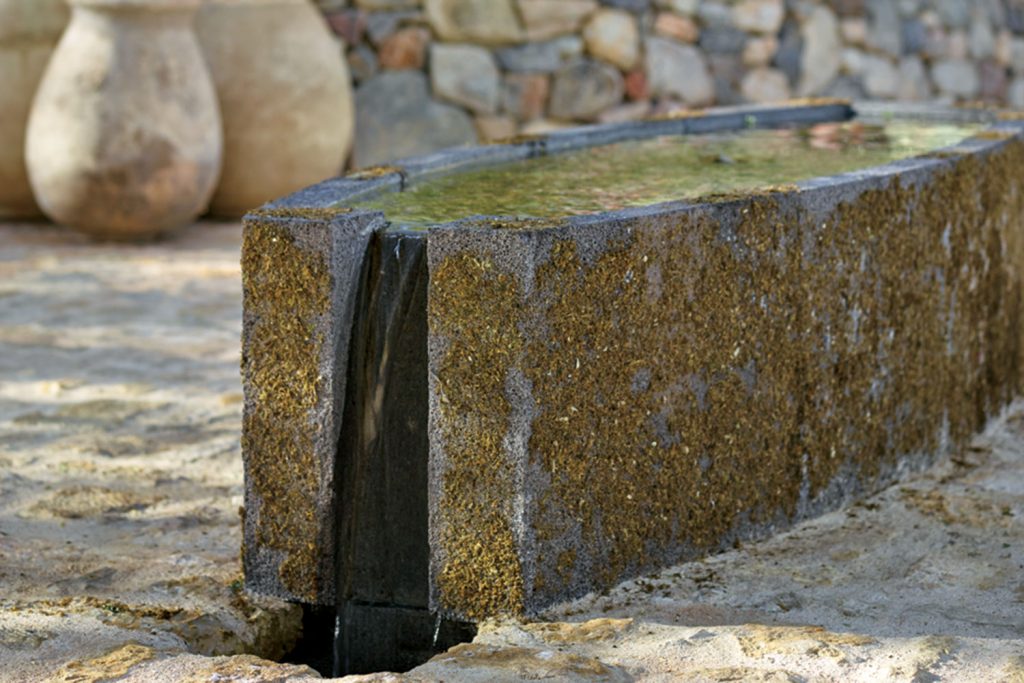
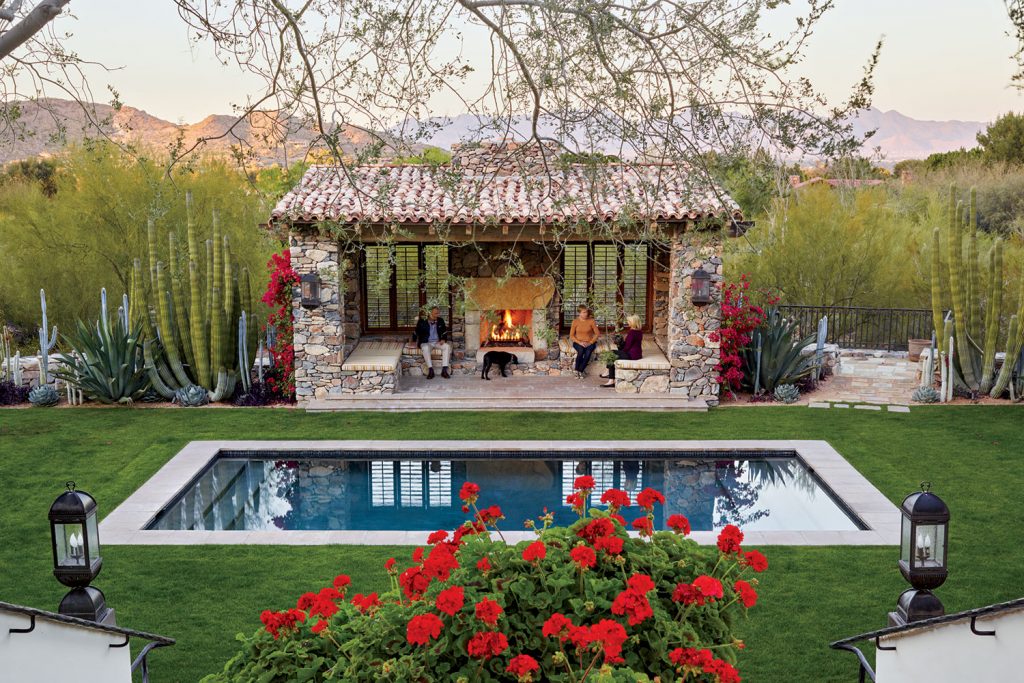
The perimeter of the property was restored, revegetated and enhanced with species that are native to the Sonoran Desert and that would blend with the greenery on Camelback Mountain. Existing plantings were relocated to appropriate microclimates within the lot, and dozens of large specimens salvaged from other sites under construction were replanted throughout the yard. A key objective of the design was to preserve the mature trees to serve as a backdrop for the rest of the newly updated landscape.
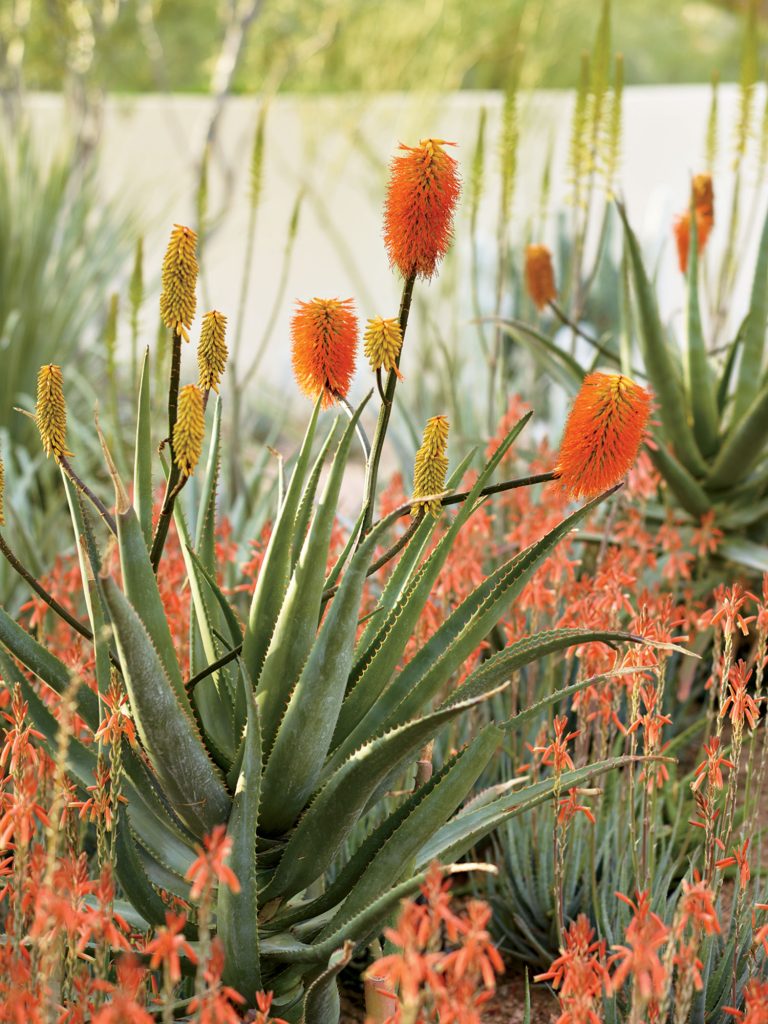
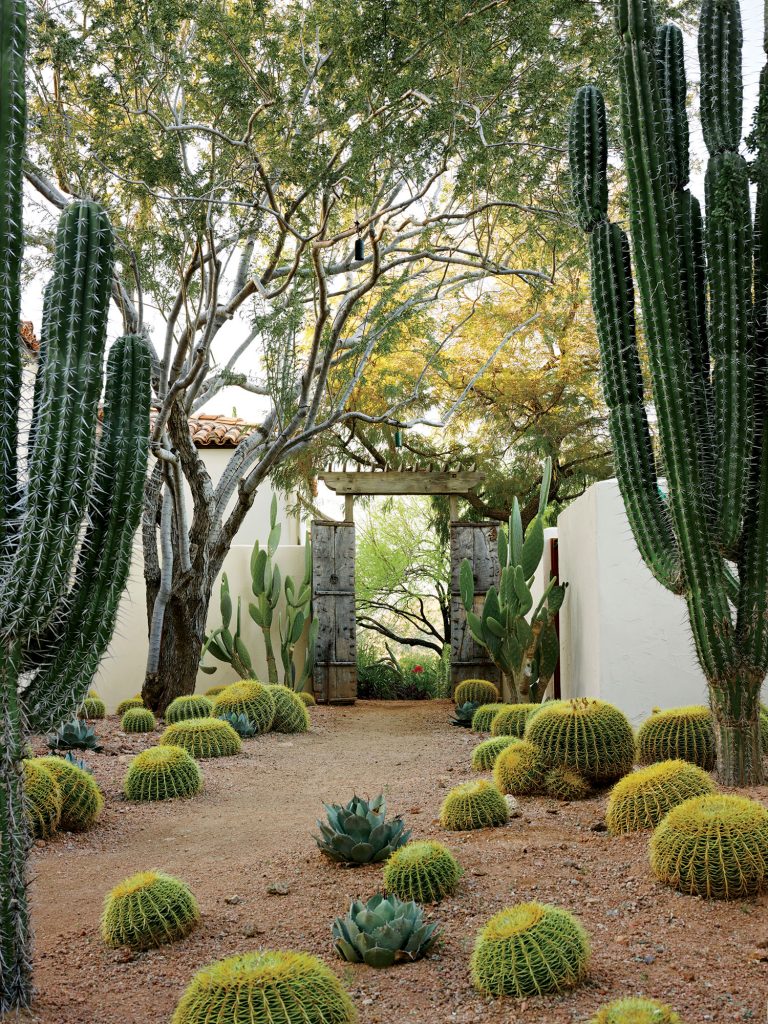
Closer to the house, the landscape architects designed a series of gardens, all with differing personalities. “Some have a lot of punch, and others are quieter,” notes Colwell. In one area, for example, 16-foot-tall candelabra cacti are positioned among a mass of golden barrels, creating a striking collage of highs and lows. In the “Freaks ’N Geeks” garden, a moniker given to it by the landscape architects, bizarre and rare specimens co-mingle. By contrast, the aloe garden is more restful, with fewer specimens and numerous aloe species. A field of yuccas, a majestic cardon cactus, a worn garden gate framing a profusion of agaves, the twisted form of an ironwood tree—all are elements and vignettes designed to seamlessly flow from one area to the next.
“The vision was to transform the site into a spectacular celebration of our region’s incredible and diverse plant life.”
—Michele Shelor, landscape architect
Colwell and Shelor admit that it was a challenge to tie all of the garden personalities together, since each has a distinct feel. The pair visited botanical gardens, including Lotusland and Huntington Botanical Garden, both in California, to study how to connect the spaces. They were able to do this by planting such native vegetation as brittlebush, chuparosa and prickly pear throughout the property, as well as transitioning garden areas at existing gates and walls, where microclimate allowed. “There is a series of walls throughout the property to help retain a 50-foot grade change, and these elements became helpful in both transitioning the different gardens, as well as tying them together with a common material,” Colwell explains.
“One thing that was unusual about this project was that we generally knew what we wanted to do, but we had to first find the specimens that would suit the microclimate where they would be planted, then create the garden around that,” Colwell continues. “The most difficult area is what we call the riparian garden, which is the shadiest spot. There are several mature mesquite trees located along an existing water feature, but it has been challenging getting a healthy shade garden working, so we continue to tweak.”
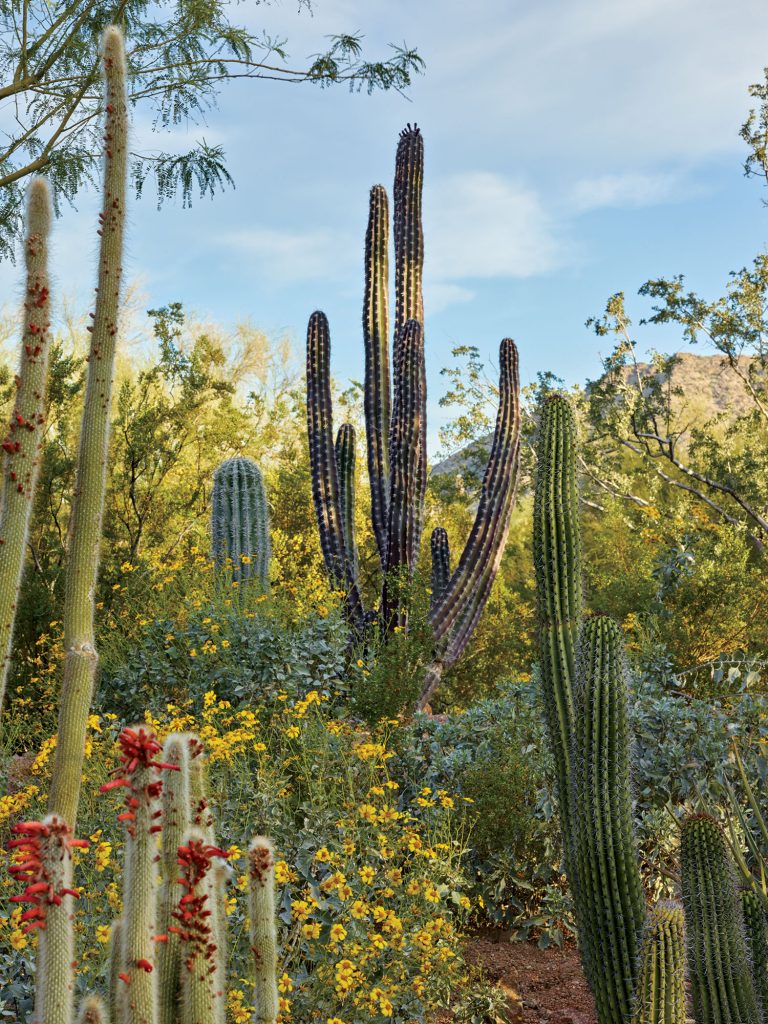
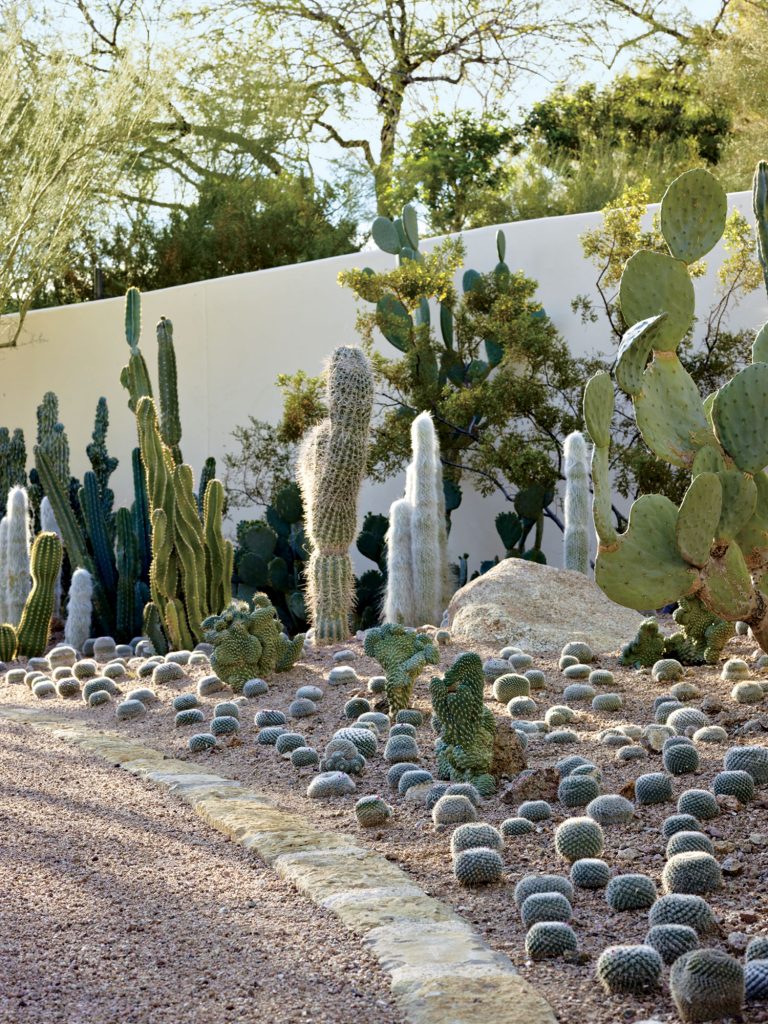
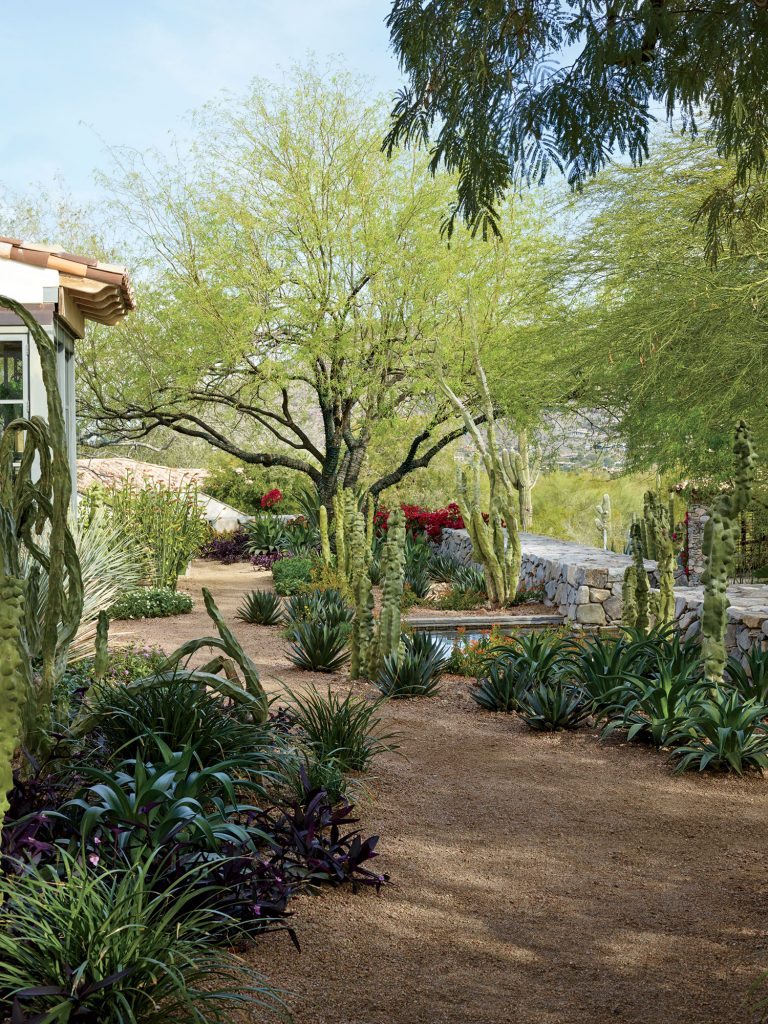
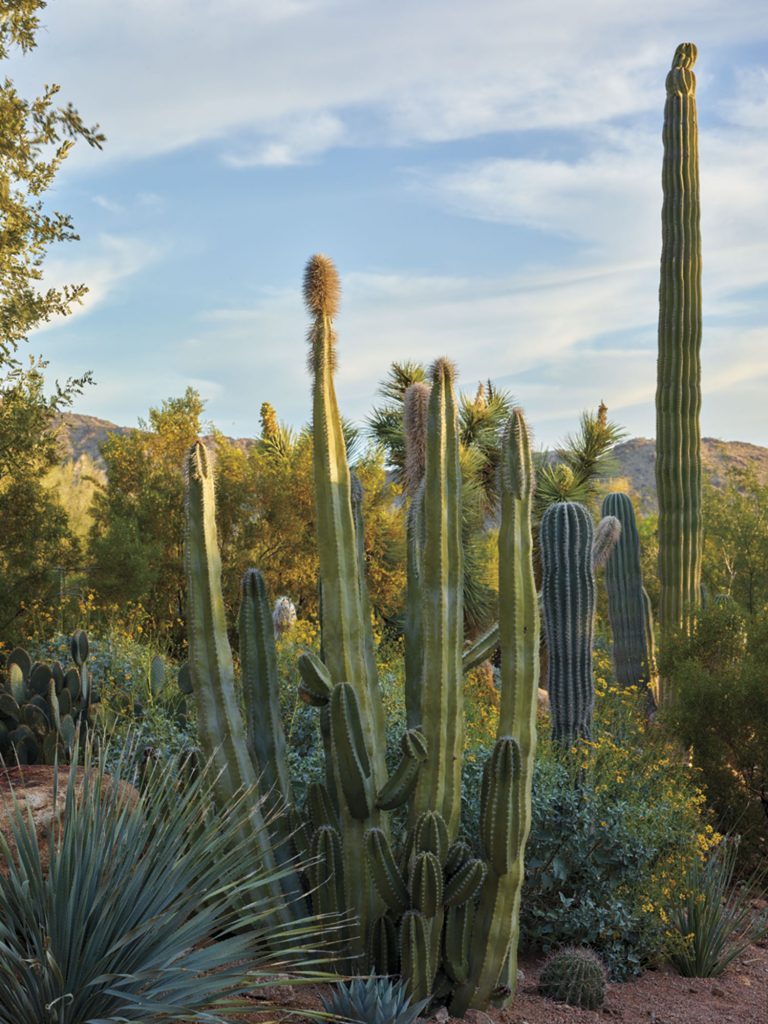
Once established, many of the plantings thrive on rainwater alone, require no fertilizing and little to no pruning, and provide a rich habitat for a multitude of wildlife. “Water use was reduced by 30 percent the first year and 85 percent within three years,” says the wife. “Prior to that, we would lose more than 20 percent of the plants each summer because they couldn’t handle the heat.”
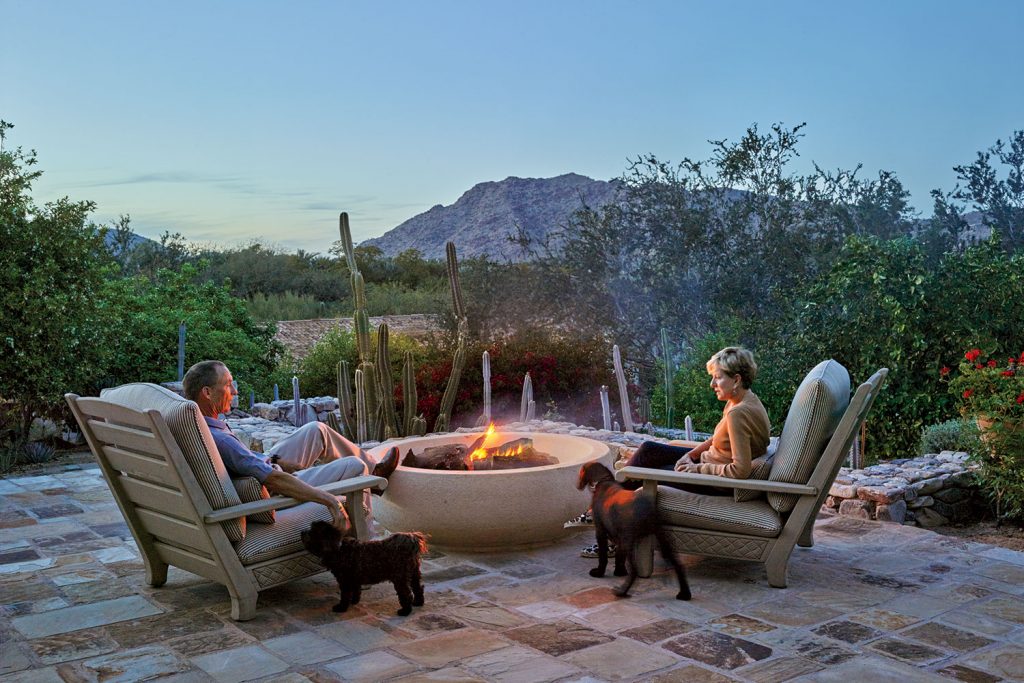
Even with all the new desert-adapted vegetation, there still is a lushness to the property, especially around the swimming pool where the existing lawn was preserved. “This was one of the only places where we kept a more water-intensive landscape, mainly because the area is utilized for events, as well as active family life,” notes Shelor.
The couple swims in their solar-heated pool every day and loves spending summer evenings out there looking at the stars. “While many people like to leave Phoenix in the summer, we actually enjoy it,” says the husband. “It’s a great place to watch the storms, and if we’re out of town when a good one hits, we’re always disappointed.” Another favorite gathering spot to view sunsets and impending monsoons is the fire pit located just outside the home’s kitchen and family room. Constructed of limestone, its steel grill at the bottom of the fire feature is a tree grate.
Throughout the project, the homeowners and landscape designers became good friends. “Allison and Michele are still invested in revisiting our garden and tweaking anything that might need attention,” says the wife. The couple was particularly impressed when the design duo created a guidebook to help them understand the names and needs of their garden’s flora. “They also created custom plant identification markers for us that incorporate symbols reflective of our family. These are especially wonderful when we have visitors and host Garden Club of America tours.”
The homeowners, who are very involved with Desert Botanical Garden, The Nature Conservancy and Conservation International, remark that their once water-thirsty landscape is now an eye-catching legacy garden that pays homage to its desert surroundings. “It is sustainable and demonstrates our passion for conservation and our beautiful native plants,” says the wife. “In fact, we are in the process of documenting the garden for the Smithsonian now that it has so beautifully matured.”
For more information, see Sources.
2019 MASTERS of the SOUTHWEST Award Winners
Allison Colwell & Michele Shelor
The synchronicity between design partners Allison Colwell and Michele Shelor has been the catalyst for numerous high-profile, award-winning residential and public installations throughout the Valley and beyond. The two met early in their careers while working as project managers for landscape architect and Phoenix Home & Garden Masters of the Southwest award winner Steve Martino. “We discovered we were totally in sync when it came to our design aesthetic, and our individual skills meshed perfectly,” recalls Allison. “My strength is the big picture, and Michele is all about the details.”
The duo’s undeniable passion for the Sonoran Desert is evident in their work, which consistently emphasizes sustainability, an affinity for natural materials, an indigenous plant palette and the celebration—and conservation—of water.
“Allison and Michele have an innate understanding of both structure and landscape and how the two are interconnected,” says architect John Kane, who has worked with the partners on numerous projects. “They are provocateurs who do not shy away from creating spaces that are sculptural, innovative and interactive.”
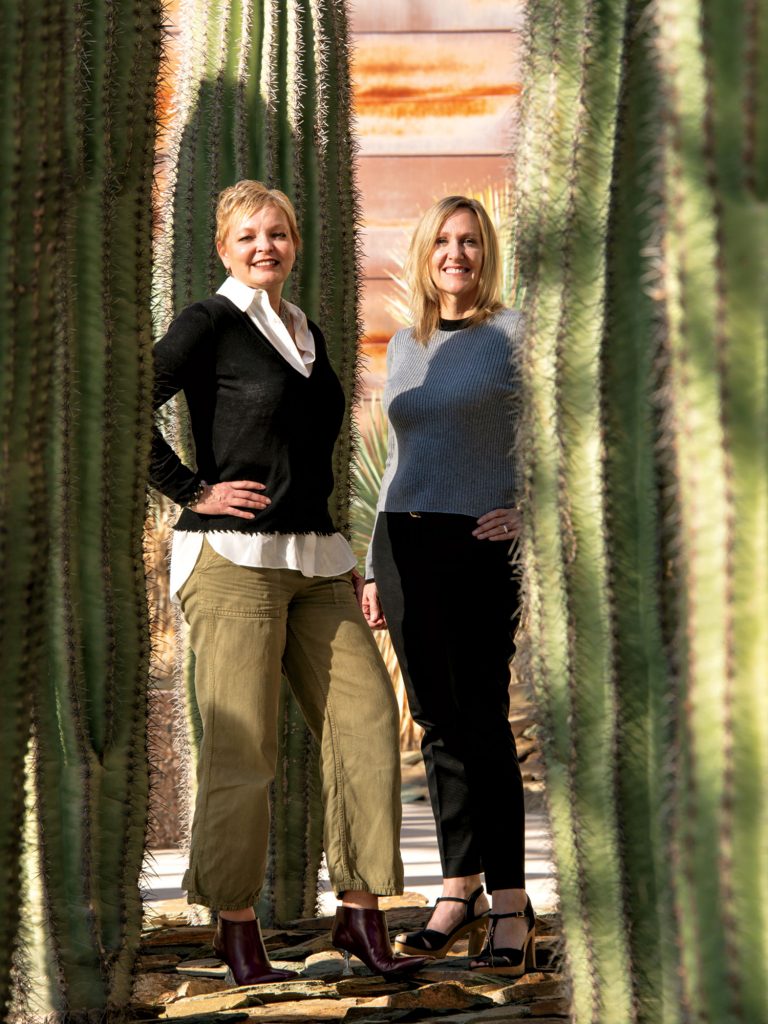
As the firm of Colwell Shelor Landscape Architecture celebrates its 10th anniversary this year, we are proud to name Allison and Michele as Masters of the Southwest award winners.
—The Editors