


A Chandler Collector’s Vast Compilation Celebrates Mexican Art in Every Form

Meet the art collector preserving the legacy of Chicano creatives in Arizona—and his beloved late wife is the inspiration for it all.
By Erika Thomas | Photography by Austin Larue Baker
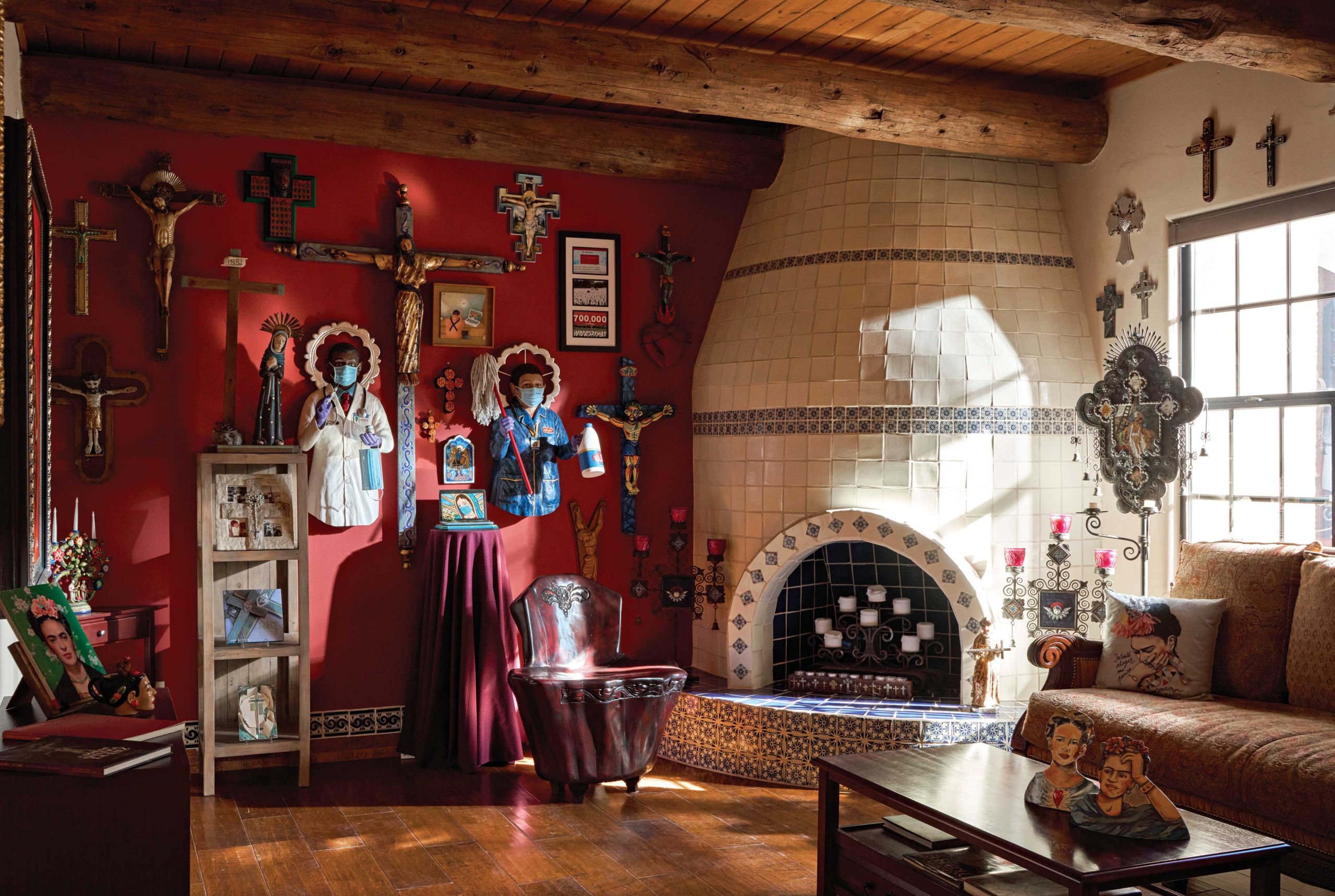
Bold color, religious symbolism and ethnic imagery are only a few of the aspects that define the diverse collection of Jose Cardenas. The passionate advocate of the Latino arts community and senior advisor for civic engagement and special counsel at Arizona State University never set out to amass such an extraordinary catalog. He sources new finds everywhere, from open-air markets in Mexico City and galleries in Los Angeles to local art shows in Tucson. “Collecting art started by accident when I was in law school at Stanford,” he says. “One of my classmates had purchased a group of reproductions by Francisco Zuniga. He decided to sell some of it off, and my wife and I bought two of them, which became the start of my collection.” The reproductions were of such high quality, Jose notes, that “the framers could not believe they weren’t originals.”
Artist and longtime friend Gennaro Garcia began his career more than 20 years ago making retablos (intricately carved and painted religious scenes) with his father, Luciano Garcia. He’s seen firsthand Jose’s support of the Mexican art world and the desire to further the success of its creatives. Garcia learned of Jose and his late wife, Virginia, through their involvement with Latino Culture magazine and through Xico, an organization that amplifies the presence of Chicano and Indigenous artists throughout Arizona. “Jose and Virginia were on the board and would come to my shows,” Garcia explains. “I always felt they would like my art. One day, Donna Valdez, the director of Xico at the time, introduced me to them. Two years later, they bought one of my pieces.”
Jose, who currently serves as an emeritus board member for the nonprofit, remains fiercely dedicated to solidifying a creative landscape that’s ethnically diverse. “Every artist should have someone who supports their vision,” Garcia says. “For those just starting , it is invaluable to have mentors with as much knowledge as Jose. He has strengthened our community. We are who we are because of him.”
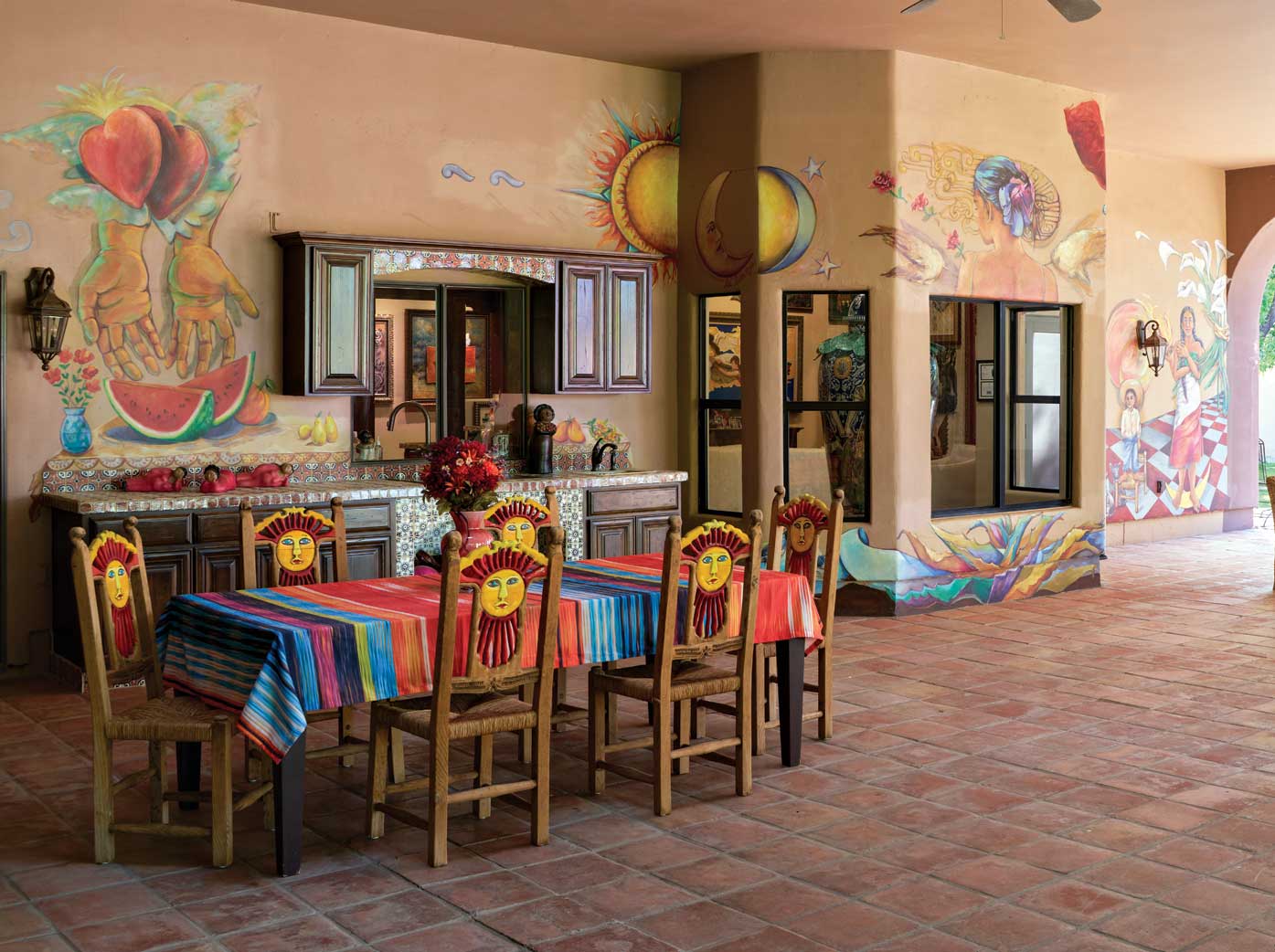
Jose has amassed a collection that numbers well into the thousands, with the pieces sectioned into specific themes throughout his hacienda-style residence. “I had no plan or particular way of arranging everything—it has evolved over time,” he says. A Day of the Dead hallway features carved wooden figurines and paintings of La Calavera Catrina, the iconic female skull symbolizing Dia de los Muertos. A grouping of renditions of the Madonna can be seen in the dining room, and various interpretations of Frida Kahlo grace the entryway. A display of old photos tells the Cardenas family’s history, including Virginia’s first holy communion and Jose’s father as a young man when he first arrived in the U.S. A picture of the 14-year-old couple on their first date at the Flamingo Hotel in 1966 is among his most cherished memories.
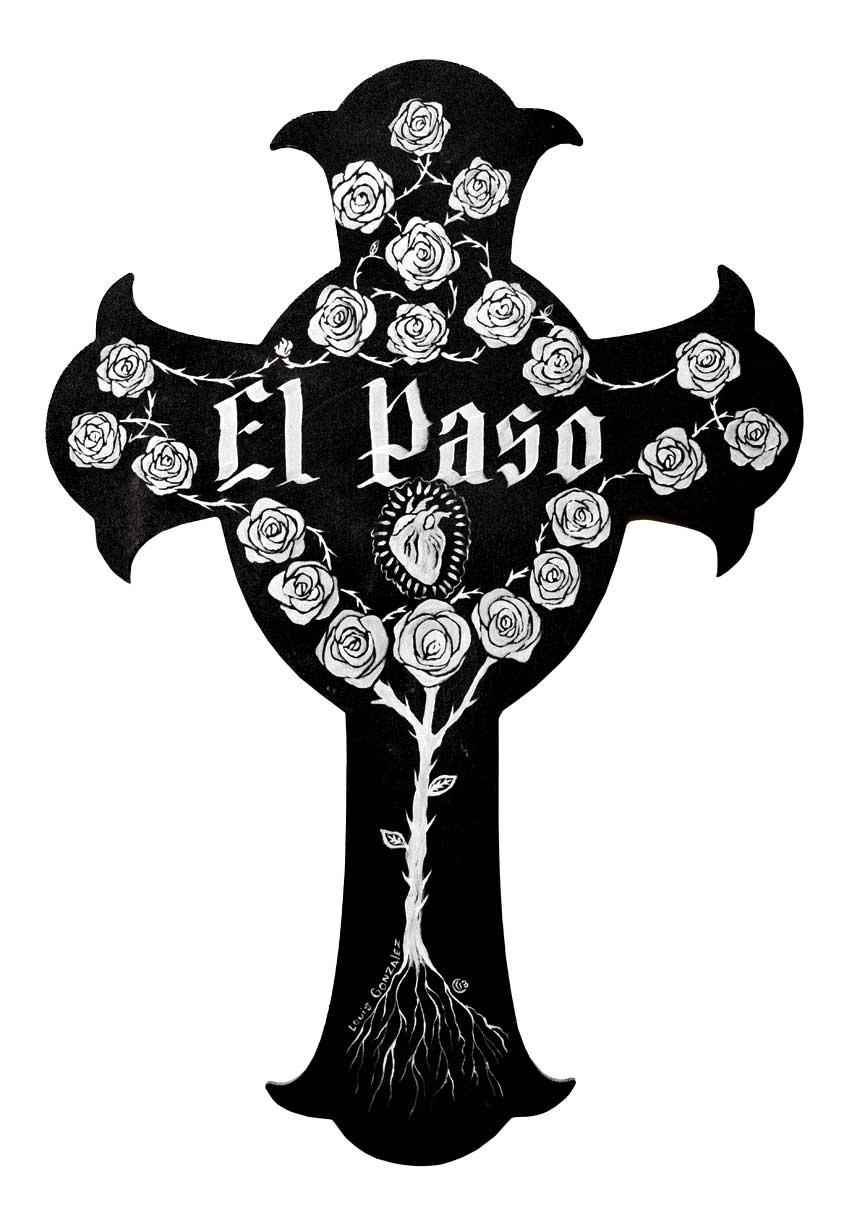
Phoenix painter, ceramicist and muralist Joe Ray has numerous pieces displayed in the home’s primary bedroom, many of which are hearts, one of Ray’s signature motifs. It was through his relationship with Jose that Ray was commissioned to transform his painting, “Esperanza,” into a bronze statuette for the Virginia E. Cardenas Arts Advocate Award for Xico’s annual gala. “This project was an honor to be part of,” Ray reflects. “I worked with a local caster to create a mold for 12 statues. That was 11 years ago. We have one left to be given out at next year’s event, and I was recently asked to do 10 more, which will be awarded over the next decade.” Of Jose’s collection, he says, “It is like an amazing museum. There’s this great vibe of optimism and positive energy that can be felt in the space. But the true beauty is the diversity of artists and mediums that tell the story of the Chicano and Latino experience.”
Jose recalls growing up with no artistic influences in a rough section of North Las Vegas.“We had pictures of the Pope and JFK,” he says. “There was also a lot of sacred heart imagery. I was never exposed to art and had no creative ability.” Those who know him and have seen the evolution of his collection feel differently. “There is so much innovation, from the way the work is hung and grouped to the pieces he selects and his choices in framing,” Ray notes. “It is an art unto itself.”
Garcia feels fortunate for the time spent with Jose. “Everyone admires the love he had for his wife. They were always together, and it was so beautiful to see. They both loved art. She inspired everything in his collection, which is an homage to her devout faith and Mexican heritage.”