


Fab 4: Rooted in Design
Elevate your interiors with statement-making indoor trees that combine architectural form and lush foliage.
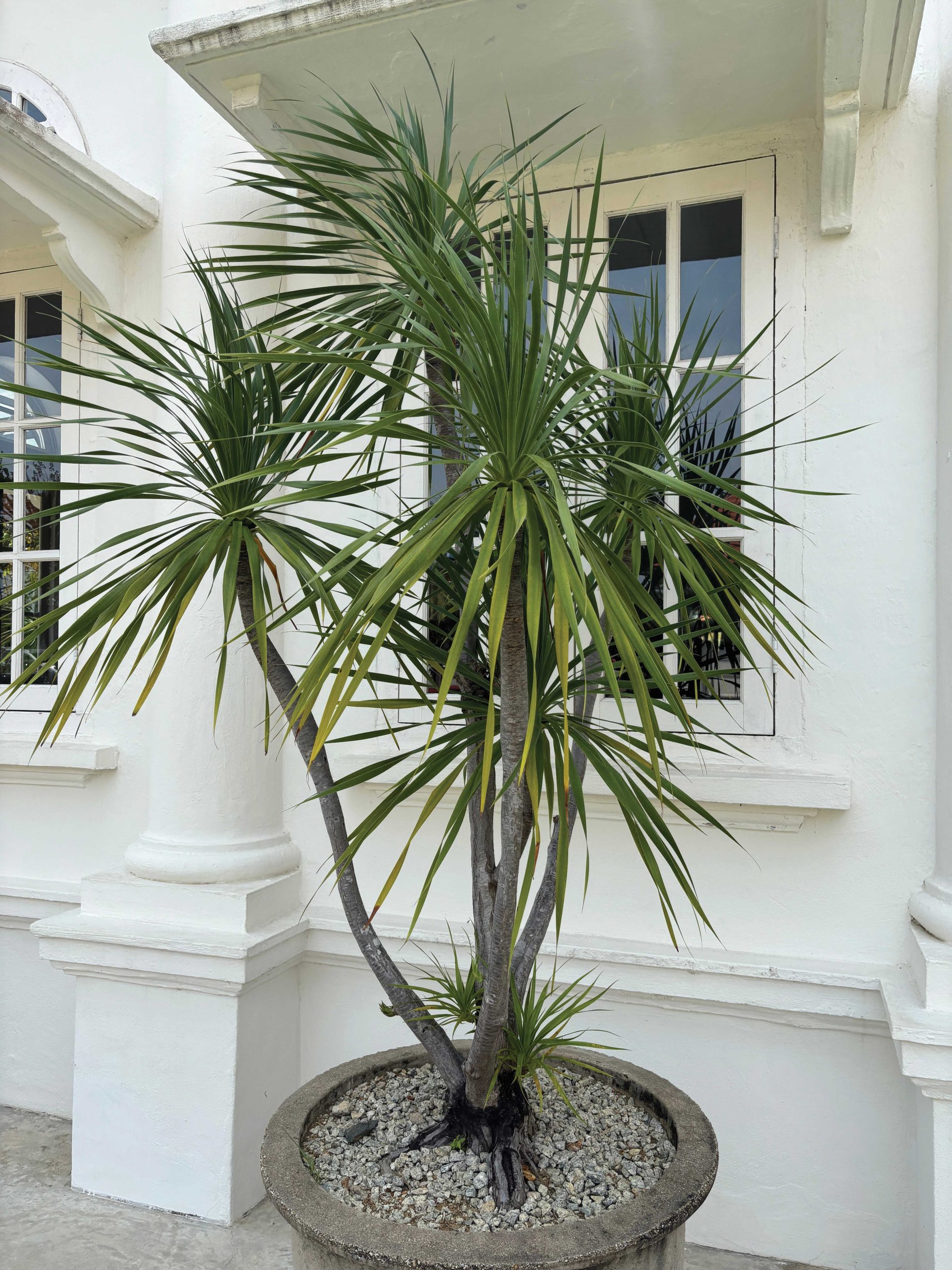
Dracaena Marginata ‘Freestyle’
Also known as Madagascar dragon tree, the ‘Freestyle’ moniker refers to its twisted cane trunks, rather than the single straight stem found in other dracaena varieties. Easy to maintain and beginner- friendly, it thrives in bright, indirect light, but also adapts to lower light, though slower growing.
WHY WE LIKE IT: Although it does bloom when planted outdoors, ‘Freestyle’ is prized primarily for its twisted, architectural foliage and cane structure rather than its flowers. In indoor settings, blooming is uncommon, so it is generally grown as a foliage plant. Red leaf margins atop its twisted stems enhances its aesthetic appeal.
- Evergreen perennial
- White; summer
- 3′-6’H by 2′-3’W
- Well-drained potting soil
- Zones 10-12
- Bright, indirect light
- Low to medium water; low maintenance
Ficus Audrey
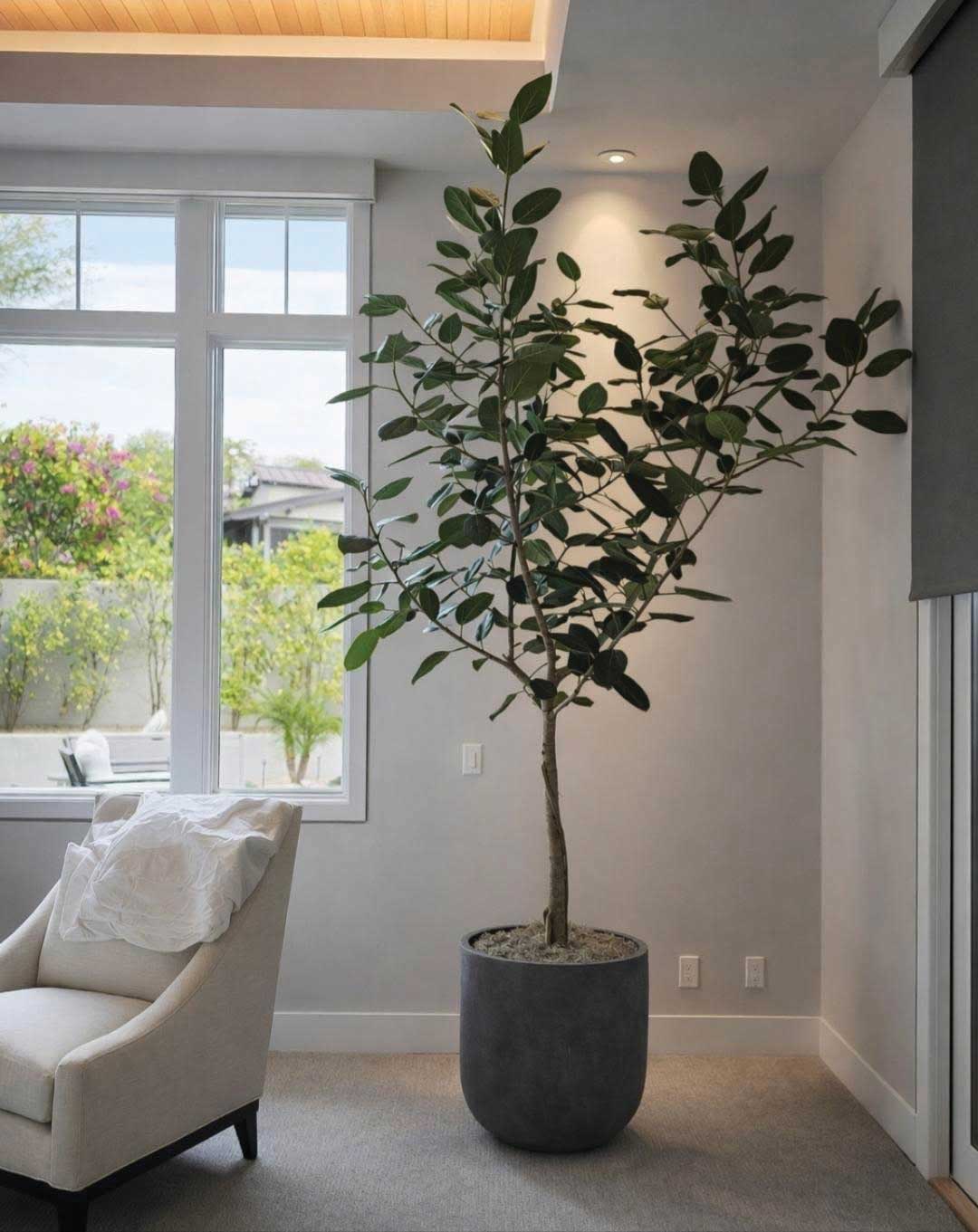
Native to India, Ficus Audrey is often promoted as an easier-care alternative to the popular fiddle leaf fig, with a more forgiving nature regarding watering and humidity fluctuations. Keep soil moist, but never soggy. Like other ficus, Audrey’s milky latex sap is mildly toxic to people and pets if ingested.
WHY WE LIKE IT: Audrey rarely flowers when grown indoors, but even outdoors, flowers are inconspicuous and hidden inside fig-like structures. It features soft, velvety green oval-shaped leaves with cream-colored veining and smooth, pale bark on a single trunk. It makes a perfect statement piece for living rooms or corners.
- Evergreen perennial
- Greenish; summer
- 5′-10’H by 2′-4’W
- Well-drained potting soil
- Zones 10-12
- Bright, indirect light
- Medium water; medium maintenance
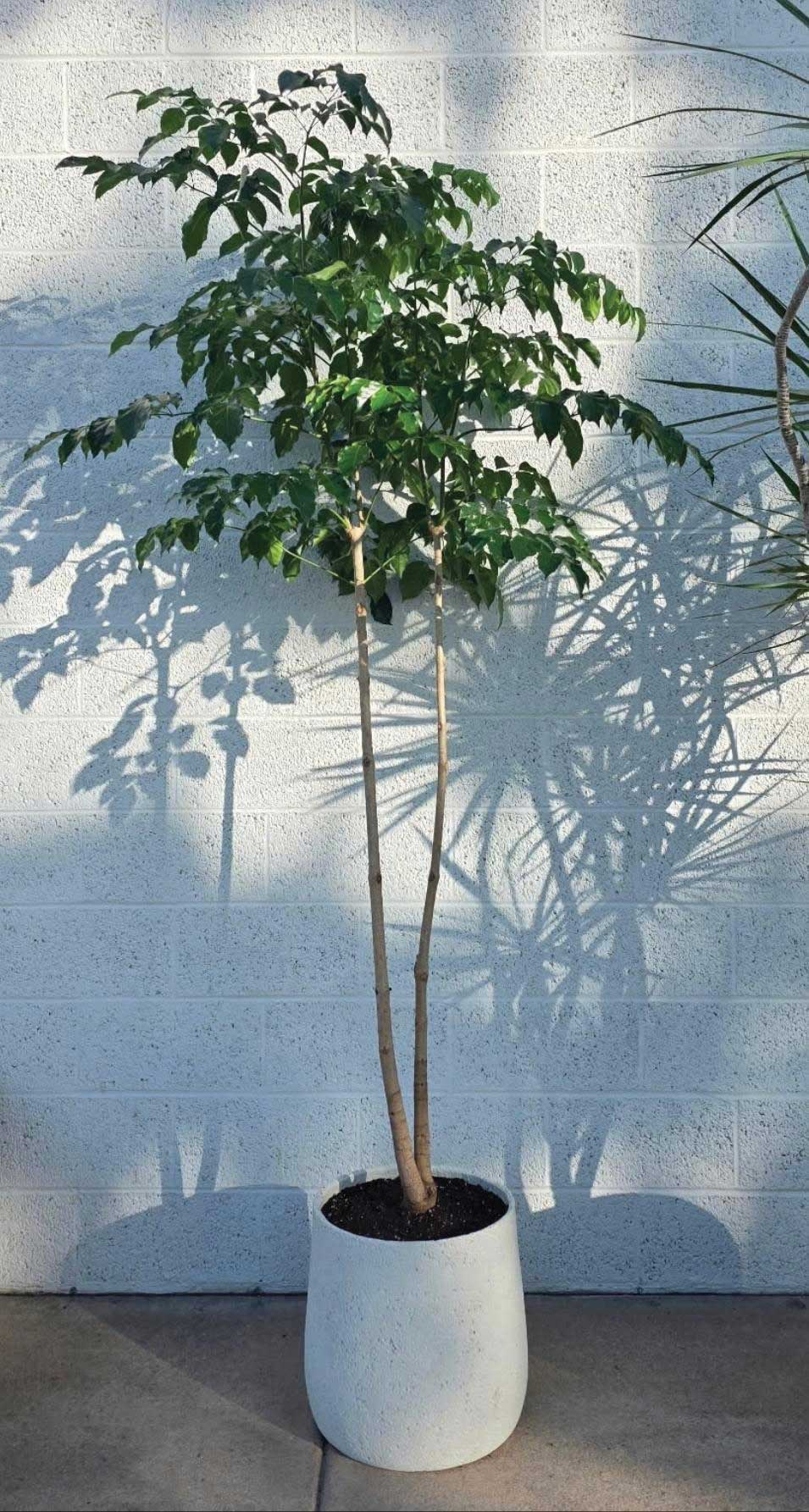
China Doll Tree
Native to subtropical areas of southern China and Taiwan, this tree’s soil should be kept moist, but not soggy. Pruned as needed to maintain its graceful shape and keep in draft-free areas between 65 and 75 degrees Fahrenheit. Repotting is rarely needed, as it prefers to remain root-bound.
Why We Like It: China Doll is prized primarily for its glossy, finely divided foliage and compact tree-like structure rather than its flowers, making it a popular houseplant. Indoor blooms are rare and its ornamental value comes almost entirely from its lush green leaves, adding sophistication and warmth to indoor spaces.
- Evergreen perennial
- White to yellow; summer
- 4′-6’H by 2′-4’W
- Well-drained potting soil
- Zones 10-12
- Bright, indirect light
- Medium water; medium maintenance
Ponytail Palm
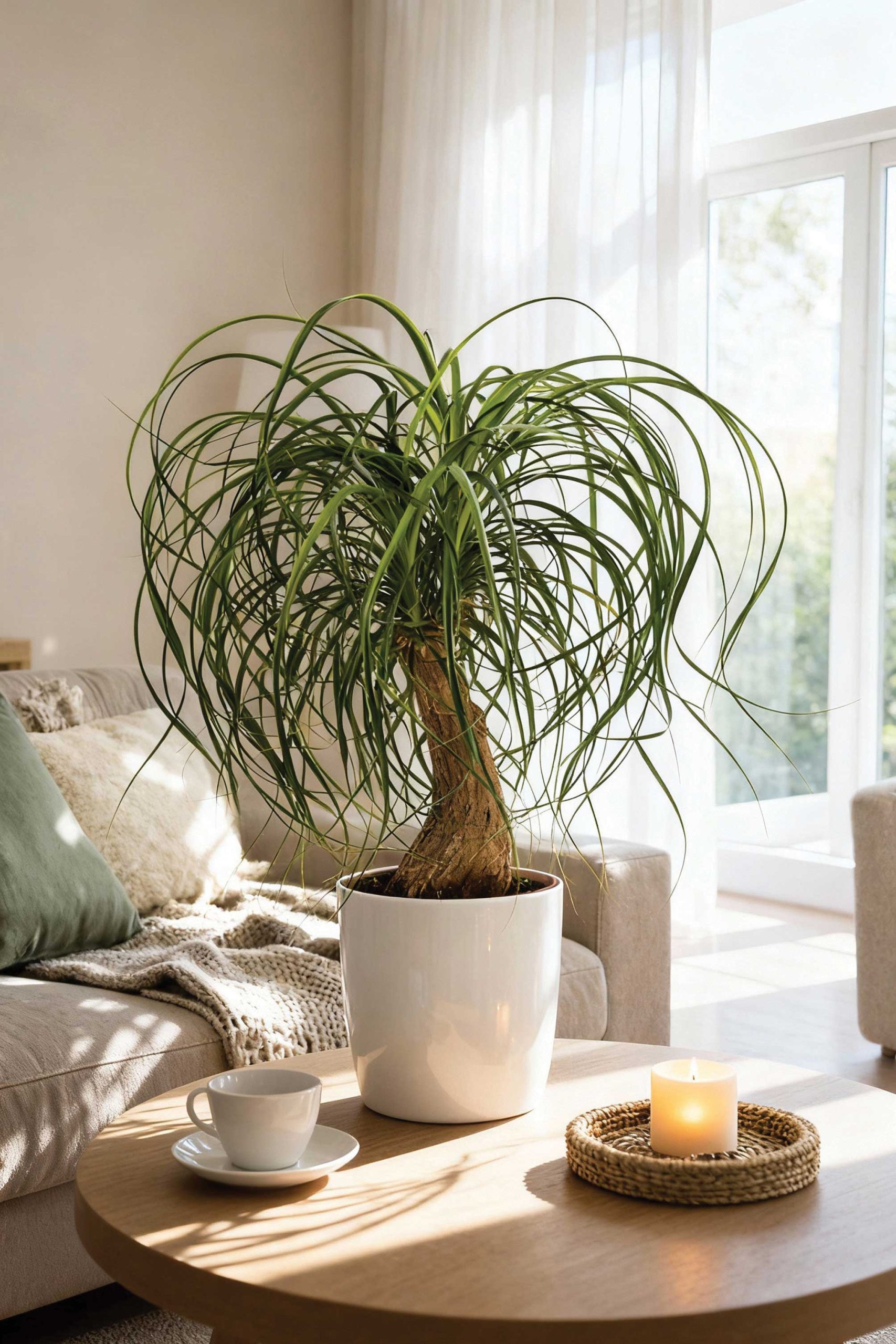
Native to eastern Mexico, the ponytail palm is actually a succulent, not a palm, and stores water in its bulbous trunk, allowing it to go weeks without watering. These slow growers can reach up to 30 feet tall when grown outdoors but top out around four feet indoors. Blooms are rare indoors and only occur outdoors at full maturity.
Why We Like it: The ponytail palm is one of the easiest indoor tree-form plants to grow. Prized for its bulbous, sculptural trunk and long, cascading leaves, the ponytail resembles an oversized bonsai specimen with a desert-inspired aesthetic, ideal for Southwest interiors.
- Succulent perennial
- Cream; spring
- 3′-6’H by 2′-4’W
- Well-drained potting soil
- Zones 9-11
- Bright, direct light
- Low water; low maintenance