


John Henry Waddell’s Sculptures Find New Life at Sedona’s Tlaquepaque
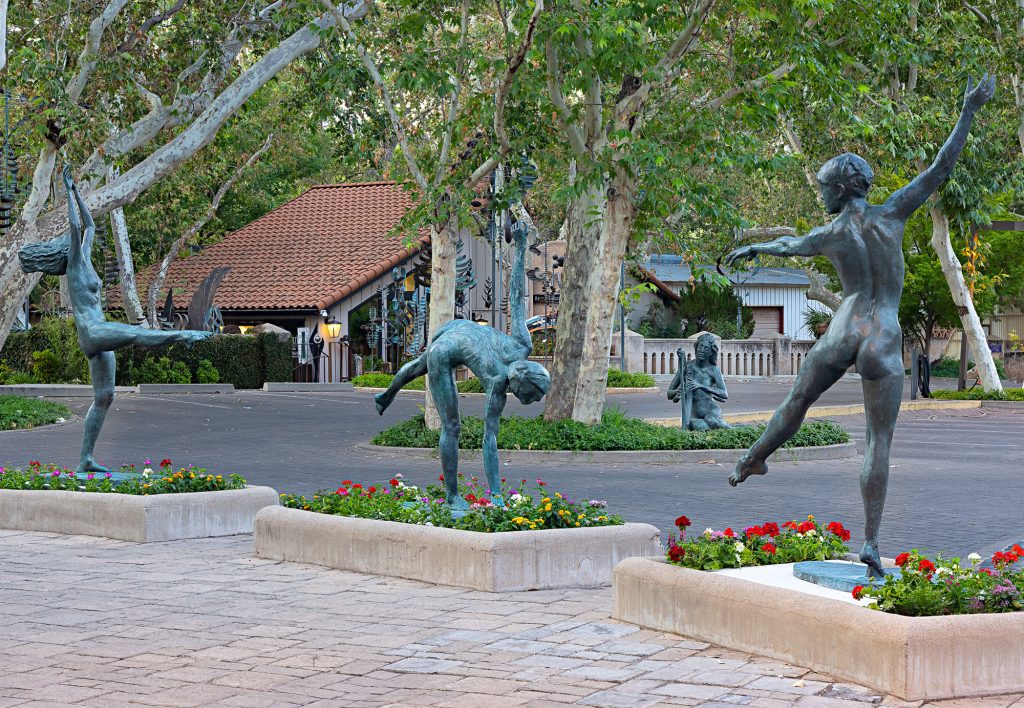
John Henry Waddell first displayed the bronze work “Martha” in Sedona about 50 years ago, between two sycamore trees at the entrance to the El Prado Gallery at Tlaquepaque in Sedona. Now, 16 of the artist’s sculptures are on exhibition throughout the arts and shopping area as part of “Walk Into Beauty, The John Henry Waddell Sculpture Walk.”
Waddell, who passed away in Verde Valley in 2019, was a prolific painter, sculptor and educator. He was best known for his life-size, expressive, kinetic nude sculptures that can be seen around Phoenix and beyond.
Waddell’s daughter, Amy, says people who see the works often try to mirror the poses. “I love that, because it’s art that’s inspiring some action,” she says. To mark the exhibition, festivities are planned from Nov. 7-9, including a special dance performance by Sedona Dance Project and a screening of the documentary “Rising,” about Waddell and his work of the same name.
We caught up with Amy, who is a writer, producer and director, about this latest exhibition and the legacy of her father.
Sculpting a Legacy
Your father first exhibited some of his sculptures at Tlaquepaque 50 years ago. Now some of his works are returning.
It’s wonderful to see my father’s works standing under those beautiful sycamore trees that the developer (and founder of Tlaquepaque) Abe Miller promised to shepherd into the future when he purchased the land. Wendy Lippman, the current owner, is the shepherd of the sycamore trees now, and the sculptures are beneath them and around them, and it’s very peaceful and beautiful.
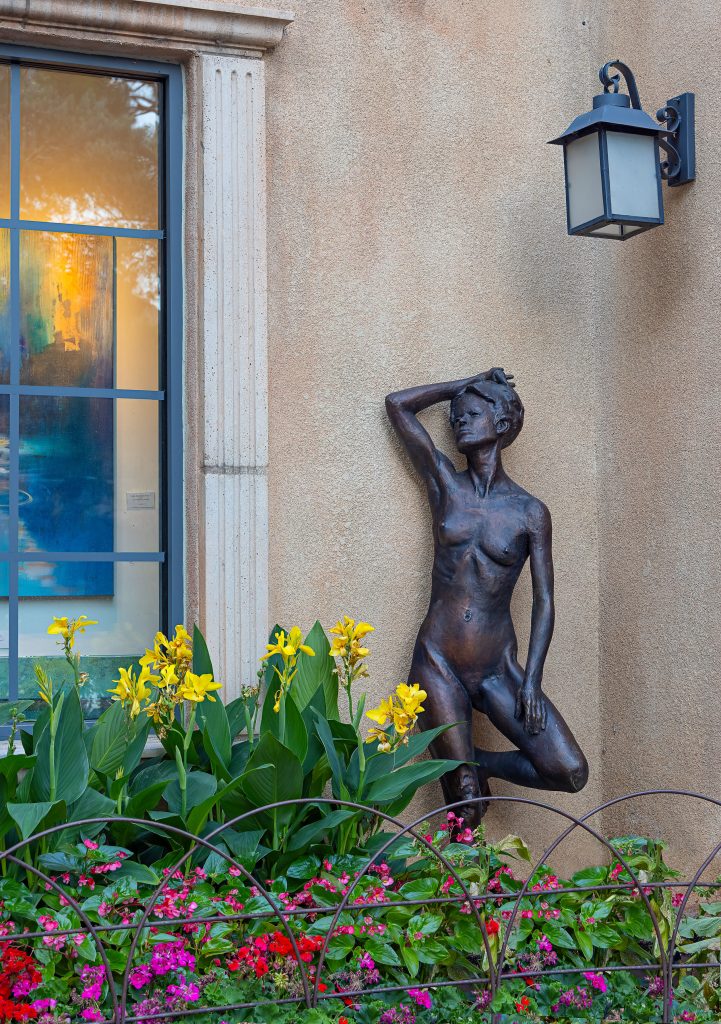
“Meta” by John Henry Waddell. Photo by Derek von Briesen 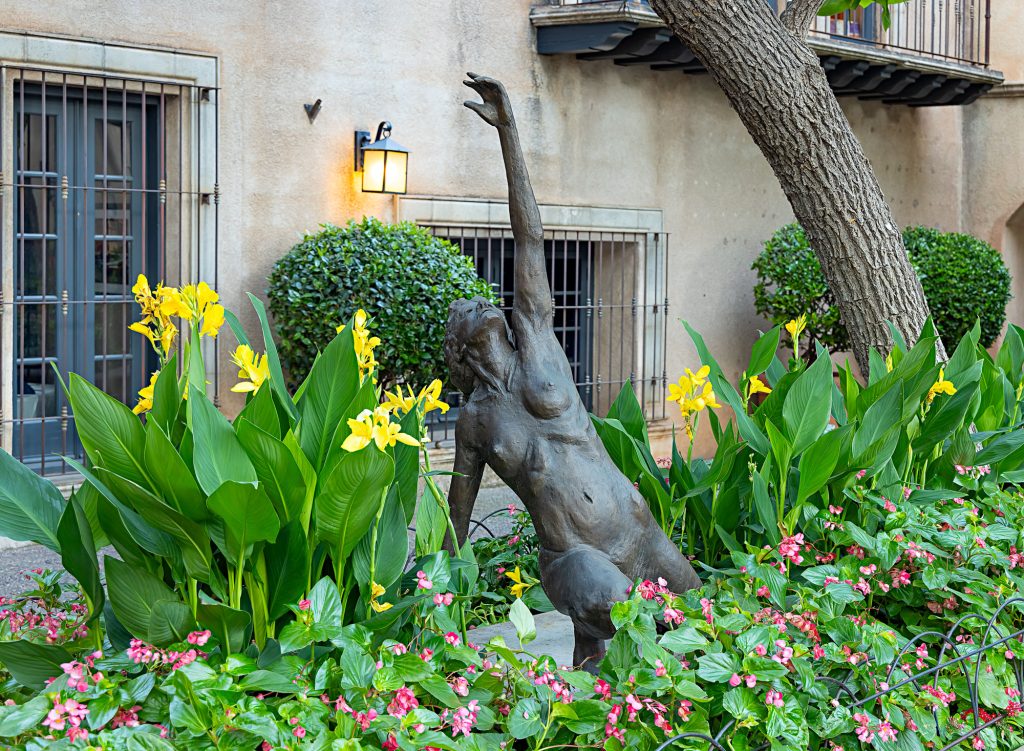
“Aspiration” by John Henry Waddell. Photo by Derek von Briesen 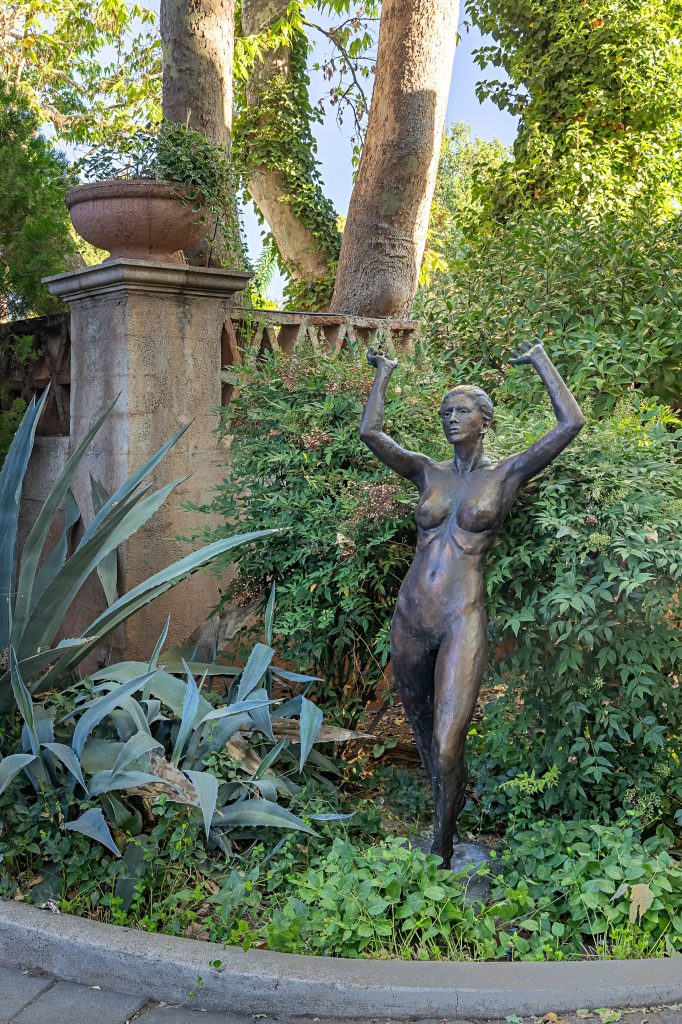
“Atlas” by John Henry Waddell. Photo by Derek von Briesen
Tell us about some of the pieces that will be on exhibition.
There’s a very nice bas-relief, called “Dancer in Motion.” The woman who posed for that was the prima ballerina of the dance company at the time, the Phoenix Ballet Company, I believe. It’s a dancer going through a series of motions. It’s nice to see that one up.
There’s one female “Atlas” figure (pictured above). I haven’t ever seen Atlas portrayed as a woman, but in this case, it’s a long, lithe, strong woman with her arms raised, as if, you know, holding up the world.
There’s a “Mother & Child” piece, and that one is behind the Pumphouse Station restaurant. This is a woman whose child is sitting on one of her knees. She’s sitting cross-legged, and the child’s hand is under her chin, sort of holding her chin up, so she’s looking toward the future, a very proud female figure.
My dad spent months on each sculpture. He didn’t work from photographs. Each model would come and stay with my mom and dad, and they would get to know them well. While sculpting, he would really infuse that piece with the essence of that person, so it goes beyond just the form and figure.
I was just at the Rodin Museum in Paris. His work is masterful, strong and poetic. My dad’s work takes it further, with a lot of movement in the pieces.
Do you know how your dad selected his subjects for his work?
Models came from all over. It could be a friend. Sometimes, when we had students, they would model.
In 1963, there was a KKK bombing in Birmingham, Alabama, and four little girls were killed. And when my dad heard about that tragedy, he was living in Mexico with my family. He came right back. He started to sculpt, and those models came to him. They wanted to be part of that piece (which was titled “That Which Might Have Been”).
When he did “Dance,” which is in front of the Herberger, he was searching out very specifically classical ballet dancers, although my mom (Ruth Holland Waddell) is one of those figures. She was not a classical dancer, but it’s a beautiful piece. I think more than anything, if an individual struck him as interesting, he might ask them to model. These friendships with my parents lasted their lifetime.

Tell me about the conversations that led to this new exhibition.
I approached Wendy Lippman, the owner of Tlaquepaque, last October at the Humane Society of Sedona’s Howl-o-Ween event. I asked, ‘Would you be interested in coming out and looking at the work at the studio? Because I would really love to have a piece at Tlaquepaque.’
She was very enthusiastic and supportive about championing of the work. When I asked again if she would consider having a piece at Tlaquepaque, she said, I’ll take all of them.
That started this process. Wendy’s father had been a collector, so she has a profound knowledge of art, furniture and architecture.
What do you think your parents would think about these pieces being there now?
He loved it when people interacted with and appreciated the work, so I am sure they would be very happy.
Your father was such a prolific creator. How was he so productive?
He was just a natural-born artist. He took classes in Chicago when he was 7, and he was teaching adults by the time he was 16.
He saw the world through artists’ eyes. Pretty much any medium he touched, he was able to create that would touch people. He would say to me, it’s important as an artist to have ego strength, meaning you must believe in your work and have drive, whether people love our work or hate it. It’s a very disciplined life as an artist, where you’re on your own, self-motivating.
What do you hope viewers take away from this exhibit?
My father was a humanitarian artist. I hope people find something they can emotionally relate to. I also want to encourage people to look further into his work and story, because it isn’t every day that you have artists who persevered and kept sculpting and painting until age 97? What drives those people to do that?
At a time when we’re so divided, art asks us to look at a problem and communicate differently.