


How to Help Your Plants Thrive Through the Summer Heat
Send your gardening questions to info@azplantlady.com
Hello Friends,
Here in the desert, we are transitioning to the hottest and driest time of the year, one of the two summer seasons we experience here in the Southwest. The first part is called “dry summer,” which begins in May and lasts through June. During this period, we experience triple-digit temperatures and low humidity, which put a lot of stress on plants. Our “wet summer” period begins in July and runs through September and is signified by higher humidity levels and sporadic monsoonal rains. Dry conditions can be challenging for plants, but read on for heat-resilience strategies you can implement around your landscape.
While we are hibernating indoors in air-conditioned comfort, we can still enjoy beautiful garden views from our windows. Thankfully, plants’ maintenance needs lessen this hot time of year, but some tasks are important for their health.
I encourage you to explore these heat-proof strategies, which will help lessen the intensity of our hotter summers by creating a hardier outdoor space.
Noelle, aka “AZ Plant Lady”
Summer Garden Survival Guide
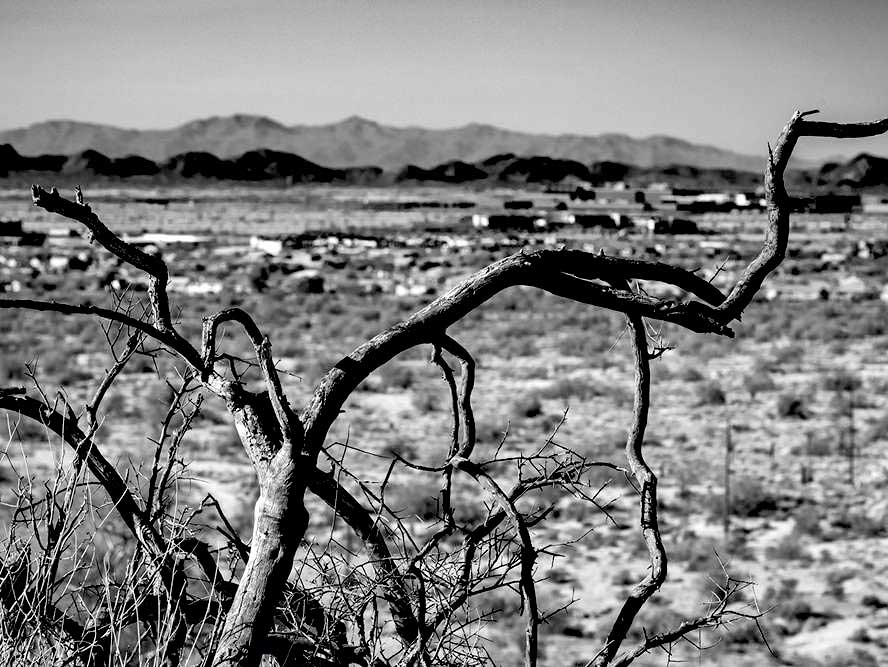
Stepping outside this time of year, you will be greeted with a dry blast of hot air that will have you scurrying back into air-conditioned comfort. However, the plants in your landscape don’t have that option since they can’t escape the heat. When temperatures edge toward triple digits, you may notice signs of heat stress in your garden, such as yellowing foliage, fewer blooms, sunburn or wilting leaves. In recent years, our hotter summers have resulted in increased heat stress. The good news is that you can help them through the summer heat with the following strategies—including some that you can implement right away.
Don’t prune plants in the summer: Pruning removes outer branches that help shade a plant’s interior from the sun. Trimming also increases the amount of water they need while stimulating new growth, which is susceptible to sunburn. Wait until temperatures cool into the 80s in the fall before pruning again. Consider allowing shrubs and ground covers to grow to their mature size, which helps shade more of the ground and their roots, creating a healthier environment for them to grow.
Pause feeding plants: Fertilizing plants stimulates new growth, and it’s tough for shrubs, vines and perennials to grow in summer since their resources are devoted to managing the heat. Fertilizers will redirect them toward growth, which can have a detrimental effect on the plant’s ability to manage the effects of heat. Allow them to have a summer rest period.
Use shade cloth to protect plants that show signs of heat stress: Not all plants can handle hot temperatures without showing signs of heat stress—particularly young plants. Shade cloth is an excellent way to offer relief from the sun and is rated by the percentage of protection it provides. Available in black, green or tan in rolls and folded sheets, you can cut the cloth to the size you need. For shrubs, vines and ground covers, use 50% shade cloth and 30% for cacti and other succulents. Place directly over the plant (for columnar cacti, wrap the sides, not the top) and do not remove until mid-fall, when temperatures dip into the upper 80s.
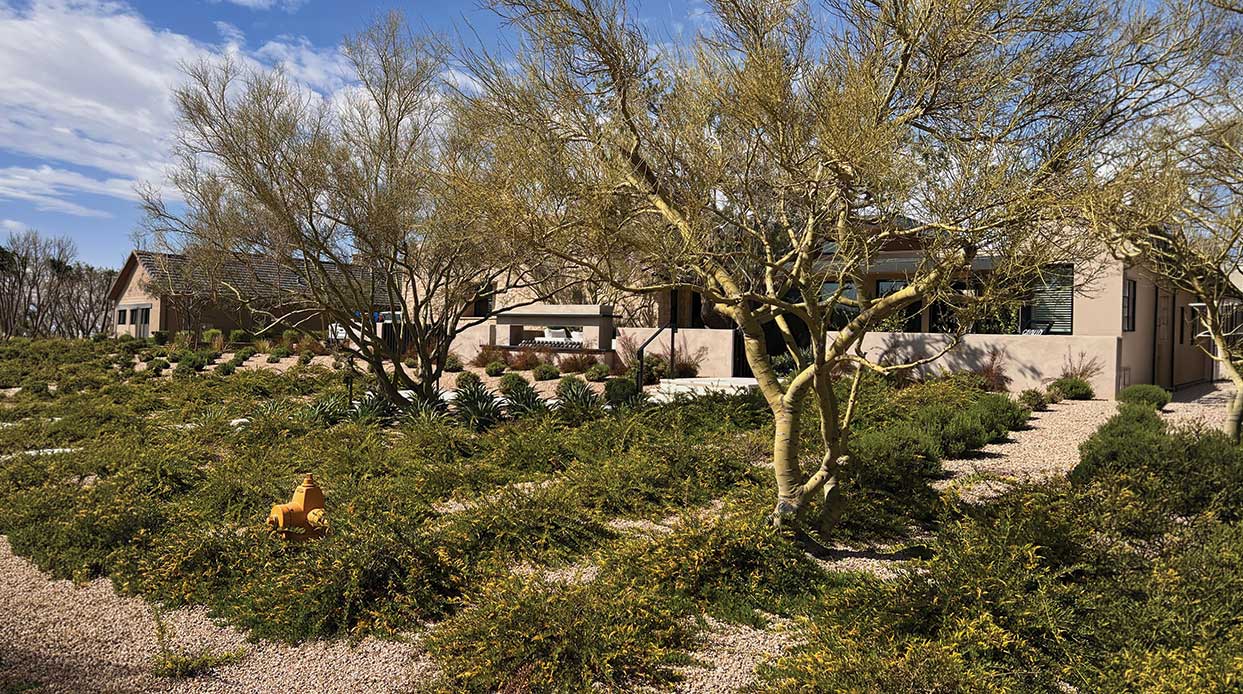
Add mulch around plants: The landscape rock or gravel that covers many yards is an inorganic mulch that re-radiates heat, making it hotter for plants. If signs of heat stress are observed, consider replacing the rock with organic mulch, such as bark chips, which don’t heat up. You can use mulch throughout the entire landscape or in smaller spaces. In communities where gravel is required, move the rock away a few feet from the base of plants, and add organic mulch.
Ensure plants are watered to the proper depth: One common mistake people make is not irrigating their plants deeply enough. This results in the soil drying out quickly, leaving behind salts as moisture evaporates, leaving a white powdery substance on the surface. Deep watering will encourage roots to grow farther down into the ground, where it is cooler and the soil takes longer to dry out, which results in a reduced need for watering. This practice decreases heat stress for plants since they have a larger, more robust root system. Use a soil probe (or piece of rebar) to determine how far the water has permeated after you irrigate, and adjust until you reach the recommended depth.
- Trees: 2 to 3 feet
- Shrubs: 1.5 to 2 feet
- Ground covers/vines: 1 foot
- Cacti/succulents: 8 to 12 inches
- Lawn: 6 inches
Reduce reflected heat from walls: Hard surfaces around landscapes, such as concrete block walls, absorb heat and reflect it back on plants, making it even hotter near those areas. To decrease radiated heat, choose large shrubs such as bougainvillea (Bougainvillea spp.), Texas sage (Leucophyllum spp.) or yellow bells (Tecoma stans) in front of walls that face south or west, which are the hottest exposures. Allow these plants to grow to their mature size to provide more coverage and prevent them from heating up.
Create more shade: Hard surfaces, such as concrete, pavers, walls, driveways and sidewalks, absorb heat and reflect it outward toward plants. Adding trees for shade is the best strategy for reducing hot temperatures around your home. During the day, the shade from trees will move along with the sun, so if possible, place trees where they will provide relief from the intense heat of the afternoon . If you don’t have room for a large tree, add a smaller one, such as desert willow (Chilopsis linearis) or Texas olive (Cordia boissieri).
Tall shrubs, such as hop bush (Dodonaea viscosa) and orange bells (Tecoma x ‘Orange Jubilee’) can provide shade in side yards that cannot accommodate trees.
Observe what plants are doing well in summer with no protection: During the height of summer, note what plants are thriving, and look for those showing signs of heat stress.
Take your observations beyond your own yard—to the neighborhood, parking lots, local businesses’ landscaping and road medians. Photograph any heat-tolerant plants, and ask your local nursery professional to identify them. In the fall, replace the heat-stressed plants in your landscape with those proven heat-busters. Here are some of my favorite heat-proof plants in my garden:
- Tropical agave (Agave desmettiana)
- Bougainvillea (Bougainvillea spp.)
- ‘Outback Sunrise’ emu (Eremophila glabra ‘Mingenew Gold’)
- Ocotillo (Fouquieria splendens)
- ‘Rio Bravo’ Texas sage (Leucophyllum langmaniae ‘Rio Bravo’)
- Pink muhly grass (Muhlenbergia capillaris)
- Baja ruellia (Ruellia peninsularis)
- ‘Sparky’ tecoma (Tecoma ‘Sparky’)
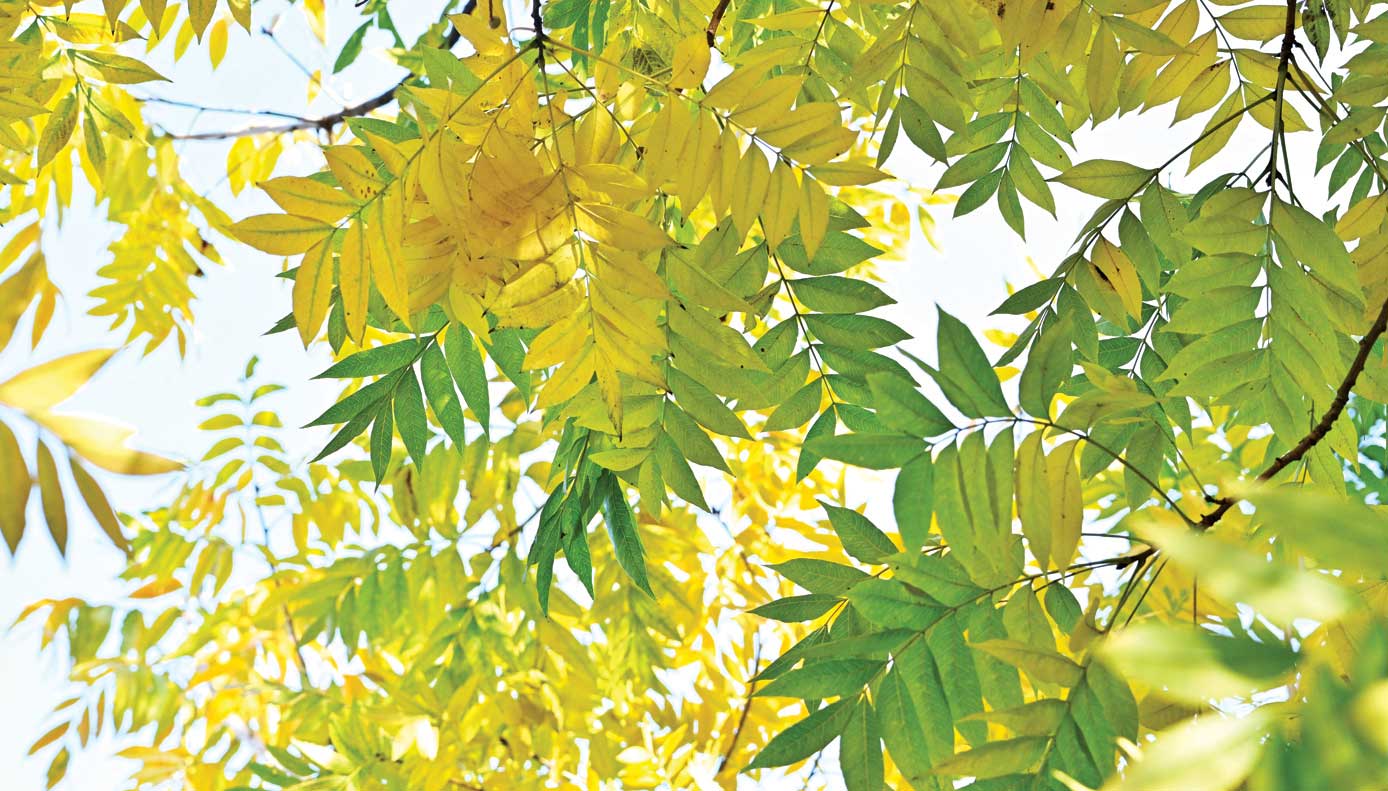
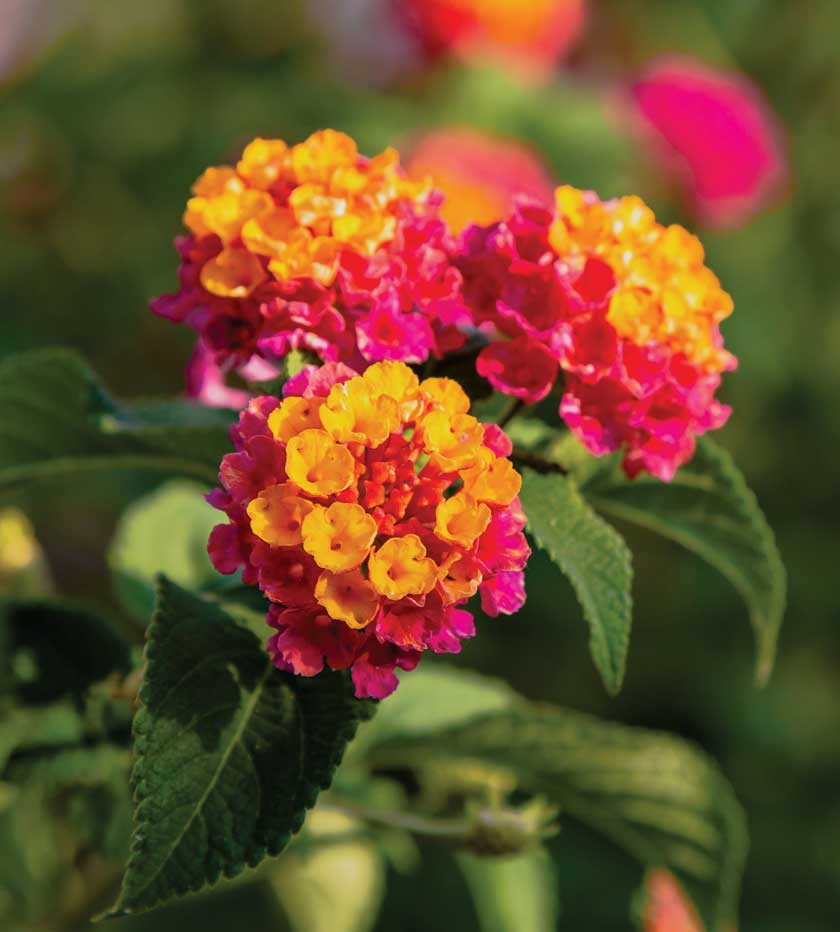
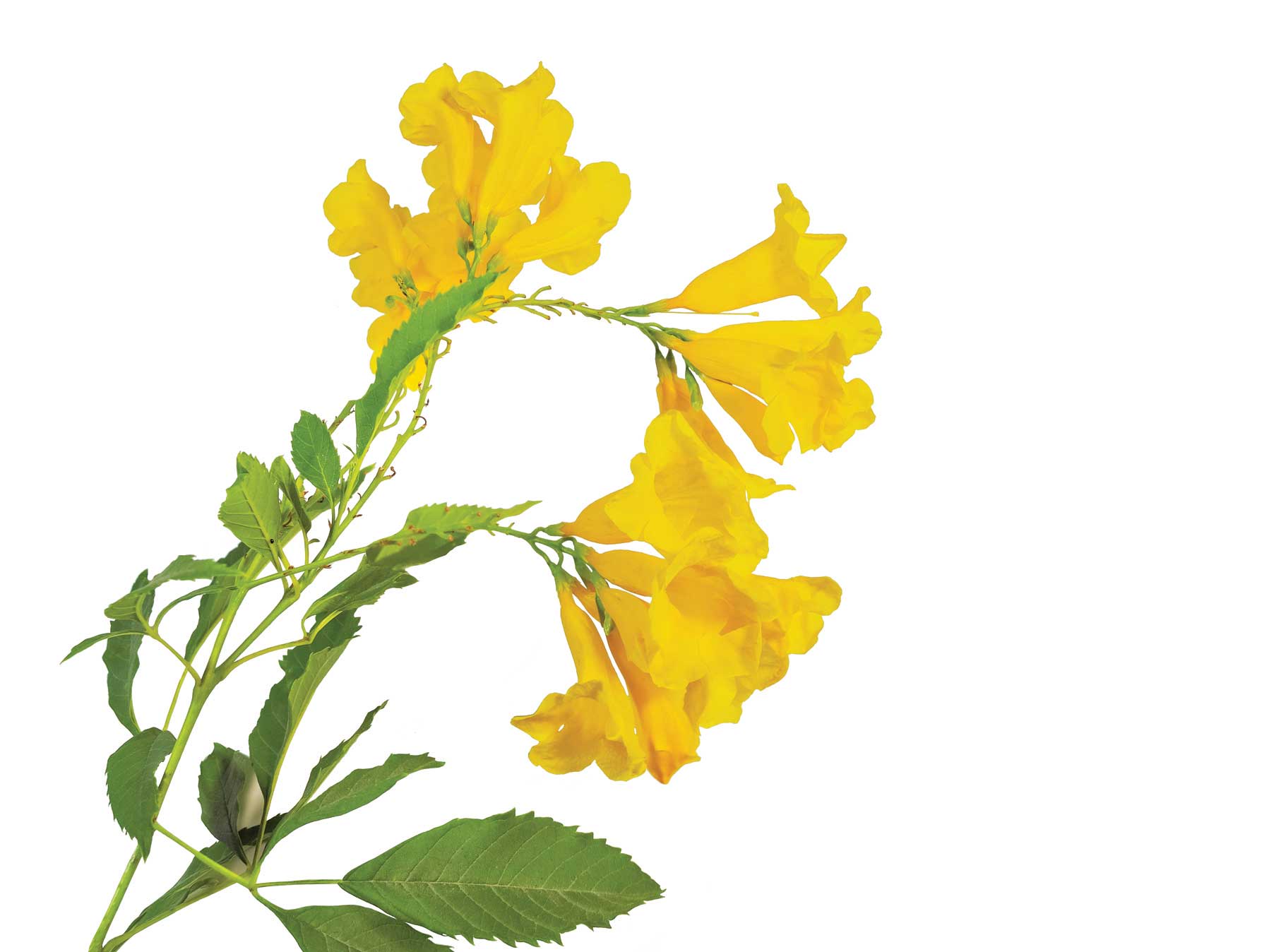
We recently moved and have made changes to the landscape around our home. Last fall, I removed several plants and added a Chinese pistache (Pistacia chinensis) tree, lantana (Lantana spp.) and yellow bells (Tecoma stans) shrubs. What do I need to do to help them survive their first summer?
There are two things important to help your new plants through this hot time of year. The first is to water them more frequently, since they have a smaller root system and can’t absorb as much water as established plants. Trees should be on their own irrigation line, separate from other plants, as they require less frequent watering but need longer run times to water deeply, about 3 feet in depth. You can find a watering schedule for new plants at amwua.org/landscaping-with-style/maintain/watering-schedules. If your lantana and yellow bells shrubs are in full sun for most of the day, cover them with 50% shade cloth until mid-fall to help provide some relief from the heat.
We are undergoing a backyard renovation with new hardscape and plants. The contractor has completed the hardscape and now wants to place trees, shrubs and ground covers. Can this be safely done now that the summer heat is just beginning?
New plants are especially susceptible to heat stress, so installing them at this time of year isn’t recommended. A healthy root system is crucial for absorbing the water they need to survive triple-digit heat, and it takes a while for those roots to grow. Summer is the worst time of year to put in new plants. Wait until fall, when temperatures dip into the 80s, which will allow the plants time to grow and increase their survivability the following summer.
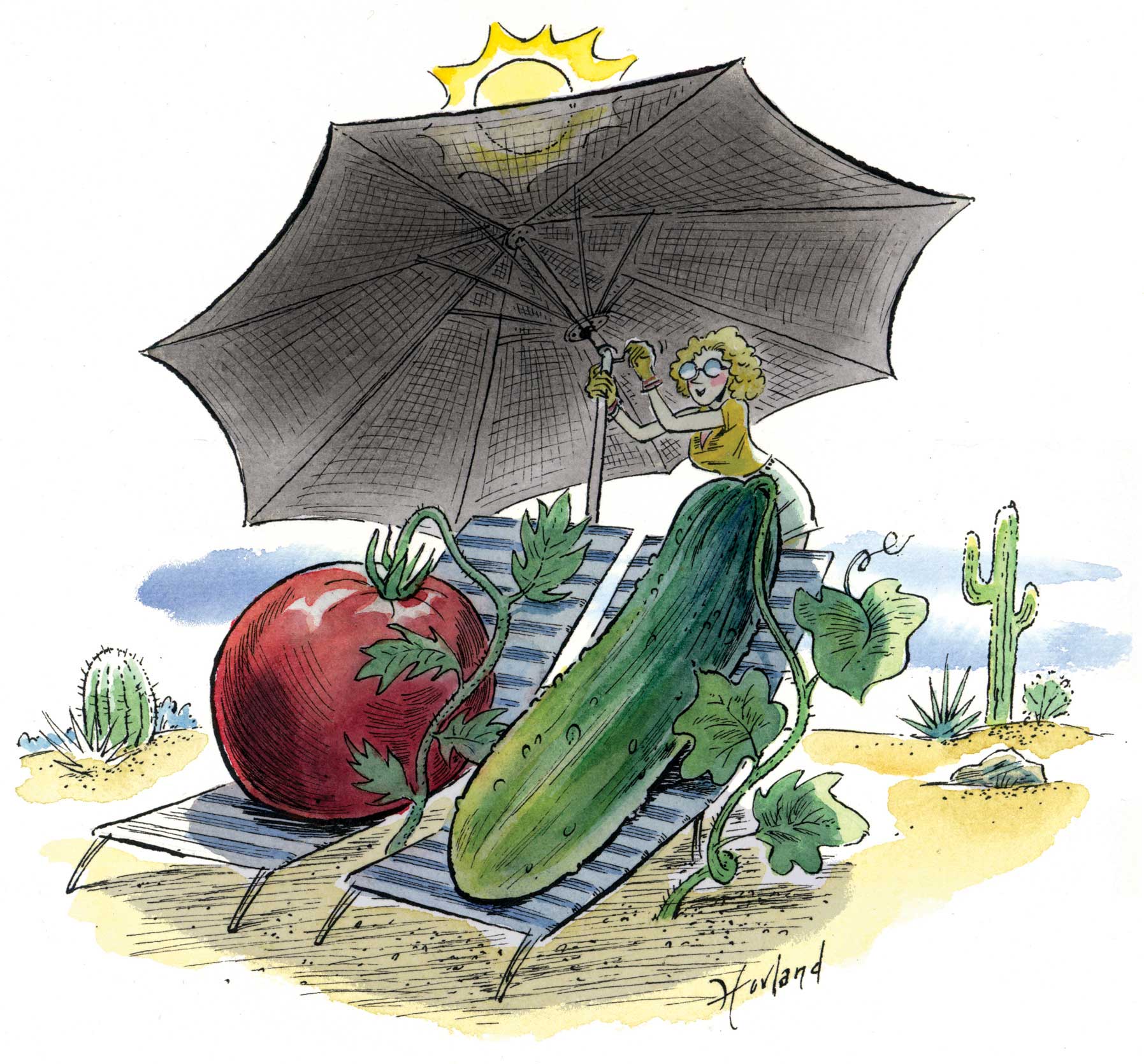
I am growing vegetables in the desert climate for the first time. My cucumbers and tomatoes did well this spring, but now their leaves are curling in and appear wilted, and the fruit has yellow areas on it. The soil is moist, so the issue is not overwatering. What am I doing wrong?
While you can grow vegetables throughout the year in the desert, our intense summer sun increases the amount of water the plant releases into the atmosphere in a process called “transpiration.” This causes tomato leaves to curl to limit the moisture loss and cucumber leaves to wilt during the heat of the day. Once temperatures get into the 90s, protect your edible garden with 50% shade cloth and leave it on until the weather begins to cool in fall. You can place the cloth directly on the plants or mount it on stakes over the entire garden.
MONTHLY GARDEN TASKS: LOW TO MID-ELEVATIONS
Fertilize palm trees, such as Mediterranean fan (Chamaerops humilis), pygmy (Phoenix roebelenii), queen (Syagrus romanzoffiana) and mule palms (Butiagrus nabonnandii) with an organic palm fertilizer, following package directions. Taller types, such as California and Mexican fan palms, generally don’t need feeding. Citrus trees should be fertilized around Memorial Day. For both types of plants, it is helpful to water well before and after feeding to help the fertilizer move to the roots.
Keep an eye out for spider mites, which flourish in the hot, dry and dusty conditions of early summer. The webs of these tiny insects cause the browning of leaves. To get rid of them, spray affected plants with a hose in the evening every two to three days, which removes the dust the pests cling to and increases the humidity. Avoid using insecticidal soap, neem oil or other sprays, which can burn the foliage when temperatures are 90 degrees and higher.
Fertilize around roses using an organic mulch such as bark chips or straw, which will keep soil temperatures cooler and keep the soil from drying out quickly. Blooms will start to decrease in size and quantity. The desert summer is not roses’ favorite season, so don’t fertilize now, as it will put undue stress on the plants to grow when their resources are managing heat stress. You can cover with 50% shade cloth to shield out some of the intense sun. The main task is ensuring they get enough water—approximately every three days.
High Elevations
Late spring and early summer are great times to add shrubs, ground covers and vines to the garden. Refresh the planting mix in your containers and create eye-catching annual flower combinations by pairing contrasting colors, such as orange and purple blooming plants or blue with yellow. Keep an eye out for aphids on perennials and in an edible garden. Remove them by hand, spray them off with a hose or use insecticidal soap. Wait until any threat of frost is over before adding warm-season fruits and vegetables, including beans, cucumbers, melons, peppers and squash to the edible garden.