


4 Stunning Roses That Thrive In The Desert

These modern varieties are heat-tolerant and feature longer blooming periods, making them well-suited for desert climates.
By Lori A. Johnson
Romantica Ball Gown Rose
(Rosa ‘Romantica Ball Gown’)
- Class: Hybrid Tea
- Medium pink; spring and fall
- 4′-6’H by 2′-3’W
- Well-drained soil
- Zones 6-11
- Full sun
- Medium water; medium maintenance
- Attracts: Bees, birds, butterflies
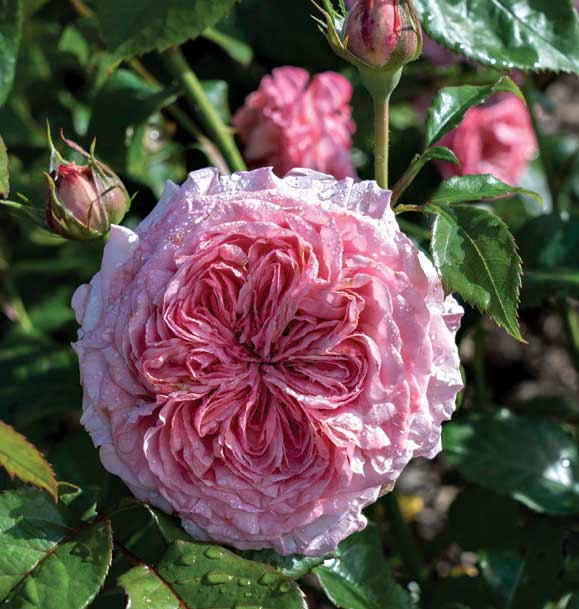
The hybrid tea rose was first introduced in 1867 in France and became synonymous with the long-stemmed roses commonly used in modern floral bouquets. With its dark green, glossy foliage and upright, bushy growth habit, this variety is highly disease-resistant and blooms repeatedly.
Why we like it: Ball Gown’s large, dense pink flowers feature as many as 100 petals each, and its romantic appearance and extended vase life make it ideal for floral arrangements. Its relatively strong fragrance resembles that of a classic sweet rose.
Dream Come True Rose
(Rosa ‘Dream Come True’)
- Class: Grandiflora
- Yellow-to-red; spring and fall
- 4′-6’H by 4′-5’W
- Well-drained soil
- Zones 5-9
- Full sun
- Medium water; medium maintenance
- Attracts: Bees, birds, butterflies

The Grandiflora class of roses is a cross between a floribunda and a hybrid tea and is characterized by large blooms and long stems, making them ideal for use as cut flowers. First introduced in 2008, this medium-to-tall upright and bushy variety featuring matte green foliage is especially disease-resistant.
Why we like it: Dream Come True’s large flowers, up to 5 inches in diameter with a petal count of around 40, are yellow, edged in ruby red, blushing to solid ruby red as they age. Its multicolor display blooms continuously, and the flowers emit a mild tealike fragrance.
Fourth of July Rose
(Rosa ‘Fourth of July’)
- Class: Climber
- Red and white; spring and fall
- 43″-15’H by 26″-6’W
- Well-drained soil
- Zones 5-10
- Full sun
- Medium water; medium maintenance
- Attracts: Bees, birds, butterflies
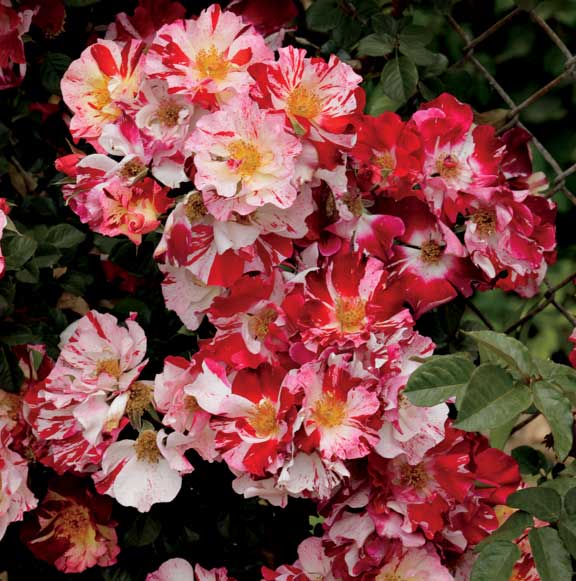
Climbing roses produce long, arching canes that are trained to climb upwards, making them best suited for arbors, fences, pergolas and trellises. First introduced in 1999, this medium-to-large-flowered variety featuring glossy deep-green foliage is especially disease-resistant.
Why we like it: Fourth of July’s patriotic fireworks-inspired, cuplike flowers in striped velvet red and white feature sprays of 4-inch blooms with a petal count of around 15. Exposed stamens make it especially attractive to pollinators. This variety emits a spicy/sweet apple-like fragrance.
Sunbelt Plum Perfect Rose
(Rosa ‘Sunbelt Plum Perfect’)
- Class: Floribunda
- Purple; spring and fall
- 2′-3’H by 1′-2’W
- Well-drained soil
- Zones 5-10
- Full sun
- Medium water; medium maintenance
- Attracts: Bees, birds, butterflies
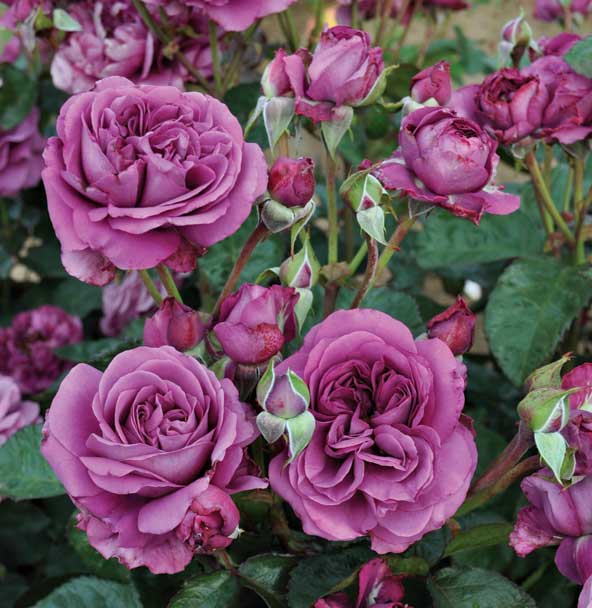
The term floribunda was first coined in the early 20th century and is a cross between a tea rose and a polyantha, with either a single or double bloom type. Floribundas are generally smaller shrubs with an “abundance of flowers,” hence the name. Heat-tolerant Plum Perfect features glossy, green foliage.
Why we like it: Plum Perfect’s medium-sized, intensely plum-colored double-petaled flowers feature around 75 petals each and hold their color from start to finish during their long blooming period. With its smaller growth habit, this rose is ideal for beds, borders and containers.