



Musical Instrument Museum’s Exhibition Highlights ‘Golden Age’ of Violins, Guitars
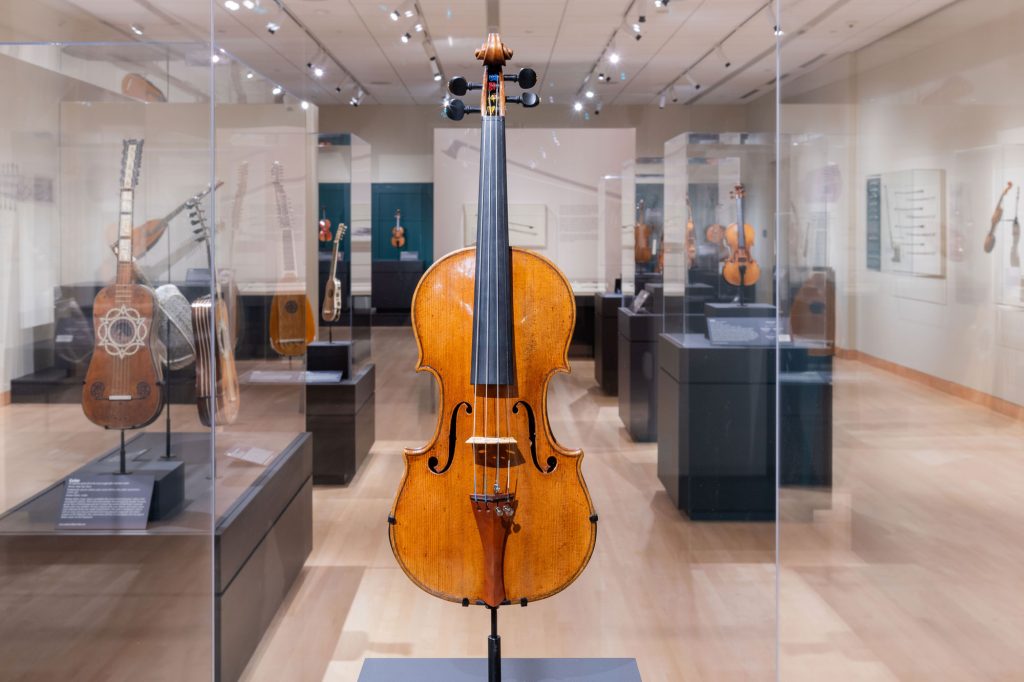
The Musical Instrument Museum’s latest exhibition, “Stradivarius and the Golden Age of Violins and Guitars,” showcases more than 70 string instruments crafted by master artisans from the 16th to 19th centuries. Highlights include a violin by Antonio Stradivari and a newly acquired piece by Andrea Amati, one of the earliest known luthiers. “The exhibition explores the artistry of these influential makers and the connections between violin and guitar craftsmanship, offering guests a chance to see how centuries-old masterpieces inform modern instruments,” says Matthew Zeller, the MIM’s curator for Europe.
We caught up with Zeller about pieces in this latest exhibition, how the craftsmanship of these instruments influences making them today, and more. The exhibition is on display until Sept. 14.
Q&A: New Stradivarius Exhibit at the MIM
Tell us about this exhibition and the types of instruments we will see.
“Stradivarius and the Golden Age of Violins and Guitars” presents an exclusive collection of
extraordinary and sought-after string instruments from iconic European makers. In the exhibition, guests will discover the stunning beauty, superior craftsmanship and enduring excellence of more than 70 violins, guitars, lutes, bows and other string instruments made between the 16th and 19th centuries.
There are some historical examples on display for the first time—tell us about some of the pieces that have come from the MIM’s collection.
MIM is excited to unveil its recent acquisition of a violin made by Andrea Amati in Cremona, Italy, in the 1560s. Amati invented the violin family as we know it today. There are only 23 documented surviving instruments by Amati; it is exciting that one now lives permanently
in Phoenix.

The museum also received some pieces on loan—what are some of those that are on
display?
Some exceptional instruments the museum has on loan include a 1726 violin by Antonio
Stradivari known as the “Tartini,” as well as one of only two known mandolins made by
Stradivari. The mandolin also has its original case, which is truly extraordinary. The case is
decorated with floral-patterned paper on its interior and exquisite leatherwork on its exterior. It
is fantastic.
Do you have a favorite piece from the exhibition?
They are all my favorites! The Tromba marina is particularly cool. It is a bowed instrument with a
single string, but it tricks the brain into perceiving the tone color of a brass instrument, hence its name—trumpet marine.
The chitarra battente by Gioane and Michele Sellas from 1652, with its ivory and ebony back, and beautiful, tiered wedding cake rose inside its sound hole, is both rare and exceptionally beautiful.
And, of course, MIM’s Andrea Amati, one of the violins that started it all.
People will be able to see these works, but will they also be able to hear how they sound?
Yes, absolutely, guests get to hear many of the instruments on display through MIM’s Guideport
technology. The exhibit includes monitors for guests to see and hear these musical instruments in action, bringing the exhibition to life.
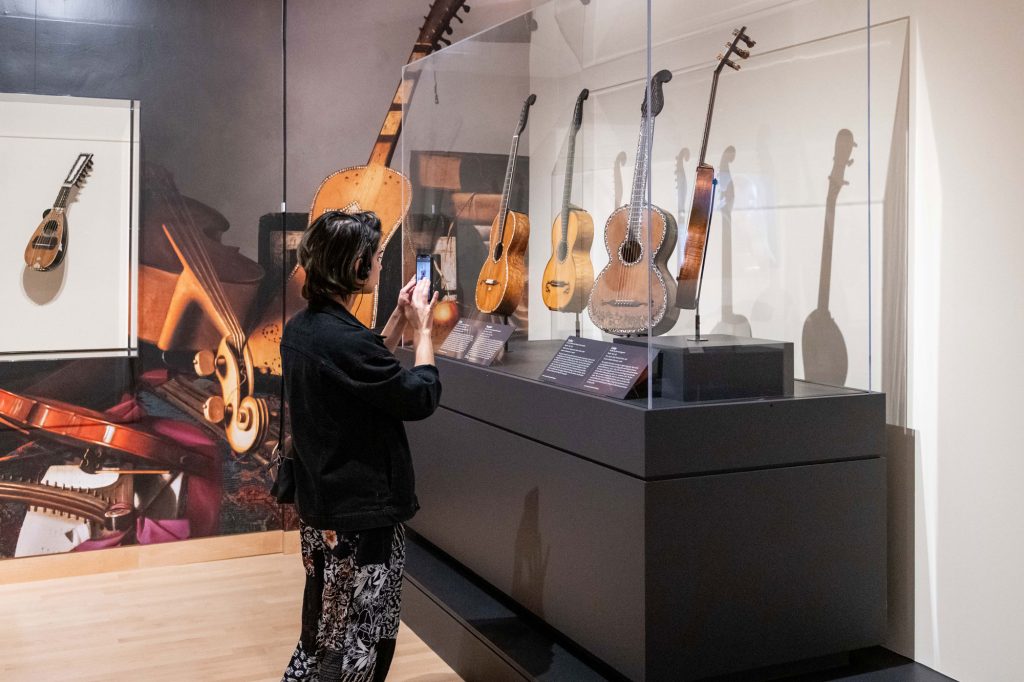
The exhibition shows instruments crafted over three centuries. What are the most notable ways in which making these instruments has evolved?
That is a very broad question that can best be summed up using an example: During the golden
age of Cremonese violin making, from about 1550 to 1750, instrument makers designed their
instruments by scribing their designs on the materials with a compass and straightedge. They understood the principles of creating a finely tuned acoustic machine.
After that knowledge was lost, makers turned to a template method, blindly copying the successful models made by the masters of yesteryear. It is only recently that we have begun to rediscover the secrets of the past.
The exhibition also illustrates the evolution from classical to modern instruments. Tell us about how crafting instruments like violins has impacted how guitars are made.
Today, we associate violins with classical music and guitars with popular music, but throughout
history, the two types of instruments have been much more closely linked. The techniques of
making have overlapped and interested each other, and the music has, too.
For tickets, go to mim.org.