


An Iconic Midcentury Home by a Famed Architect is Safe—For Now

Al Beadle built the “White Gates” house for his family. Today, it is in danger.

The outrage over the White Gates house created a Phoenix firestorm.
How, people wanted to know, could this historic building be scheduled for demolition? Didn’t the new owner understand the significance of architect Alfred Beadle’s midcentury designs here in the Valley? How could the city even allow a demo permit to be pulled for this gorgeous and noteworthy structure?
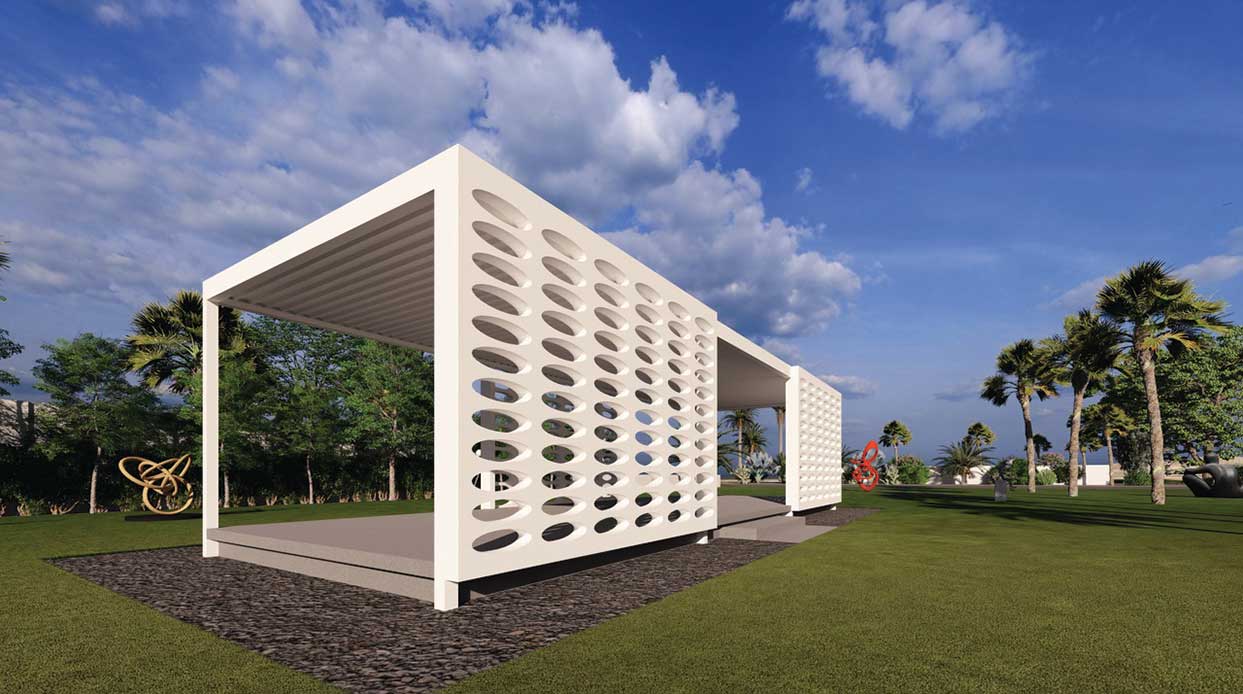
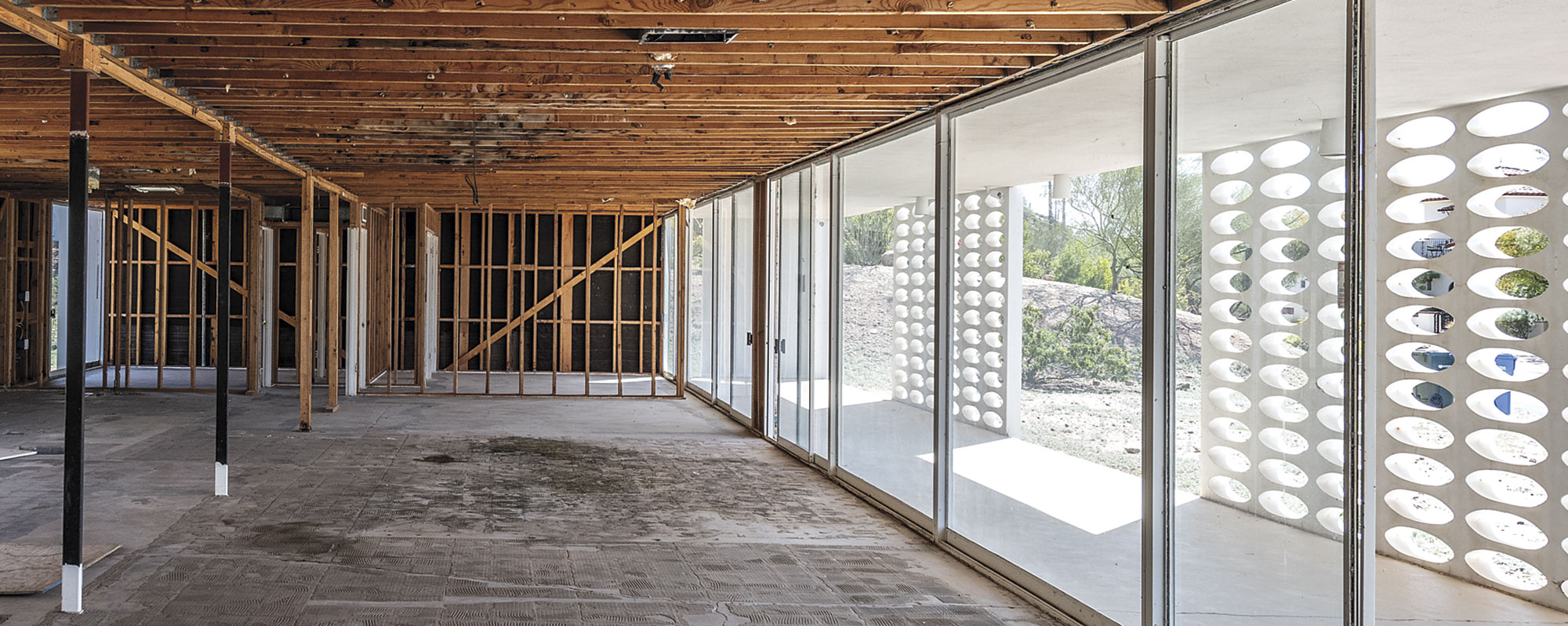
White Gates, also known as Beadle House Number Six, is the house that the esteemed architect built for his family in 1954. Wrapped in ellipsoid plaster screens made of metal flashing and two-by-fours, this floating rectangle of a residence stands in contrast to the red rocks of Camelback Mountain’s rugged southern slope. White Gates is considered a forerunner to the notable architect’s “Beadle Box” designs, which he became known for in the 1960s.
“It wasn’t Frank Lloyd Wright or Paolo Soleri who brought modernism to the Valley,” says architect Eddie Jones, who was a close friend of Beadle’s and refers to him as a personal hero. “It was Al Beadle. No question.”
Phoenix is home to many of Beadle’s best works. There’s the Fifth Avenue Medical Building, that concrete and steel box just north of Osborn Road; Old Town Scottsdale’s flagstone-and-breeze-blocked Day-O Apartments; and the Executive Towers condominium high-rise, chockablock with texture, color and tone, and once the tallest residential building in Phoenix.

Many of Beadle’s buildings, such as his glittery glass-box Mountain Bell midrise, have been demolished. And White Gates may be next—though not if local activists have anything to say about it. When the home’s current owner requested a demolition permit from the city in March, preservationists, architects and activist groups rallied to save the building. They gathered signatures, wrote letters to District 6 city councilman Kevin Robinson and attended preservation commission meetings. They demanded that the property be added to Phoenix’s Register of Historic Properties, called for emails to be sent to the Historic Preservation office and gathered at an open forum to speak out against the demolition.
“It’s a real testament to how effective the community can be when they stand up for a building they value,” says Alison King, activist and founder of the midcentury modern network Modern Phoenix. “You can save a landmark if you take the proper steps.”
When it came to saving White Gates, King spearheaded those proper steps. She’s seen people come from all over the country to visit the building in person. “For people who understand modernism, visiting White Gates is like visiting Grecian ruins. They see what architecture looked like, but they also see potential for the future. White Gates is a symbol of hope for what we want Phoenix to be.”
As a result of the brouhaha caused by King and other preservationists, White Gates’ legal representative formally withdrew the demolition application in early April.

That doesn’t mean that the building is safe. It means that both sides will regroup—the owner, perhaps, to attempt a new approach to earning rights to knock down the building; the activists to scramble for future landmark designation for the possibly doomed structure.
“It’s very humbling,” says Beadle’s daughter, Gerri, “to know there are people in the community who care this much about my father’s work.”
Gerri Beadle doesn’t remember much about living at White Gates; she was only 2 years old when her family left for a larger house in 1962. But she loves White Gates and understands its greater importance to Phoenix’s history. She also understands why, to others, it’s just another old building.
“We have so many transplants here who don’t care about Phoenix history,” she says. “They didn’t grow up here, and they don’t care about whether a building means something to the community. They just want to make a buck. They want what my dad would call ‘a sea of houses,’ all beige and all alike.”
Gerri Beadle recalls previous attempts to save White Gates. She remembers a buyer in the 1990s who was going to build a larger home on the property and turn the original building into a guest house. This owner tore down the carport, removed the landscape and ripped out the interior, then sold it after learning the cost of rehabbing the place. She recalls that restaurateur David Lacey owned White Gates for a while and sold it to a Beadle fan who planned to sell the house with the contingency that she could approve any remodeling done by the buyer. Unable to sell the house, she reportedly let it fall into disrepair before selling it to the current owner.
There are new concerns about the building’s general condition, which would prevent its being relocated. White Gates is today a gutted shell; beyond its beautiful façade there’s little more than an empty box there. And no one seems certain about what will become of White Gates if it is saved from the wrecking ball. Which, Jones says, is too bad.
“White Gates was one of the many homes Al designed for his family, acting as banker, developer, architect, builder and realtor,” he points out. “Therefore, it should remain as an important example of Beadle’s expanded visionary aspirations.”
Those aspirations don’t matter to some locals, Gerri Beadle believes.
“I’ve seen so many of my father’s buildings torn down,” she says. “When we do that, we’re not just losing beautiful buildings. We’re losing Phoenix’s history.”