


3 Questions on Interior Design
This issue, three of the Valley’s top creatives tackle your questions about interior design dilemmas.
By Lauren Tyda & Leah LeMoine
Interior Designer Jill Bowman, Jill Bowman Design
I am remodeling my home and am considering keeping the existing flooring in many areas. How much will it impact the overall design, and is it worth the investment to install all new floors?
Flooring is a major element in a home’s design and creates a canvas for the overall space.
From a designer’s perspective, leaving existing flooring can greatly hinder a new design plan.
The designer inherits a starting point, which may limit their ability to provide the greatest transformation for their client. If the current floors do not ideally complement the surrounding new finishes, the old floors will likely look even older once the renovation is complete. When this occurs, many clients regret not removing their flooring during the renovation. Some consider replacing the flooring later, understanding that there will be further disruption and higher costs.
Experts commonly suggest homeowners replace small-scale tile with wide grout joints, faux wood with a heavy grain pattern, floors with clashing patterns or colors, tired-looking materials and wall-to-wall carpet.
There are cases, however, when preserving original flooring is important to the home’s integrity and enhances the overall new design.
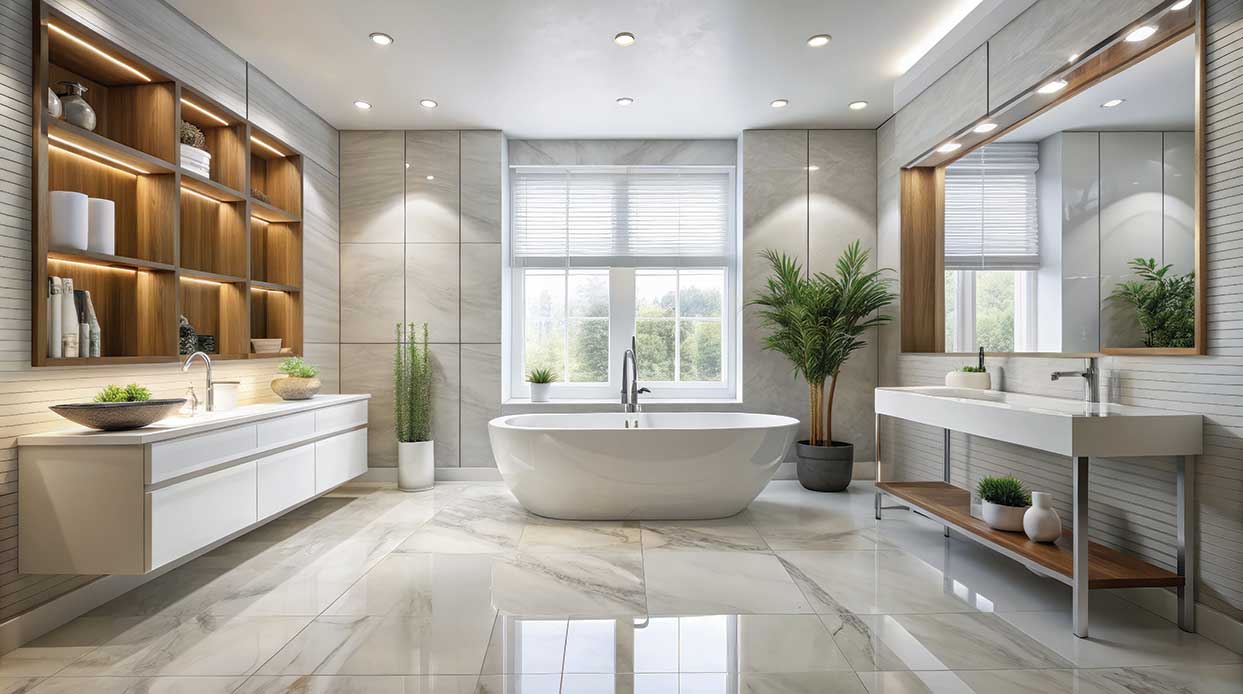
Popular new flooring options include engineered hardwood and large-format materials such as limestone, ceramic and porcelain. Solids or muted patterns are best for a timeless design and allow the floors to complement, rather than distract from, the overall space.
A design professional can help determine if replacing your floors is right for you and select the most appropriate flooring for your space. Budget, lifestyle, overall design and resale are factors when considering this important investment.
Interior Designer Lauren Jacobsen, Lauren Jacobsen Design
I appreciate contemporary design, but I also love the warmth that traditional elements bring. How do you make modern feel cozy rather than cold?
Contemporary homes don’t have to feel sterile. You can embrace clean lines, strong silhouettes and a minimal color palette while still creating a space that feels warm and inviting. The key lies in thoughtful material selection and layering.
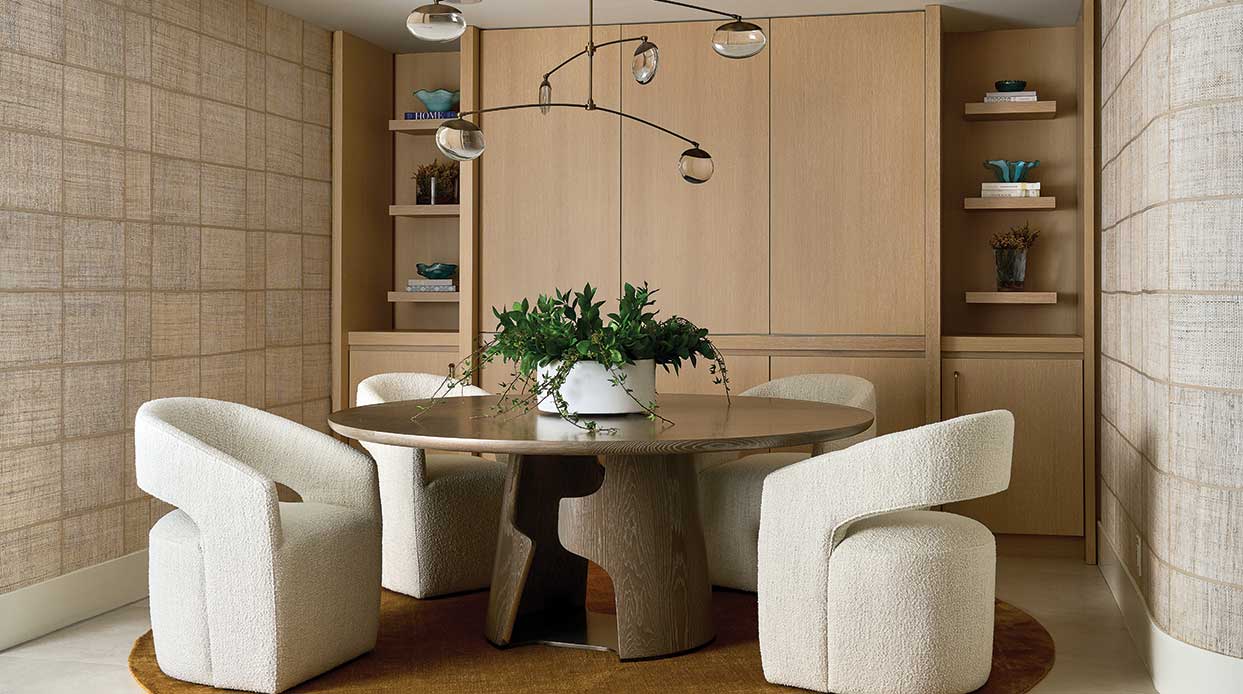
Add warmth through texture—think plush rugs, velvety fabrics and soft, inviting pillows. Sofas and chairs with curves, upholstered in tactile fabrics, such as bouclé, help soften a room. Mixing fabric textures creates a rich, welcoming feel, especially when juxtaposed with natural materials such as stone, warm woods and woven accents, such as rattan, to balance higher-polish surfaces.
Lighting is another essential element in creating warmth. Use multiple sources of light throughout a room—pendants, table lamps and floor lamps—and put as many as possible on dimmers to control the mood at different times of day. LED recessed lights should be on dimmers and specified as warm-dim fixtures. As the light level lowers, the color temperature warms to a soft glow rather than simply dimming at the same color temperature.
These thoughtful layers and choices help contemporary spaces feel both modern and comfortably lived in.

Interior Designer Janet Jackson, Interior Design Residential Faculty, Scottsdale Community College
What is the difference between an interior decorator, interior designer and licensed interior designer, and what are the advantages of each?
Often the terms “decorator” and “designer” are used interchangeably. In practice, they are different roles, although there can be overlap in services and strengths.
Interior decorating is primarily focused on the look and feel of a space. Decorators commonly work with furnishings, color, textiles, accessories and styling to refine the aesthetic of a home. There is no universal education or examination requirement to use the title “interior decorator.” Many decorators may build expertise through certificate programs, retail or showroom experience, staging and/or years of hands-on work.
Interior design includes aesthetics, but also focuses on function and problem-solving. Interior designers provide space planning; material and finish selection with performance in mind; specifications and sourcing; and technical documentation. They may also coordinate with contractors and consultants and consider applicable codes and building systems. Interior designers typically pursue formal education and meet industry standards for training and experience.
“Licensed interior designer” is a jurisdiction-specific term. In states where interior design is regulated, it may indicate that the individual has met state requirements for education, verified experience and examination, and is authorized to use a protected title or provide certain regulated services. Licensing is intended to support public protection.
Arizona does not currently license interior designers at the state level, although many interior designers hold national credentials and may partner with registered design professionals when a project requires stamped documents or regulated services.
When screening for design services, consumers can evaluate national credentials, professional memberships, portfolios and references. National Council for Interior Design Qualification (NCIDQ) certification is a recognized national benchmark that requires defined education, supervised work experience and successful completion of a comprehensive examination through Council for Interior Design Qualification (CIDQ). Professional design organizations such as the American Society of Interior Designers (ASID) and International Interior Design Association (IIDA) provide membership levels that reflect a mix of education, industry experience, continuing education and, in some cases, NCIDQ certification.
As far as advantages go, a decorator can enhance how your home looks and feels through styling, furnishings, art, accessories, fabrics and color. An interior designer improves both form and function by designing layout, flow, storage, lighting and aesthetics that make a home feel cohesive and complete. Their education and project experience become especially valuable in remodels and new builds, where details, material selection and sequencing matter. Through clear documentation and coordination with contractors and vendors, they help keep decisions organized and reduce costly mistakes.
Submit your design questions to phgmag.com/ask-the-experts for the chance to be featured.