


How to Help Your Plants Thrive Through Monsoon Season

What to plan, prune and pluck in late summer, according to your elevation.
Hello Friends,
As the second half of summer sets in, warmer nights and the onset of monsoon rains bring higher humidity, offering some relief to shrubs, ground covers and vines. However, elevated nighttime temperatures can be tough on succulents, including cacti, as they interfere with the plants’ ability to “breathe” (exchange gases) at night. This stress can lead to decline or even death—especially with the increasingly hotter summers we’re experiencing.
Now is the perfect time to assess your garden. Take note of which plants are thriving and which are showing signs of heat stress. This evaluation will help guide your decisions come fall—the ideal season for planting and replacing struggling plants with more heat-adapted choices.
Monsoon season brings both challenges and benefits to the desert garden. While strong winds can pose a threat to trees, the rains offer a welcome extra drink of water for plants. Read on to discover tips for protecting your trees from wind damage and simple ways to harvest rainwater for your outdoor and indoor plants. You will also learn how to address common summer issues to help your plants stay healthy and resilient through the hottest part of the year.
Noelle, aka “AZ Plant Lady”
Send your gardening questions to info@azplantlady.com.
MONSOONAL PREPAREDNESS
The high winds of monsoon season can cause serious damage to desert trees, even in areas that don’t receive rain. Trees such as mesquite and paloverde are especially vulnerable—particularly when they have long, heavy branches that extend far from the trunk. These overhanging limbs are more likely to snap under pressure and should be carefully pruned back.
To reduce risk, inspect your trees for branches that could threaten power lines, your home, yard walls, sheds or pergolas. For the safest and most effective results, consult a certified arborist to determine the best pruning approach and minimize potential storm damage.
Don’t let precious rainwater go to waste—put it to work in your garden and home. Rain barrels are a smart option if your home has gutters, as they enable you to collect water from the roof for later use. This stored rainwater is ideal for outdoor container plants and indoor houseplants, which often struggle with the salt buildup from tap water. Unlike municipal water, rainwater is naturally low in salts, making it gentler on plant roots and helping to prevent issues such as brown leaf tips.

Passive water harvesting is even more popular and effective in desert gardens. This approach involves shaping the land to guide rainwater from your roof directly to trees, shrubs, vines and ground covers. Start by observing where water flows and collects during a storm. You can then create shallow basins around plants or design a dry creek bed filled with river rock that winds through your garden. These features help slow the flow, allowing water to soak into the soil and provide moisture for nearby plants. Learn more about how to enjoy the benefits of free water by downloading “Passive Water Harvesting” at extension.arizona.edu
If your plants are showing yellowing leaves with dark green veins—especially on new growth—they may be suffering from iron chlorosis, a condition caused by insufficient iron, an essential element for chlorophyll production and photosynthesis. Although iron is present in our desert soils, it’s often unavailable to plants due to high alkalinity, and summer heat can worsen the issue.
Commonly affected plants include citrus, gardenias and purple lilac vine (Hardenbergia violacea). To help, apply chelated iron, which is a form easily absorbed by plants that will help to restore vibrant green foliage and overall plant health. It is mixed with water and applied around the base of the plant. Find it at your local nursery or garden center.
Monsoon storms can bring much-needed relief to desert gardens, but don’t assume one downpour is enough to skip your next watering. These rains often come fast and hard, leading to runoff before the water can soak into the soil. As a result, your plants’ roots might still be dry even if your rain gauge shows a decent amount. A good rule of thumb is this: If you receive at least half an inch of rain, you can likely skip one irrigation cycle. Your plants depend on consistent, deep watering—whether it comes from the sky or a hose.
In recent years, hotter-than-normal summer temperatures have taken a toll on even the most established trees in our landscapes. Many mature trees, which were regularly irrigated when young, are now left to fend for themselves, often without sufficient water. As heat intensifies, higher-water-use species such as ash, pine, Chinese elm (Ulmus parvifolia), oak, Chinese pistache (Pistacia chinensis) and sumac are increasingly showing signs of stress or even dying. Symptoms such as browning leaves, premature leaf drop, peeling bark and sunburned trunks are common indicators of decline. The truth is, as summers grow more extreme, trees require more water to stay healthy. To support them through these tough conditions, trees should be watered every seven to 10 days during summer, with water reaching a depth of 2 to 3 feet. This deep watering ensures the moisture reaches the root zone, especially at the drip line (the area directly beneath the outermost branches where roots absorb the most water). You can install a drip irrigation line for your trees, or use a soaker hose, which is made of permeable rubber that leaks water slowly into the soil.
Even in desert landscapes, cacti and succulents can struggle during the summer. While these plants are built to withstand arid conditions, extended periods of heat and low humidity can push them to their limits—especially if they are not connected to a drip irrigation system. Agave, aloe and cacti may not always need supplemental water, but it’s crucial to monitor them. In cacti, drought stress often appears as thinner pads or stems, and in columnar varieties, you may notice wrinkling or pronounced folds—both indicators that the plant is dehydrated. If you spot these signs, supplemental watering is needed. Use a hose set to a slow trickle and water around the base of the plant, allowing the moisture to soak to a depth of about 12 inches. According to “Water Use It Wisely” (wateruseitwisely.com), most cacti and succulents should be watered every 14 to 30 days during summer, depending on weather conditions and soil type.
Low to Middle Elevations
Help your citrus trees cope with the heat by watering early in the morning, when they take up water more efficiently than later in the day. Irrigate deeply—down to about 2 feet, to promote deep rooting where the soil is cooler and stays moist longer. Keep the area beneath trees free of grass, which competes for water. Move any landscape rock away from the base to reduce heat stress. Instead, apply a 2- to 3-inch layer of organic mulch such as bark chips to retain moisture, cool the soil and improve soil health.
Summer is an ideal time to plant new palms, as warm soil encourages the root growth essential for their health and survival. However, avoid planting queen palms (Syagrus romanzoffiana), as they often struggle during our hotter summers. Instead, consider mule palms (Butiagrus nabonnandii), a hybrid of queen and pindo palms. Mule palms offer a similar elegant look but are much more heat-tolerant, drought-resistant, and can withstand colder winter temperatures.
Plant sunflowers this season for an easy and striking addition to your garden. These stately flowers grow well from seed and thrive in arid climates. They’re perfect for vegetable gardens—though avoid planting them near beans or potatoes because they can inhibit the growth of these vegetables. They also do well in containers with regular irrigation every one to two days during summer. Choose from towering varieties such as the Mammoth sunflower (Helianthus giganteus), which can soar to more than 8 feet tall, or more compact varieties such as the fluffy ‘Teddy Bear’ (Helianthus annuus, ‘Teddy Bear’), which grows 2 to 3 feet tall.
High Elevations
Continue deep, infrequent watering to encourage strong root growth—irrigate early mornings or evenings to reduce evaporation. Avoid heavy fertilization; focus on maintenance only. Harvest summer crops, including tomatoes, peppers and beans regularly and start planning fall crops. Cool-season vegetables such as broccoli, kale and lettuce can be seeded indoors or in shaded areas. Monitor trees and shrubs for heat stress—look for leaf scorch or browning tips. Deep-water trees weekly. Deadhead flowering perennials to encourage continued flowering.
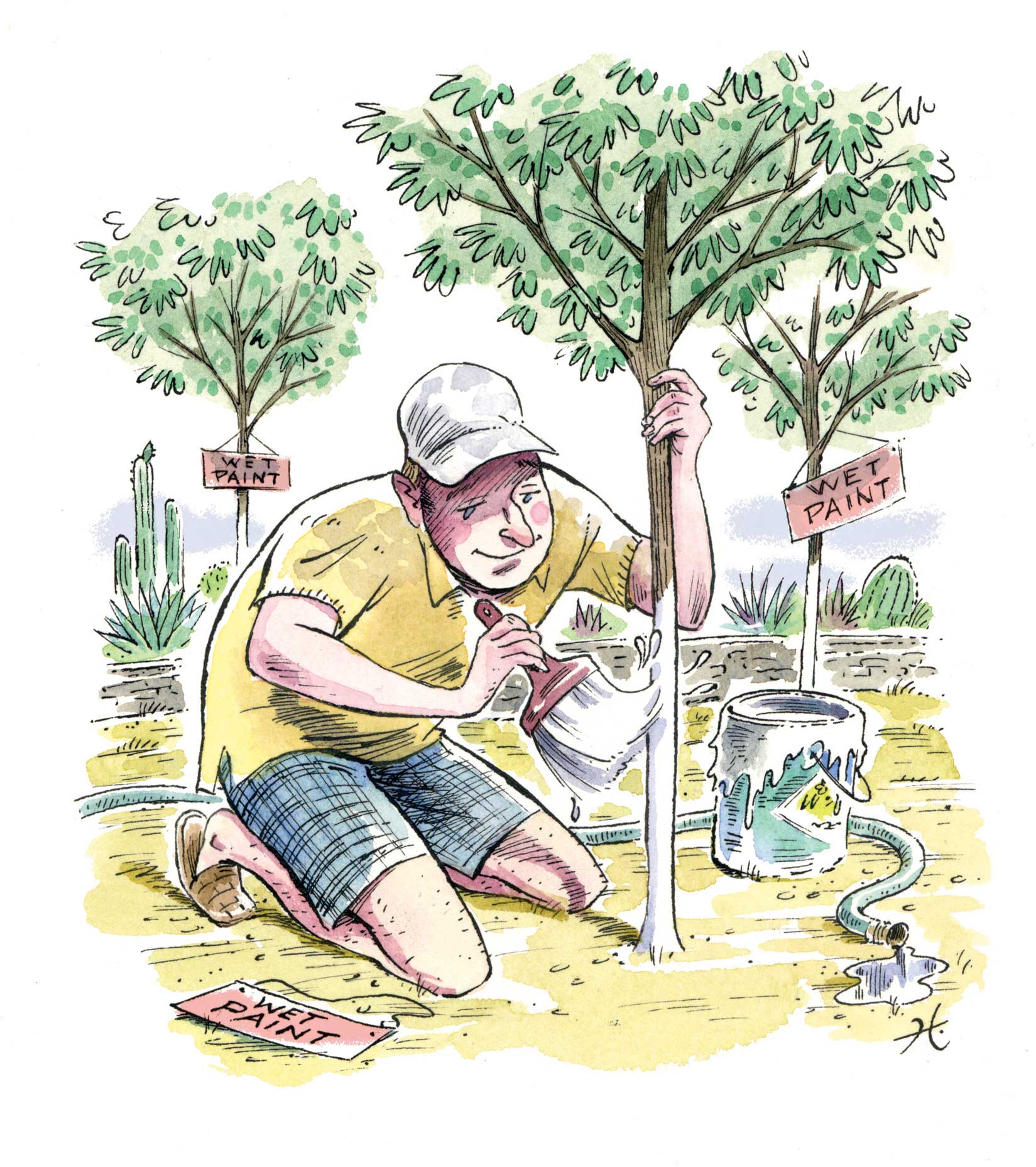
We planted a grapefruit, orange and lemon tree this spring. I’ve noticed that some people paint the trunks of their citrus trees white. What is the purpose, and should we do it for our trees?
Citrus trees thrive in our desert climate, but their trunks and branches are vulnerable to sunburn—especially when pruned into a traditional tree shape. Naturally, citrus grows as large shrubs, with dense foliage that protects their trunks. When lower branches are removed, the exposed trunk becomes susceptible to sun damage. To prevent this, you can either leave the lower branches intact to shade the trunk or apply a 1:1 mixture of white latex paint and water directly onto the trunk. This acts like sunscreen, reflecting sunlight and shielding the bark from harmful rays.
This is our first summer in the desert, and we were excited to move to a home that had beautiful rose bushes. They did great this spring but look awful this summer. There are no blooms, and the leaves are sunburned. What can I do to help them?
While roses thrive in our cooler seasons, they struggle during the intense heat of summer. During this time, they enter summer dormancy, where growth slows and blooming pauses as they wait for cooler weather. During the hotter months, water the plants every two to three days and avoid pruning. For added protection, drape 50% shade cloth directly over the bushes to reduce heat stress.
Come mid-September, give your roses a light pruning to prepare for the fall bloom. Remove any dead growth and lightly trim the upper third of the stems. Follow up with a dose of rose fertilizer to encourage strong, healthy growth as the weather cools.

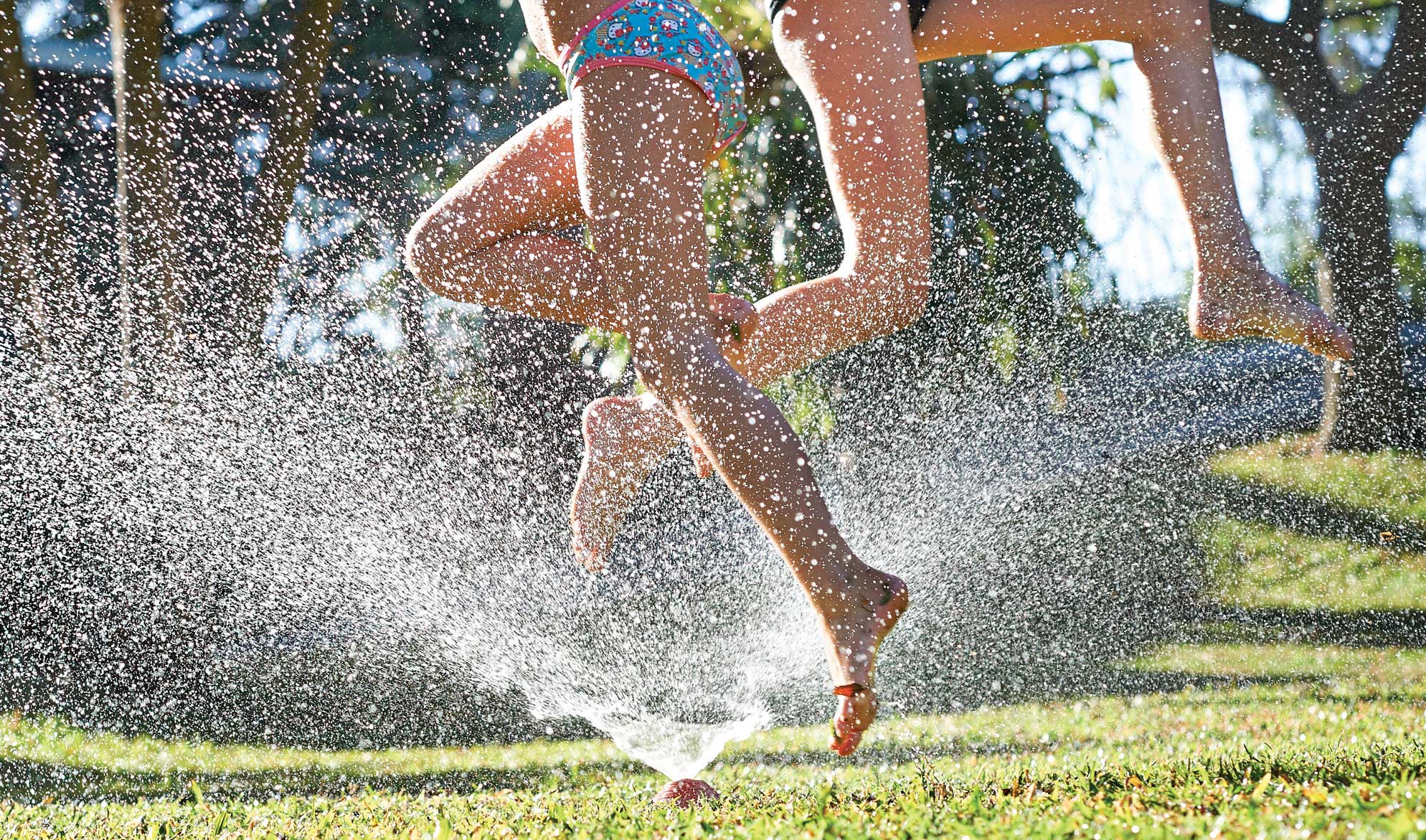
We have a lawn in our backyard where our kids love to play. I know that grass can use a lot of water, and we want to ensure that we are irrigating as efficiently as possible. Are there any tips to minimize our water usage other than ripping up our lawn?
While a lawn does use more water than other plants, there are strategies you can implement to ensure you are maintaining it correctly to minimize irrigation. First, remove nonfunctional turf in areas where no one walks, plays or gathers. To minimize water waste, irrigate in the early morning every three to four days during summer, ensuring it reaches a depth of 6 to 10 inches. Mow weekly, removing only one-third of the grass height to help shade the soil and reduce evaporation. To promote healthy roots and improve water absorption, aerate your lawn (poke small holes in the ground) every three years to reduce soil compaction and allow air and moisture to penetrate more effectively.