


An Emotional 9/11 Memorial by Local Architects Uses Sun and Shadow to Keep the Memory Alive

Nearly 20 years ago, a trio of local designers created a 9/11 memorial—and a bit of controversy.
By Robrt L. Pela | Photography by Bill Timmerman
The memorial is most visible at noon. During the rest of the day, “Moving Memories”—Phoenix’s remembrance to those who died in the Sept. 11, 2001, attacks, located at Wesley Bolin Memorial Plaza—is less obviously there.
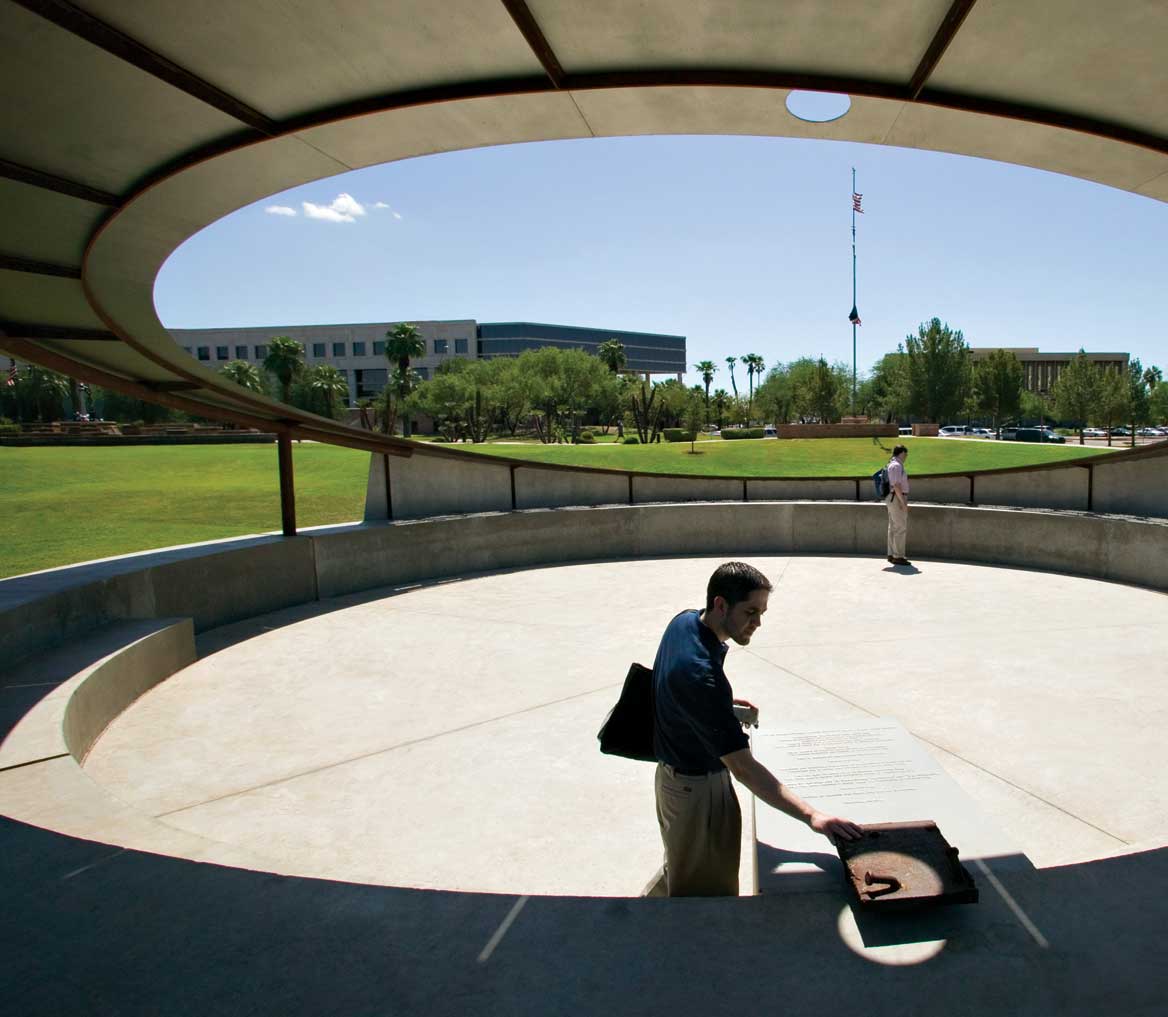
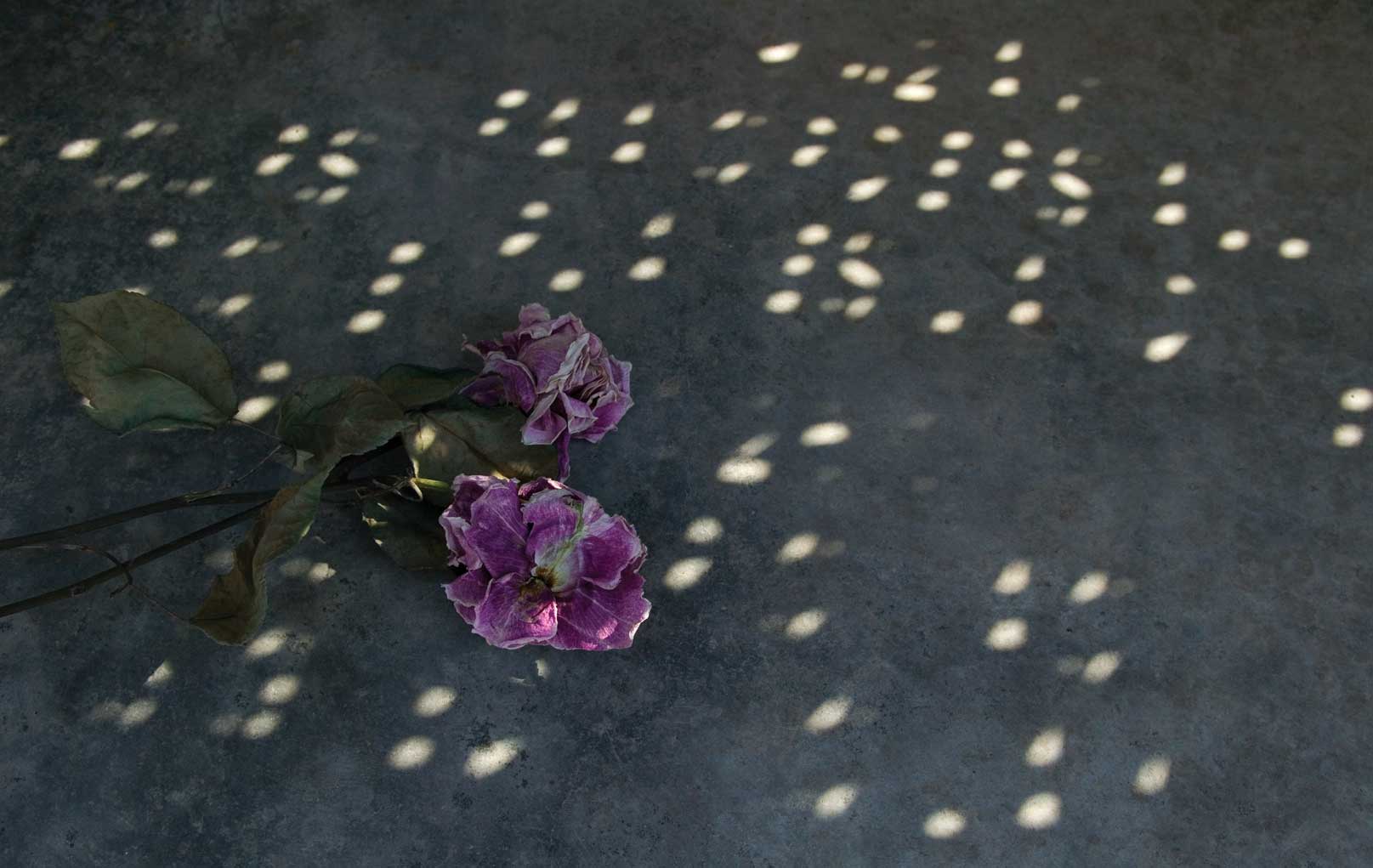
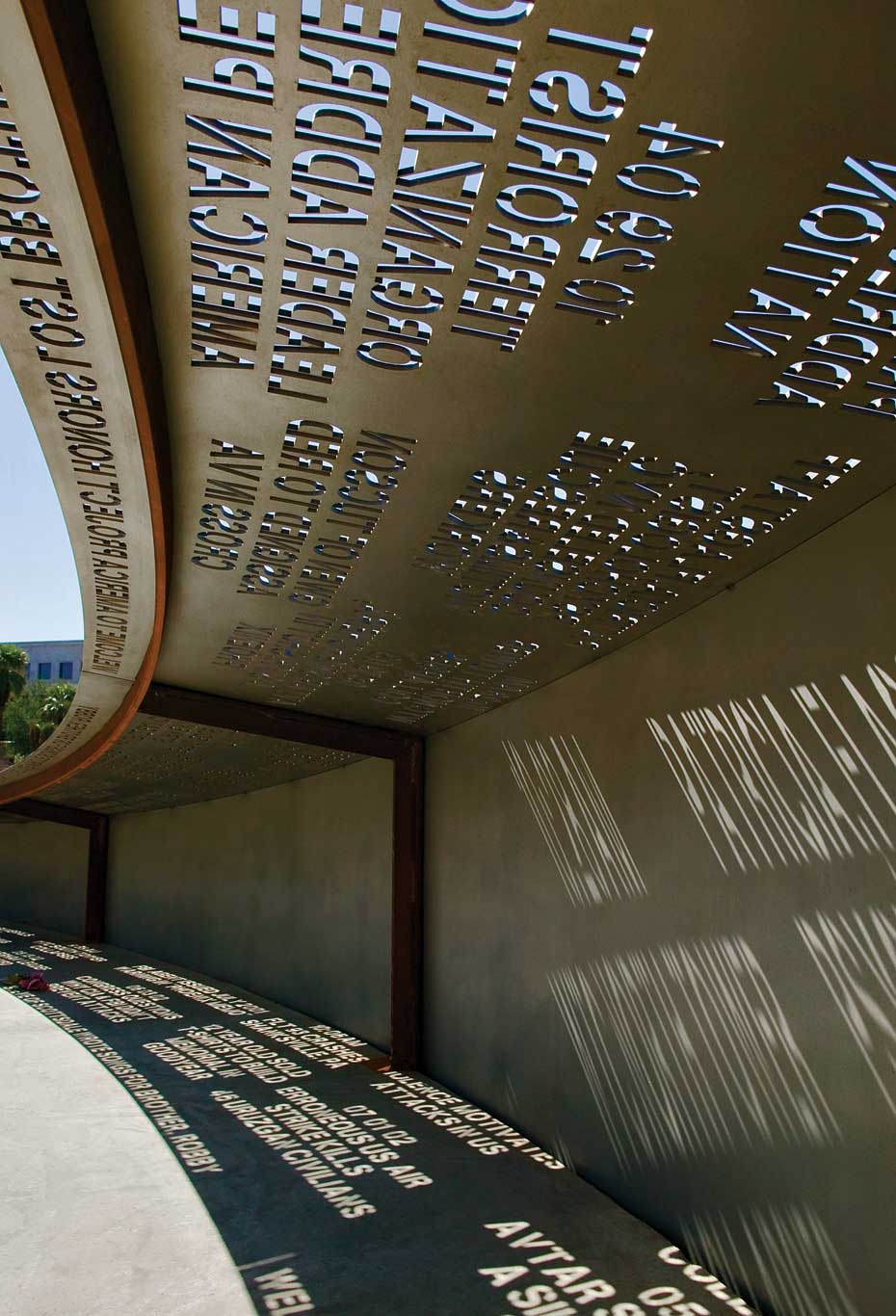
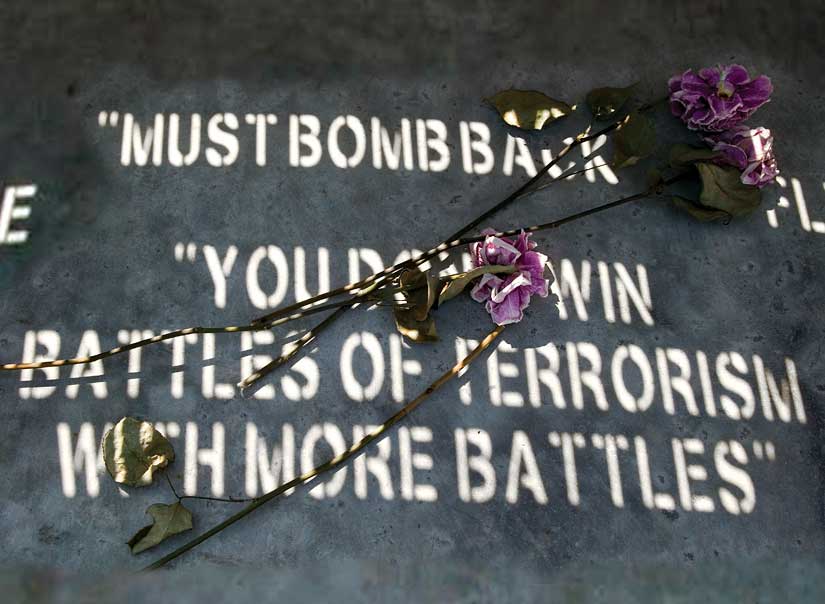
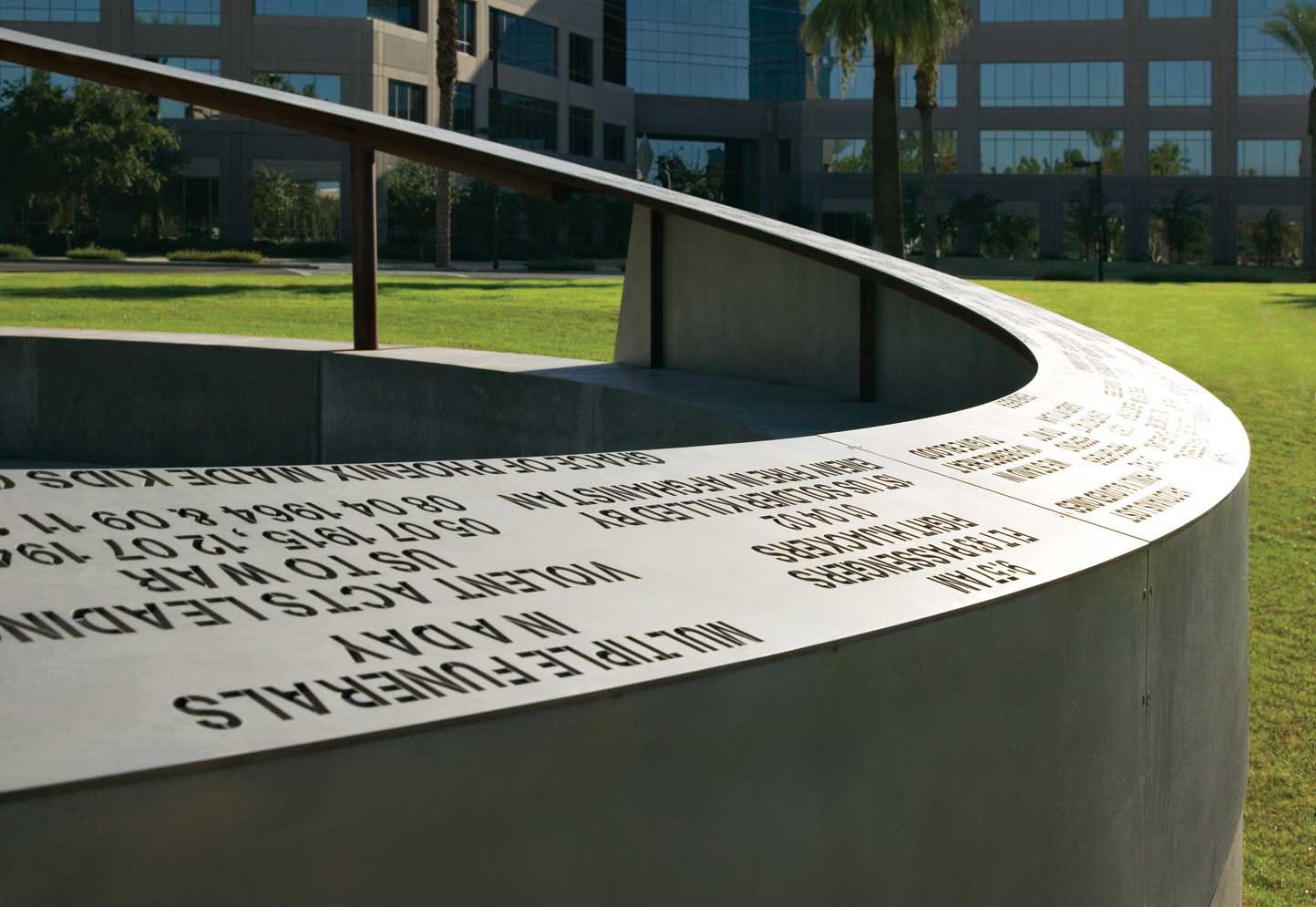
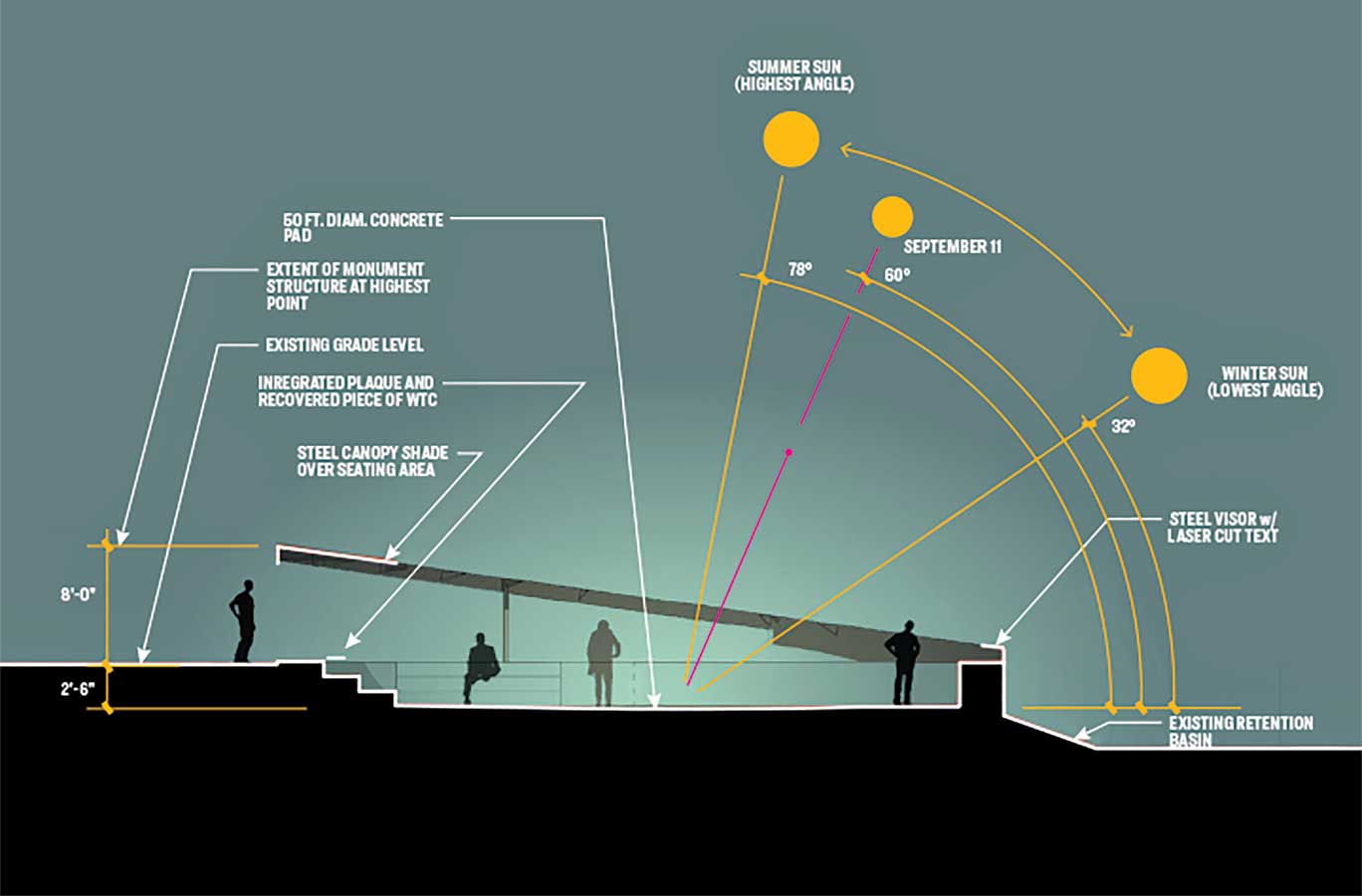
That’s by design. Its creators—Maria Salenger, Matthew Salenger and architect Eddie Jones of Jones Studio—planned a commemoration that uses architecture and sunlight to comment on loss and the value of memory. Its circular steel canopy is suspended over a sunken concrete gathering space, and that canopy is stenciled with phrases and words taken from headlines and interviews about the events of 9/11. The words are visible when sunlight passes through the canopy, casting them as shadows on the ground below. As the sun moves across the sky, different phrases appear as others fade; as the sun heads westward, some phrases blur into abstractions, while others become sharper.
“In the morning, the words are just dots,” Jones explains. “As the sun rises, they align to form legible words and phrases. It’s poetic, like the sun is reminding us that each day brings renewed hope.”
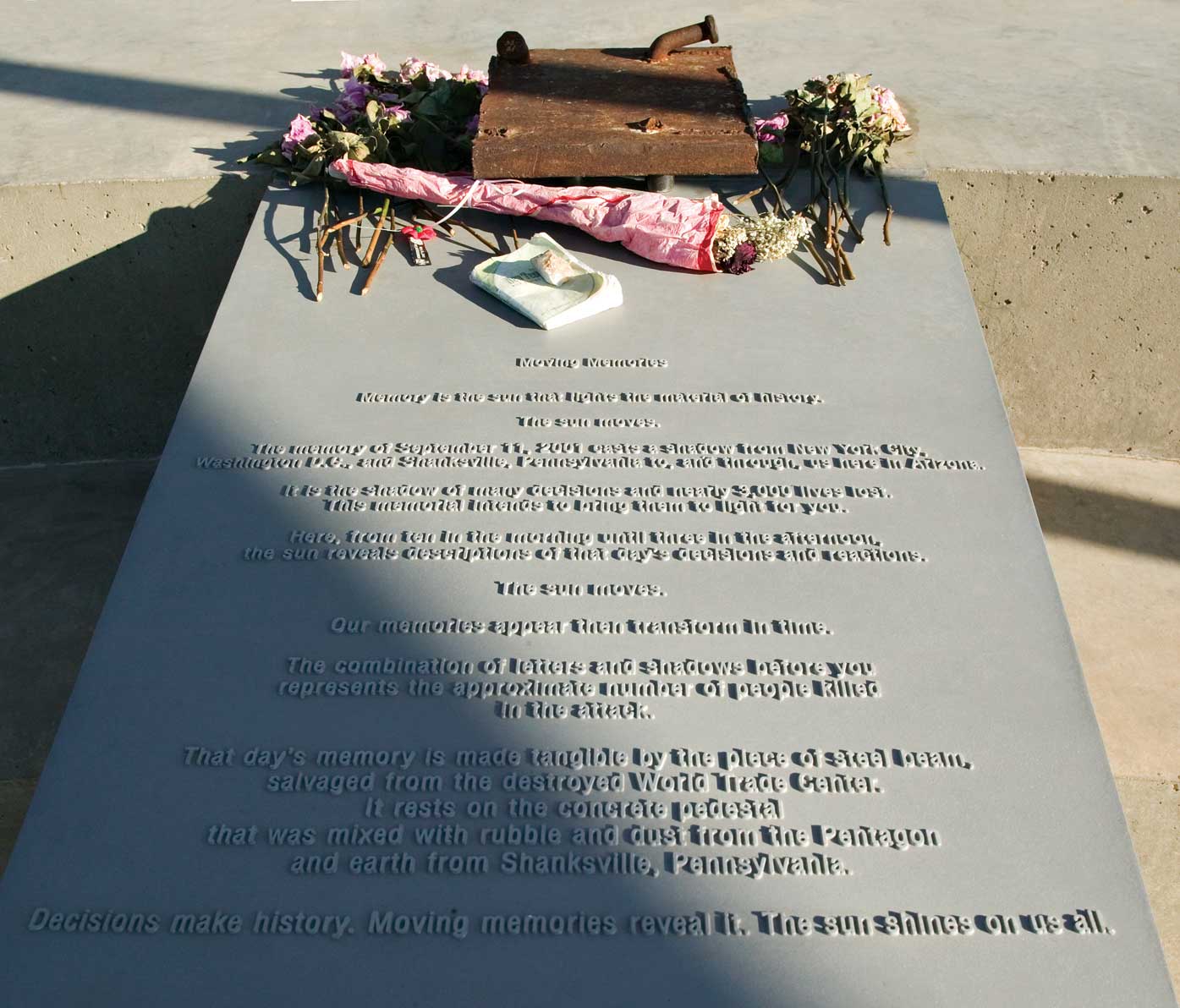
At the northern-most edge of the memorial stands a steel beam salvaged from Ground Zero, illuminated—thanks to careful planning by Matthew—by a circle of sunlight at noon each year on Sept. 11. Embedded in the base of the beam is some soil from the Flight 93 crash site and bits of rubble from the Pentagon.
Jones and the Salengers, a married couple who operate the architecture and design firm coLAB Studio, were chosen to create the tribute in a 2003 competition facilitated by the Arizona Commission on the Arts. The team’s design ideas came quickly, Matthew recalls. Jones remembers that there were specific guidelines: The memorial had to be low maintenance and, if it had moving parts, they couldn’t require fuel of any kind.
“We wanted the memorial to be interactive,” Jones says. “We figured, we live in Arizona. The sun comes up and goes down very reliably. So using the arc of the sun and the rotation of the earth seemed like profound ingredients that could carry a good idea.”
Jones thought a sunlight-powered structure was such an obvious idea that every other designer in the competition would propose it. “And we were the only ones who did,” he says with a laugh.
“Everything had to be in balance in order for our idea to work—the size of the cut-out letters and the thickness of the metal,” Jones continues. “Matt had computer software to shape the structure, and Maria came up with the circular visor, the unifying part that creates the space. I loved that the final piece wasn’t an object you stood and looked at, but rather a place that you literally occupied.”
Jones says the team wanted a memorial that everyone could relate to. Toward that end, Maria read hundreds of media interviews and other documents about 9/11, looking for impactful quotes and historical facts and dates regarding the terrorist attacks. She narrowed down a list of some 300 items to create a pair of timelines, one that retraced the events, another to remind visitors of what came after—the impact these attacks had on our society. Woven between these timelines are quotations, taken from various sources.
“We thought, there’s no way this will be controversial,” Maria says.
But not long after it opened in 2006, “Moving Memories” became the subject of local complaints. Some visitors to the site believed that some of the inscriptions were too political. Public meetings followed, and in 2008, the state legislature passed a bill mandating some changes.
“We removed one of the inscriptions,” Maria recalls. “And we created two plaques for the site, one with a narrative about Sept. 11 and the other a guide to experiencing the memorial. It was a compromise to help people understand what the project was about.”
Jones notes most of those who complained were people who admitted they had not seen the structure in person.
“But in the end, it worked out,” he reflects. “I mean, we created somewhere you can take a child, and that child can put their hand out and hold the word ‘peace.’ And that word is made entirely of light. How can you not love that?”
“We thought, there’s no way this will be controversial.”
—Maria Salenger, co-creator

SOURCES
- Eddie Jones, FAIA, Jones Studio, Tempe, jonesstudioinc.com
- Maria Salenger, AIA, Matthew Salenger, AIA, CoLAB Studio, Tempe, colabstudio.com