


Why Scottsdale Artists’ School is a Hidden Gem for Valley Creatives

Hiding in plain sight, the nationally respected Scottsdale Artists’ School remains a mystery to many locals.
By Robrt L. Pela | Photography by Scott Sandler
“We’ve had students move here from other parts of the country,” says Trudy Hays, “just so they could attend our school on a regular basis. And yet there are people here who don’t even know we exist or that we’re one of the major art centers in the country.”
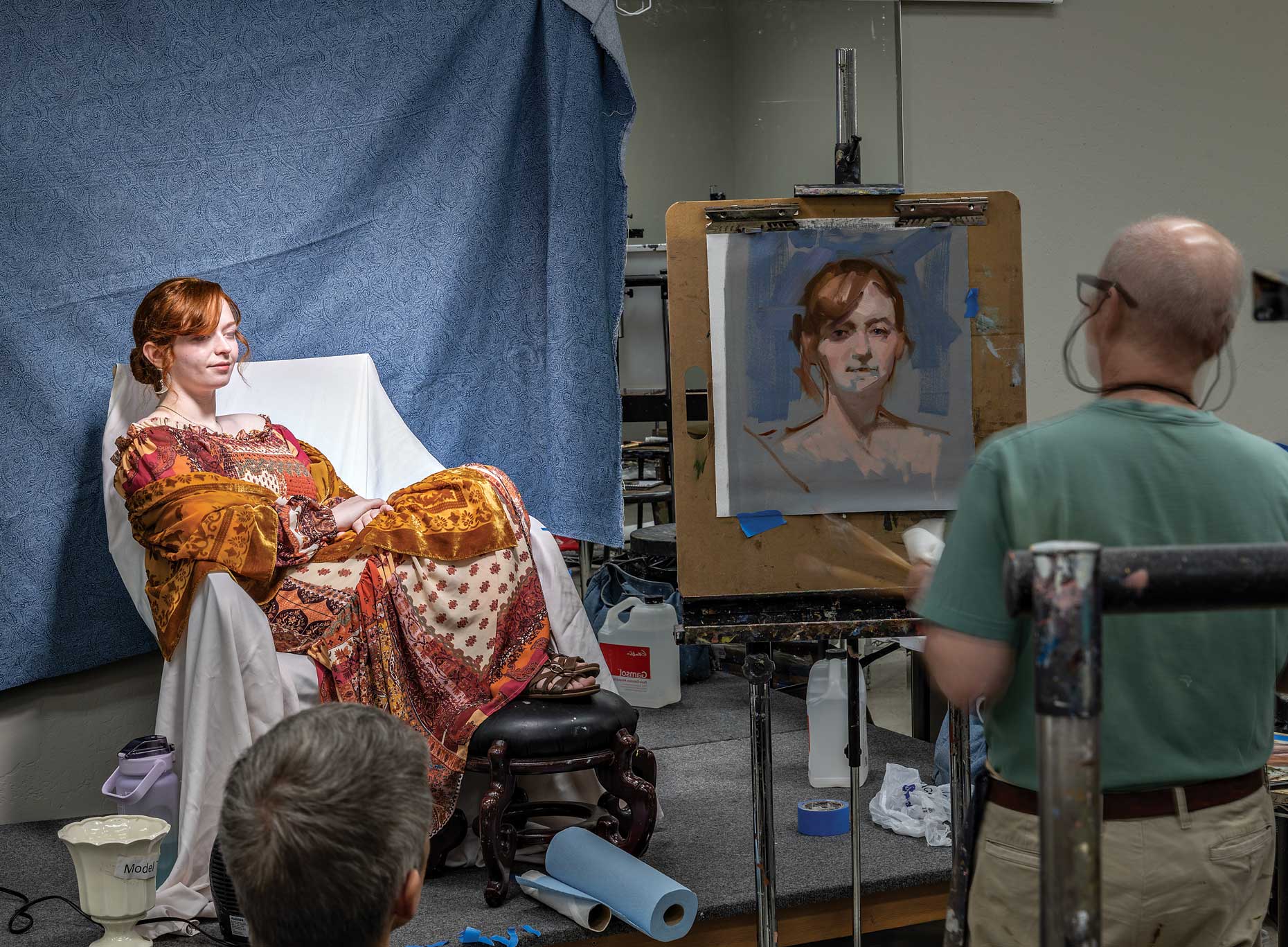
Hays is referring to Scottsdale Artists’ School, which may well be the city’s best-kept secret. Dedicated to teaching the fundamentals of fine art, the all-ages school is known nationally for its workshops and its celebrity artist instructors, according to Hays, the school’s executive director. For more than four decades, the school has taught art history and technique—32 of those years as residents of a historic building designed nearly a century ago by Lesher and Mahoney, known statewide for creating unique and sturdy school buildings.
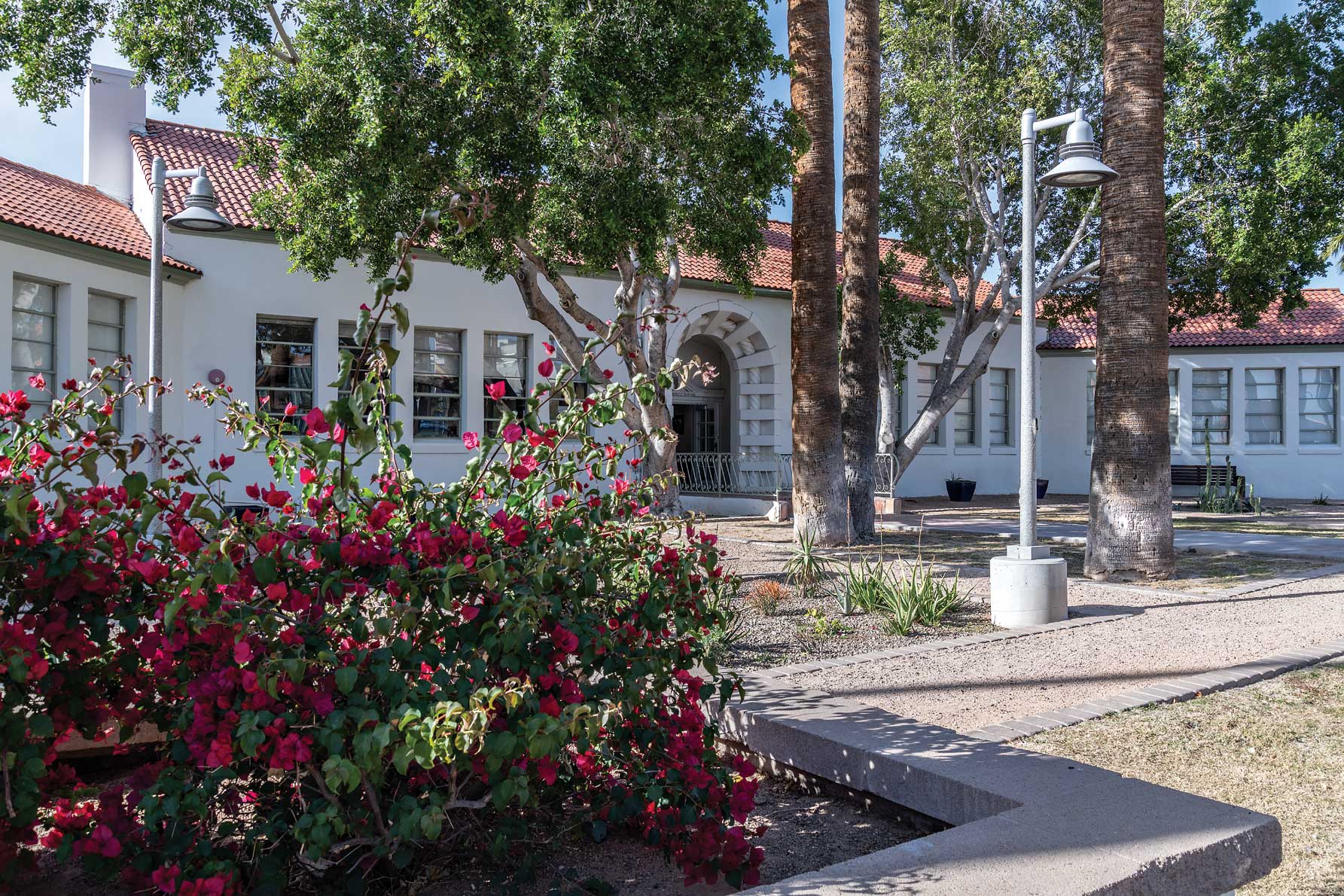
Located minutes from Scottsdale’s downtown arts district, the building has come full circle. Built as the Scottsdale Grammar School in 1928, the Spanish Colonial Revival structure—later renamed Loloma Elementary—was home to reading, writing and arithmetic until 1980, when the school closed its doors. Various other businesses resided there—including Scottsdale’s first-ever cable television provider—before Scottsdale Artists’ School relocated there in 1993.
First, though, the building— with its unique gabled-tile roof and glazed Saltillo floors—needed an overhaul. Phoenix architect Douglas Sydnor set about updating the original 16,000-square-foot structure.
“The budget was tight,” Sydnor recalls of the remodel, “but the cable company had helped us out by removing a lot of the hazardous materials that had been there. They’d also opened up the space by taking out nonstructural interior walls, so there were these open, loftlike spaces that were good for art studios.”
Sydnor created five such studios, then tackled areas that needed ADA compliance, as well as a tricky roof repair.
“I wanted to match the original clay tile roofs,” he recalls, “but no one was making that material anymore.”
Sydnor is still scratching his head over his good fortune 30 years later. “We stumbled on a couple of pallets of the same tiles at a boneyard in south Phoenix,” he remembers. “And it turned out it had all been salvaged from the Good Shepherds Girls School, which had been built around the same time.”
Sydnor returned the building’s original paint colors, with one exception. “In 1928, the window frames were dark brown, and it just didn’t feel right,” he says. “I went with a dusty green to contrast the white walls and as a visual reference to the green landscape outside the windows.”
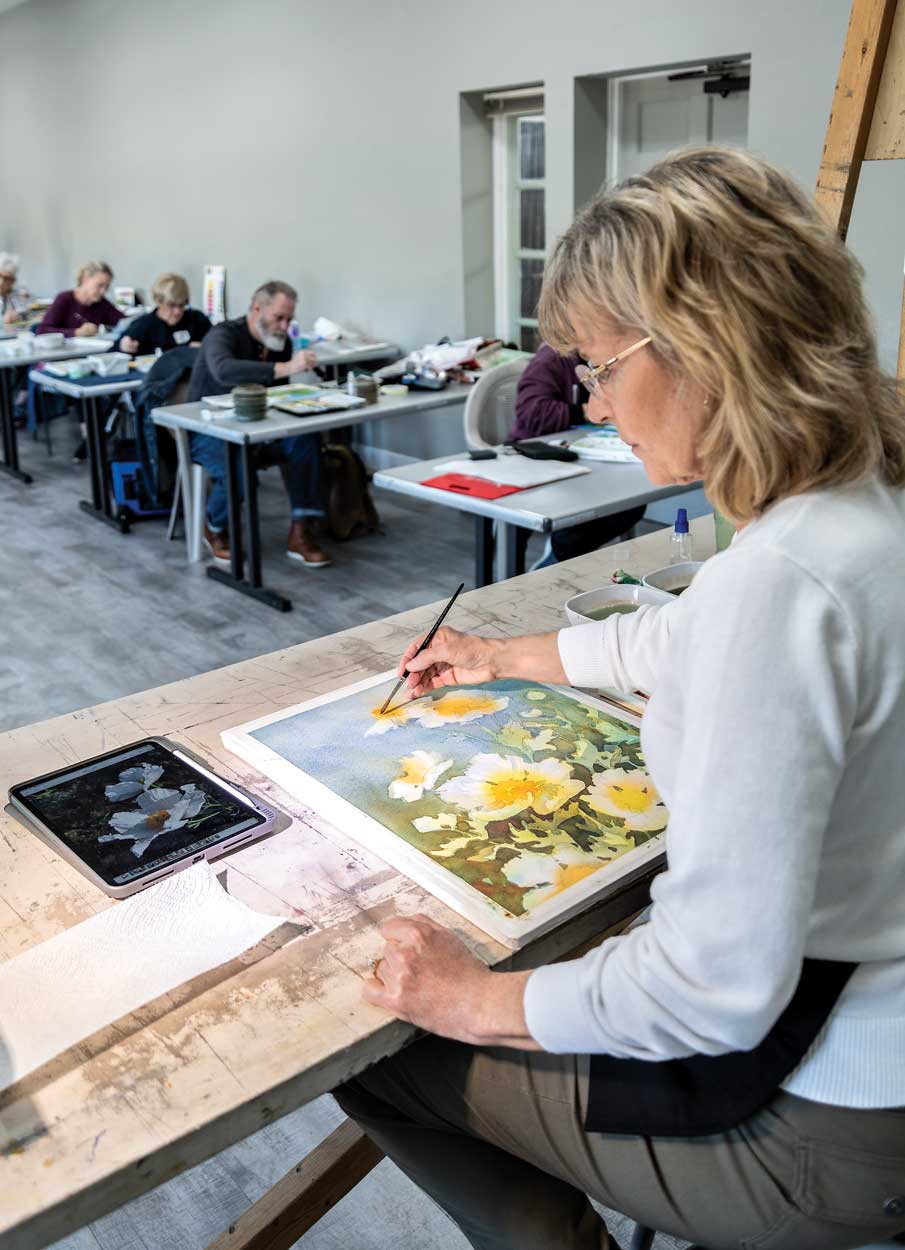
“Once the building was a school again, its guest artists and instructors could set about enlightening locals about the secret of making good art.”
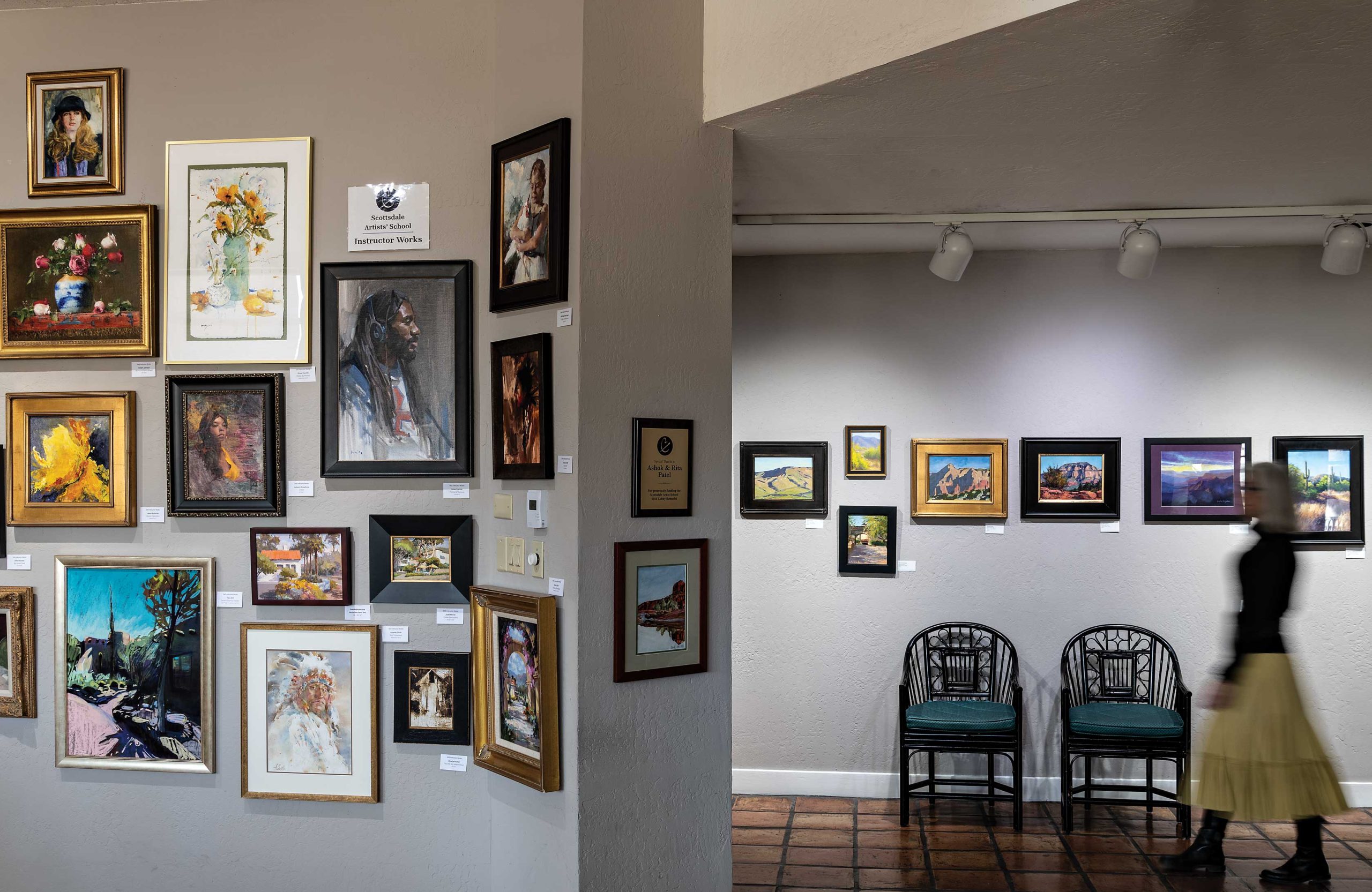
Once the building was a school again, its guest artists and instructors could set about enlightening locals about the secret of making good art.
“A lot of people have the idea that there’s some kind of magic trick involved in painting or drawing,” says the artist John Schieffer, who teaches at the school. “I like to demystify art and let people know that anyone can make it. This school supports me in getting that message across.”
Schieffer, who is represented locally by Scottsdale’s Bonner David Gallery, is glad SAS is there, as the city continues to trim funding for public school arts education.
“It’s very troubling to me. I taught art part-time at my daughter’s school, and the kids want to make art. Places like Scottsdale Artists’ School are filling that void, but it’s a real shame that they even have to.”
The school helps fill that gap, according to program director Danielle Spahle, by teaching more than 700 students in its summer session alone. “We work with Scottsdale Unified School District and the Scottsdale libraries to teach during and after school,” she says. “And we have a new program for young adults who are too old for the youth classes but not ready to jump into our adult program.”
Spahle says SAS’s outreach programs also enrich the community by working with organizations such as Hospice of the Valley and Ability360, a nonprofit that provides services to the disabled. The school also offers weekly art history lessons and provides scholarships to people who couldn’t otherwise afford to attend.
In spite of all this goodwill and great training, the Scottsdale Artists’ School remains an unknown entity to many locals.
“I knew the school,” says Hays, a former director of Scottsdale’s now-shuttered Overland Gallery, “because I took a class here in the ’80s. I’d judged their student shows, and my son took their classes.” And Spahle, who grew up just five minutes away, admits she didn’t know about the school until she was an adult. She thinks that’s ironic because SAS was founded in part on the principle of bringing national artists to town to teach and to give Scottsdale access to their work.
“It’s been a struggle for years,” Hays admits. “I’ll tell people where I work and they’ll be like, ‘Oh, I wondered what was in that building.’”
Hays is trying to enjoy the irony that artists come from all over the world to take classes and to teach at Scottsdale Artists’ School, while—for more than 40 years—locals don’t seem to know it’s there. But she’s confident that art will prevail.
“I like to say that creating art makes us human,” she says, “and sharing art is what makes us humane.”
Scottsdale Artists’ School, Scottsdale, scottsdaleartschool.org