


Plant Now, Enjoy for Decades
These long-lived desert classics reward fall planting season with year-round sculptural interest for your landscape.
Boojum Tree (Fouquieria columnaris)
- Succulent
- Cream; late summer
- 10′-50’H by 1′-2’W
- Well-drained, sandy soil
- Zones 9b-11
- Full sun
- Low water; low maintenance
- Attracts: Bees, butterflies, hummingbirds
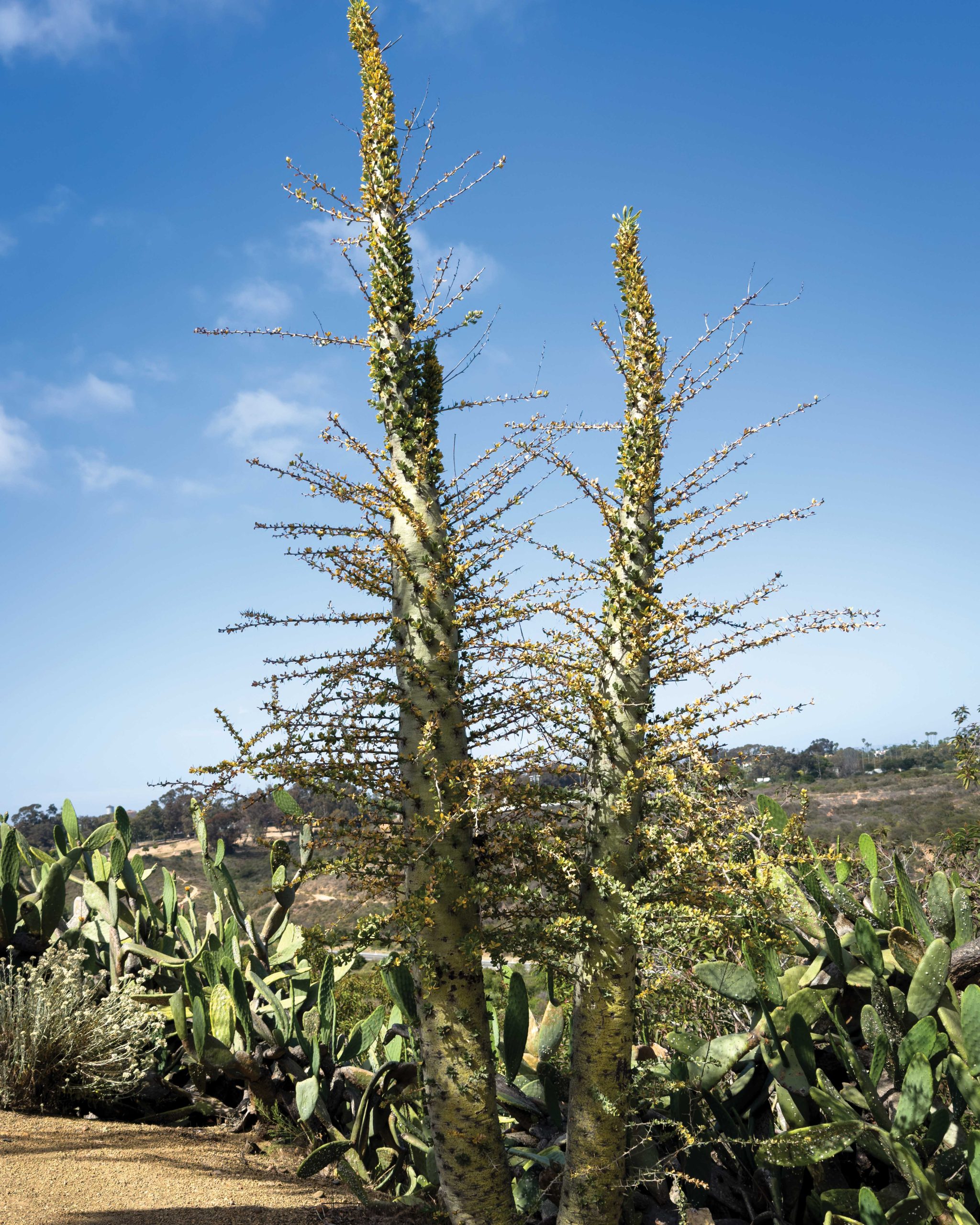
Native to the region of Baja California, the boojum tree is in the ocotillo family, but grows in a tapered tree form, with a base as thick as 24 inches and a height averaging 50 feet. Extremely slow growing, the boojum tree takes 10-20 years to reach just one foot tall from seed.
WHY WE LIKE IT: The unusual upside-down carrot-shaped trunk sprouts tiny green leaves during its active growing season of fall through spring. Its trunk holds water and drops its leaves to conserve water during dry spells. Honey-scented blossoms at the top of the tree attract a variety of pollinators.
Shaw’s Agave (Agave shawii)
- Succulent
- Yellow; spring
- 7′-13’H by 3′-4’W
- Well-drained, sandy soil
- Zones 9a-11b
- Full to filtered sun
- Low water; low maintenance
- Attracts: Bats, hummingbirds, insects
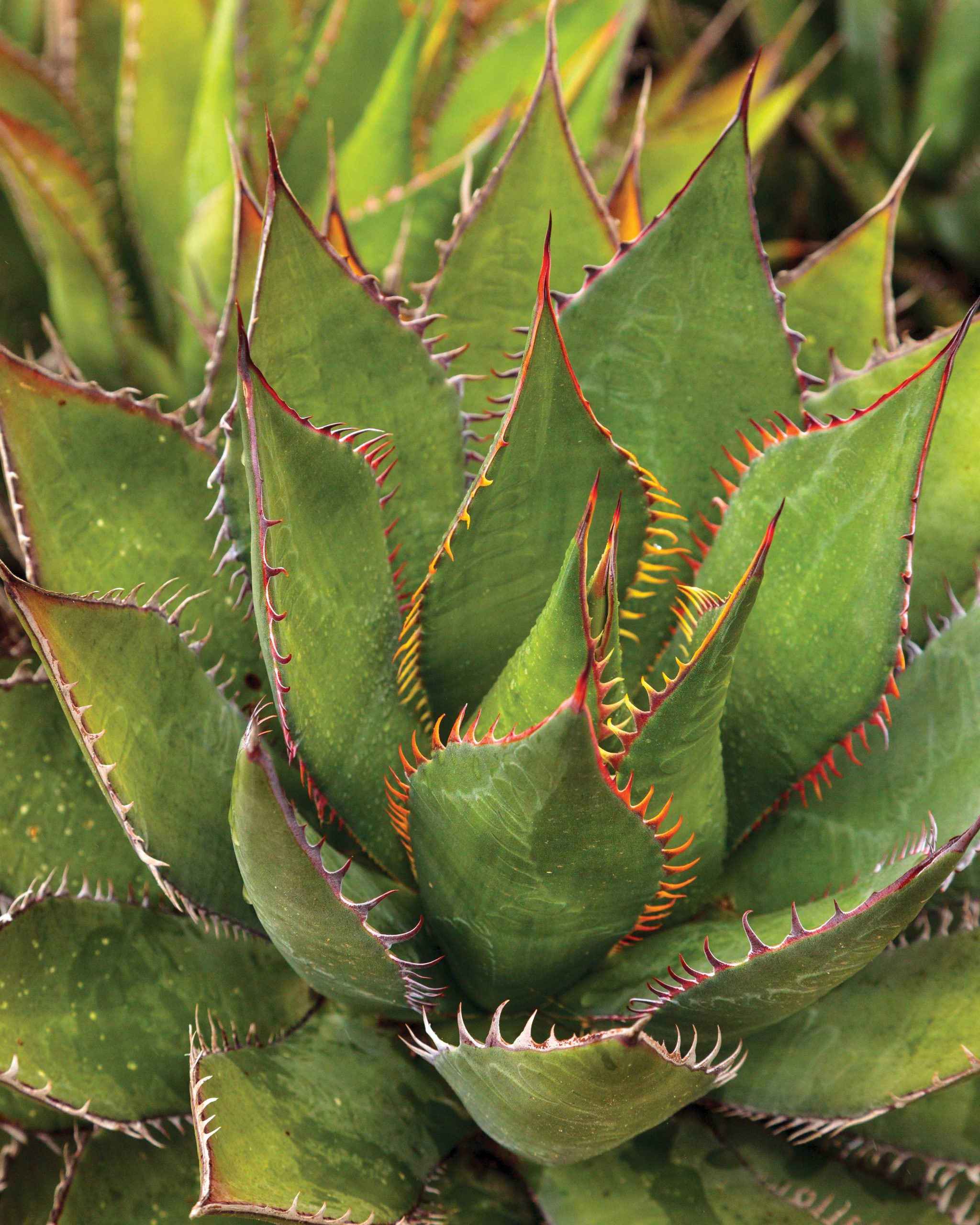
Also known as coastal agave, this long-lived species is native to coastal Southern California. This slow grower does not need supplemental water once established in full-to-filtered sun. Handle with care due to its sharp terminal spines, also called “teeth.”
WHY WE LIKE IT: Valued for its sculptural quality, this large agave sports dark green leaves with red teeth that vary in color throughout the plant’s growth cycle. After many years in the garden, this agave eventually sends up a yellow-flowering stalk reaching over 10 feet tall before it dies, leaving behind a cluster of small offsets, also known as pups.
Desert Spoon (Dasylirion wheeleri)
- Succulent
- White to pink; summer
- 3′-4’H by 4′-5’W
- Well-drained, sandy soil
- Zones 7-11
- Full sun
- Low water; low maintenance
- Attracts: Bees, hummingbirds
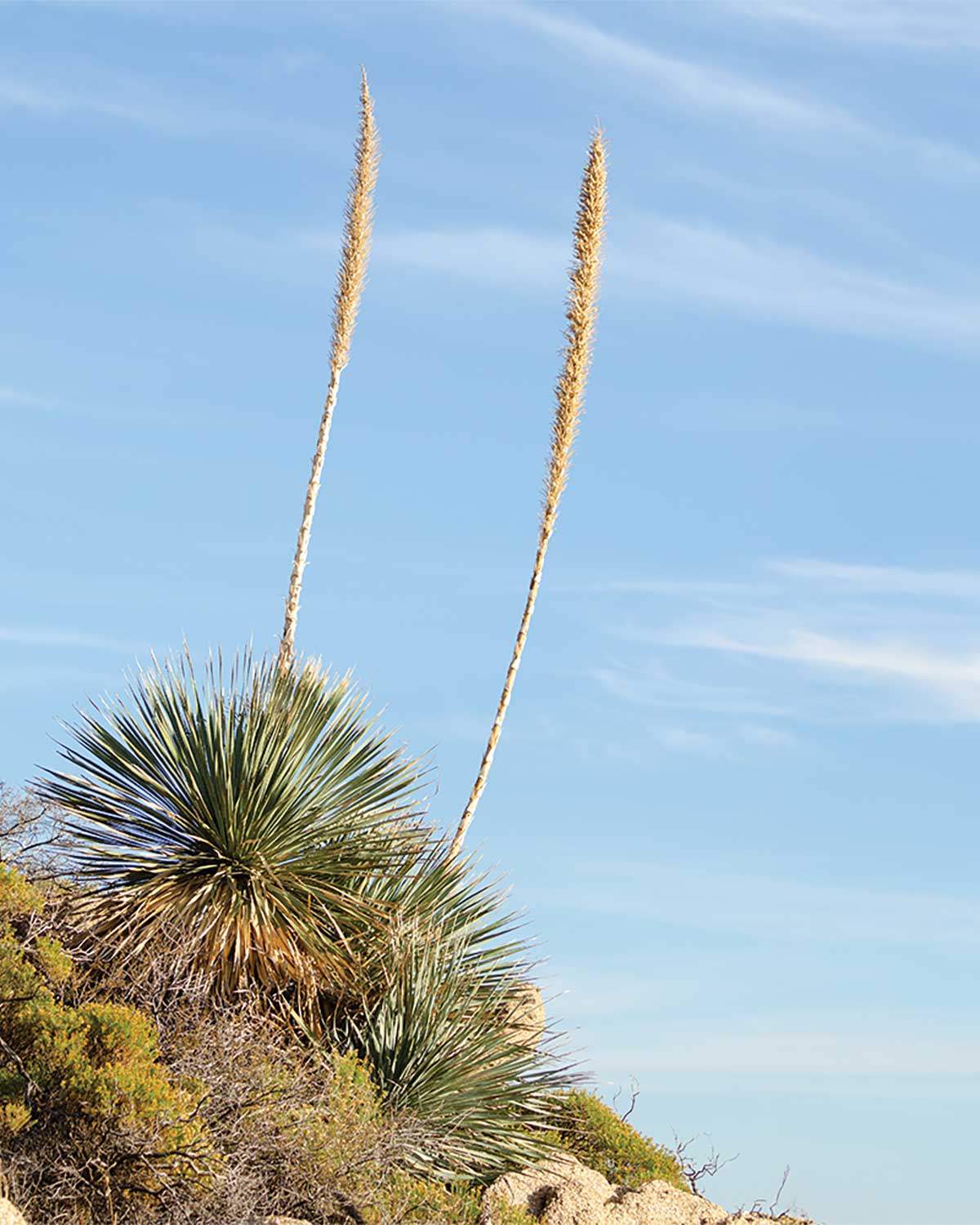
Also called sotol for the traditional alcoholic spirit that bears its name, desert spoon is native to the Sonoran and Chihuahuan deserts, providing many traditional uses for Indigenous peoples, from food to woven items. This long-lived slow grower will eventually form a short trunk, growing at a rate of just inches per year over decades.
WHY WE LIKE IT: Dramatic foliage consisting of slender gray-green leaves as long as 3 feet arch from a central rosette, each with a fine-thorned, spoon-shaped base that lends the plant its common name. In spring, tiny white-to-pink blooms appear on flower spikes as tall as 15 feet.
Mexican Fire Barrel Cactus (Ferocactus pringlei)
- Succulent
- Orange; summer
- 3′-5’H by 1′-3’W
- Well-drained, sandy soil
- Zones 8-11
- Full to partial sun
- Low water; low maintenance
- Attracts: Bees, birds, butterflies
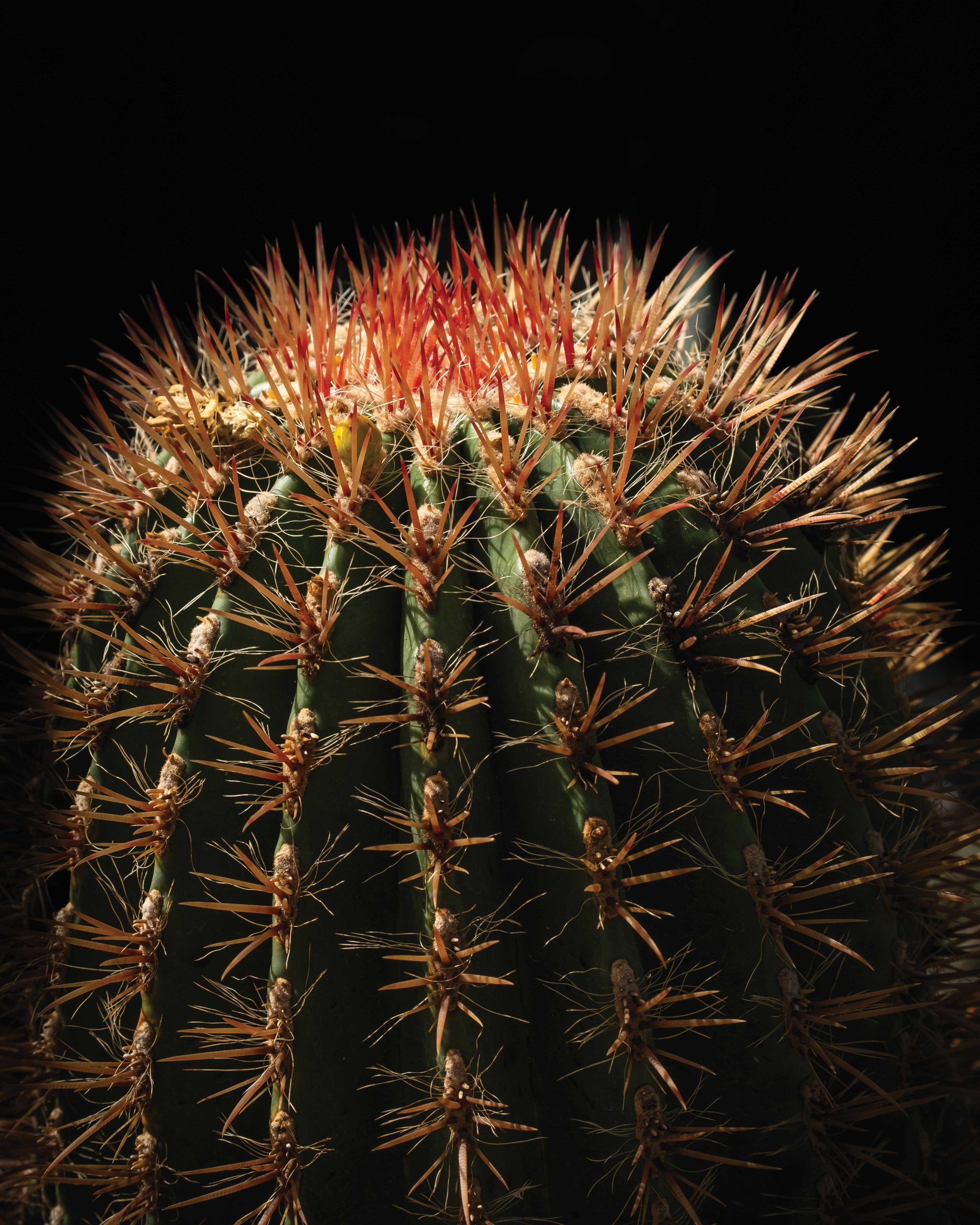
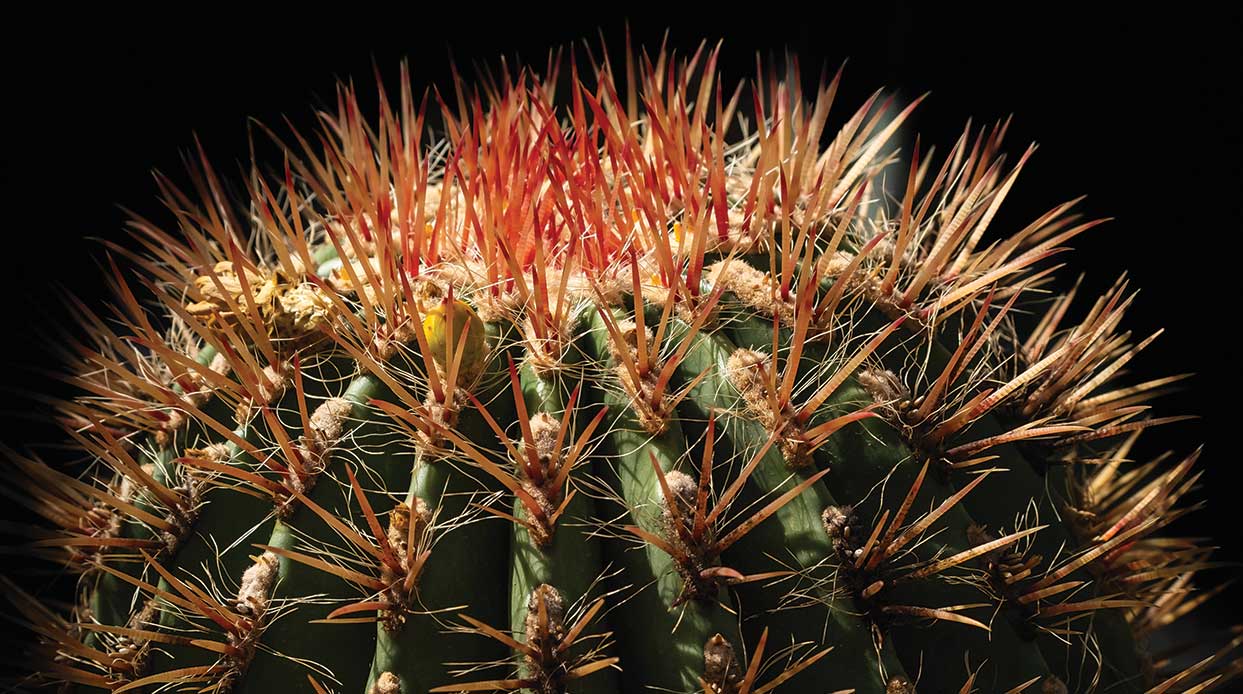
This slow-growing cactus, which is native to north central Mexico, can live as long as 100 years when it is well-managed, taking decades to reach its full height prior to flowering. It often produces offsets that clump at the base. Beware of the fire barrel’s sharp spines when transplanting.
WHY WE LIKE IT: The Mexican fire barrel is known for its dark green stems and fiery red spines that glow in the sun. Its common name derives from dramatic orange-to-red blooms with yellow centers that form a ring around the top of the cactus during late spring or summer.