


Peek Inside the Studio of one of the Valley’s Most Fascinating Architects

Inside the studio (and mind) of celebrated Arizona architect Eddie Jones.
By Robrt L. Pela
With architecture, we’re solving problems, and we want the solutions to be beautiful,” architect Eddie Jones says. “And sometimes, along the way, really neat things happen.”
Jones has made a name for himself with those “really neat” things. Locally, he’s known for his environmentally conscious building designs that predate the modern-day green movement. Globally, he’s the guy who—along with his brother and business partner, Neal, and principal architects Brian Farling and Jacob Benyi—routinely emphasizes the importance of nature and the value of water in buildings worldwide.
In Arizona, the firm’s best-known work includes a renovation of the Harold Wagner sanctuary at Valley Presbyterian Church; a concrete, steel and glass Mariposa Land port of entry structure in Nogales and, more recently, a “secret garden” makeover of the former Phoenix First Baptist Church that transformed a historic ruin into a beautiful downtown event space.
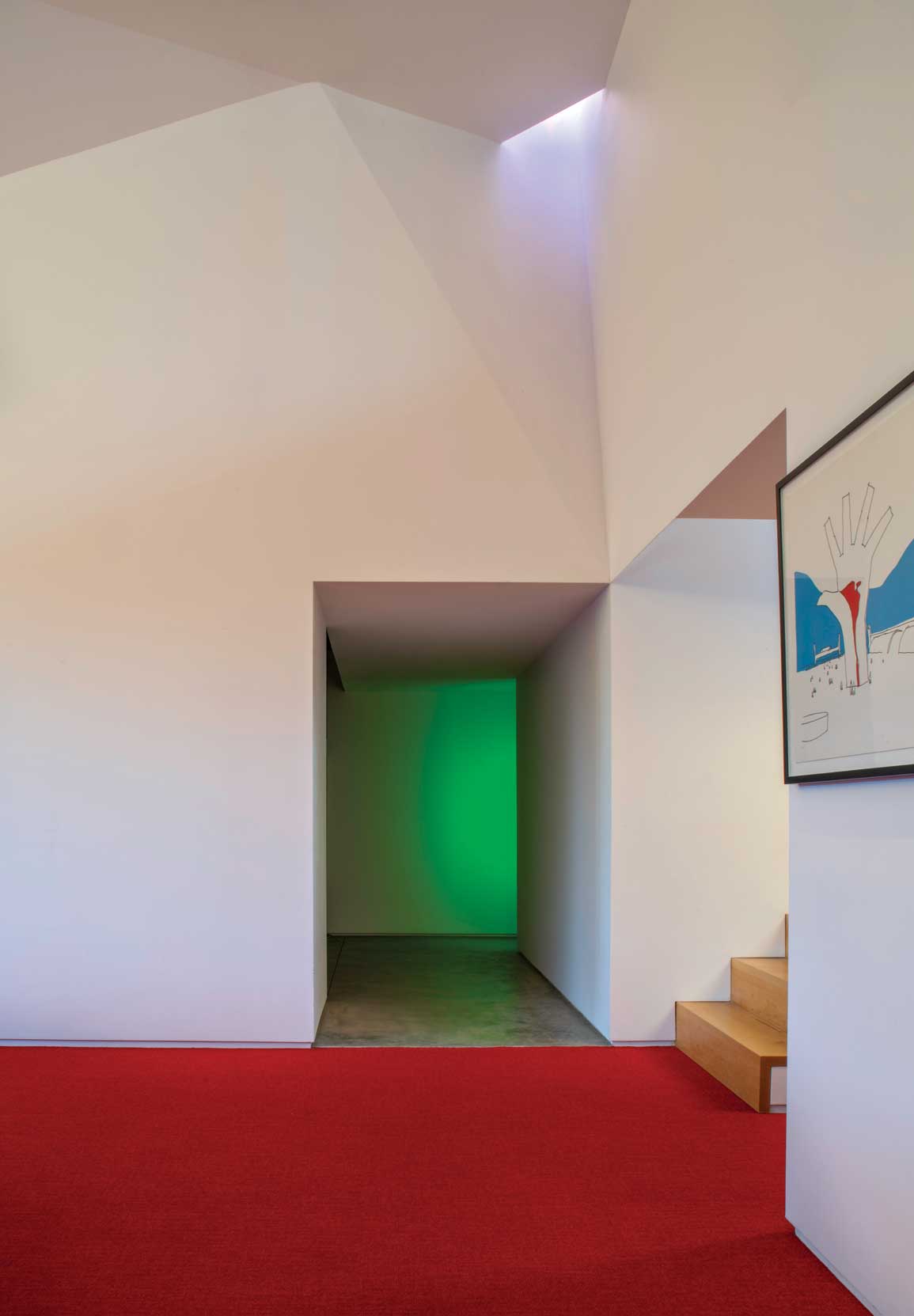
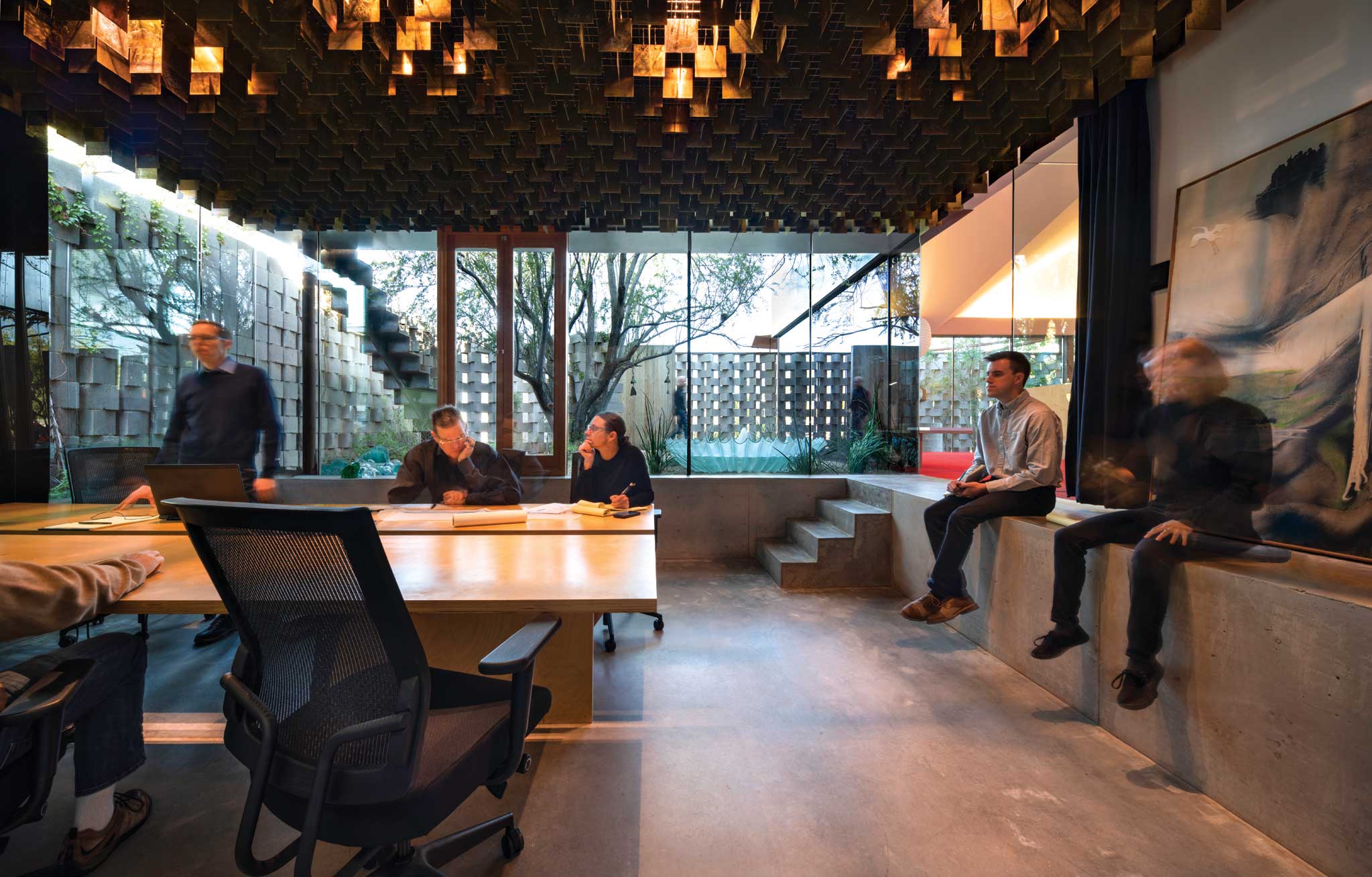
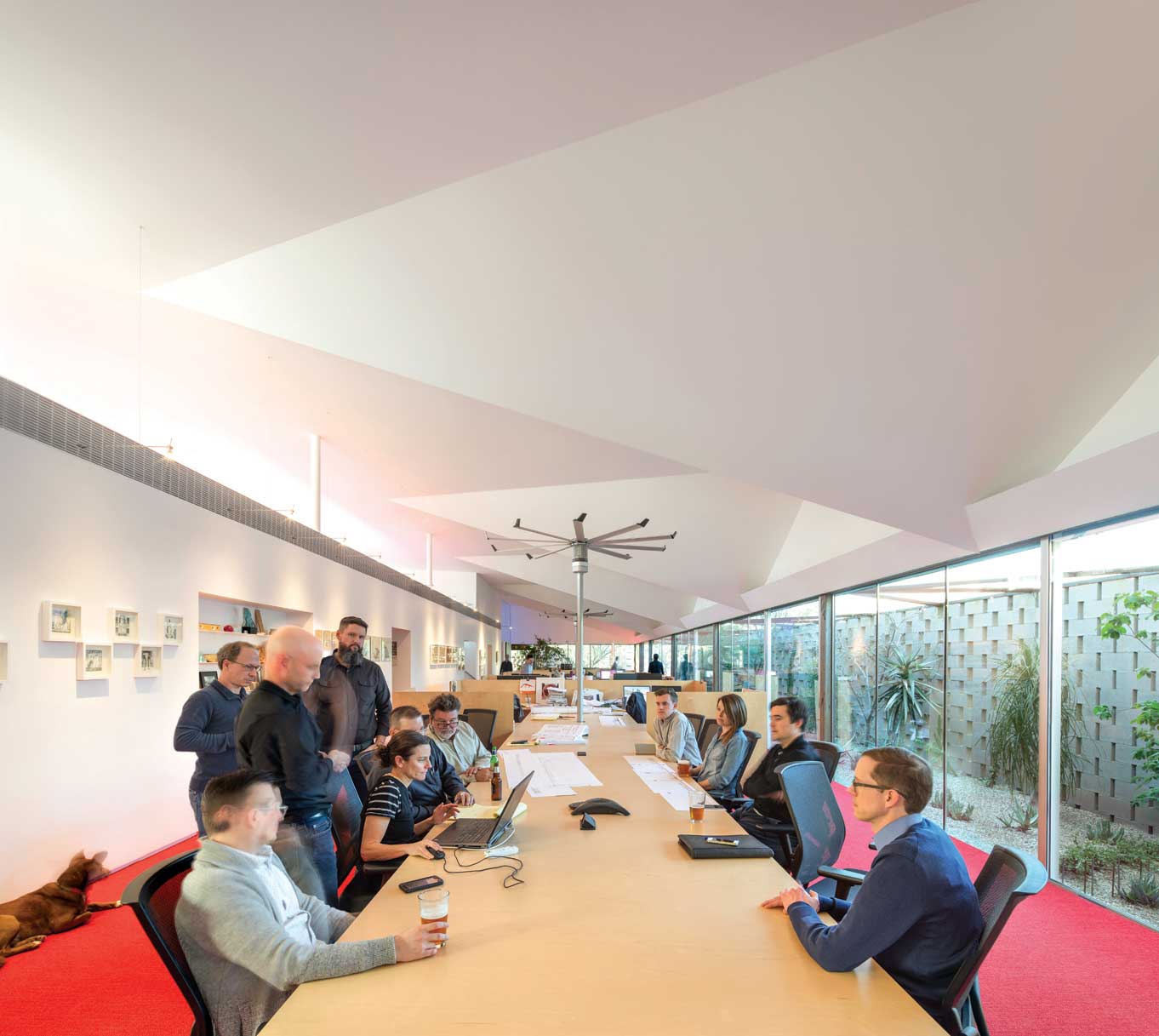
He’s especially proud of Jones Studio, where those other notable buildings were first imagined. Jones’s 6,500-square-foot Tempe office calls to mind an artist’s enclave, with its origami-like roof structure; sculptural ceiling fans; skylights positioned to splash light in particular places and a conference room ceiling covered in tiny brass and acrylic panels that Jones refers to as “leaves.”
“Look at the beautiful light patterns on that wall,” he says from a comfortable chair in that conference room. “That’s coming from a linear skylight reflecting off the brass leaves.” The light play was accidental. Jones hung the leaves there to obscure unattractive smoke detectors and air vents in the ceiling. “The light show on the white wall just happened,” he says. “I couldn’t have planned the beautiful speckles and rays of light we get throughout the day.”
Jones won’t take credit for what appears to be deliberate use of light and shadow here.
“It’s nature and the environment giving something greater than what we expected,” Benyi says. “It’s true throughout the building. On summer afternoons, the western sun hits the red carpeting, and this end of the office turns bright red. At other times of the year, it happens on the other end of the building, turning it pink.”
“I wasn’t thinking, ‘How can I get the ceiling to glow pink or gold fractals on the white walls in the summertime?’” Jones admits. “It just happened. It’s one of the gifts that architecture gives back.”
If you’re Jones, architecture also gives back awards and citations—more than 200 of them over 40 years. The architect arrived here from Oklahoma in 1972; by then, he’d already fallen in love with Arizona, where many of his heroes—including Frank Lloyd Wright and Paolo Soleri—had prospered. He started out designing Housing and Urban Development homes for the Lescher and Mahoney firm but quickly established himself as an architect whose sustainable designs referenced nature in peculiar and interesting ways.
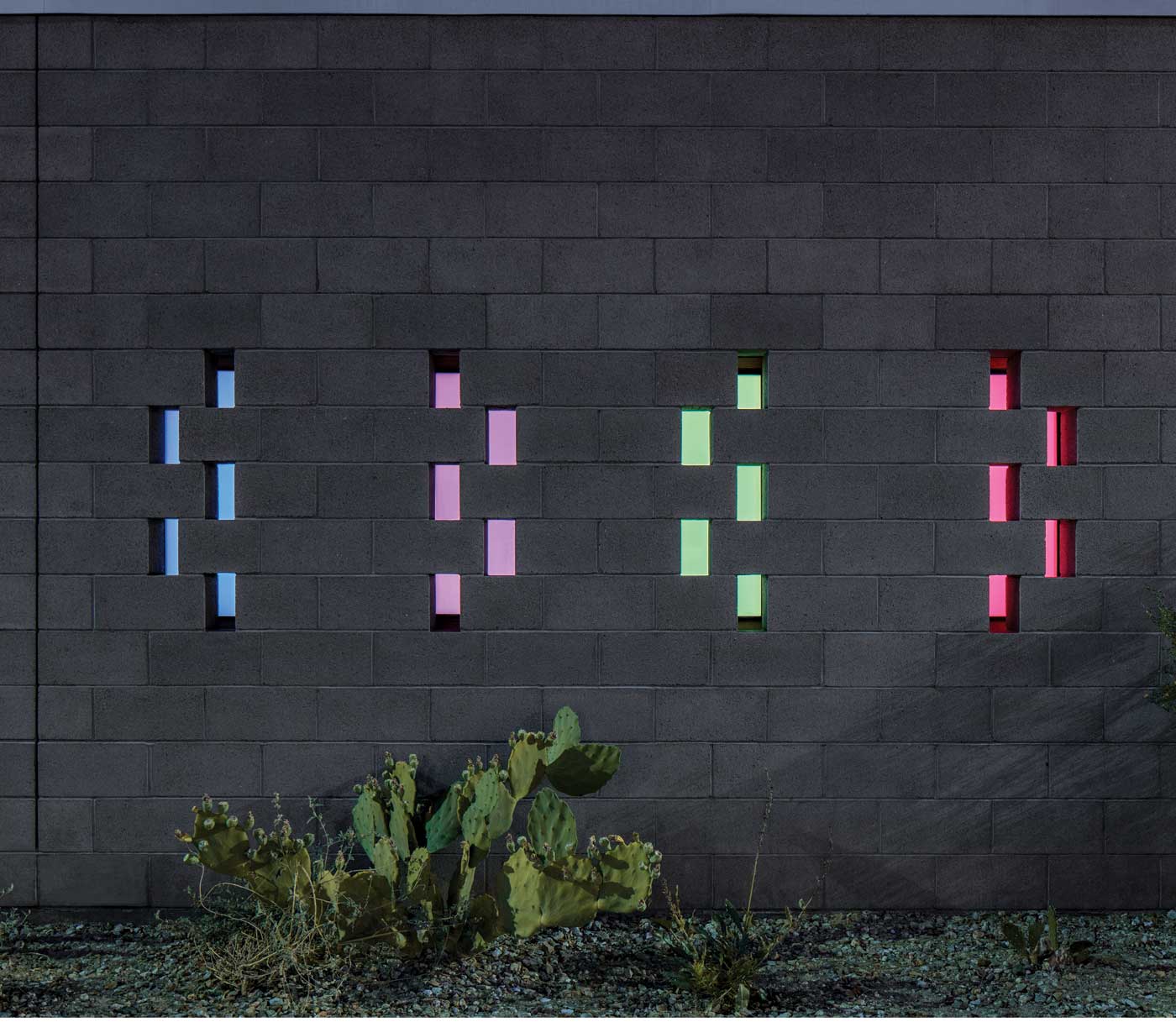
Most of the Jones Studio trophies, Benyi says, are kept upstairs in a closet. Instead, the walls and shelves here are filled with art and artifacts, much of them gifted by other architects—a Bill Tonnesen sculpture here, an Alfred Beadle sketch there. On one shelf, a framed rendering of a house by Bart Prince leans near a sketch of the Louvre and a piece by famed architect Brian Andrews called “House for Hitler.” Nearby, another shelf holds a roof tile from Frank Lloyd Wright’s Taliesin, a chunk of mortar from Tokyo’s Imperial Hotel, and the neatly stacked dominoes Jones used to design the office’s exterior block wall.
“We wanted a north-facing glass wall to catch the beautiful indirect daylight,” Jones says of the design, “but we didn’t want to look at car bumpers. We wanted to see a garden. We needed a screen wall.”
With an eye on his budget, Jones chose concrete block, the least-expensive masonry he could use. “Then I had to figure out how to make it breathe and create some interesting shadow patterns. The wall starts straight, and then it begins to morph, pull apart and turn. By the time it ends, the wall has turned 180 degrees. It may look random, but it’s not.” Beyond the wall, the Jones Studio parking lot resembles a Sonoran garden of desert plants and sand-colored gravel; there’s no white-striped asphalt or ADA signage here. The vegetation is fed by the sculptural, steel-canopied roof of the building.
“All the rain that hits our roof drains into a concealed gutter,” Jones says of his design. “The gutter takes the water to a pair of canopies and is channeled into a 2,500-gallon underground cistern that irrigates our landscape.”
Back inside, Neal Jones points out the studio ceiling his brother designed to address a structural question about how to support the north-facing glass wall. “In the end,” Neal says, “we got this beautifully folded ceiling that distributes natural daylight throughout the room.”
Beneath that ceiling there’s a bright-red meeting room and a tree growing out of a neatly dressed hole in the floor. An upstairs loft overlooks an airy, open-format workspace and is anchored by a solid-oak drafting table that was a long-ago gift to Eddie from his and Neal’s father.
“When he gave me this table,” Jones recalls, “it was like he was saying he already saw me as an architect. That meant a lot.”
One of Jones’s favorite details is the amber glass railing that rings the Jones Studio rooftop.
“On summer mornings, the sun shines through that amber glass and casts a gilded shadow onto Wilson Street,” he says. “I didn’t plan that. I couldn’t have. But I find myself stopping my car and enjoying that shadow before turning into our parking lot. I mean, who wouldn’t love to go to work every day and be bathed in gold?”

“It’s nature and the environment giving something greater than what we expected. It’s true throughout the building. ”
—Jacob Benyi, architect


SOURCES
- Architect: Eddie Jones, FAIA, Jones Studio, Tempe, jonesstudioinc.com.
- General contractor: Rich Fairbourn, owner; superintendent: Budd Conn, Build, Inc., Phoenix, buildinc-arizona.com.