



June/July 2024 Garden Checklist and Solutions
Hello Friends,
Summer is here, and after the record-breaking heat of 2023, I am hopeful that we will experience lower temperatures this year. But it’s wise to be ready for whatever the season has in store for us. Let’s begin by exploring strategies we can implement now to help mitigate the effects of hotter weather and reduce summer stress for plants.
It’s no secret that this is the most difficult time of year in the desert landscape when the intense sun and heat lead to drought stress, sunburn and insect damage for plants. Water is essential for gardens, especially in summer, and while it is tempting to stay indoors in air-conditioned comfort, it’s important to ensure that your irrigation is working properly. Check out my guidelines for how to do an audit on your watering system to identify any problems.
In our next issue, I will take a look at how to care for your trees and plants during the monsoon season, including how to manage the water from torrential rains.
I welcome your questions, which may be featured in a future Garden Solutions section. Please send them to me at info@azplantlady.com.
Noelle, aka “AZ Plant Lady,” azplantlady.com
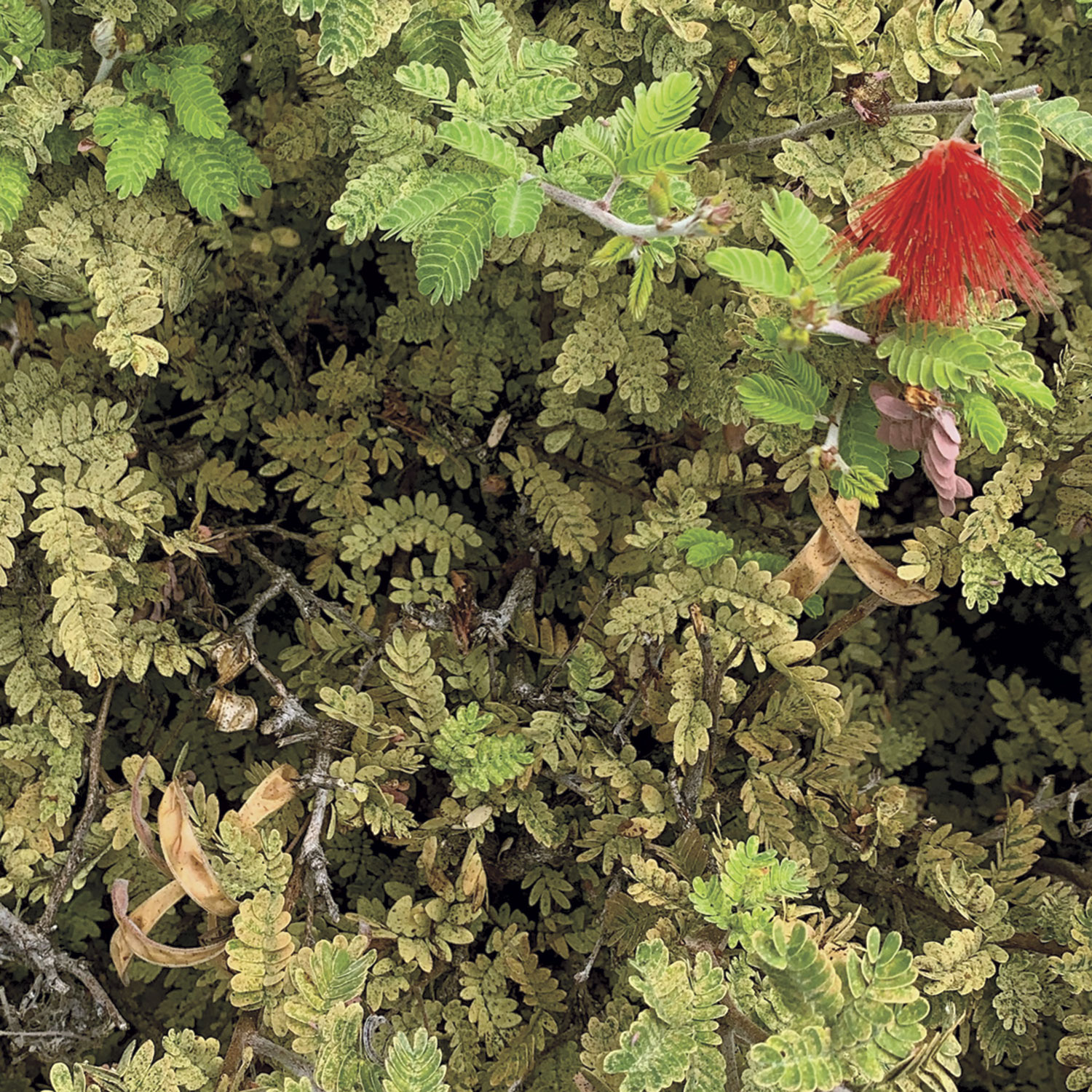
In summer, the leaves of some of my plants, such as Baja fairy duster, pyracantha and roses have a speckled appearance and small webs on them. It seems to happen each year once it gets hot. What causes this, and can I avoid this problem?
What you are describing is the damage from spider mites, which are tiny arachnids that love hot, dry weather and dust. They prey on both ornamental plants and vegetable gardens. To determine if a plant is affected, tap the foliage over a sheet of white paper. If the pests are present, you will see very small rust-colored specks that are moving. These unwelcome visitors congregate on the undersides of leaves and feed on the fluid within plants, causing yellow speckling on foliage and sometimes white webbing. The solution is simple—spray the affected plants with water from your garden hose three times a week for at least a month, which will remove the mites and the dust that attracts them. It will also increase the humidity around the plant, which is helpful. You can also be proactive and begin doing this early in the season before the damage shows up. Be certain to spray underneath the leaves where the mites are usually located.
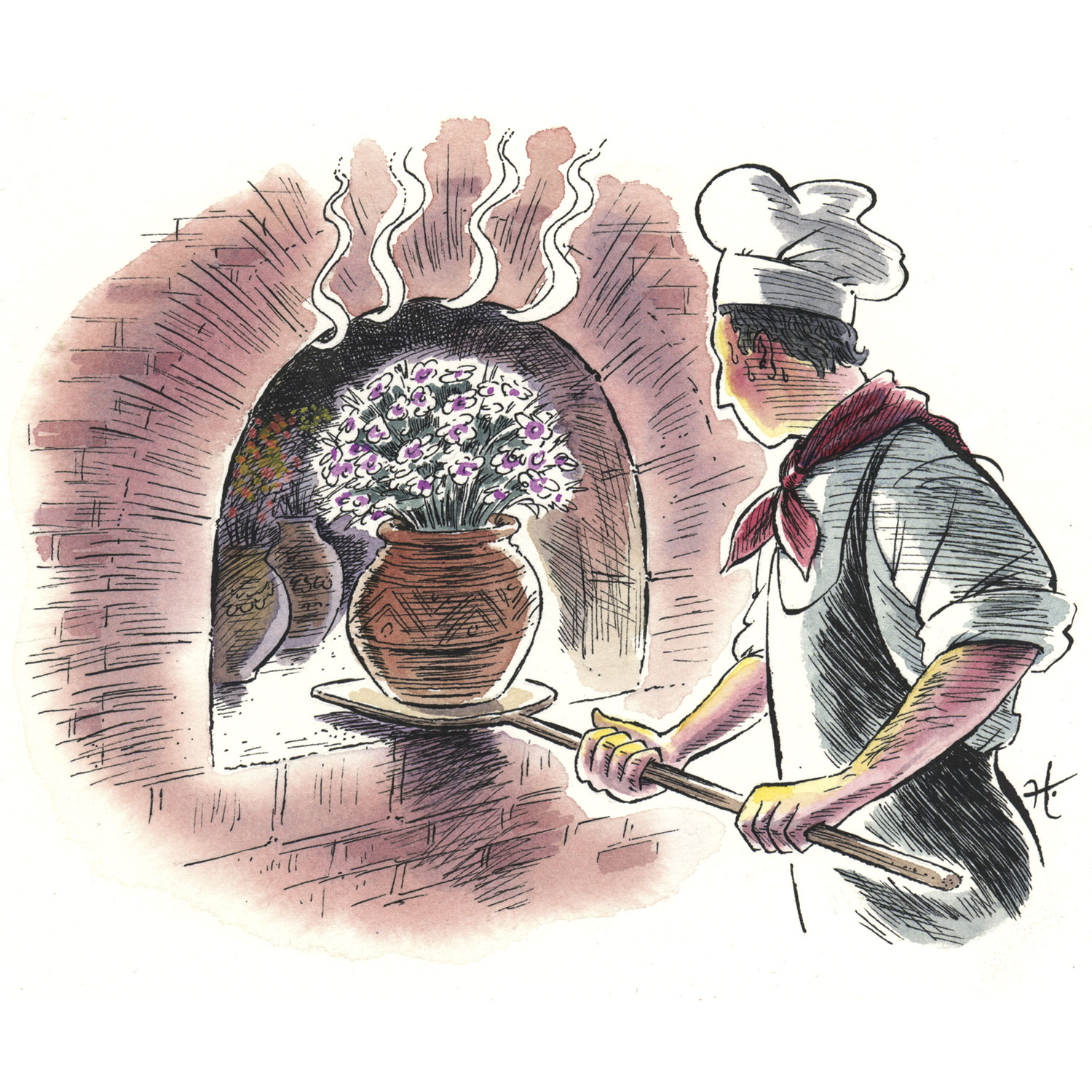
I love growing flowers in outdoor pots and watering them by hand. My cool-season annuals do very well through fall, winter and spring, but the flowers I add for the summer struggle to survive. I water and fertilize them, but that doesn’t seem to be enough. I see the same annuals do well in other people’s gardens—what am I doing wrong?
During hot weather, the temperatures literally “cook” the roots of plants and cause the soil to dry out quickly. This is especially true in smaller vessels since there is very little to protect them from the heat. The good news is we can enjoy the benefits of container gardening in the desert. The key to success is to select larger vessels that hold more soil and provide more insulation for the roots. A good minimum size is 16 inches tall and wide (don’t be afraid to go even larger). A bonus is that larger containers can hold more water and won’t dry out as quickly. Another option is to place your pot into a larger one, which will provide extra summer protection.
Low to Middle Elevations
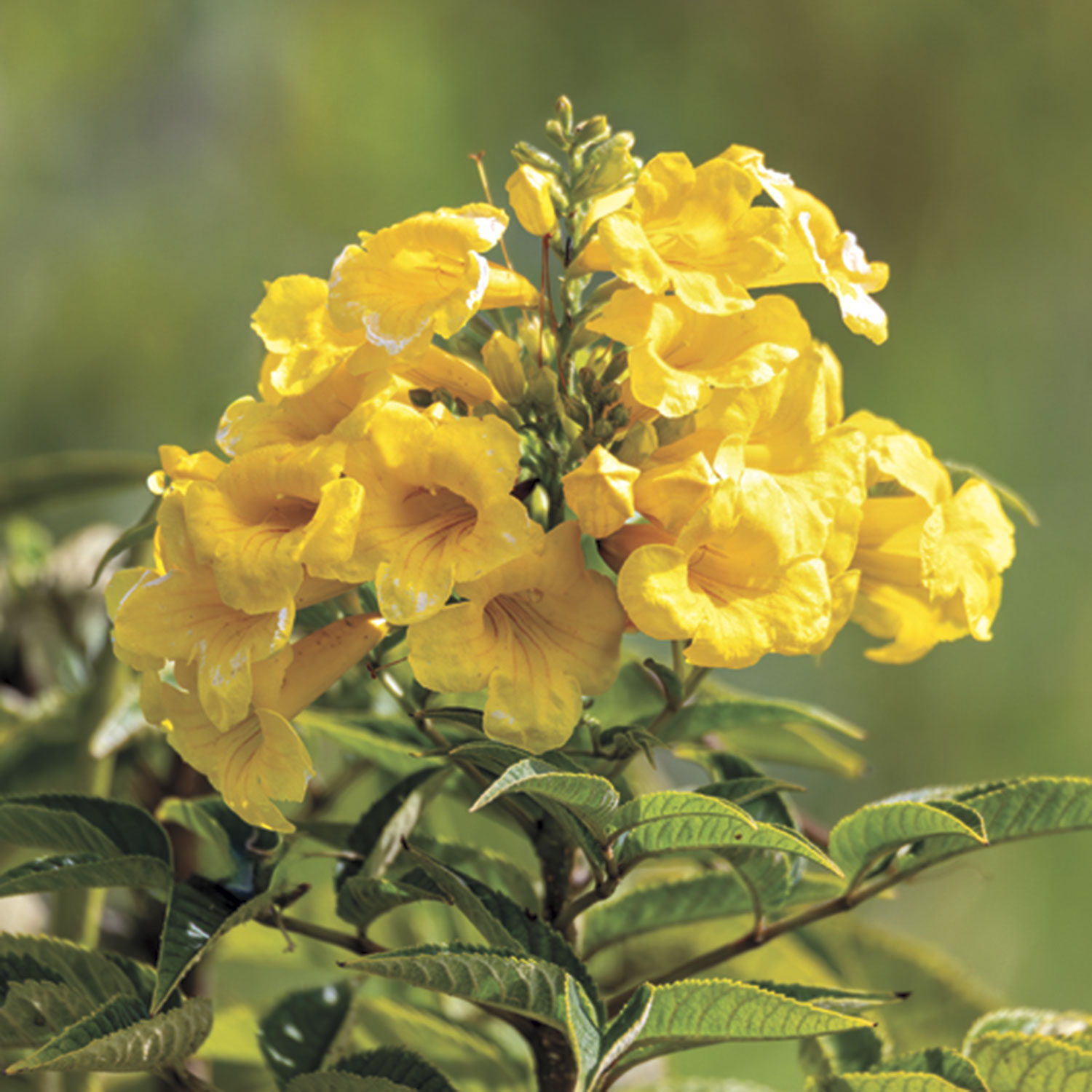
Keep a lookout for caterpillar damage on flowering shrubs, such as yellow bells (Tecoma stans) and related cultivars. The Tecoma leaf tier caterpillar (Antigastra catalaunalis) feeds on new growth, causing dried, skeletonized leaves. These pests are most active during warmer months, including summer. Monsoon rains will increase their numbers. This little caterpillar is very difficult to spot, but they leave behind small, black fecal droppings. Established shrubs can handle the damage with no intervention. However, younger plantings can be adversely affected. Where damage is significant, spray with Bt (Bacillus thurgiensis), an organic pesticide that targets the caterpillars. Repeat only if you see new damage.
Irrigate plants in the early morning to maximize efficiency. If your sprinklers turn on in the middle of the day, 50% of the water immediately evaporates into the atmosphere. Plants prefer being irrigated in the morning when it is cool, which allows them to better take up water. They cannot absorb it as efficiently later in the day as they deal with the stresses that the sun and heat bring.
If you have a lawn, allow the grass to grow taller to provide shade to the roots. Frequent mowing exposes the base to sunlight, which dries out the soil more quickly. Let grass grow to a height of 3 inches before you mow it and cut no more than one-third of the height. This will save water and help to prevent weeds, which need sunlight to germinate. Instead of bagging up your lawn clippings, let them remain on the surface, as they break down quickly and add nitrogen to the soil.
For a bright splash of color, plant sunflowers in your vegetable garden or containers. These annuals love the heat and do well throughout the summer. The seeds can be planted every four to six weeks through August to provide a nonstop floral display. From the tall, single ‘Mammoth,’ to the shorter ‘Teddy Bear’ (which has a less prominent center), there are countless varieties to try.
High Elevations
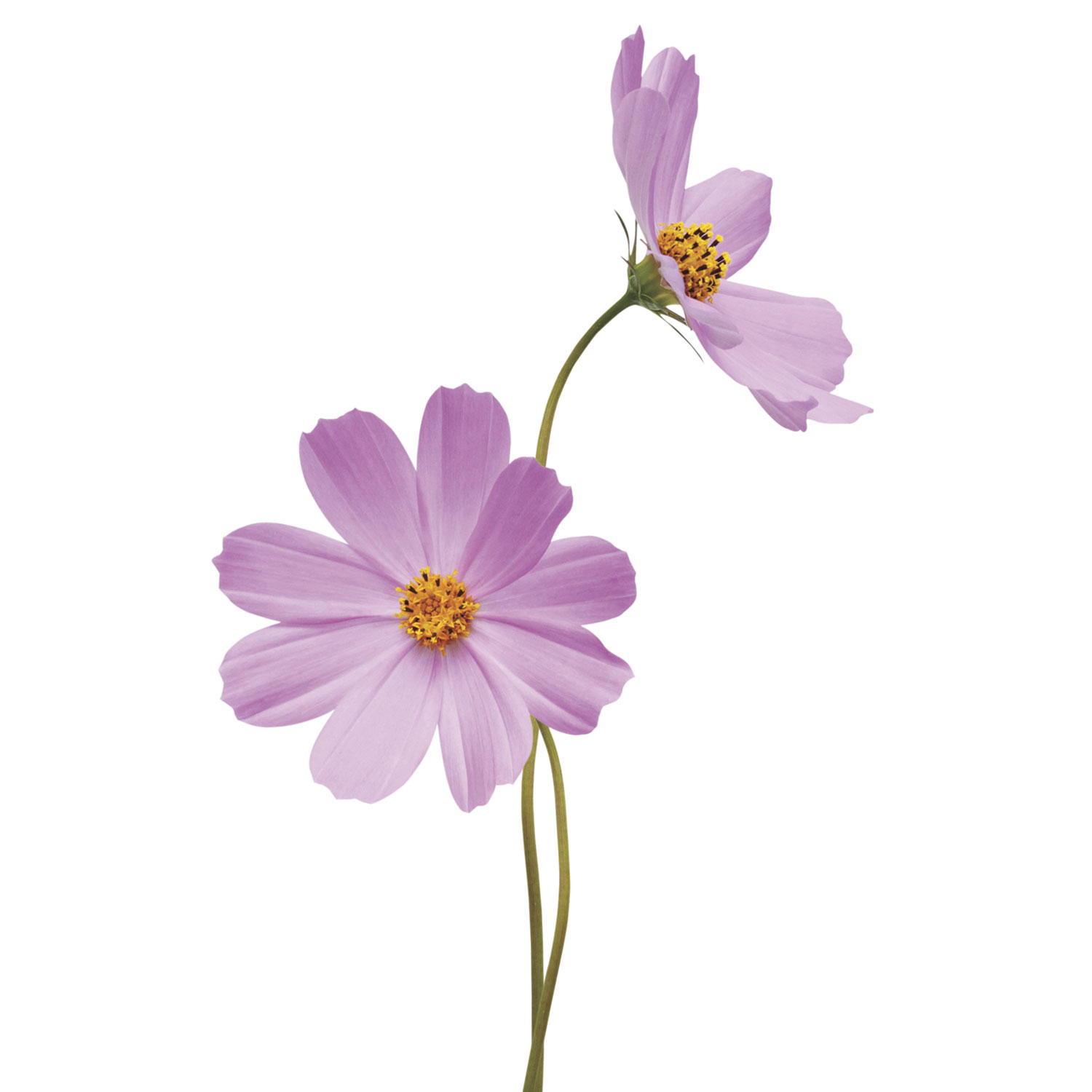
Plant summer flowers such as cosmos, marigolds, vinca or zinnias. If using an existing pot with soil, remove at least 6 inches of soil and top with new container potting mix. Add a slow-release fertilizer to provide a steady supply of nutrients. Water when the top inch of soil is barely moist.
Add a layer of mulch around plants to prevent the soil from drying out. Pine needles are an excellent material to use for this purpose, and they also help to naturally acidify our alkaline soils. Apply a 2- to 3-inch layer, but don’t pile it up against tree trunks or shrubs. Leave a few inches of space to prevent a favorable environment for fungi or damaging insects to thrive.
Feed vegetable gardens monthly using an organic fertilizer that is formulated for edible plants. Established beds that are at least 2 years old may not need to be fed as often, as they tend to be richer in nutrients due to earthworm activity and the addition of compost (organic matter) over time.
I have a monthly landscape service that prunes my plants each time they visit. Last summer, several of my shrubs and ground covers seemed to do worse than my neighbor’s, who doesn’t have their plants trimmed often. I’m thinking it might be the frequent maintenance that caused mine to do poorly. Should I continue this service through the heat of summer?
Last year, during our record-breaking heat, many of the plants that showed browning foliage were pruned during this time of extreme temperatures. Summer is the time to leave shrubs and ground covers alone. Triple-digit heat and low humidity put additional stress on plants and trimming makes it even harder for them. It also can lead to sunburn by exposing the growth underneath. Removing a wayward branch or two is fine, but other than that, most pruning should be done in spring.
Heat-proof strategies for a beautiful, resilient garden
If you drove down any neighborhood street last summer, you likely spied yards (including your own) filled with yellowing cacti and trees, shrubs and ground covers with burnt foliage. By the end of the season, I saw countless landscapes filled with dead plants. Last year’s extra-high temperatures made its presence known, even affecting many so-called “heat-proof” plants. It was overwhelming, to say the least. We cannot predict what this season will bring, but the overall trend is summers with higher temperatures.
So, is it time to throw in the towel and have a landscape composed solely of rocks? The answer is no. There are things you can do that can modify the climate around your house that can lower the temperatures by several degrees, which can make a difference in how well plants perform.
• Replace plants that struggled in the high summer heat with ones that did well last year, whether you observed them in your own garden or around town.
• Add plants at the right time of year. Avoid setting out during hotter months, as they will often struggle to survive. Fall, winter and early spring are the optimal times to bring in new flora to allow them time to grow a healthy root system, which is vital to being able to take up water in summer.
• Introduce more shade to your landscape. Trees are an excellent way to do this. Chinese elm (Ulmus parvifolia), mesquite (Prosopis spp.) and paloverde (Parkinsonia spp.) have broad canopies that provide welcome relief from the sun. For areas too small for a large tree, consider small -to medium-size varieties such as mulga (Acacia aneura), cascalote (Caesalpinia cacalaco), or desert willow (Chilopsis linearis). Large shrubs, such as hopseed bush (Dodonaea viscosa), Arizona rosewood (Vaquelinia californica) and orange bells (Tecoma alata) are excellent shade options for narrow areas.
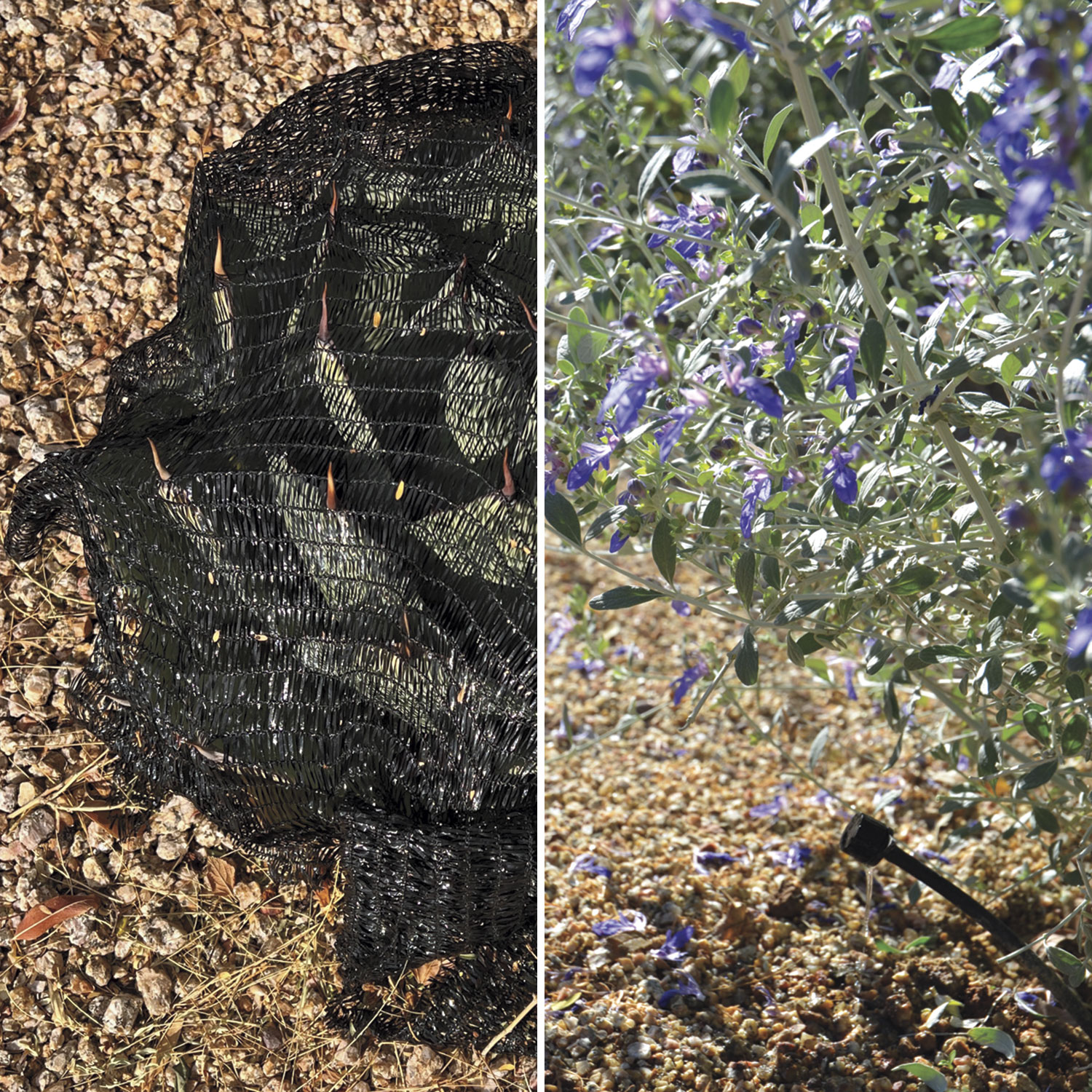
• Add temporary sun protection if plants show signs of heat stress, such as yellowing, wilting and browning. Shade cloth can serve as “sunscreen” in summer and can be draped over the plant. Shade cloth with 50% light diffusion is good for leafy green plants, such as young citrus trees, shrubs, vines and ground covers. For succulents, such as agaves, 30% shade cloth is recommended. Remove the cloth in mid-September, once the sun’s intensity has lessened.
• Reduce reflected high temperatures around your yard by adding shrubs against concrete block walls. Shrubs that grow at least 5 feet tall will cover much of the wall’s surface, preventing it from radiating heat. Bougainvillea (Bougainvillea spp.), Texas sage (Leucophyllum spp.), feathery cassia (Senna artemisiodes) and yellow bells (Tecoma stans) are good choices. Be sure to allow them to grow large so they can provide coverage.
• Cover decomposed landscape granite with plants and provide shade where possible. The rock mulch that covers many yards absorbs and radiates heat. In addition to shade from trees, group ground covers, such as ‘Outback Sunrise’ emu (Eremophila glabra ‘Mingenew Gold’) or gold lantana (Lantana x ‘New Gold’). Space them closely enough that they will touch, creating an attractive swath of green. Allow existing plants to grow larger, which will cover up more of the rock. Consider using organic mulch such as bark, compost, leaves, straw or wood chips instead of landscape granite where possible.
Preparing your irrigation system for summer
Water is vital to the survival of most of our plants at this time of year. However, problems with your irrigation system may remain hidden until you notice dead flora or a higher utility bill. Thankfully, you can prevent many of these unwelcome surprises by taking a walk through your garden.
When your irrigation system is on, look for any unexpected wet spots on the ground and repair any drip emitter heads that have popped off. Deposits from Arizona’s hard water can plug the small holes of an emitter, so check that each plant is getting water. If the emitter is hidden under the plant, you may need to lightly dig to see that the soil is moist. Look for signs of drought stress, such as yellowing/browning foliage, abnormally smaller growth or wrinkling of succulents, which can indicate problems.
Wilting and yellowing of foliage are signs of under- and over-irrigation. If the soil around the plant is dry, it isn’t getting enough water. If the soil is fairly moist, it’s likely receiving more water than it needs. Evaluate your irrigation schedule to ensure you are following the correct guidelines. If only a few plants are affected, switch out the drip emitter for a different size.
Many irrigation timers are powered by electricity but have a battery in case of a power outage, which can occur during monsoon season. If your timer uses a battery as a backup, switch it out with a fresh one. You can find instructions online for your model, including how to perform this task.