


Hanging by a Thread: Carol Eckert’s Fiber Sculptures Tell the Story of Human Impact on Nature
By Paula M. Bodah | Photography by Carol Eckert
Carol Eckert’s intricate artworks crafted of thread and wire elevate a millennia-old basket-making technique to a true art form.
On a typical day, Carol Eckert is at work first thing in the morning, dealing with emails, paperwork and the other office tasks that go along with being one’s own boss. By noon, she’s in the studio at her Tempe house, where she spends the hours left in her day with the simple tools of her art: wire, thread and a needle.
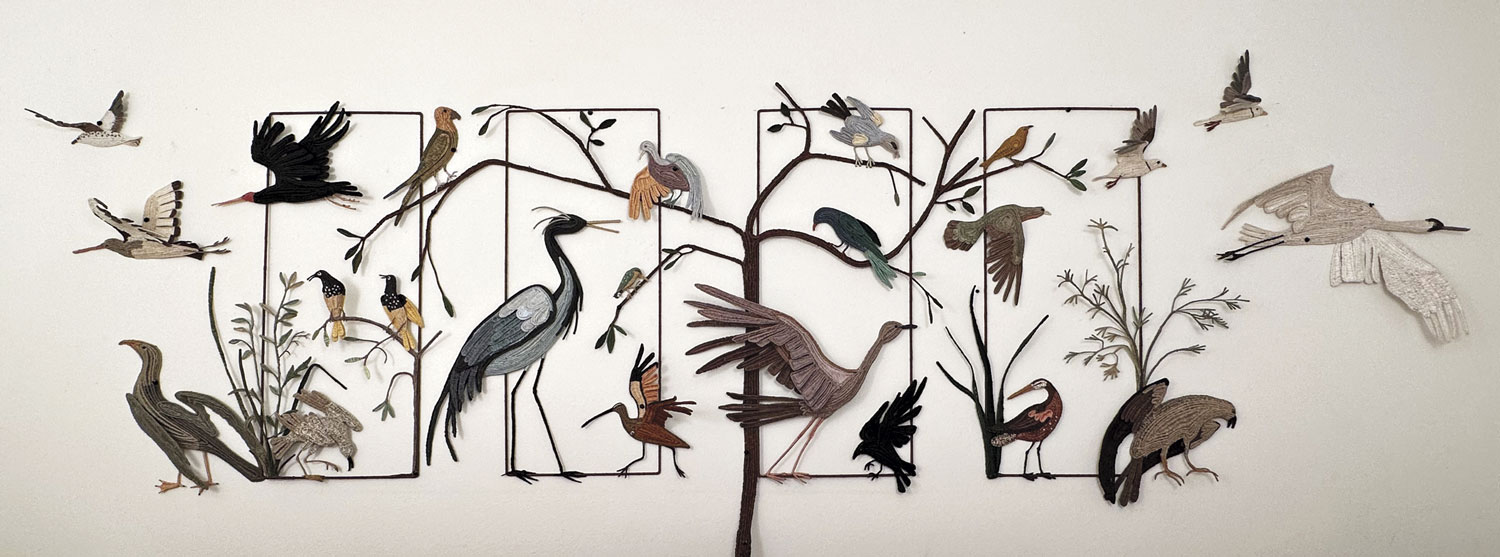
The tools are basic, but the results are anything but. Eckert creates intricate, highly textured sculptures on a large scale, using figures from land, sea and air—flowers, animals, fish, birds and insects—to tell complex stories about the relationship between humans and the natural world. Many of her figures reference mythology or use animals as symbols. “I like the universal nature of animal symbolism,” she says.
Her techniques are based on basketry methods from more than 10,000 years ago when people first figured out how to coil natural fibers to create functional pieces for everyday use. Vessels made of twined grasses to store food or household goods were sturdy but light, the perfect option for hunter-gatherers on the go.
Over the centuries, basket makers began to personalize those ordinary vessels, adding beads or dyeing the fibers to add color and pattern.
Eckert came to her unique version of the art form in a roundabout way. She had earned a bachelor’s degree in painting from Arizona State University, but, she says, “I wasn’t painting much.” While leading art classes, she was searching for something she could teach children when she came across traditional coiled basket-making. “It suddenly just felt right,” she recalls.

Even in those early days, she incorporated the themes she currently explores. “I made vessel forms, often with creatures on them. The pieces became more complex, and eventually the vessel components disappeared,” she explains.
Her work now consists of large-format sculptures and wall hangings, but the focus remains the same: the delicate relationship between man and the natural world. In recent years, she finds herself influenced by her increasing concern with the state of the environment. “My view has gotten a little darker when I think about the environment and what we’re doing to it,” she says.
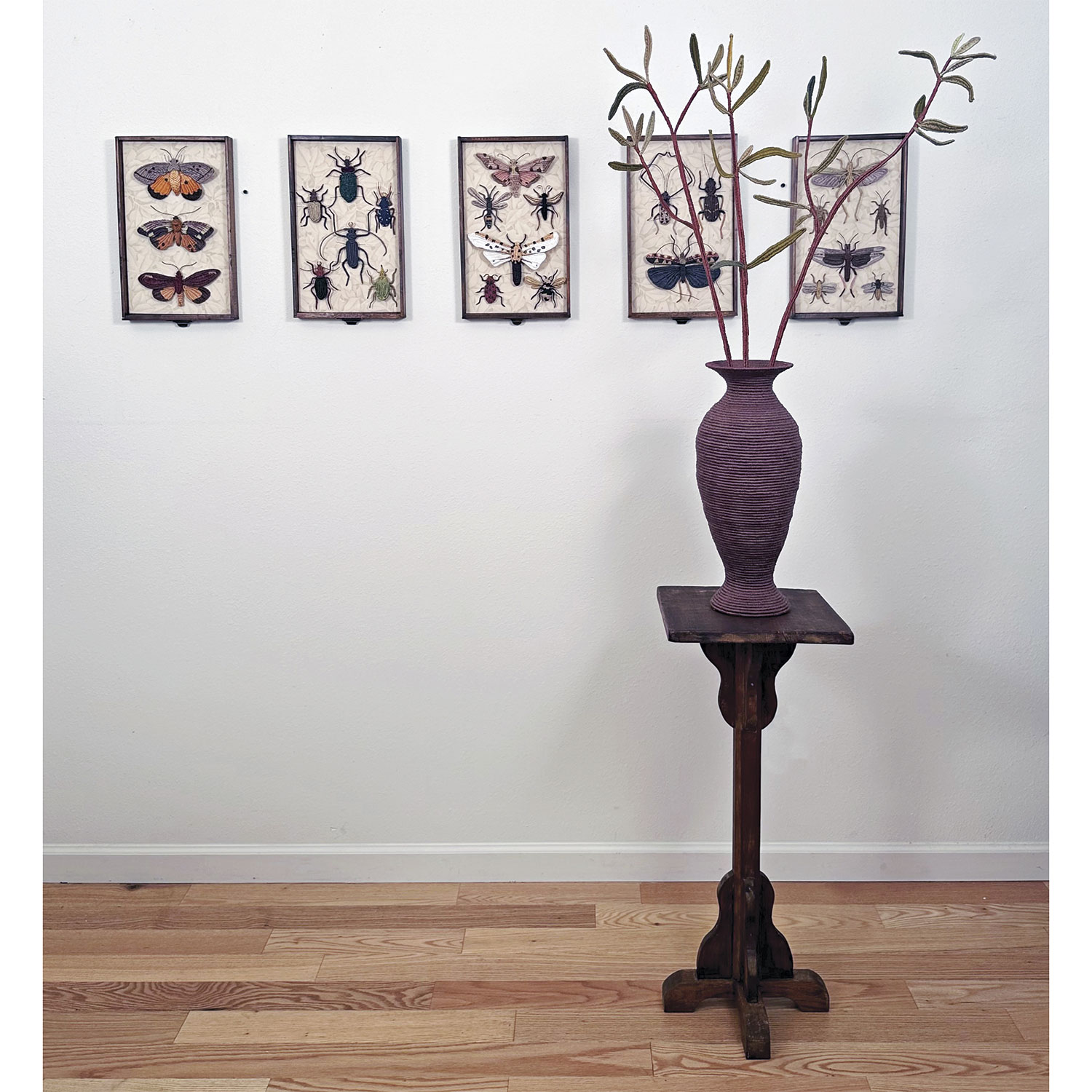
She also operates on an increasingly larger scale. A recent wall piece called “The Fall of Icarus” measures 79 inches wide by 38 inches tall.
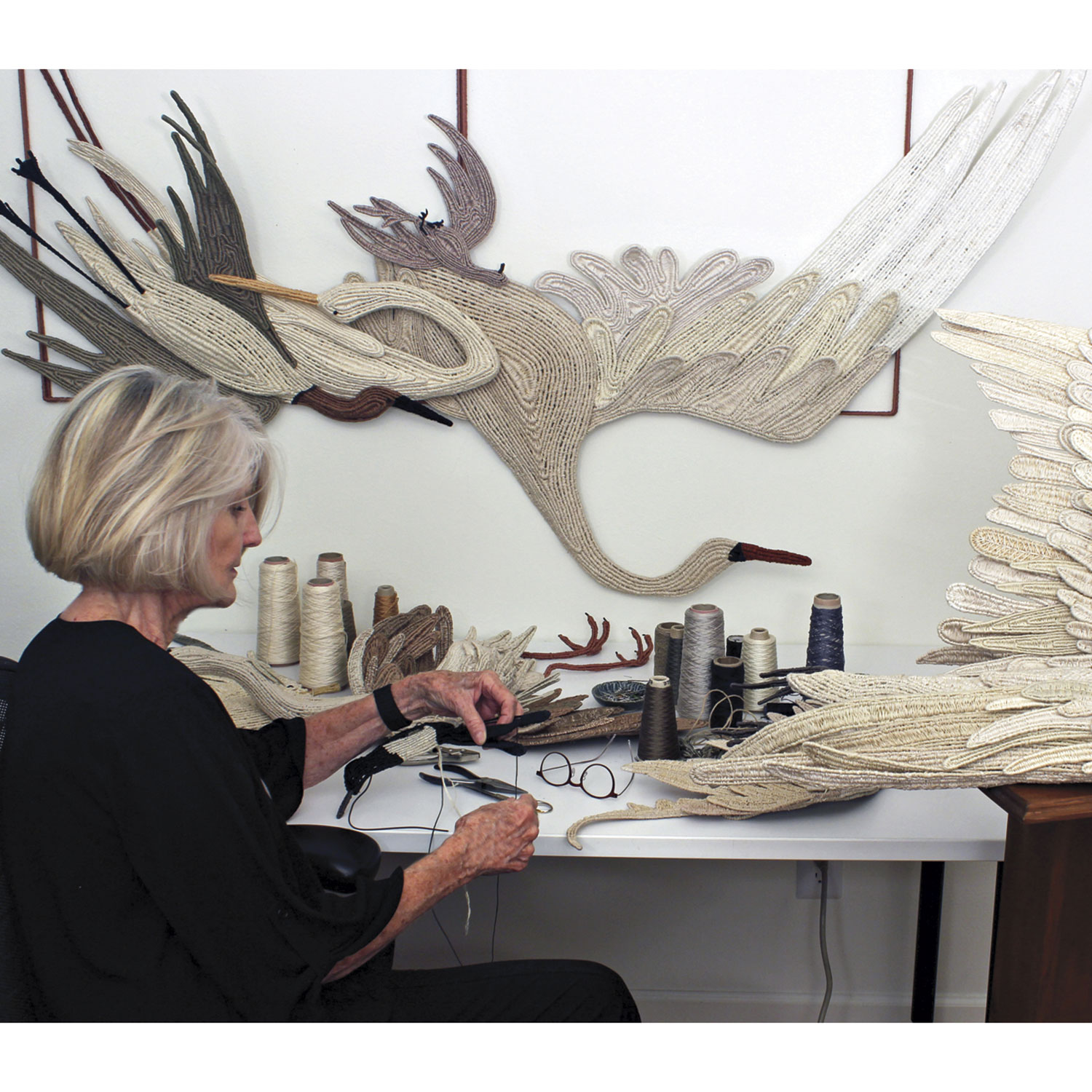
Eckert first sketches what she wants to design, then follows her drawing closely. She coils fiber—usually cotton or linen thread in various weights and, typically, a muted palette of colors found in nature—around wire. She stitches together the wrapped wire, to create her complex forms. “The materials are very mundane, and the technique is very simple,” she says.
It’s also a long, slow process. To help pass the time, she often listens to audiobooks. “Before the pandemic, I used to listen to things that were more important, but the world got kind of overwhelming, so I retreated into something mindless,” she says with a laugh. “I started listening to those old British detective novels. Sometimes I lose track of the story because I’m focused on my work, but it’s okay because the stories are all pretty much the same.”
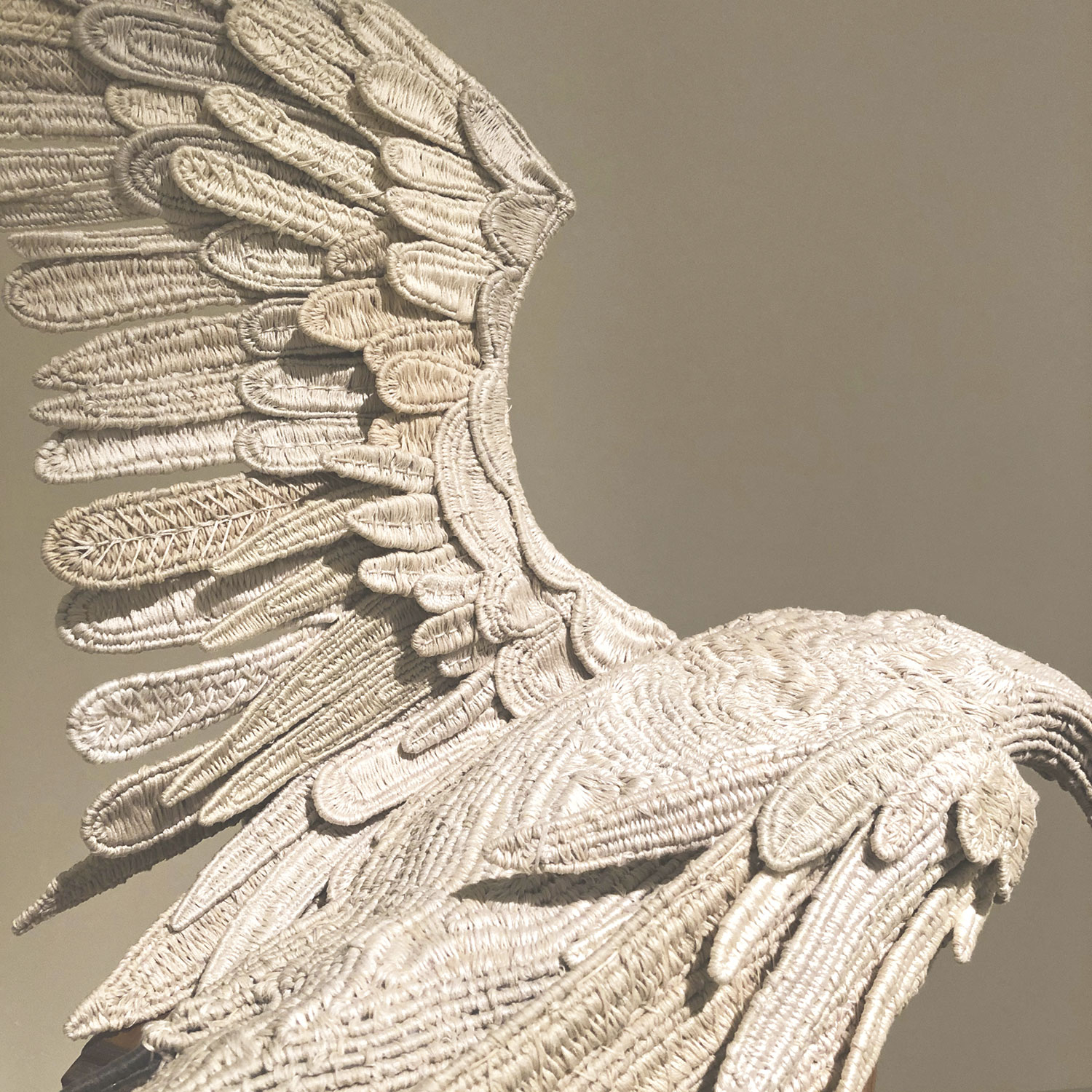
The time and care she puts into her work are not lost on those who view her creations, says Phoenix gallerist John Reyes. “It’s an incredible continuation of a form from ancient times,” he says. “You start looking, and it dawns on you how much has gone into it. She connects this timeless technique with literary references, and it’s representational but also conceptual and narrative.”
Eckert’s art hangs in some 20 museums across the country and internationally, and, Reyes notes, “She hardly has any finished pieces in her studio because she sells so fast.”
Wisconsin’s Racine Art Museum has a large collection of Eckert’s work, amassed since the early 1990s. Says Bruce Pepich, the museum’s executive director and curator of collections, “Carol is one of the leaders in the fiber field.”
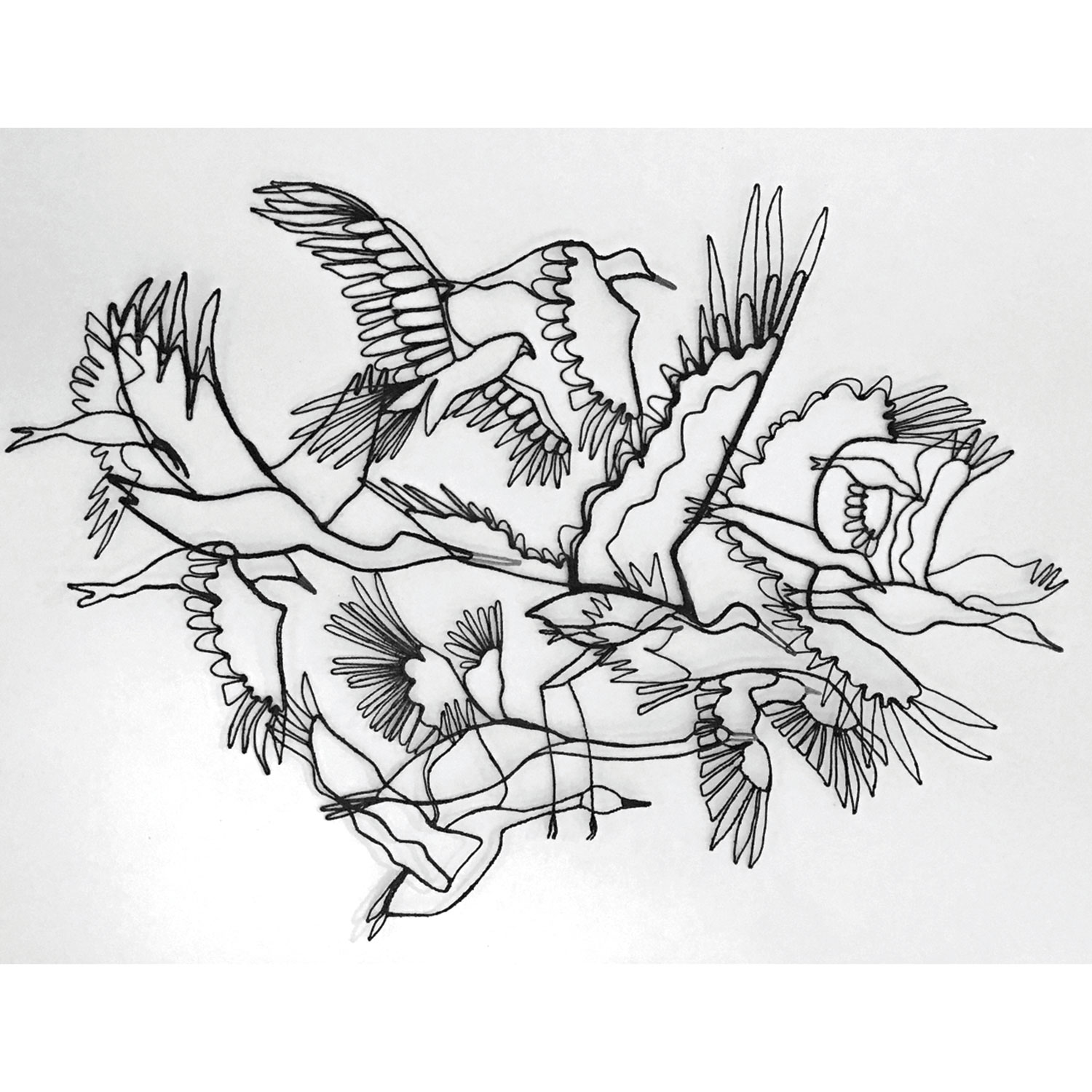
Like Reyes, Pepich believes the appeal of her art lies in its mix of simplicity and complexity. “People look at her pieces and think they’re beautiful and charming, then the more they look, the deeper the connection becomes and the more layers they see.”
Like so many young women in her baby boom generation, Eckert learned the rudiments of needlework as a child. “Girls were expected to learn to sew and embroider, and I did things like quilting and embroidery, but not as a serious expression of art,” she says. “Many years later, all those skills came back to me in a very natural way.”
Sources
caroleckert.com