


Garden Solutions: What to Plant This Winter in Arizona

What to plan, prune and pluck in December and January according to your elevation.
By Noelle Johnson | Illustration by Gary Hovland
Hello Friends.
As we enter winter, we are reminded of why we make the desert our home. It’s when we spend more time outdoors and enjoy the unique beauty of this region. While the holidays can be a busy time, I encourage you to spend a few moments per week sitting and relaxing in your garden, which helps decrease the stress common during this time of year.
Many garden tasks slow down as the weather cools, but some are important to do now, such as planting and pruning roses. I’ll share my best tips for growing them in our hot, dry climate.
Winter is a great time to add new trees, shrubs and ground covers. The sooner plants are installed, the better, as it allows them to grow roots, which is vital to surviving the summer heat. If you want to grow delicious tomatoes this spring, now is the time to get them started from seeds indoors to give them a head start this spring. Many varieties are well-adapted to the challenges of the desert vegetable garden, which you’ll find below.
Questions? Send them to info@azplantlady.com. They may be featured in a future Garden Solutions.
Noelle, aka “AZ Plant Lady”
Send your gardening questions to info@azplantlady.com.

I love to cook using fresh herbs, but I am frequently underwhelmed by the quality of what I find at my grocery store. I would like to grow my own. Can herbs be grown outdoors all year? What types do best in the desert?
Herbs do very well in our arid climate since most prefer drier growing conditions. Our mild winter temperatures mean that we can harvest year-round straight from the garden. Oregano, rosemary and thyme can be grown year-round. Additionally, you can grow chives, cilantro, dill and parsley right now, as they prefer cooler winter temperatures. Basil does exceptionally well through our hot summers and can be planted in spring. Place herbs in an area that receives five hours or more of sun, within an existing vegetable garden or in a large container.
Low to Middle Elevations
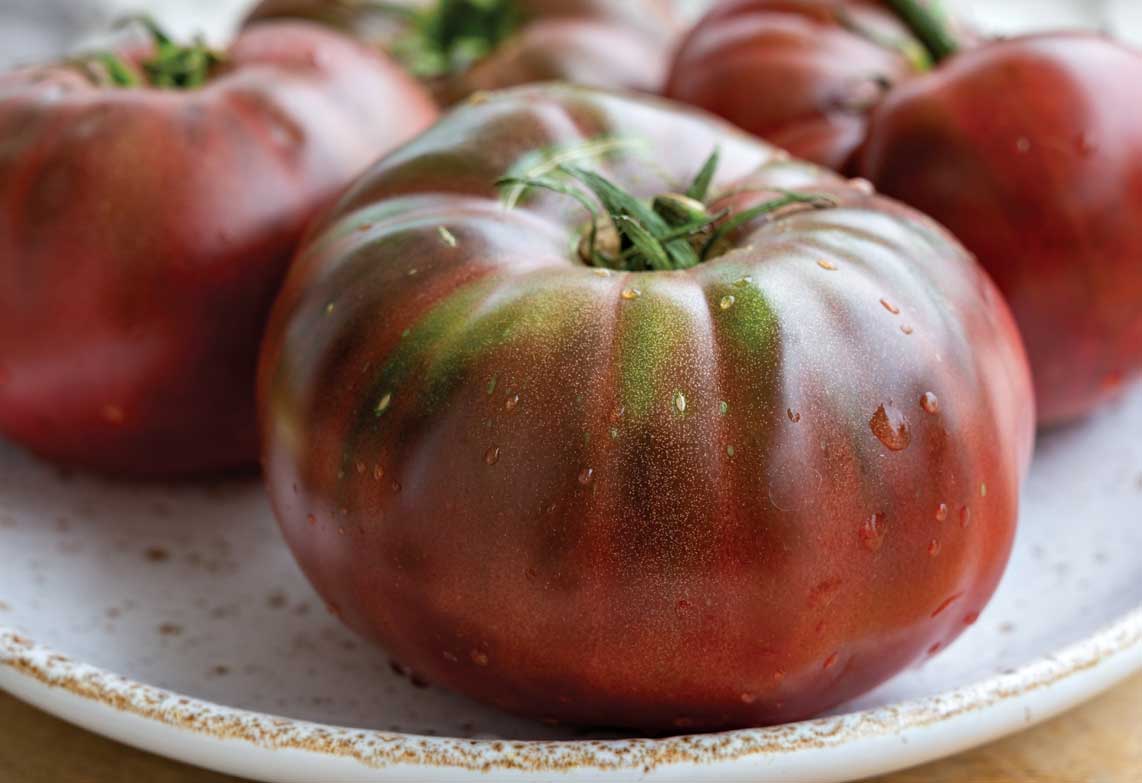
Get a jump-start on spring by sowing seeds for tomatoes indoors eight to 10 weeks before planting outside to maximize the growing season. There are more varieties to choose when using seed versus transplants. Look for those that do well in the desert, such as ‘Black Krim,’ ‘Black Plum,’ ‘Celebrity’ and ‘Early Girl.’ Refer to the timeline on the seed packet for each type to see how long it will take from planting to maturity, and plan accordingly. Once temperatures hit 90 degrees and above, tomatoes will no longer produce viable pollen, and fruit production will be halted, so the sooner you can plant them, the better.
Add fruit trees such as apples, apricots, peaches and plums sold as bare-root or in a nursery container. Select a location away from walls and hard surfaces with reflected heat. Create a hole that is three times wider than the root ball and backfill with existing soil. After planting, add a 3-inch layer of organic mulch, such as bark chips, extending 3 feet out from the base (and 6 inches from the trunk), which helps moderate soil temperatures and reduces the heat from landscape rock. Don’t fertilize the first year after planting, so that roots have a chance to grow, which is vital for vigorous top growth later.
Feed flowering annuals and vegetables in the garden, which are actively growing this time of year and require a regular supply of nutrients. Select an organic fertilizer specially formulated for each type of plant, which lasts longer than synthetic blends without the danger of over-application and burning plants.
Adjust your controller so it irrigates less frequently. Plants don’t need as much moisture in winter as in summer, as colder temperatures cause them to stop actively growing. Unfortunately, overwatering is a common mistake, resulting in overly wet soil, declining plant health and a higher water bill. Utilize well-researched, interactive watering guidelines from Water—Use It Wisely (wateruseitwisely.com/saving-water-outdoors/interactive-watering-guides) tailored to seasonal irrigation needs.
On cold nights last winter, we covered our lantana and bougainvillea with old sheets and towels to protect them from freezing temperatures. However, they still had brown, crispy leaves. Is there anything more we can do?
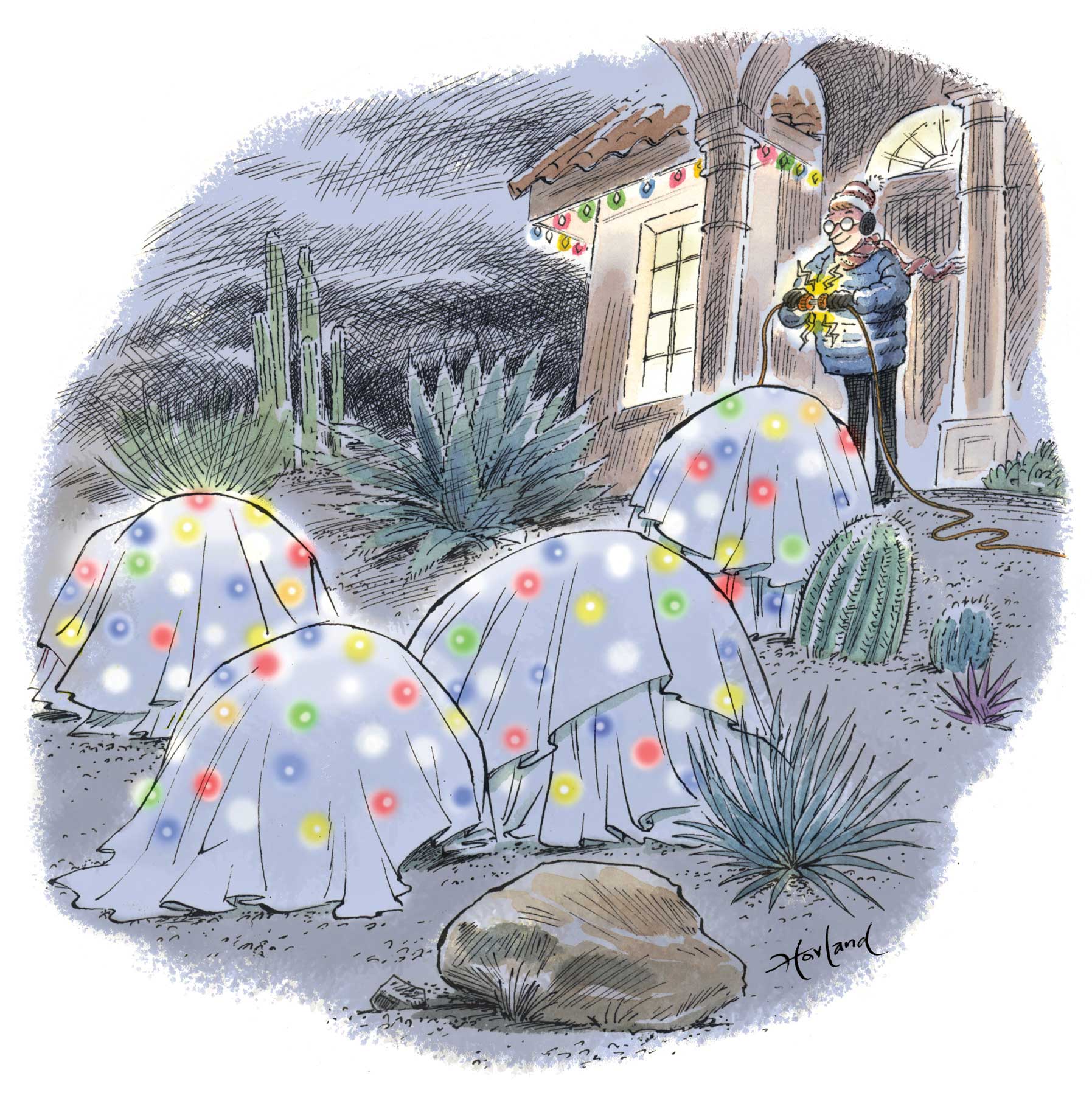
Frost-tender plants experience damage to the foliage when temperatures dip into the low 30s, resulting in dead foliage concentrated around the outer part of the plant. Frost cloth, sheets or towels are used as a cover to capture the heat from the ground, keeping plants a few degrees warmer. However, the effects of freezing weather are cumulative, and the longer it lasts, plants can still experience frost injury, even when protected. Be sure to cover shrubs and ground covers completely, leaving no gaps for cold to enter. Adding holiday lights on plants (in addition to covering them) can bring some extra protection, as does watering them the evening before freezing temperatures are forecast, since water releases heat. The good news is that cold injury is temporary, and affected leaves can be pruned away in spring.

PLANTING ROSES IN THE DESERT
The arid climate makes the Southwest a great place for these hardy shrubs and their fragrant blooms. Growers have been raising roses for nurseries in the outer reaches of the Phoenix metro area for decades. Why would they select the desert? The answer is that our low humidity reduces the incidence of fungal diseases, and we have fewer damaging insects than in other regions.
Winter is the time of year to plant bare-root roses, meaning the soil has been removed around their roots and their canes (branches) cut short. You can find a nice selection in your local nursery or big-box store this time of year. The low desert has two main bloom periods: spring, fall and early winter. The key to growing roses successfully depends on where they are planted—specifically, their sun exposure.
Unsurprisingly, roses don’t like our hot summers and will suffer if located in areas that receive afternoon sun or near the reflected heat from sunny walls, sidewalks and streets. Ideal placement will receive morning sun and afternoon shade, such as an east-facing exposure. Areas with filtered sunlight are also suitable. Ensure that bushes are planted at least 10 feet away from hard surfaces that absorb heat and re-radiate it outward. Often, people add landscape rock around the base of their rose bushes, but this can also raise temperatures around the shrub. Instead, add a 3-inch layer of organic material, such as bark chips, that extends outward 3 feet from the center.
When shopping for roses in winter, you’ll find them bare-root, which are best planted in December and January because waiting until the weather begins to warm may hinder their establishment with our hotter summer weather. Roses are rated based on the thickness of their canes and root system. For Arizona gardens, select plants rated Grade 1 or 1½, which is of higher quality. Avoid purchasing those dipped in wax (which can burn in the sun), any with dead canes, or those with a quarter inch of new growth or more. Before planting, cut a quarter inch off the tips of each root to stimulate new growth. Fill a bucket with water, and soak the bare-root rose for eight to 24 hours, ensuring the root portion is completely covered, before planting in the soil.
Create a hole that is approximately 30 inches wide and 24 inches deep. Fill it halfway with compost and existing soil to improve soil texture, and add nutrients. Finally, add a cup of bone meal, which is a good source of phosphorus and important for root growth. Before adding the rose bush, create a mound with the soil/compost in the center of the hole for the bare roots to rest upon before filling in the hole with the rest of the soil mixture. Gently tamp down the soil by walking around the shrub to remove any air pockets. Ensure that the bud union (the swollen area between the canes and roots) is 1 to 2 inches above the soil line.
Cover the new rose bush with a 12-inch-high compost pile to help prevent the canes from drying out. Once new growth emerges in about a month, gently spray off the compost with a hose. Water it well after planting and every two to three days through their first summer. Wait until the first blooms have faded before fertilizing with organic rose fertilizer.
Prune existing rose bushes now to force dormancy, which will lead to increased blooms in spring since they produce flowers on new growth. Cut back roses to approximately 1½ feet tall, making your pruning cut a quarter of an inch above an outward-facing bud (a small swollen area that leaves grow out of). Keep five to seven canes (stems) that are the diameter of a pencil or more, and remove the rest. At the same time, remove all the remaining foliage and clean up any leaf debris on the ground to prevent overwintering fungal diseases and insect pests.
Winter Tree Care
In winter, deciduous trees such as desert willow (Chilopsis linearis), Chinese pistache (Pistacia chinensis) and Chinese elm (Ulmus parvifolia) become dormant and lose their leaves. During this period, they aren’t actively growing, which makes it the best time to do any needed pruning. Be sure to complete this task by the end of February before temperatures begin to warm and stimulate new growth. The bare canopy of these trees makes it easier to see where pruning needs to occur. You’ll need a pruning saw for limbs more than 1 inch thick and loppers for smaller ones. Focus on removing any crossing branches that may rub together. At the same time, remove any dead or diseased growth. Don’t leave stubs behind, which can harbor harmful diseases or damaging insects. Instead, prune back to the ridged area surrounding the limb where it attaches to the trunk (called a branch collar). Alternatively, you can shorten the length of a branch by making the pruning cut a quarter of an inch above a bud or smaller branch along the length of the original limb. Suckers or water sprouts can be taken off using hand pruners. Check for any support cables tied to stakes, and ensure they are loose and not cutting into the trunk. Often, trees remain tied to supports long after they are needed. To determine whether support is still required, remove the wire and observe if the trunk and upper canopy remain upright for a few days. If the trunk is still leaning, reattach the cables to the stakes. Shade trees are vital to cooling our outdoor spaces—especially during our hotter summers—so spending time on winter maintenance tasks will ensure they continue to add beauty while moderating outdoor temperatures. Enlist a certified arborist to help you properly care for your trees (treesaregood.org/findanarborist).

Make your garden a bountiful buffet of nectar for our tiniest feathered friends. Hummingbirds love desert-adapted autumn sage (Salvia greggii), Parry’s penstemon (Penstemon parryi), yellow bells (Tecoma stans), ocotillo (Fouquieria splendens) and Mexican honeysuckle (Justicia spicigera), all of which require minimal irrigation and care.
I recently switched out my potted flowering annuals for succulents. I love the lower maintenance and the unique shapes and textures they add to my outdoor space. I watered them weekly during their first winter, as I do throughout the year, but several of them did not survive. What did I do wrong?
Succulents, including cacti, are an excellent choice for containers since they require much less maintenance and irrigation than leafy green or flowering plants. However, one of the biggest mistakes people make is overwatering, which is especially true in winter since the plants aren’t actively growing and need less moisture than in warmer times of year. A good guideline is to apply water for potted succulents once a month, from December through mid-February, in low-desert gardens. Be sure that the entire root ball of the plant is wet to ensure that all the roots will receive a good drink.