


Fab 4: Daisies For Days
Many plants share the daisy name, but each brings its own sunny personality to the garden.
By Lori A. Johnson | Photography by Lori A. Johnson
African Daisy
(Osteospermum spp.)
- Perennial
- Multicolor; spring and fall
- 12″-36″H by 12″-24″W
- Well-drained soil
- Zones 10-11
- Full sun
- Medium water; low maintenance
- Attracts: Bees, butterflies
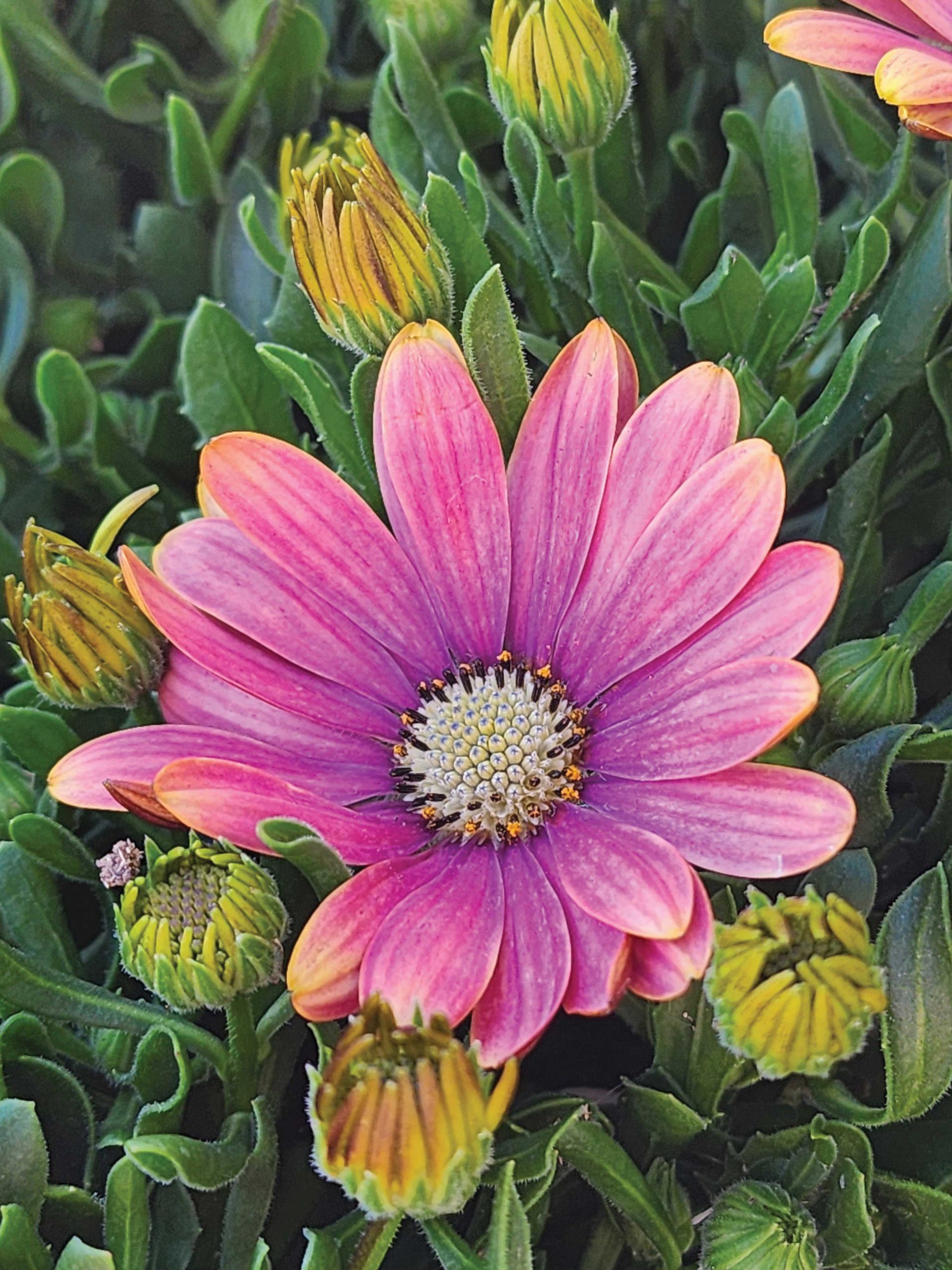
Also called Cape daisy, the Osteospermum genus consists of as many as 70 wild species along with hundreds of cultivars available in an array of colors with a contrasting central disk. They typically have a mounding growth habit and close at night or during cloudy weather, reopening in sunshine.
WHY WE LIKE IT: African daisies are very versatile and can be used in various garden settings, such as mixed borders, containers and hanging baskets. Drought-tolerant once established, this flower’s adaptability and relatively low maintenance requirements make it ideal for adding vibrant color to low-desert gardens.
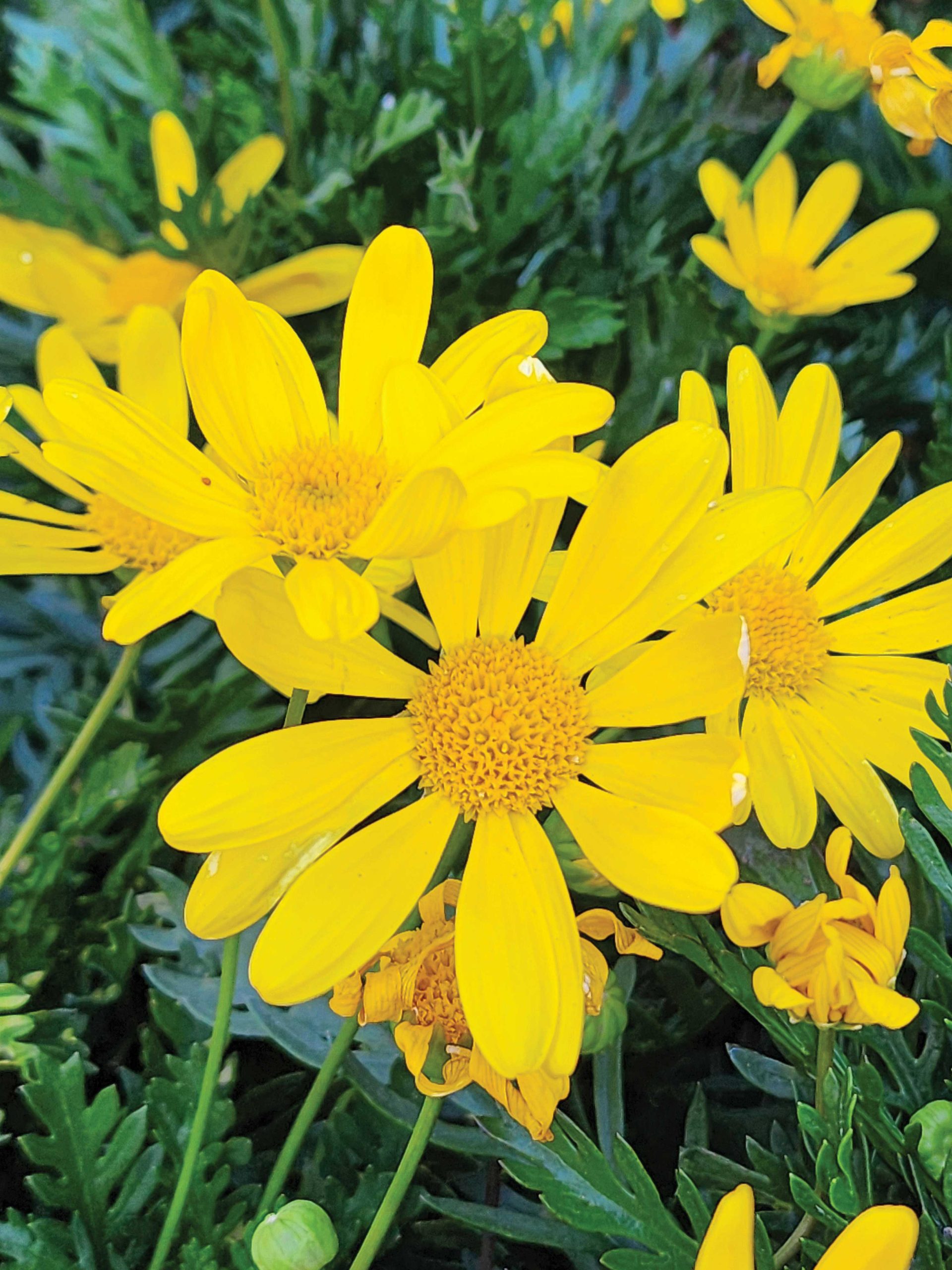
Golden Shrub Daisy
(Euryops pectinatus)
- Shrub
- Yellow; year-round
- 3′-6’H by 3′-6’W
- Well-drained soil
- Zones 9-11
- Full sun
- Low water; low maintenance
- Attracts: Bees, butterflies
The golden shrub daisy is also known as euryops daisy or African bush daisy. The genus name Euryops stems from the Greek words for “wide eye” in reference to the large, showy yellow flowerheads that stand out against its gray-green feathery foliage.
WHY WE LIKE IT: This evergreen upright shrub, known for its drought tolerance and environmental adaptability, is often associated with resilience and perseverance. Primarily an ornamental plant ideal for use in virtually any garden style, whether planted in the ground or grown in containers, it produces vibrant yellow daisy-like flowers that bloom virtually year-round.
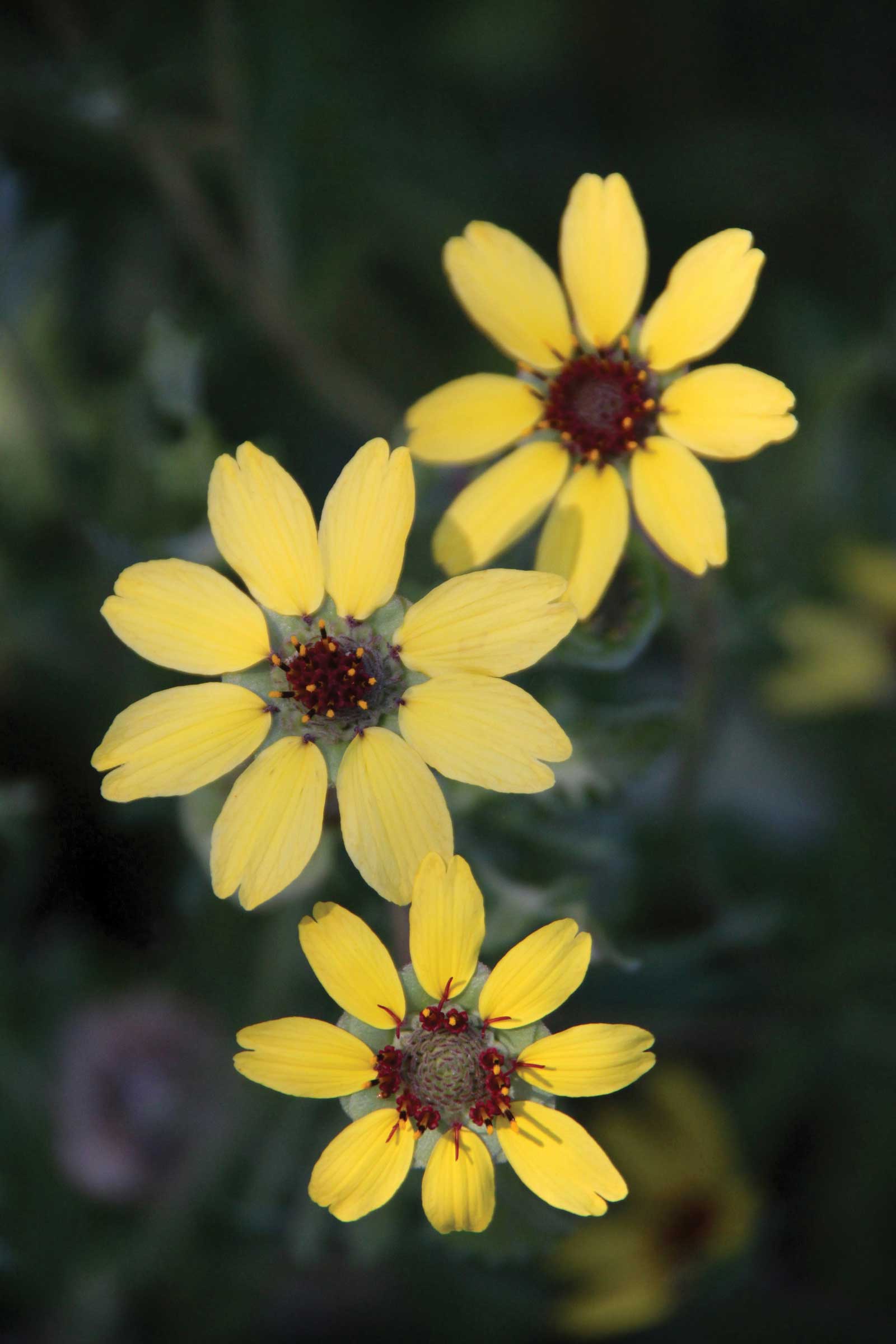
Chocolate Daisy
(Berlandiera lyrata)
- Perennial
- Yellow; spring-summer
- 12″-18″H by 12″-24″W
- Well-drained soil
- Zones 4-11
- Full sun
- Low water; low maintenance
- Attracts: Bees, butterflies, hummingbirds
The daisy-like chocolate flower is technically a member of the sunflower family and may bloom year-round in frost-free areas. The fragrance of these night-bloomers is at its peak in the mornings, and the petals gradually close or drop as daytime temperatures rise. The undersides of the yellow petals have striking reddish stripes.
Why we like it: This flower gets its common name from the scent of chocolate that infuses the entire garden when planted in large clusters. Though it’s mainly cultivated as an ornamental, its edible stamens also carry the scent of chocolate.
Gerbera Daisy
(Gerbera jamesonii)
- Perennial
- Multicolor; spring and fall
- 12″-24″H by 8″-18″W
- Well-drained soil
- Zones 8-11
- Full to partial sun
- Medium water; low maintenance
- Attracts: Bees, butterflies
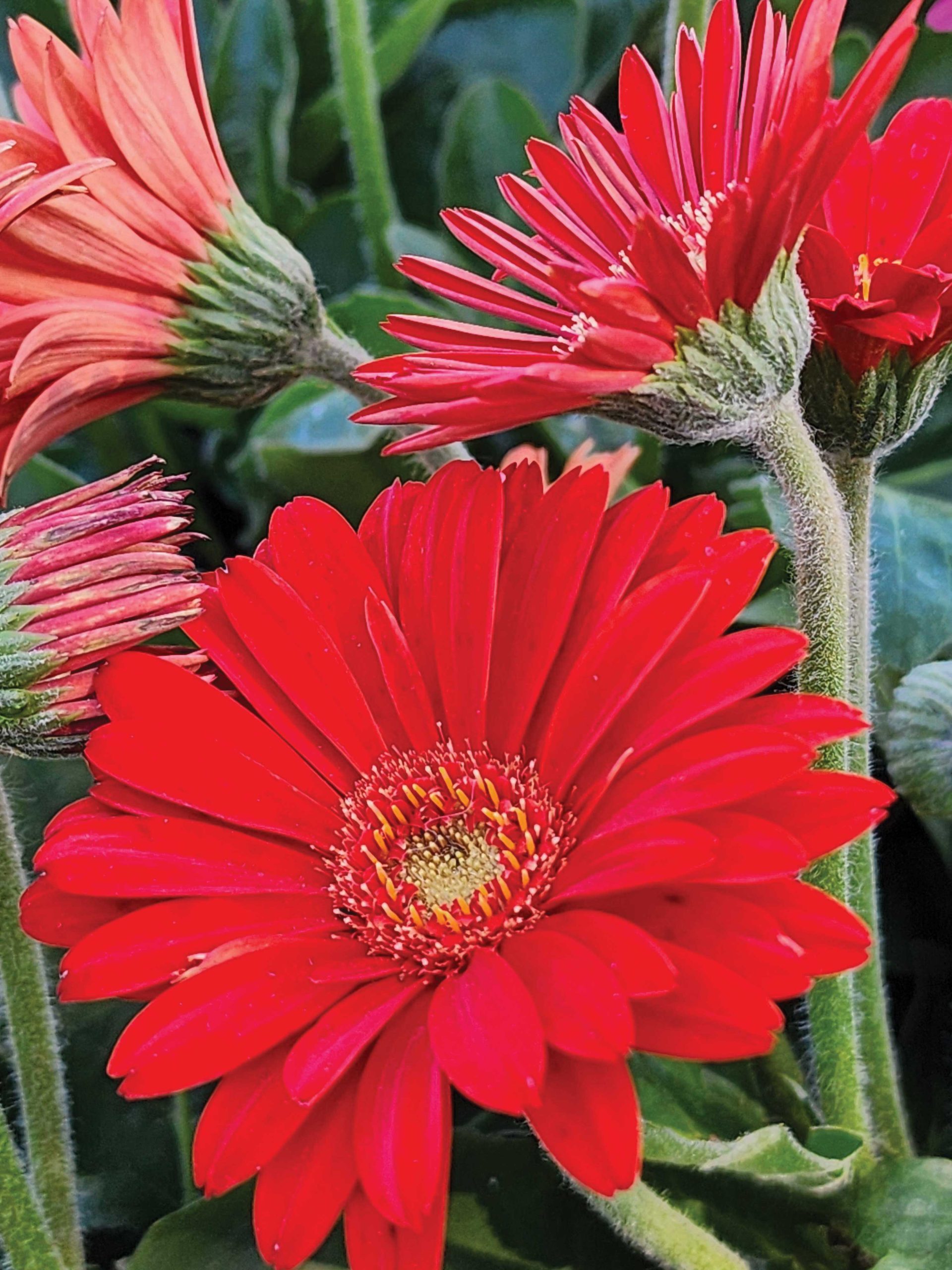
Gerbera daisies are one of the most popular cut flowers in the world due to their large blooms measuring up to 5 inches across, long stems and a vase life of up to two weeks, making them ideal for use in floral arrangements. When planted in soil, they are best confined to pots and brought indoors in the hottest part of low-desert summers.
Why we like it: This daisy is available in an array of colors and color combinations. Each color family is associated with a different meaning. Red, as shown here, are a symbol of love and are often sent as romantic gestures, such as anniversary gifts.