


Desert Deco: Phoenix’s Stylish New Preservation Movement

With a flair for vintage style and community connection,
the Phoenix Art Deco Society is keeping a bold era beautifully alive.
It started with a dress. Or, more accurately, a growing collection of vintage garments from the 1920s and ’30s that eventually led Erin Lindsey down a rabbit hole of Jazz Age fashion, culture and design. What began as a personal passion ultimately sparked something even bigger: the eventual formation of the Phoenix Art Deco Society.
Officially launched in 2023, the society is still in its early days but is already making an impression in the Valley. Lindsey, a Phoenix native and the group’s founder and president, describes it as “a community for people who appreciate the design, spirit and cultural legacy of the art deco era.” From themed cocktail socials in historic hotels to walking tours, virtual events and gallery exhibitions, the society is on a mission to preserve, educate and celebrate art deco in Phoenix—and beyond.
While cities such as New York, Chicago and Los Angeles have long flaunted their deco legacies, Phoenix’s relationship with the era is less obvious.
“We don’t have a ton of buildings in this style,” Lindsey acknowledges. “But what we do have is special…and often overlooked.”
That sense of discovery is part of what makes the work so rewarding. Unlike other preservation efforts that might focus on academic lectures or policy reform, the Phoenix Art Deco Society takes a different approach.
“We do cool things in cool places,” Lindsey says. “It’s about helping people connect emotionally to these buildings and stories. When you experience the space—have a cocktail in it, walk through its halls—it becomes real. It becomes personal.”
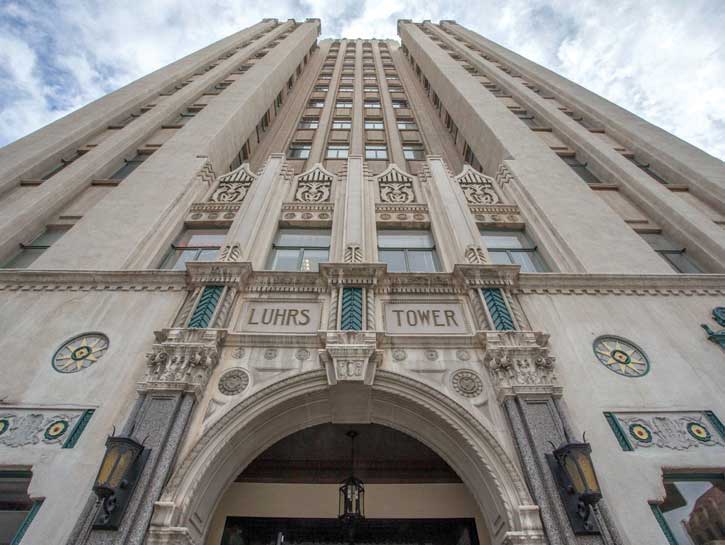
One example is the society’s photography exhibition held in the iconic Luhrs Tower, a 1929 skyscraper that’s a shining example of Phoenix-style deco. Instead of mounting the show in a traditional gallery, the team staged it in the tower’s grand lobby. The space was the story.
This immersive, place-based approach is more than just fun (though it’s certainly that). It’s also strategic. The more people connect emotionally with Phoenix’s architectural past, the more likely they are to care—and act—when preservation is on the line.
“We’re not yet directly involved in restoration projects,” Lindsey notes, “but we support them however we can. Sometimes that means writing letters, raising awareness or partnering with groups such as Preserve Phoenix.”
Indeed, the group’s influence is growing. Lindsey now sits on the board of Preserve Phoenix and is sketching out a future digital archive that will document Arizona’s art deco buildings—both standing and long-gone—through video, photography and oral histories.
While deco often conjures sleek geometry, metallic accents and cosmopolitan luxury, Phoenix adds its own flavor.
“Here, you’ll see elements that reflect the desert—colors that feel like paloverde trees, or decorative patterns inspired by Indigenous or Hispanic motifs,” says Lindsey, referring to this localized style as “Pueblo Deco,” a regional blend of Southwestern influence and 20th-century modernism.
For those looking to explore it for themselves, she recommends a few favorite spots: the restored lobby of the Hilton Garden Inn (once the Professional Building), the Orpheum Lofts (originally the Title and Trust Building), and the terra-cotta-clad former Phoenix City Hall.
“People might debate whether these are pure art deco,” Lindsey says, “but they’re rich with its influence—and full of stories.”
The society currently has about 150 members and is open to anyone with an interest in design, architecture or 1920s–30s culture. Annual membership includes access to events, tours and community-building experiences. As Lindsey puts it: “Whether you’re into architecture, fashion, old movies or vintage cars, there’s an entry point for everyone.”
To learn more or become a member, visit phoenixartdeco.org


Art Deco Gems of the Valley
A curated look at Phoenix’s most iconic examples of art deco architecture
From soaring skyscrapers to historic cultural venues, art deco style is alive and well in Phoenix…if you know where to look. Often overlooked in favor of the city’s more modern silhouettes, these architectural gems reflect a period of optimism, craftsmanship and bold design. Here are a few of the Valley’s most compelling structures from that era.
City-County Building (Old Phoenix City Hall), 1928
Architects: Edward Neild and Lescher & Mahoney
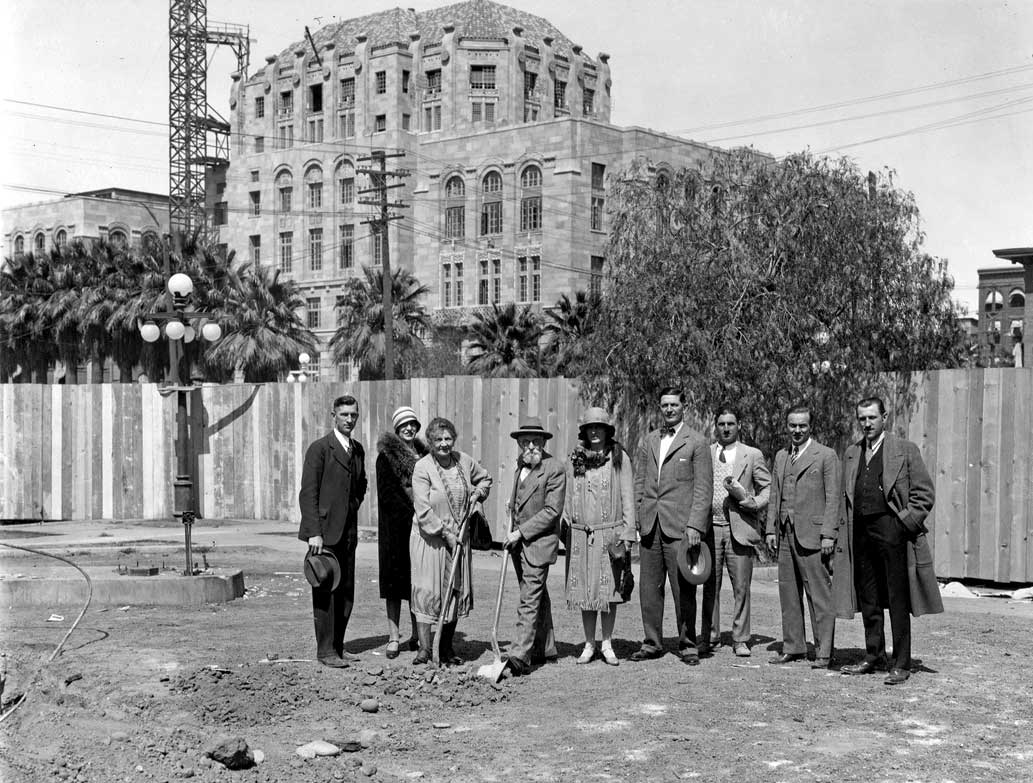
Blending early deco lines with mission-style influences, this civic structure reflects the transitional styles of the late 1920s. Inside, decorative elevator doors and period light fixtures echo the movement’s emerging flair for metalwork and geometry.
Luhrs Tower, 1930
Architects: Trost & Trost
A defining high-rise of early Phoenix, the 14-story Luhrs Tower rises with symmetrical setbacks and oxidized green concrete detailing. Southwestern botanical motifs and Spanish-inspired figures are embedded in its ornamentation, offering a regional twist on the classic art deco skyscraper. It remains a visual anchor in the downtown Phoenix area.
Title And Trust Building (Orpheum Lofts), 1931
Architects: Lescher & Mahoney
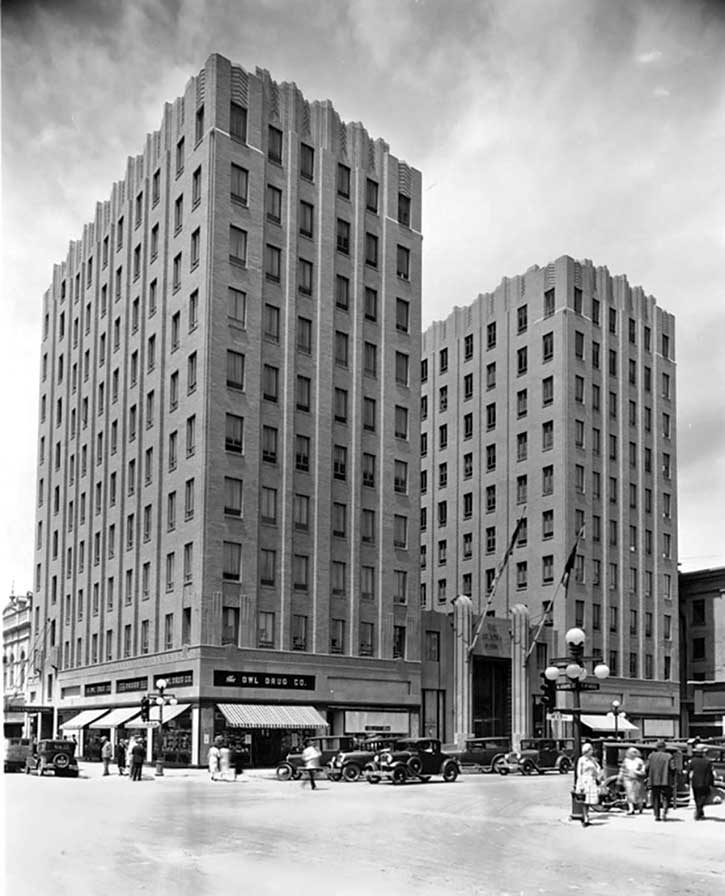
Clad in glazed terra-cotta, this tower features zigzag patterns, chevron detailing and stylized desert flora at its base, a hallmark of art deco’s fusion of nature and ornamentation. The building’s dramatic vertical lines draw the eye skyward, culminating in a tapered crown. Insider tip: The lobby is a hidden treasure trove of period details, and film buffs may recognize the rooftop from the opening scene of the 1960 thriller “Psycho.”
The Professional Building (Hilton Garden Inn), 1932
Architects: Morgan, Walls & Clements
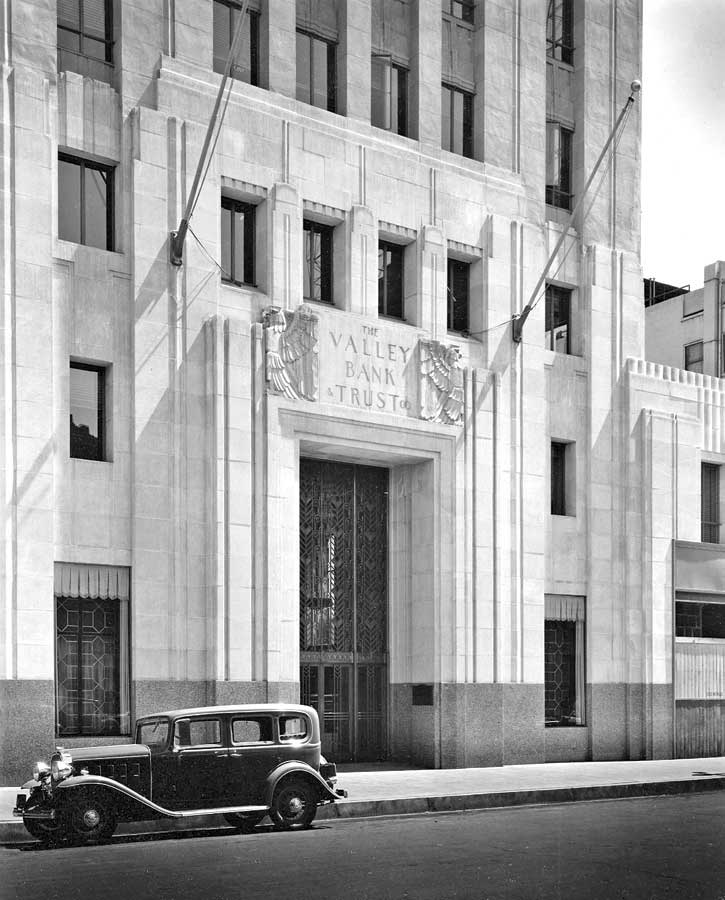
Once home to Valley National Bank, this former financial hub boasts brass-framed doors, geometric grillwork and carved eagles. Inside, original deco columns and elevator doors evoke the opulence of a bygone era. The lovingly restored lobby, now part of the Hilton Garden Inn, is considered one of the best examples of deco revival in the city.
Arizona State Fairgrounds Grandstand, 1936
This striking 50-foot structure combines asymmetry with deco-style medallions that depict scenes from Arizona life: agriculture, community and fair festivities. It’s one of several Jazz Age-era structures at the fairgrounds, including the WPA Building (1938), which narrowly escaped demolition and remains a symbol of preservation advocacy.
Honorable Mentions
- Arizona Biltmore Hotel: Often mistaken for art deco, this Frank Lloyd Wright-influenced resort features “Biltmore Block” patterns with deco flair.
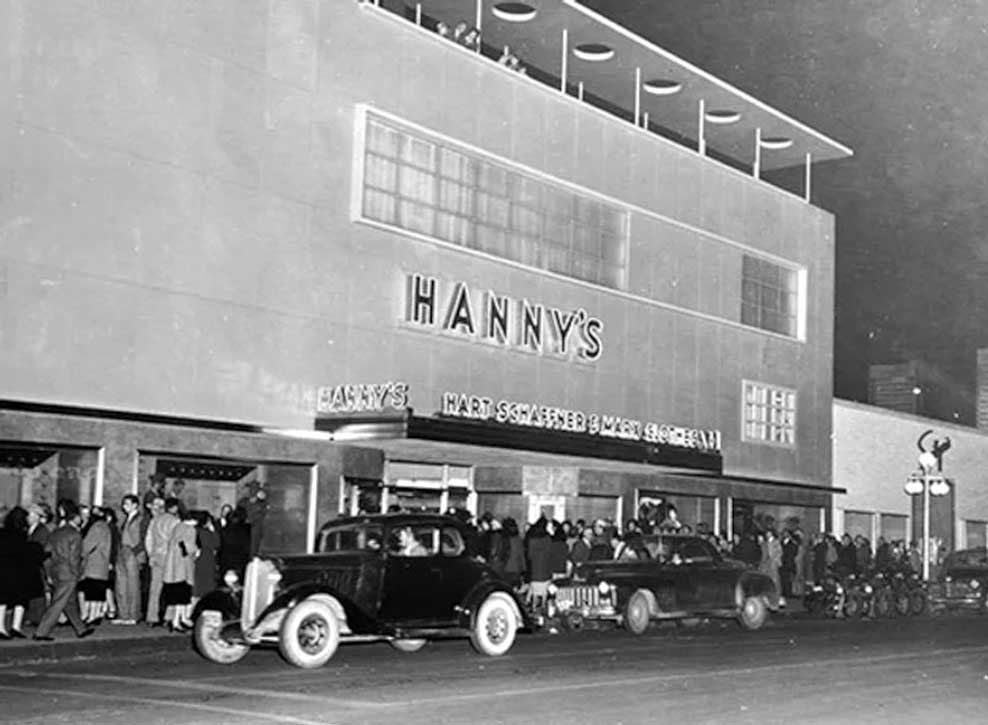
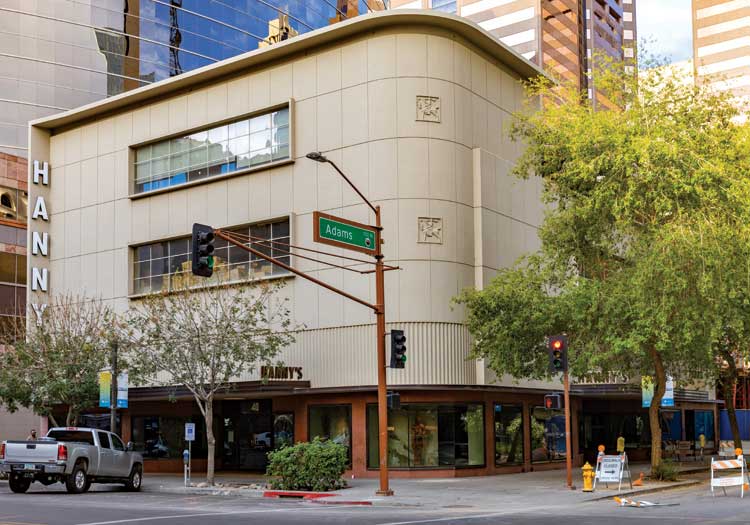
- Hanny’s Bar: A late example of Streamline Moderne, this former department store-turned-bar is a sleek downtown favorite.
- WPA Building at the Fairgrounds: Saved from the wrecking ball, this modest but meaningful structure once housed the Works Progress Administration.