


Artist Duane Koyawena Blends Hopi Tradition with Unexpected Modern Twists
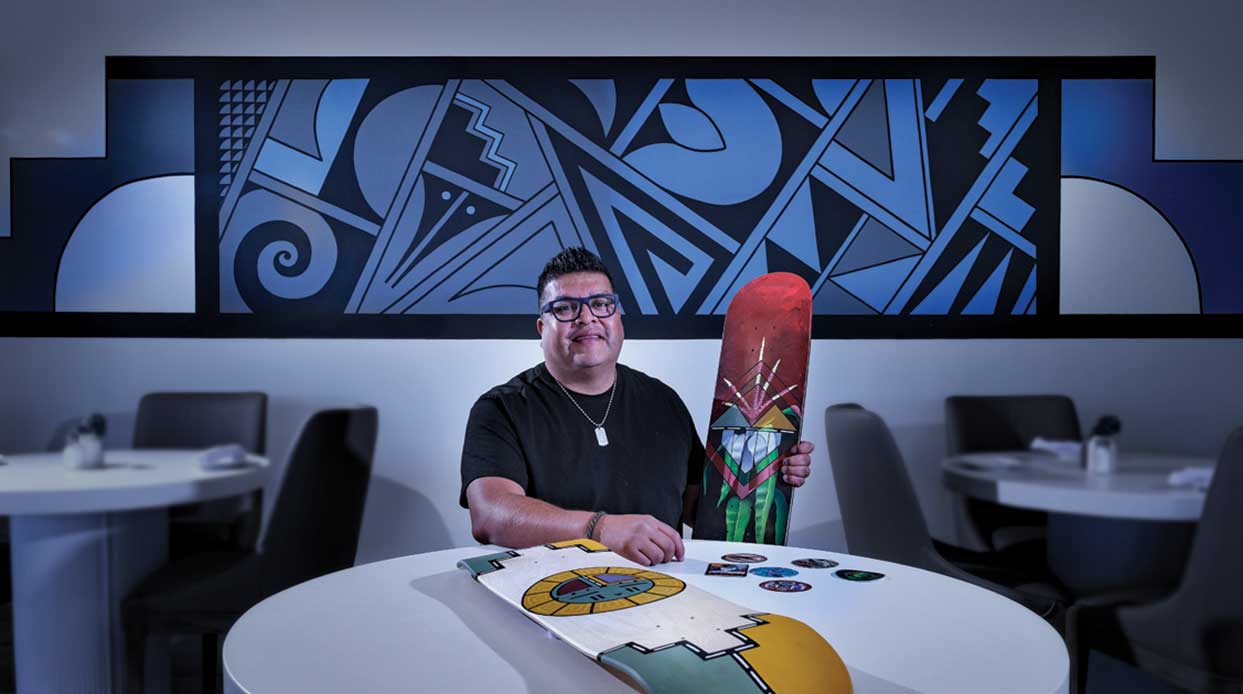
A Flagstaff artist uses his art to learn about and share his Hopi culture.
Some of us take a little longer to discover our place in life. Duane Koyawena took a circuitous route to find himself as an artist and as a Hopi. He lives in Flagstaff now, close to his Hopi roots, but as the son of a man in the U.S. Air Force, he was born in Alaska, lived in San Antonio, Texas, and then spent his formative years in Albuquerque, New Mexico. “I didn’t have a desire to learn about my culture and traditions,” he acknowledges.
Still, he was creative, and he emulated his father, Lloyd, a talented artist in his own right. “I’d watch him draw, and I’d ask him to help me,” he recalls. As a Hopi, his dad often incorporated traditional symbols in his art. “Any Hopi or Native kid grew up drawing their clan symbols,” Koyawena says.
The younger Koyawen’s talent was clear early on to the people around him, but it took the artist a while to believe in himself. “I felt like it was just a bunch of talk,” he says.
He was good enough to be included in a 2013 group show of Hopi work at the Museum of Northern Arizona. “I got a lot of positive feedback, which encouraged me to go out and pursue art,” he says.
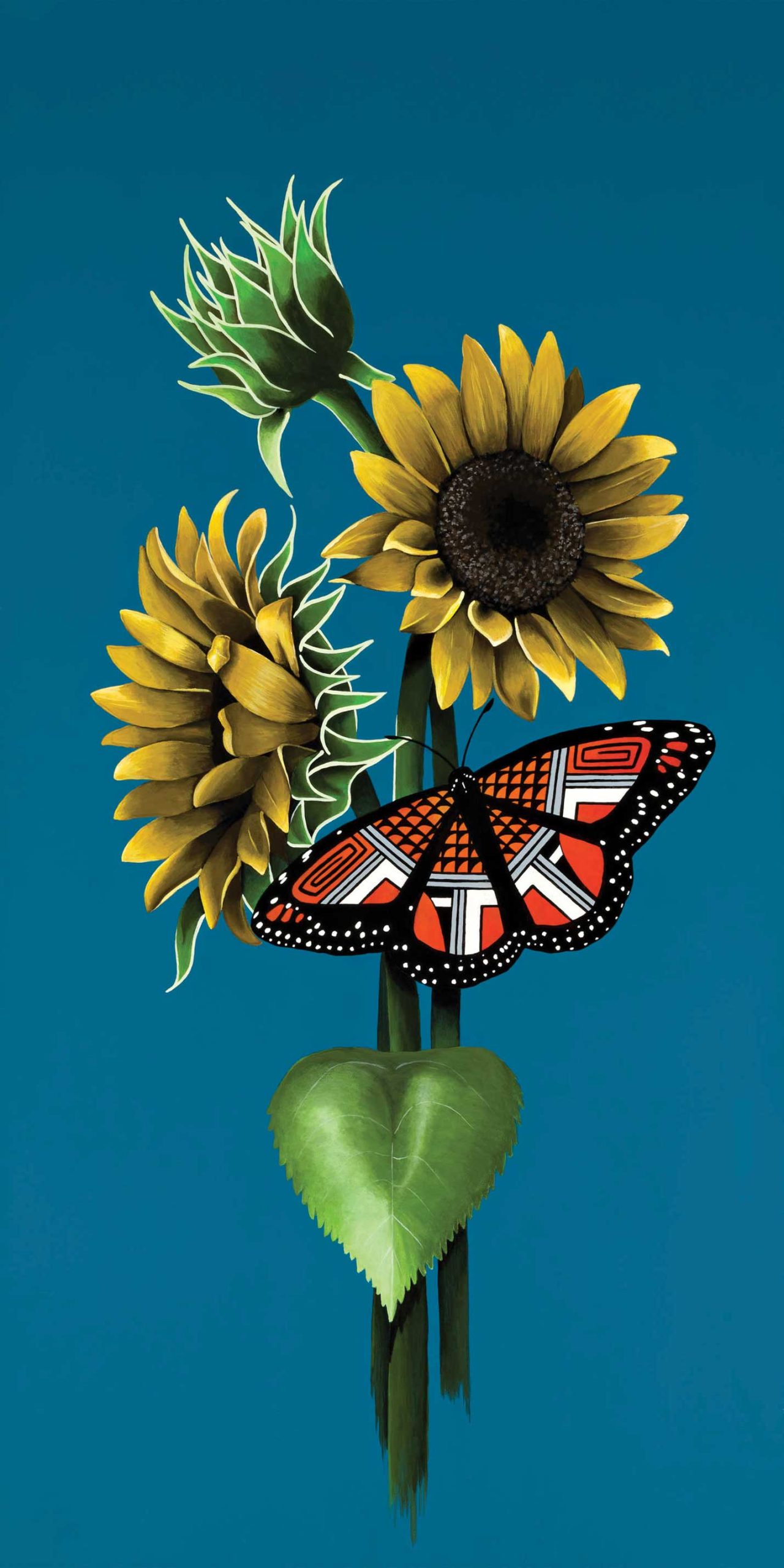
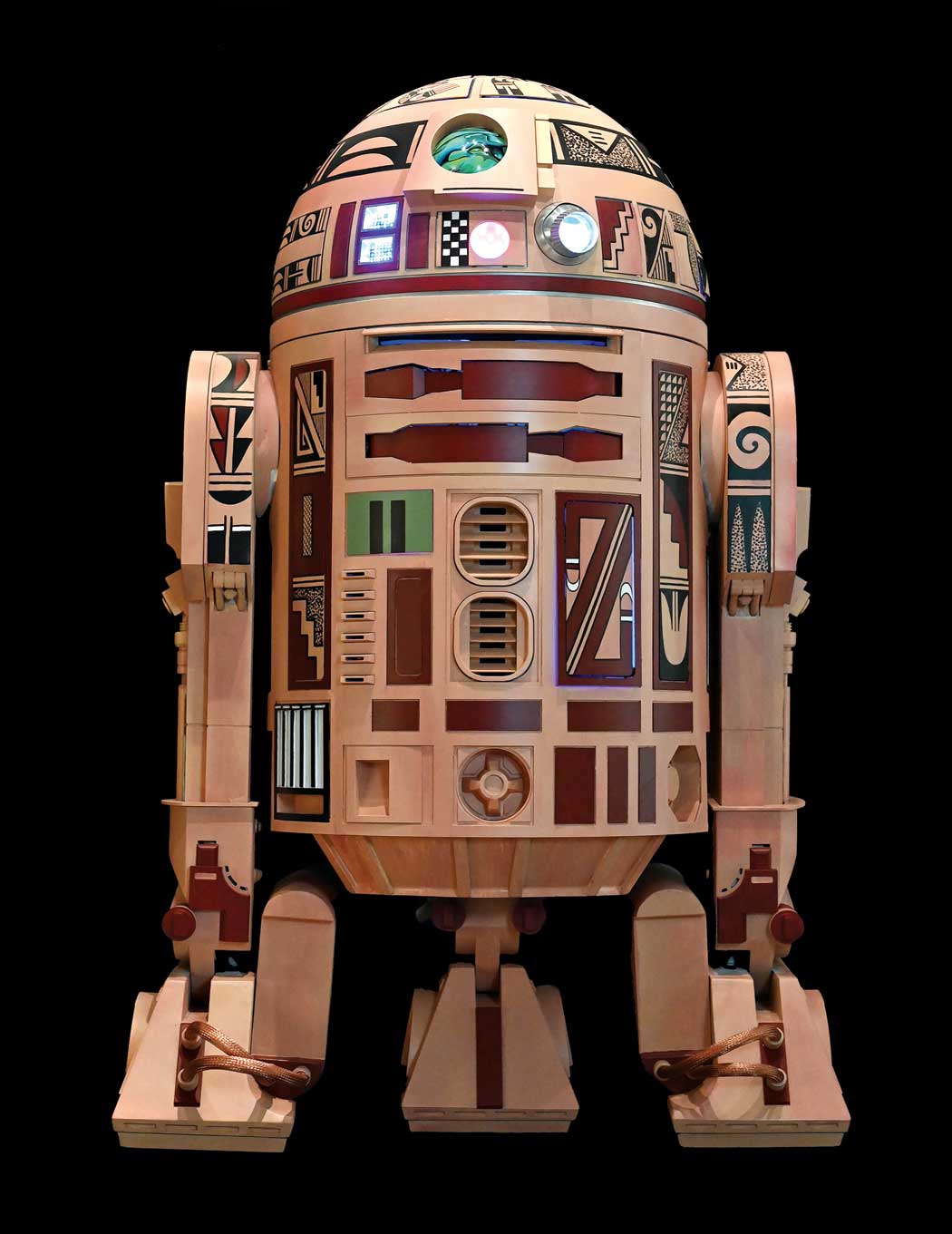
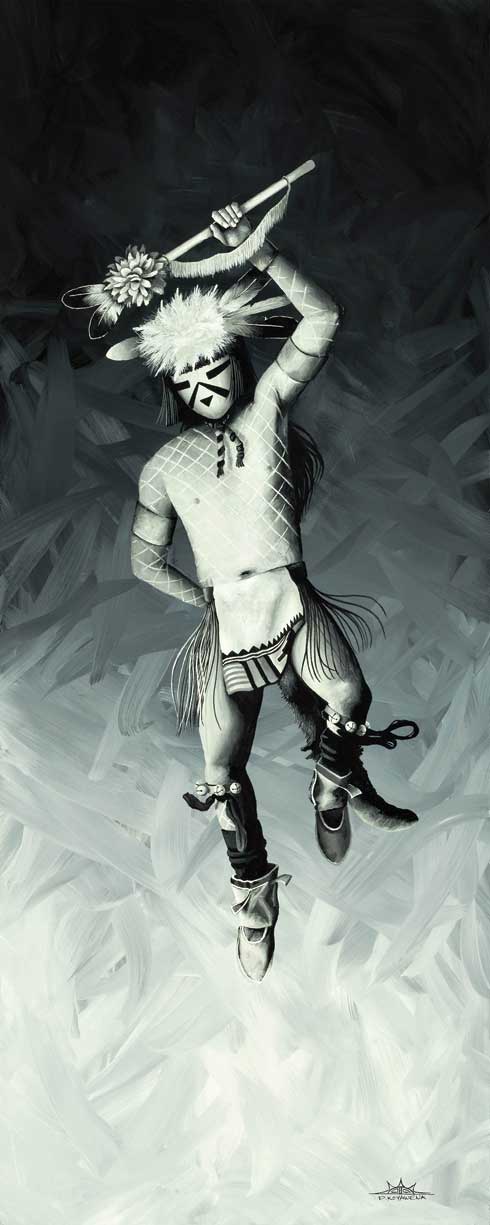
As he did so, he also began to delve into his heritage as a Hopi. Today, his work is a celebration of his Native culture, albeit with a decidedly contemporary influence. He works in a variety of media, from paintings on canvas to large urban murals to untraditional forms such as sneakers and skateboards. In every case, however, Koyawena’s focus is on the traditional themes of his culture. Images from nature, such as the sun, the tracks of birds, butterflies and flowers find their way into his work, executed with meticulous attention to detail and in vivid color. “As Hopis, we strive for a good life, and many of those symbols represent that,” he explains.
The artist’s life partner, Samantha Honanie, visitor experience manager at the Museum of Northern Arizona, describes his work this way: “What stands out to me is Duane’s ability to recognize the deep cultural traditions of the Hopi people through his own perspective. He introduces people to Hopi culture in an imaginative way.”
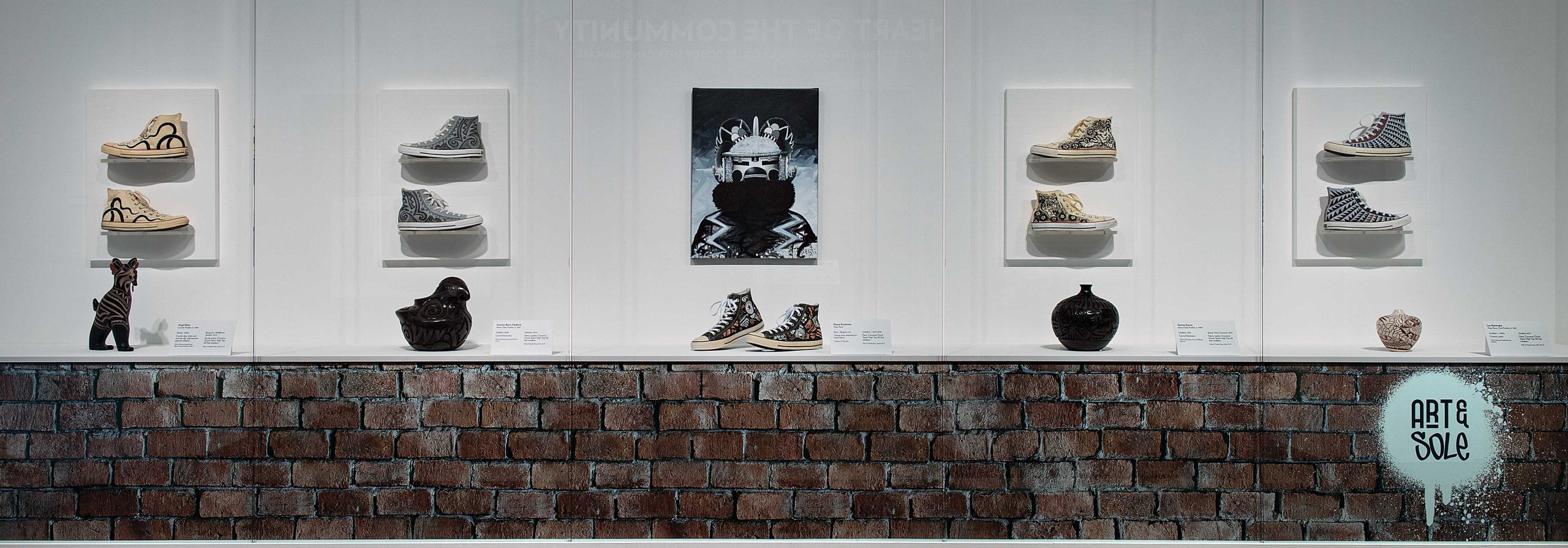
It’s hard to pigeonhole Koyawena, given the variety of his output. He has created murals on urban buildings in Flagstaff, decorated Chuck Converse sneakers, designed water bottles for the Flagstaff company Canyon Coolers, fashioned a line of T-shirts and sweatshirts and even painted custom prosthetic limbs for clients of Flagstaff’s Next Step Prosthetics.
Most recently, Scottsdale interior designer Hank Arens was working on the decor for the Taawaki Inn, a new hotel in Clarkdale that reflects and celebrates Hopi culture. Among the many Hopi artists represented in the inn is Koyawena, who painted murals in 22 of the hotel’s 44 rooms, in addition to several of its public spaces. “Duane does traditional work in traditional colors, but it’s also very contemporary,” says Arens. “Every line is intentional; every part of the design is meaningful and comes from the heart.”
Hopi themes of connection, community and healing echo throughout Koyawena’s life and work. He values collaboration, often joining forces with other creatives, such as Tohono O’odham artist Dwayne Manuel, his partner in painting a mural at Flagstaff’s Murdoch Community Center. “When it comes to tribes,” Manuel says, “Duane is representing his people in a large way.”
For Koyawena, his art is a way to further plumb the depths of his Hopi heritage. “I’m not fluent in all the ways of my culture,” he says, “but at 43—I’m still learning.”