


Fab 4: Cottage Classics
Start planning now to bring the charm and color of these cool-season blooms to your garden.
By Lori A. Johnson | Photography by Lori A. Johnson
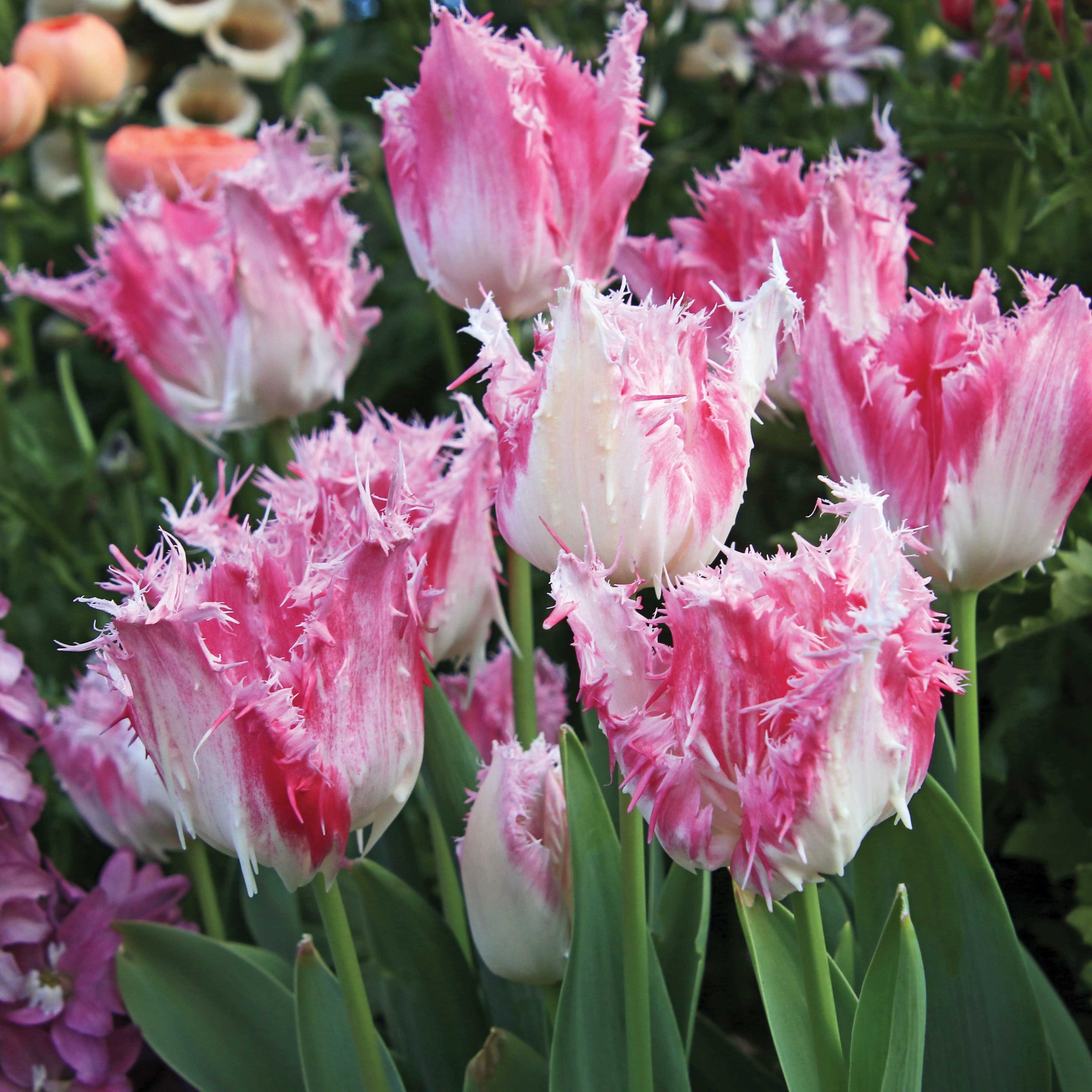
Drakensteyn Tulip
- Annual
- Pink and white; spring
- 16″-18″H by 2″-3″W
- Well-drained soil
- Zones 3-8
- Full to partial sun
- Medium water; medium maintenance
- Attracts: Butterflies, hummingbirds
Fringed tulip bulbs should be purchased pre-chilled, if possible, or refrigerated for 8-12 weeks in a paper bag before planting. Plant the bulbs about 5″-6″ deep in the late fall or winter and keep in a spot that receives full sun for best results. While technically perennials, they’re often treated as annuals in the desert.
Why we like it: Look forward to stunning blooms in the spring, when the Drakensteyn tulip’s pink and white bicolor fringed petals add charm to a cottage-style garden. Tulips are ideal for cut flower arrangements, especially when cut just before
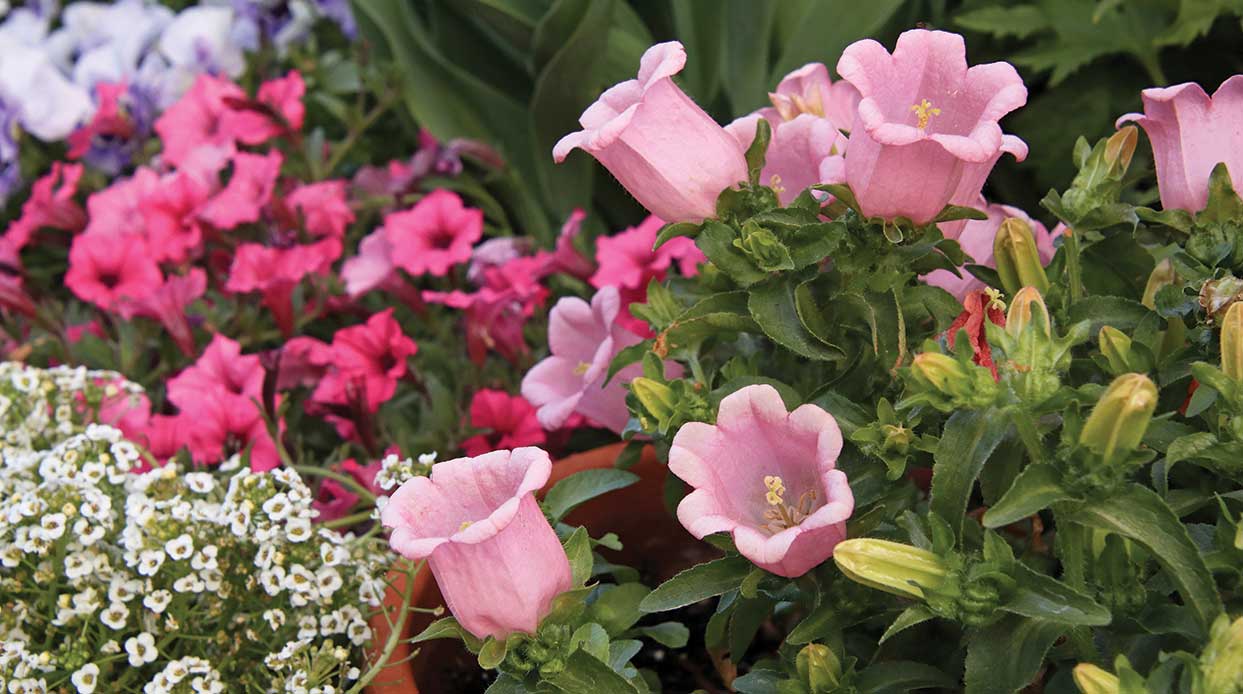
Canterbury Bells
- Annual
- Pink; spring
- 8″-12″H by 8″-12″W
- Well-drained soil
- Zones 5-8
- Full to partial sun
- Medium water; medium maintenance
- Attracts: Bees, butterflies
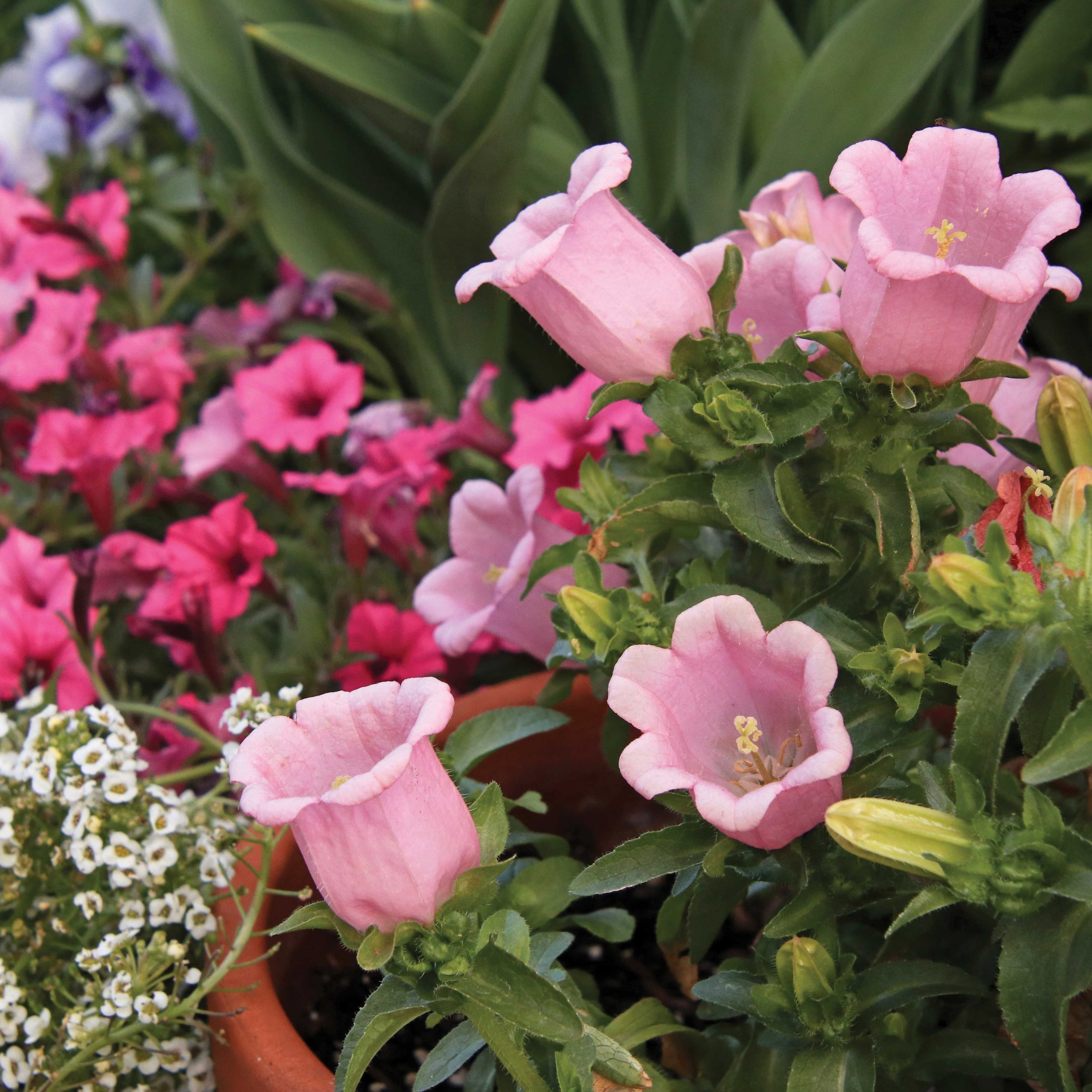
Also known as bellflower, this flower is best purchased as plugs and grown as an annual in hot climates in the fall for April/May blooms. This dwarf variety of bellflower has a relatively compact growth habit compared to taller varieties and is ideal for 5″-6″ pots or mixed containers.
Why we like it: This bellflower’s cup-shaped pink blooms add charm to small spaces, and its compact size makes it ideal for mixed containers, hanging baskets, borders and cottage gardens alongside other colorful annuals. The cups tend to collect water when it rains, perfect for thirsty pollinators.
Ranunculus Butterfly ‘Musa’
- Perennial
- Red; spring
- 25″-30″H by 10″-12″W
- Well-drained soil
- Zones 8-11
- Full sun
- Low water; low maintenance
- Attracts: Bees, butterflies
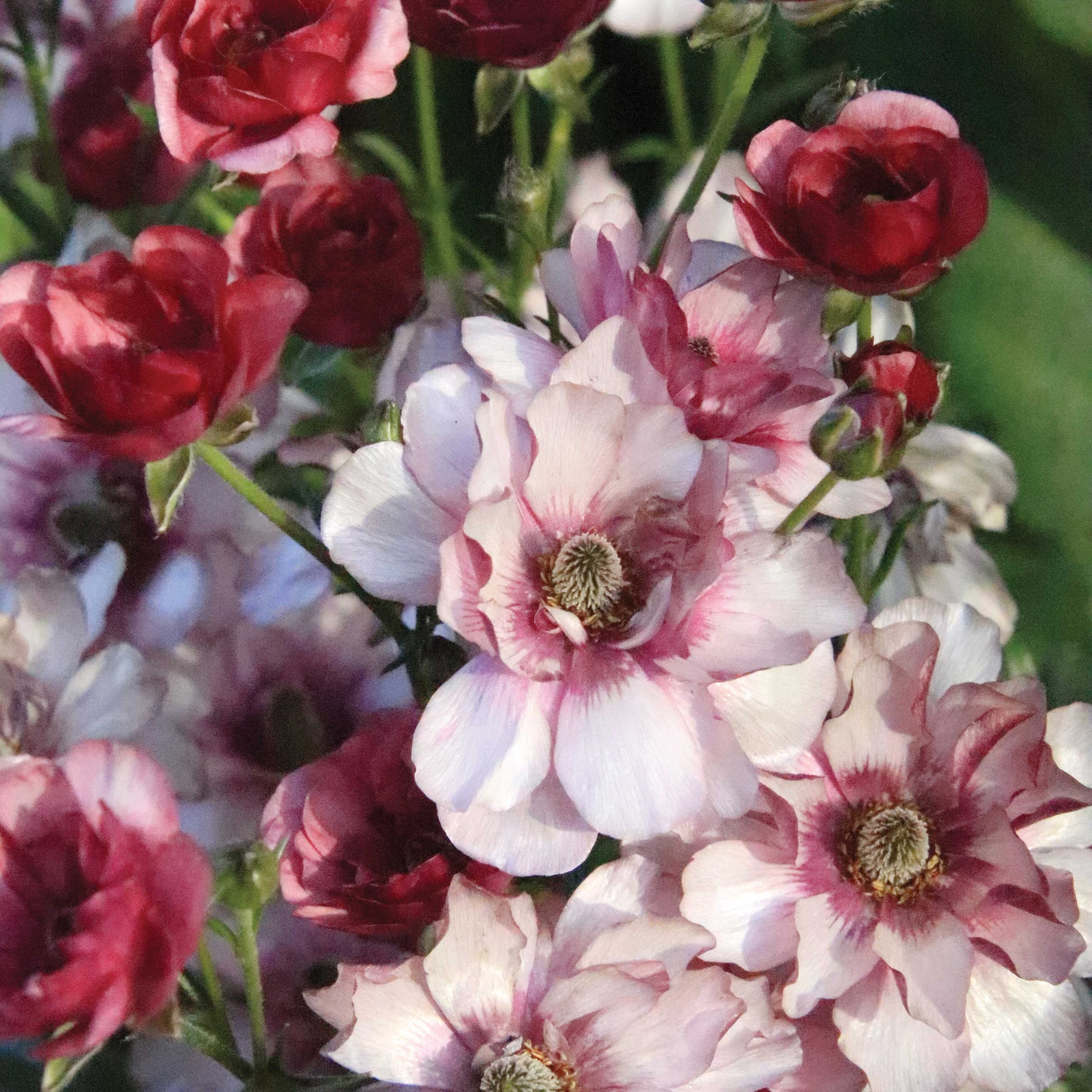
As opposed to traditional ranunculus, with one large densely petaled bloom per stem, butterfly ranunculus have branched stems with 5-7 smaller, open-faced blooms, giving them an airy, wildflower-like appearance. Butterflies are also considered hardier and less prone to rot.
Why we like it: When used as cut flowers in arrangements, butterfly ranunculus blooms last as long as 2-3 weeks due to their pearlescent waxy coating. They’re also ideal for containers and bridal bouquets. ‘Musa’ buds start out as red and the bronze flowers fade to soft coral as they age, but they are also available in a variety of other colors.
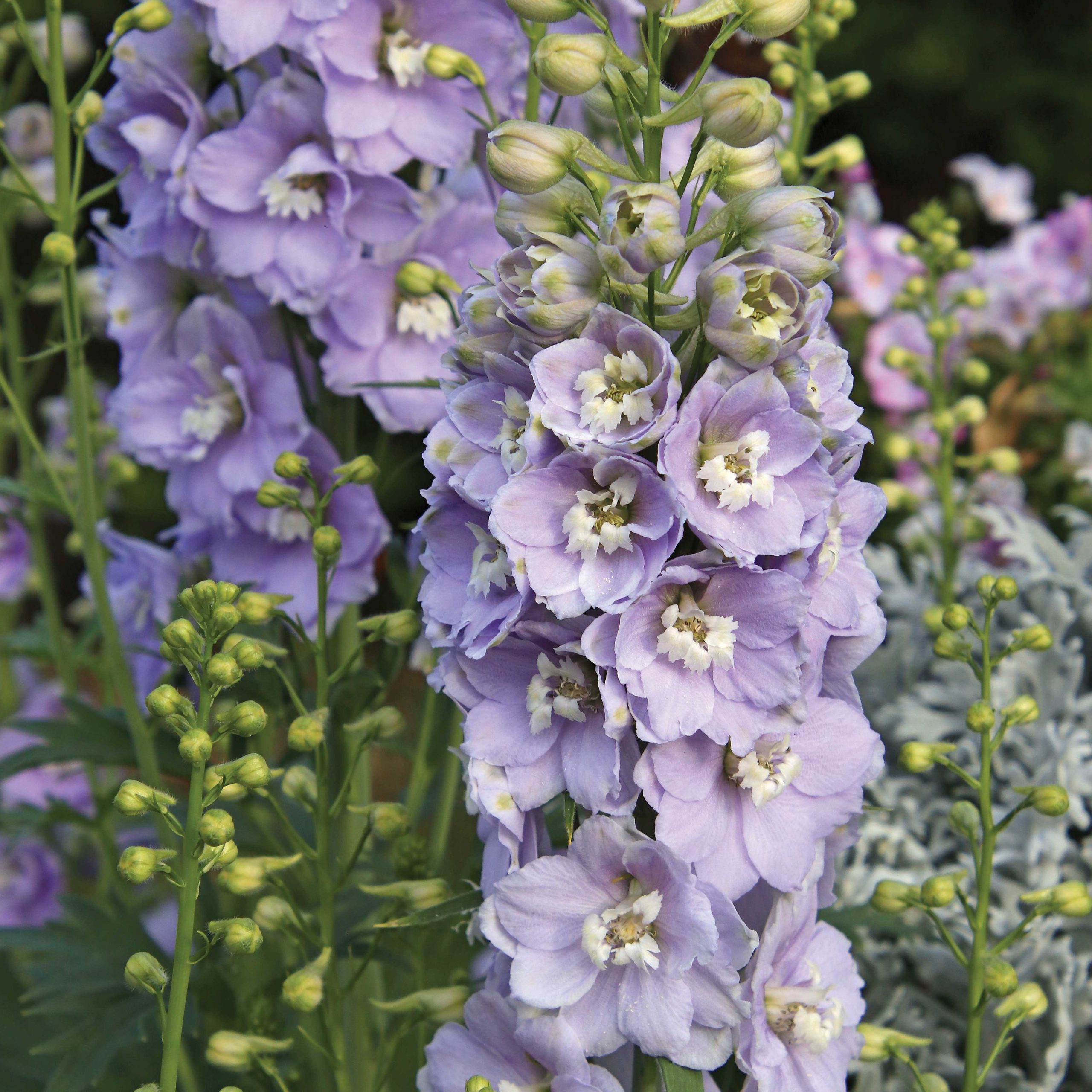
Delphinium
- Annual
- Blue; spring
- 36″-48″H by 12″-18″W
- Well-drained soil
- Zones 3-7
- Full to partial sun
- Medium water; medium maintenance
- Attracts: Bees, butterflies, hummingbirds
Also known as candle larkspur, delphiniums come in a variety of colors and are best treated as annuals in hot climates. Plant in the fall or winter for March/April blooms. Due to their height, support from peony cages or stakes is required. Note that all parts of delphinium are toxic, so exercise caution around children and pets.
Why we like it: The striking blue flowers with a white eye in the center grow stacked along tall, sturdy stems. Delphiniums add height and drama to both outdoor gardens and cut floral arrangements, lasting about a week with proper care once cut.