


4 Beautiful Low-Maintenance Ground Covers That Add Color to Your Garden

These low-growing ground covers add color and texture to your xeriscape while preventing water loss and soil erosion.
Orange Bulbine (Bulbine frutescens)
- Perennial
- Fall to spring; yellow-orange
- 12″-18″H by 1′-3’W
- Well-draining soil
- Zones 9-11
- Full to partial sun
- Low water; low maintenance
- Attracts: Bees, butterflies, hummingbirds
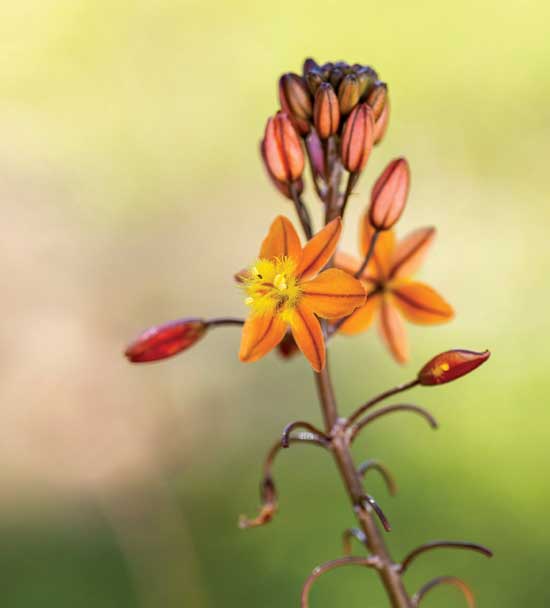
This herbaceous succulent perennial is native to South Africa and spreads by rhizomes, forming dense clumps. Orange bulbine’s long, fleshy leaves produce an aloe gel-like substance that is traditionally used to treat skin conditions, and a medicinal tea can also be made from its leaves.
Why we like it: Bulbine is a versatile plant, well-suited to a variety of garden styles. In desert gardens, it can be used as a ground cover, or in borders and containers. Showy flowers of yellow and orange with frilly stamens bloom in both spring and fall, becoming dormant in the hottest part of summer.
Kurapia (Lippia nodiflora)
- Perennial
- Spring through fall; white
- 1″-6″H by 1′-6’W
- Sandy, loamy soil
- Zones 7B-13B
- Full to partial sun
- Low water; low maintenance
- Attracts: Bees, butterflies
Also called Phyla nodiflora (or frog fruit) in nurseries, this native of Japan does not produce seeds and is propagated from cuttings and planted as plugs placed 18 inches apart into bare ground. Full ground coverage takes about three months, after which time Kurapia can be mowed when not in bloom for a more manicured look.
Why we like it: Kurapia makes an excellent ground cover in the low desert and can substitute for grass in areas with minimal foot traffic. Its tiny white or pink flowers resemble those of lantana. Kurapia is drought-tolerant once established and stays green year-round.

Goodding’s Verbena (Glandularia gooddingii)
- Perennial
- Purple; spring
- 6″-12″H by 1′-3’W
- Well-drained soil
- Zones 8-11
- Full to partial sun
- Medium water; low maintenance
- Attracts: Bees, butterflies, hummingbirds
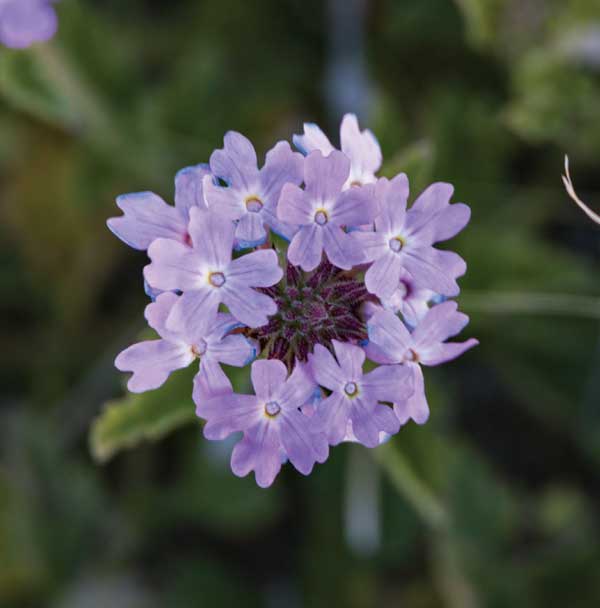
Also found in nurseries as Verbena gooddingii, this Arizona native features fuzzy, light-green, lobed foliage and stems. It’s relatively short-lived and may reseed itself the following year but will require replacement after a few years. It mainly blooms in spring and may go dormant in the heat of summer without supplemental water.
Why we like it: This colorful mounding plant puts on a beautiful flower show in spring with its rounded clusters of fragrant lavender flowers, making it ideal for pollinator gardens. It also makes a lovely accent between succulents in xeriscapes, in containers, or used as cut flowers in arrangements.
Gopher Plant (Euphorbia rigida)
- Perennial
- Winter to spring; yellow
- 1′-2’H by 2′-3’W
- Well-draining sandy soil
- Zones 8-11
- Full to partial sun
- Low water; low maintenance
- Attracts: Bees
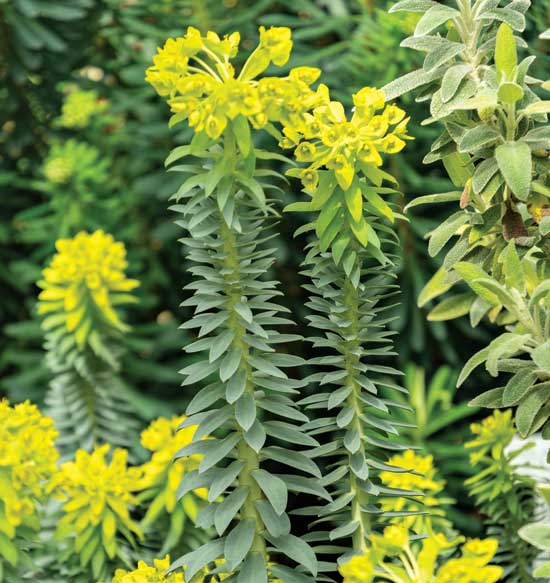
A member of the spurge family and native to the Mediterranean, this drought-tolerant succulent-like plant is well-suited to the low desert. Like other species of euphorbia, care must be taken when handling due to its milky latex sap which can be irritating to bare skin and toxic to pets if eaten.
Why we like it: Gopher plant is especially suited for rock gardens and xeriscapes with its gray-blue leaves that contrast with bright chartreuse blooms. Technically, the blooms are modified leaves known as bracts (as with bougainvillea), which have tiny yellow flowers inside the bracts that age to an orange-pink color.