


4 Festive House Plants That Will Dial Up Your Christmas Decor

These winter-blooming houseplants brighten interiors with splashes of festive color—and make great gifts for spreading holiday cheer.
Christmas Pepper Plant
(Capsicum annuum)
- Annual
- Blooms: Multiple colors; fall
- 6″-12″H by 6″-12″W
- Well-drained loamy soil
- Zones 9B-11
- Full to partial sun
- Medium water; low maintenance
- Self-pollinating
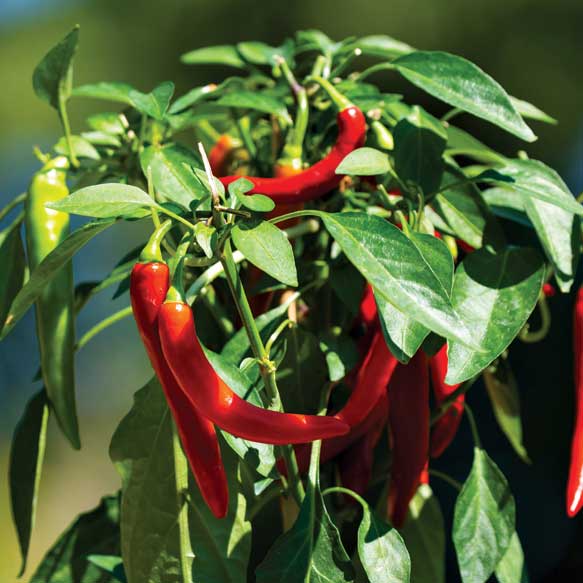
Christmas peppers were the holiday plant of choice before poinsettias were developed in the early 20th century. Also known as ornamental peppers, the colorful fruits are edible but unbearably hot compared to varieties grown for culinary use. As members of the nightshade family, like tomatoes, this plant is toxic to dogs.
WHY WE LIKE IT: There are many named cultivars of ornamental peppers, several varieties of which produce multiple colors of fruit on the same plant that are shaped like traditional Christmas lights. While treated as an annual for holiday decor, they can also be grown as perennials with proper care.
Poinsettia
(Euphorbia pulcherrima)
- Perennial
- Blooms: Yellow; winter
- 2′-3’H by 2′-3’W
- Well-drained soil
- Zones 9-11
- Full to partial sun
- Medium water; low maintenance
- Attracts: Butterflies, hummingbirds
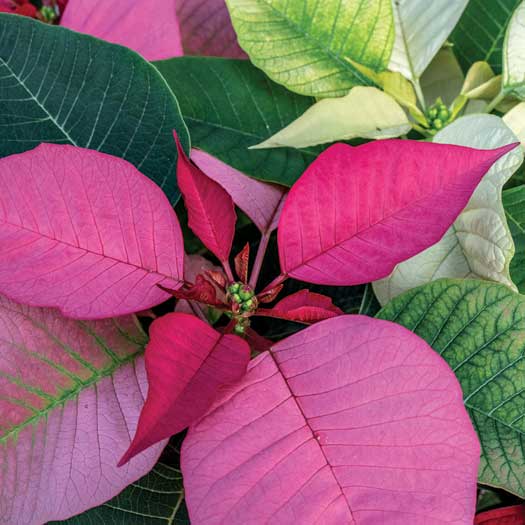
Native to Mexico and South America, poinsettia was named after Joel Roberts Poinsett, who introduced the plant to the U.S. in the 1820s. Cultivars of many color variations were developed by California’s Ecke family of growers throughout the 20th century. Poinsettias may cause mild irritation to humans or pets, but contrary to rumors, are not deadly.
WHY WE LIKE IT: With its tiny yellow flowers, this traditional holiday plant is best known for its bright red bracts that give poinsettia its signature color. Available in more than 100 cultivars, the star-shaped leaf pattern is said to symbolize the Star of Bethlehem.
Christmas Kalanchoe
(Kalanchoe blossfeldiana)
- Succulent
- Blooms: Multiple colors; winter to spring
- 6″-12″H by 6″-36″W
- Well-drained sandy soil
- Zones 10-12
- Full to partial sun
- Low water; low maintenance
- Attracts: Bees, birds, butterflies
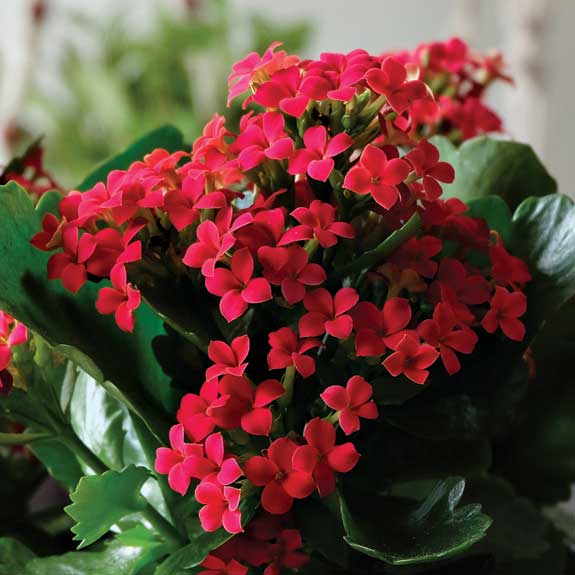
Native to Madagascar, the evergreen Christmas kalanchoe is known as a “short day” plant due to the hours of extended darkness required to induce blooming by growers for the holiday season. As a result, this normally spring-blooming succulent is sold in bloom from Thanksgiving to Mother’s Day. This plant may be toxic to pets.
WHY WE LIKE IT: Christmas kalanchoe is characterized by a rosette of thick succulent leaves topped by dense clusters of small flowers available in multiple colors, such as red, white, pink, yellow or orange. Flowers last as long as eight to 12 weeks.
Christmas Cactus
(Schlumbergera x buckleyi)
- Succulent
- Blooms: Multiple colors; winter
- 6″-12″H by 12″-24″W
- Well-drained soil
- Zones 10-12
- Partial sun
- Medium water; low maintenance
- Attracts: Hummingbirds
Christmas cactus, as well as similar plants of different species that bloom around other notable holidays, Easter cactus and Thanksgiving cactus, are tropical forms of cactus known as epiphytes and are native to South America. With proper care, this plant can live up to 20 years.
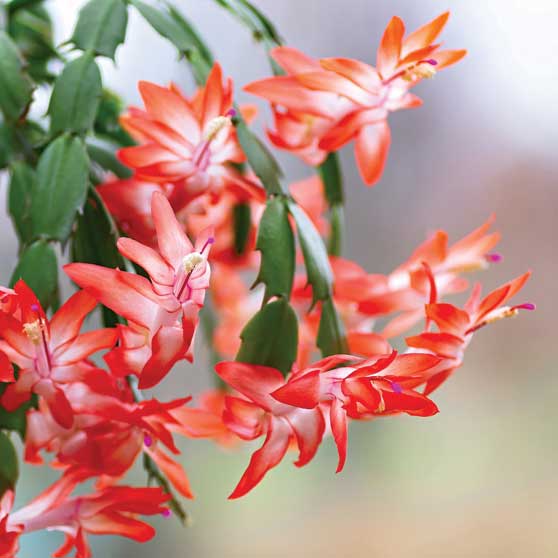
WHY WE LIKE IT: Though scentless, its showy flowers are available in multiple colors, such as red, purple, orange, pink or white, and can bloom for four to six weeks at a time. Flat green leaves with rounded teeth make the Christmas cactus pet- and kid-friendly to the touch.