


Garden Solutions: Our Expert Answers Your Questions
Send your gardening questions to info@azplantlady.com
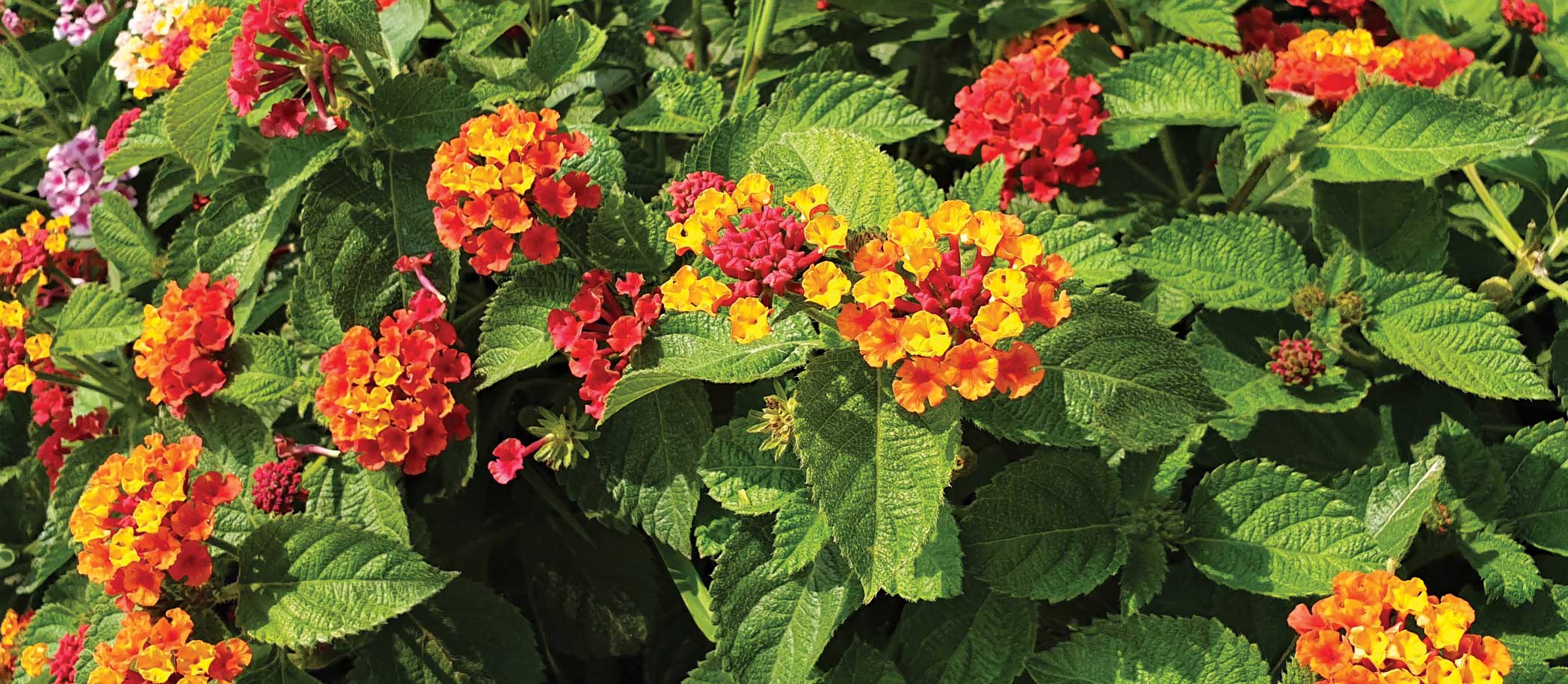
My lantana has whiteflies, which I’ve treated in the past by spraying them with insecticidal soap. But when I did this a few weeks ago, most of the leaves turned brown and appeared burned. What did I do wrong?
Pesticide sprays, such as insecticidal soap and neem oil, are popular treatments for damaging insects that suck on the leaves and stems of plants and can be quite effective in reducing their numbers. They work by suffocating unwelcome bugs and are useful during the cooler parts of the year. However, when temperatures rise above 90 degrees, they can burn the foliage of the plants and should be avoided. Summer management strategies for whiteflies include removing heavily infested growth (insects are usually found underneath leaves) and spraying the foliage with a hose daily to decrease their population.
Flowering plants provide welcome color around my patio. This summer, they haven’t been blooming very much. Should I fertilize them now to encourage more flowers?
During this time of year, the intense heat causes many shrubs, vines and ground covers to cease blooming. In most cases, there is no need for concern, as this is a heat-management strategy for them—especially with hotter temperatures. Many homeowners and landscapers fertilize without determining whether their plants need it. In many cases, they don’t— especially if they are native to Arizona or come from regions with similar weather patterns. For others requiring extra nutrients, spring is the best time of year to apply it. Avoid adding fertilizer in the summer, which causes stress by stimulating new growth at a time when resources should be focused on coping with the extreme heat. The exception is for flowering annuals, herbs and vegetables, which require regular feeding. Use an organic fertilizer on these plants, which is gentler than synthetic ones.
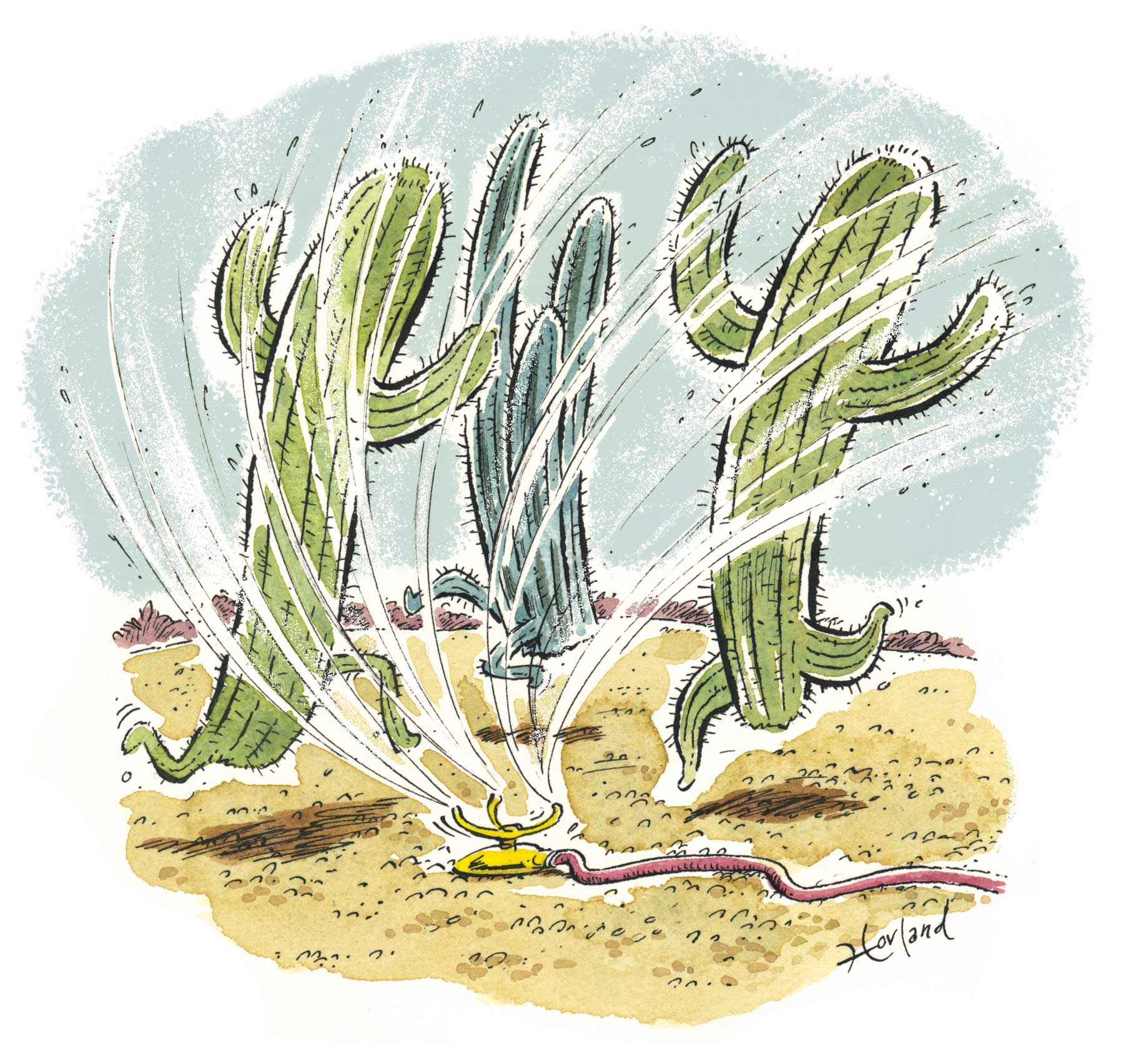
I have cacti and succulents in my front yard that aren’t connected to irrigation. Usually, they are fine without being watered. However, some of my prickly pears have wrinkled pads, and my Mexican fence post cactus has shrunken in width this summer. I assume they need water, but how much and how often?
You are correct that your cacti are showing signs of drought stress. Under average temperatures and rainfall, they may be fine without any additional moisture, but in hotter and drier summers, supplemental irrigation may be needed. Succulents such as agave, aloe and euphorbia are also affected. As they use the water they have stored inside, they shrink, resulting in the wrinkling of leaves or pads. Additionally, the folds that run vertically up and down columnar cacti can become more pronounced. In these instances, use a hose on a very slow trickle of water next to the affected plants and let run for an hour every three weeks—especially in the absence of rain in the summer. If you have several succulents (including cacti), consider adding a dedicated drip irrigation line and turn it on and off as needed in response to summer stress.