


7 Tips to Beat the Heat and Save Money This Summer

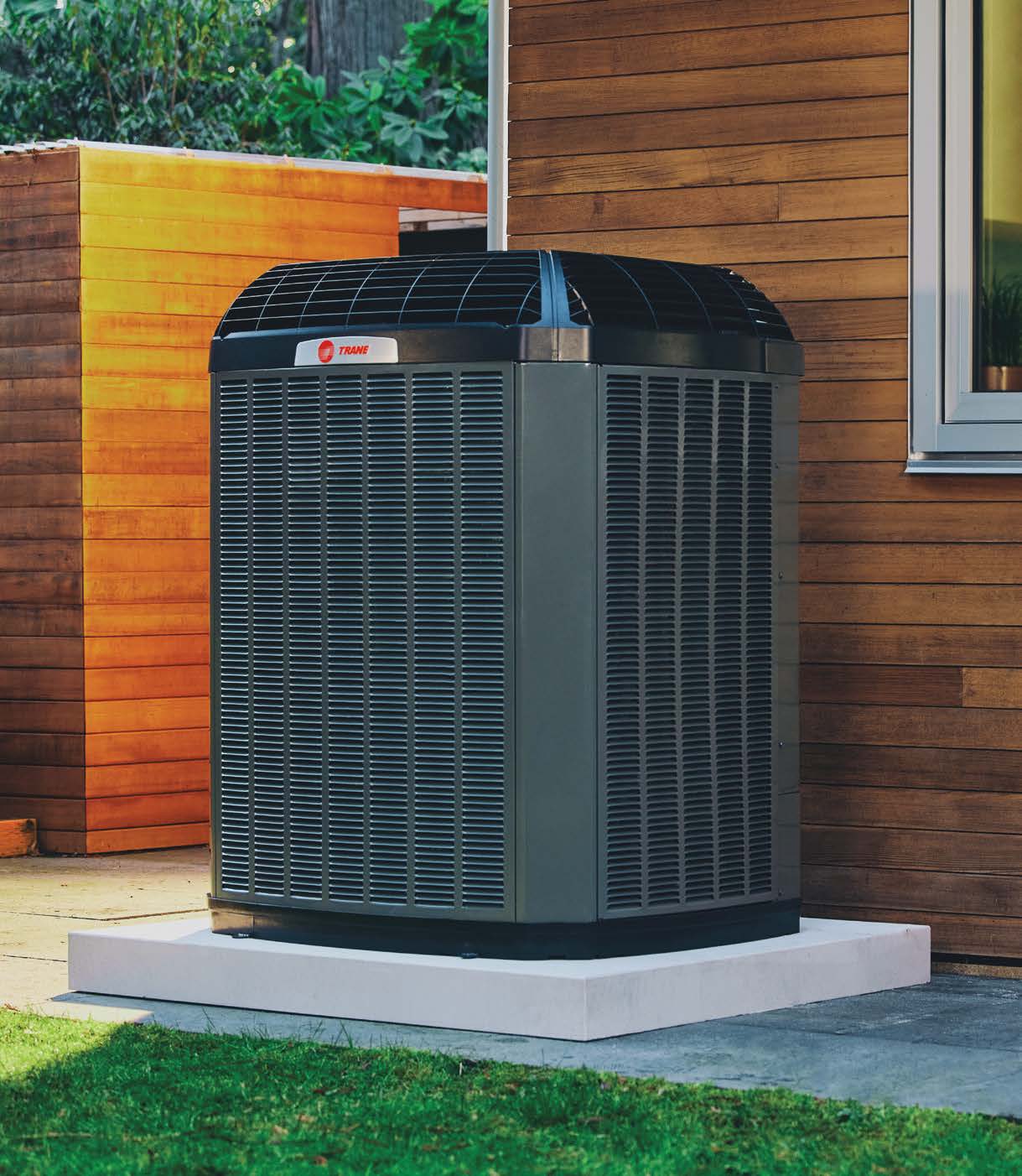
Energy bills can strain your budget during the scorching summer months. However, by making a few simple adjustments and investing in your home’s heating and cooling system, you can reduce your electric bill. Jeff Heller, a sales leader for leading HVAC company, Trane, says annual HVAC maintenance is key not only to help maximize the system’s life span, but also to run at its most efficient.
“Dirty indoor and outdoor coils will make the system work harder and potentially damage critical components if not cleaned,” he says. “Make sure to schedule a maintenance check, so your system can last longer and save you costly repairs.” Here are some other ways to save money as the temperature starts to rise.
Turn up the heat: Raising your thermostat above 72 degrees may seem counterintuitive. However, the U.S. Department of Energy recommends setting your home’s thermostat to 78 degrees during summer to save up to 10% on annual energy costs, and every degree above 72 degrees can save you up to 3% on cooling expenses.
Heller recommends adjusting the thermostat while you’re away to a higher setting, so your HVAC system doesn’t have to work as hard when you don’t need it. “We recommend setting your temperature to 7 to 10 degrees higher than your most comfortable temperature setting.”
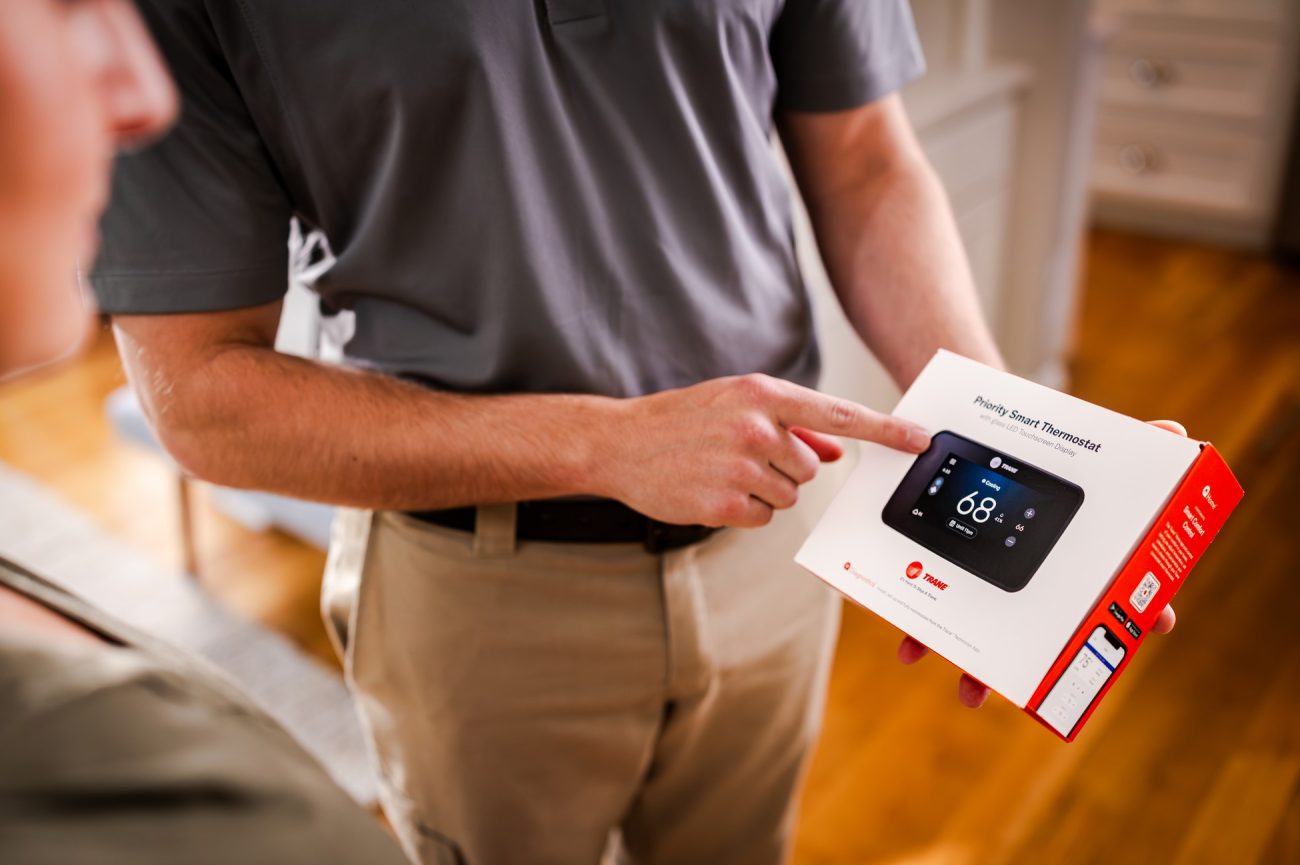
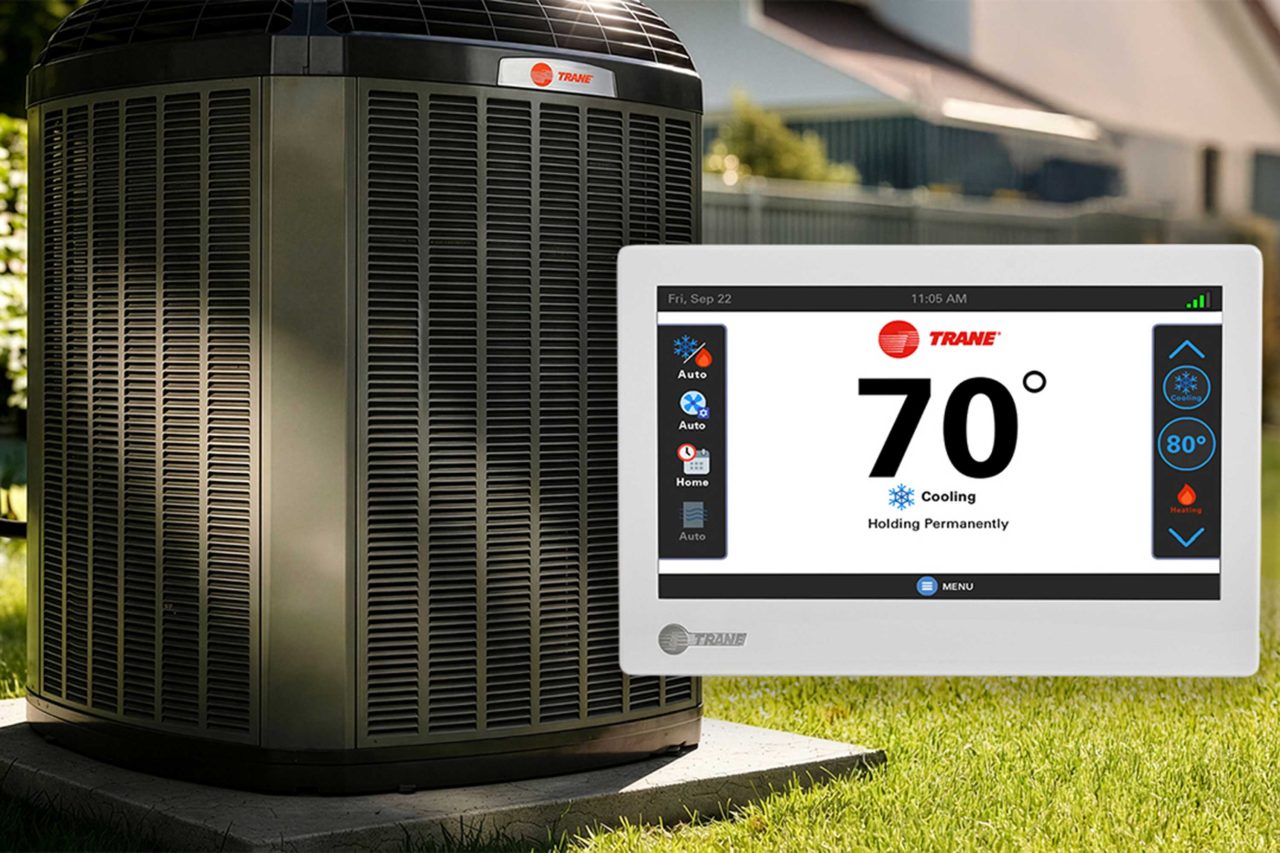
Install a smart programmable thermostat: To make it easier to remember, you can install a smart thermostat that will adjust the indoor temperature based on set heating and cooling schedules. With one such as the Trane XL824, you can set your home’s temperature to a warmer setting when away and start cooling when you’re heading home.
Fan yourself: Buying multiple stand, box, or ceiling fans is a small investment that can reduce your energy costs for years to come. Using fans to help you feel cooler means you can raise the thermostat setting by 4 degrees without reducing your comfort level, according to the U.S. Department of Energy. Just remember to turn off the fans when you’re not in the room. They aren’t intended to cool the space — just the people in the space, via the wind chill effect.
Unplug your “energy vampires”: So-called “energy vampires” are appliances and electronics that draw energy from electrical outlets when they’re turned off or in standby mode. By unplugging countertop appliances and using smart power strips for electronics and computer equipment, the Department of Energy says you can save $100-200 a year.
Seal cracks and gaps: Small gaps around doors and windows can allow chilled air to escape the home and outdoor heat to enter, which can lead to your HVAC system working harder during the summer months. It’s best to double-check wherever you have weather stripping and break out the caulk gun where needed.
Beyond those usual culprits, however, there are a few additional places to investigate that can hinder your ability to keep the chilled air in and hot air out. Cracks in exterior brickwork, as well as gaps around exterior electrical outlets and plumbing, can be sealed with weather stripping or caulk.
While you’re in air-tightening mode, verify that your fireplace damper seals correctly, so you don’t lose chilled air through there. Also, check your kitchen hood: it may be exhausting chilled air all the time, not just when the fan is running. Having your HVAC contractor check for duct leakage, especially if the ductwork is in the attic, is another way to help reduce air leakage and improve indoor air quality.
Change your filter: Clean air filters are critical for efficient cooling. “Imagine if your shower drain was clogged; the water has a hard time draining efficiently, and instead pools at your feet,” Heller says. “An HVAC system works the same with a dirty air filter.” All the chilled air can’t move through the filter as efficiently, and so your system works harder. This can increase the risk of breakdowns during extreme heat when you may need it most.
Trane recommends checking your air filters every 30 days to 90 days. In the summer when your system is running more, it’s best to check every 30 days.
The type of filter can also impact how often you may need to check or replace your filters. Standard 1” filters can be changed every 30 days, while higher-quality filters can be replaced less frequently. Beware of the 1” high MERV filters available at some retailers. They may capture a lot of particles, but they also reduce air flow, especially when dirty, which can damage your system.
Upgrade: When seeking an energy-efficient cooling system, look for an air conditioner with a high Seasonal Energy Efficiency Ratio (SEER2) and EER2 rating. According to Heller, the Energy Efficient Home Improvement Tax Credit (25C) offers incentives to encourage homeowners and renters to embrace clean energy and reduce carbon emissions. These include HVAC tax credits and rebates to homeowners that install more energy efficient heat pumps, air conditioners, and gas furnaces. In its latest budget bill, the 119th Congress has terminated the Energy Efficient Home Improvement Credit, effective December 31, 2025. For homeowners thinking about replacing their HVAC system, doing so before year-end (2025) is best in order to take advantage of the tax credit.
Utility companies also offer rebates for installing certain qualifying systems to homeowners. If you’re interested in upgrading to one of the qualified HVAC systems or want to know if you already qualify, it is best to reach out to your local HVAC technician or Trane Comfort Specialist as they can professionally assess your home and provide expert advice on how to claim these incentives.
“The best way to think about SEER2/EER2 is it’s like miles per gallon on a car,” Heller explains. “The higher the number, the more efficient it is. Generally, higher SEER2/EER2 systems will also deliver better comfort, as they are typically multi-speed or variable-capacity systems. If you live in a hot and dry climate, such as in Phoenix, a unit’s EER2 rating might be more important to you than the SEER2 rating.”
To learn more, contact your local HVAC technician or Trane Comfort Specialist to see if you qualify for an upgraded system. They can assess your home and provide expert advice.
To find the right solution for your home, contact your Trane Comfort Specialist or visit trane.com/residential.