


4 Fragrant Plants That Will Attract Butterflies to Your Garden

Nectar plants, along with larval hosts such as milkweed, are crucial for attracting butterflies to your pollinator garden.
By Lori A. Johnson
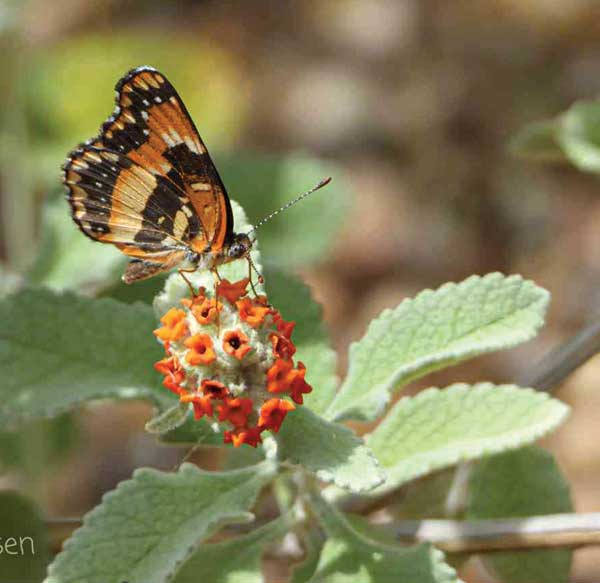
Woolly Butterfly Bush
(Buddleja marrubiifolia)
- Perennial shrub
- Orange; summer to fall
- 1.5′-5’H by 1.5′-5’W
- Well-drained soil
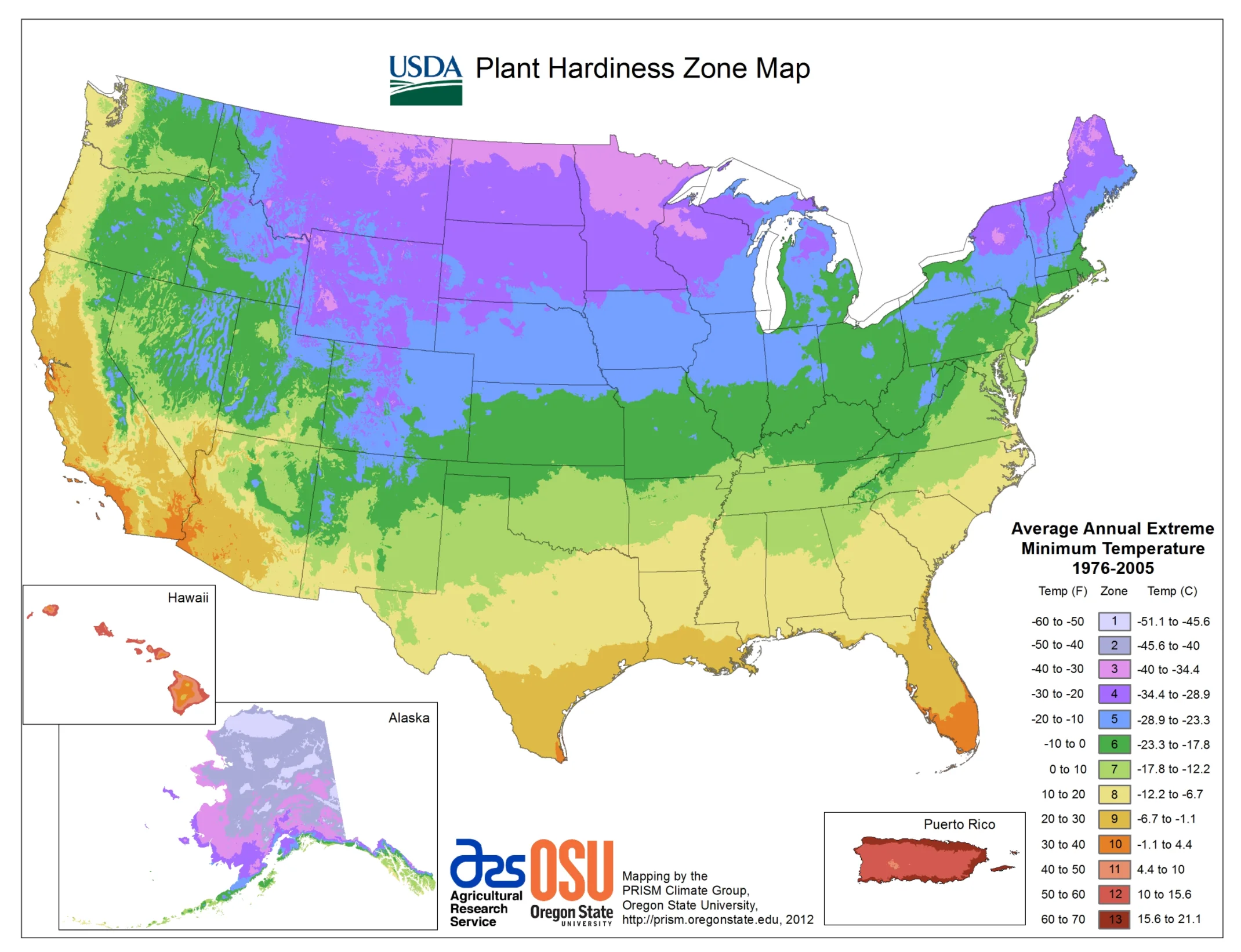
- Zones 8-11
- Full to partial sun
- Low water; low maintenance
- Attracts: Bees, butterflies, hummingbirds
Native to the Chihuahuan Desert, this ornamental evergreen shrub produces the most blooms with supplemental water and full sun in the summer, but will attract more butterflies if given partial shade. Small oval tooth-edged leaves are densely covered in hairlike structures, giving them a woolly appearance.
Why we like it: This plant’s velvety leaves appear silver, with orange aromatic flowers forming clusters about a half inch across. Its long blooming period (February through November) ensures nectar is available for native butterflies for months at a time.
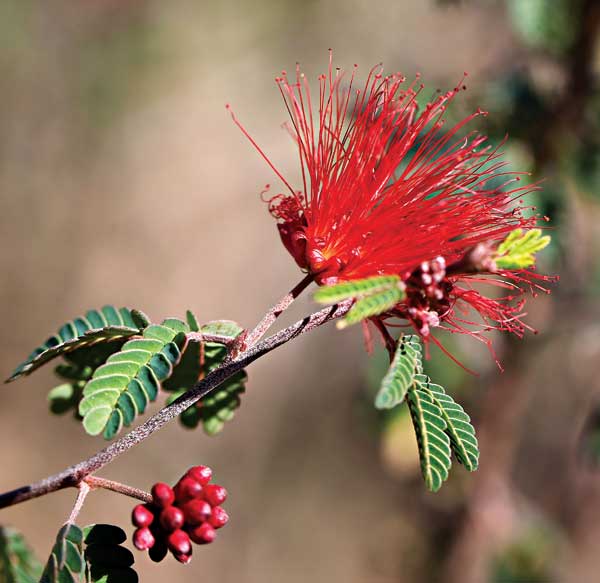
Baja Fairy Duster
(Calliandra californica)
- Perennial shrub
- Red; year-round
- 4′-5’H by 4′-5’W
- Well-drained soil
- Zones 9-11
- Full sun
- Low water; low maintenance
- Attracts: Bees, butterflies, hummingbirds
Native to Baja California and a member of the legume family, fairy duster has traditional medicinal uses, and the roots were once used as a red dye for leather. Fairy duster gets its common name from its long red stamens that resemble the tufted head of a dusting brush.
Why we like it: As a nearly year-round bloomer, fairy duster is an excellent nectar source for a variety of butterflies, from tiny marine blues, which also use it as a larval host, to larger species such as swallowtails. This small-to-medium shrub is also a favorite of hummingbirds.
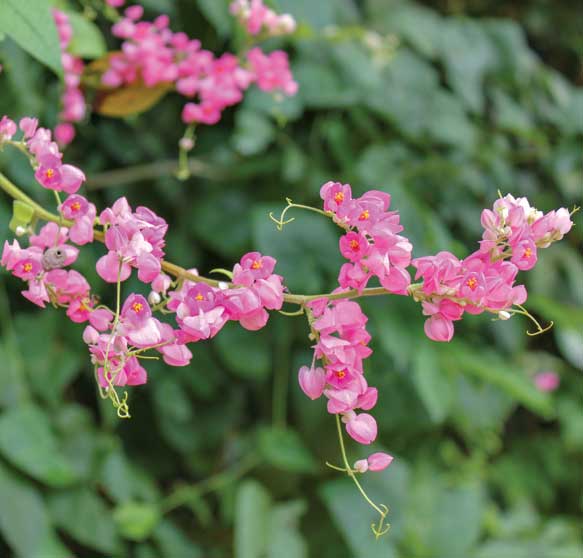
Queen’s Wreath
(Antigonon leptopus)
- Perennial vine
- Pink; spring to fall
- 8′-40′-H by 11′-15’W
- Well-drained soil
- Zones 8-11
- Full to partial sun
- Low water; low maintenance
- Attracts: Bees, birds, butterflies
Also called coral vine, as well as a variety of other local names, queen’s wreath is an evergreen, ornamental native of Mexico and is both heat- and drought-tolerant once established. Multiple parts of the plant, such as leaves, flowers and roots, have traditional medicinal and culinary uses.
Why we like it: With its showy sprays of bright pink flowers (sometimes white) and a long blooming period, this climbing vine is a rapid grower with curling tendrils highly suited for arbors, fences and trellises. Rich in nectar, it attracts a variety of pollinators throughout the year.
Gregg’s Mistflower
(Conoclinium greggii)
- Perennial herb
- Lavender; spring to fall
- 1′-2’H by 1′-3’W
- Well-drained soil
- Zones 7-10B
- Full to partial sun
- Medium water; medium maintenance
- Attracts: Bees, butterflies
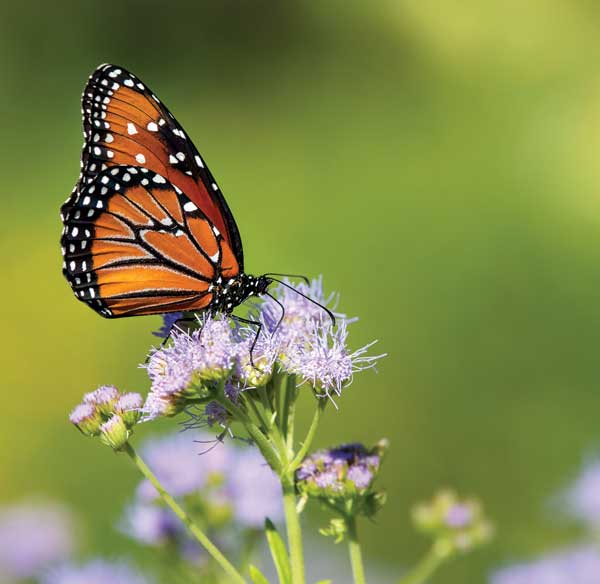
Native to the Southwest and Mexico and a member of the aster family, Gregg’s mistflower spreads easily by rhizomes, making it a good ground cover. Its common name comes from its showy powdery blue-purple flowers with long threadlike stigmas, giving it a misty appearance.
Why we like it: The lavender blooms of mistflower are highly attractive to butterflies, especially Queens, who cluster around it in the fall. Although mainly a nectar plant, it also serves as a larval host for the Rawson’s Metalmark, making it an ideal addition to pollinator gardens.