


4 Desert-Adapted Crops for Festive Holiday Meals and Gardens

Add a dash of Southwest history to your table by growing these desert-adapted crops.
Casados Multicolor (Zea mays)
- Annual grass
- Blooms; insignificant, summer to fall
- 4′-6’H by 12″-18″W
- Well-drained soil
- Zones 3-12
- Full sun
- Medium water; low maintenance
- Attracts: Bees (wind pollination)
The seeds for Casados multicolor were originally collected in 1994 from the Casados Farm in El Guique, New Mexico, where they were passed down through the family for generations. Kernel classifications for this corn include mostly flour (kernels containing a milky fluid), but also dent (kernels starting to dent, forming a “milk line”).
WHY WE LIKE IT: This is one of several varieties known as “Indian corn” with kernels in variations of red, white, blue, yellow and orange, adding a traditional look to your tablescape when left on the cob. It’s also an excellent addition to such dishes as masa, pinole or polenta.

Magdalena Big Cheese (Cucurbita moschata)
- Annual vine
- Blooms: Yellow; summer to fall
- 4′-10’H by 3′-25’W
- Well-drained rich soils
- Zones 3-11
- Full sun
- Medium water; low maintenance
- Attracts: Bees
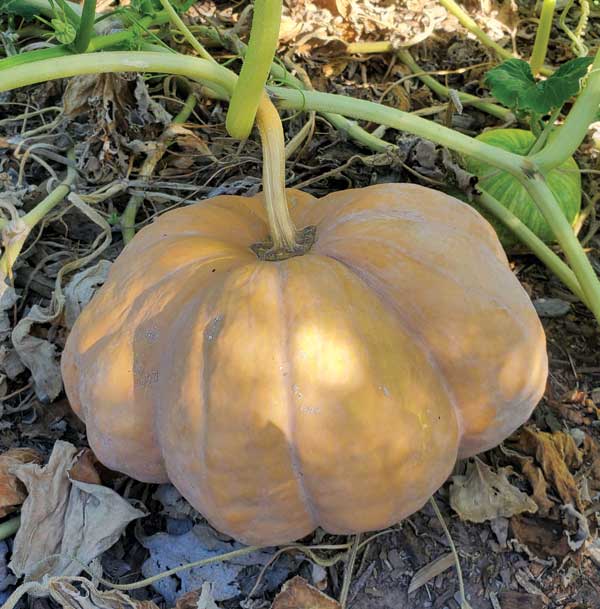
Originating from Sonora, Mexico, Magdalena big cheese is one of the oldest varieties of butternut squash in cultivation. It gets its common name due to its resemblance to a wheel of cheese. It can either trail along the ground or climb structures such as trellises and cages.
WHY WE LIKE IT: The pale orange, ribbed fruits in the shape of a flattened pumpkin contain bright orange and sweet-tasting flesh. Nutritionally dense, this squash contains a variety of vitamins and minerals, as well as dietary fiber. Culinary uses include soups, stews, pies and other dishes. The 3-to-6-inch, showy funnel-shaped flowers are also edible.
Yellow Pear Tomato (Solanum lycopersicum ‘Yellow Pear’)
- Fruiting vine
- Blooms: Yellow; summer to fall
- 4′-8’H by 2′-3’W
- Well-drained soil
- Zones 3-12
- Full sun
- Medium water; low maintenance
- Self-pollinator
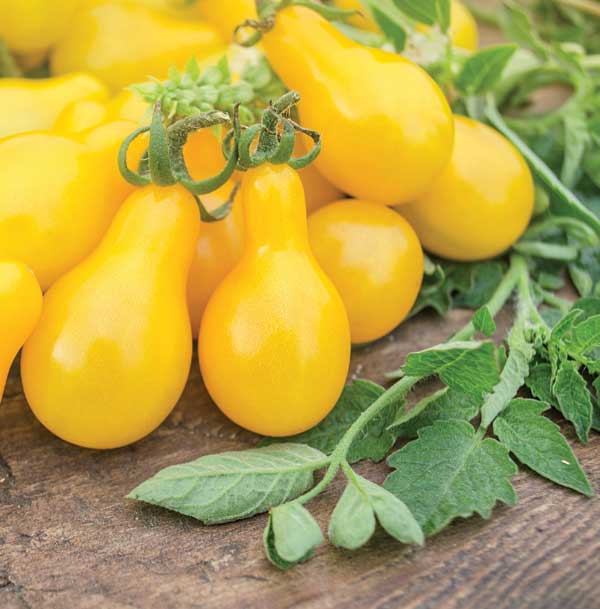
Developed in Europe in 1805, yellow pear tomatoes get their name from their unique shape, reminiscent of pears. Due to its vining habit and heavy fruiting, this heirloom variety should be staked, caged or trellised to keep it upright. A prolific producer, it bears abundant clusters of 1-to 2-inch-long tomatoes throughout the growing season.
WHY WE LIKE IT: This variety makes a great addition to salads or anywhere you would use cherry tomatoes, such as for snacking, as a garnish or even preserved by drying or making jam. It can also be grown in pots large enough to include support and proper drainage.
Dolores de Hidalgo Frijol Negro (Phaseolus vulgaris)
- Annual vine
- Blooms: Purple; summer to fall
- 6′-10’H by 12″-18″W
- Well-drained soil
- Zones 2-11
- Full sun
- Medium water; low maintenance
- Self-pollinator
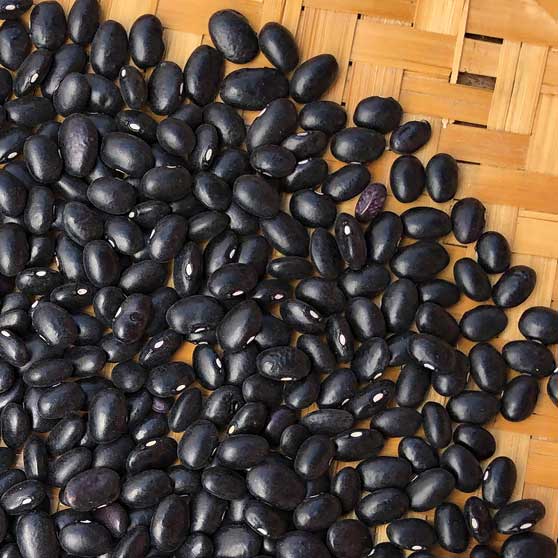
This medium-sized black bean originates from the high desert central Mexican city of Dolores de Hidalgo. As a tall vine, it requires support from a trellis, pole or fence. A member of the legume family, beans extract nitrogen from the air and add it to the soil for use by other plants.
WHY WE LIKE IT: This pole bean produces an abundance of lilac flowers and mottled purple pads. The sweet flavor and smooth texture of these dried beans can be used in recipes, including spreads, salads and soups. A nutritionally dense food containing B vitamins, fiber and protein, dried beans are easy to store for future use.