

4 Contemporary Native American Artists You Need to Know About

Contemporary Native American art is enjoying a long-overdue nationwide renaissance.
By Paula M. Bodah
To say Native American contemporary art is enjoying a moment is an understatement. For the first time in its 130-year history, the 2024 Venice Biennale chose a Native American artist to represent the United States. Jeffrey Gibson, a Choctaw/Cherokee painter and sculptor, signified validation for contemporary Indigenous American artists.
For decades, says Phoenix gallerist John Reyes, the art world was centered on white New York City talent. “The labels are breaking down and opportunities are opening up,” he says. “First, it was white female artists, then Black artists, and now, finally, Native Americans.”
This new popularity has allowed Indigenous creators to command higher prices for their work, says art adviser and curator Logan Browning. “An article in Bloomberg News last year said that prices for work by Native American artists have risen by 1,000% in recent years,” she notes.
Steven Yazzie, Navajo and Laguna Pueblo
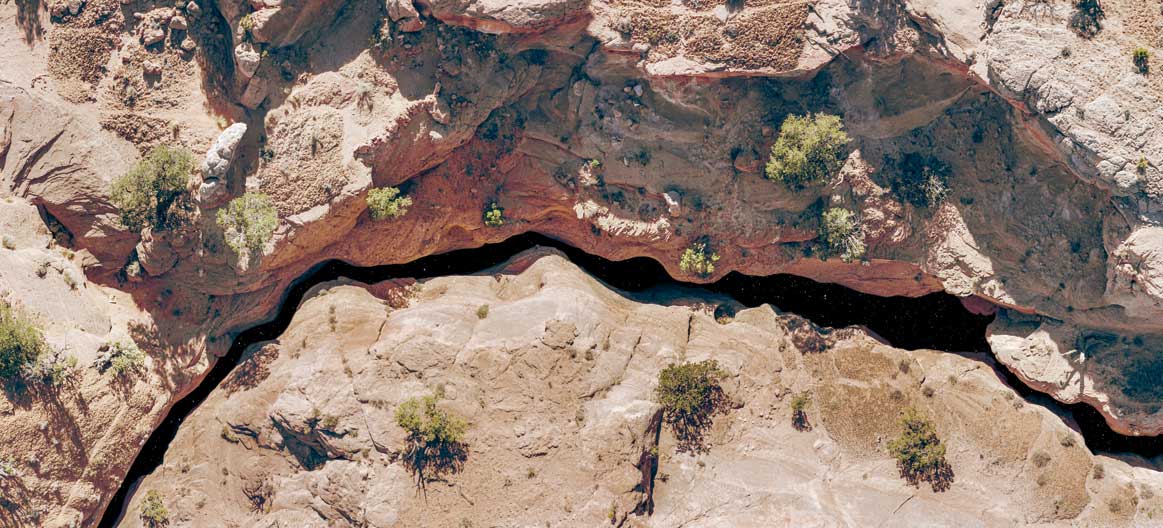
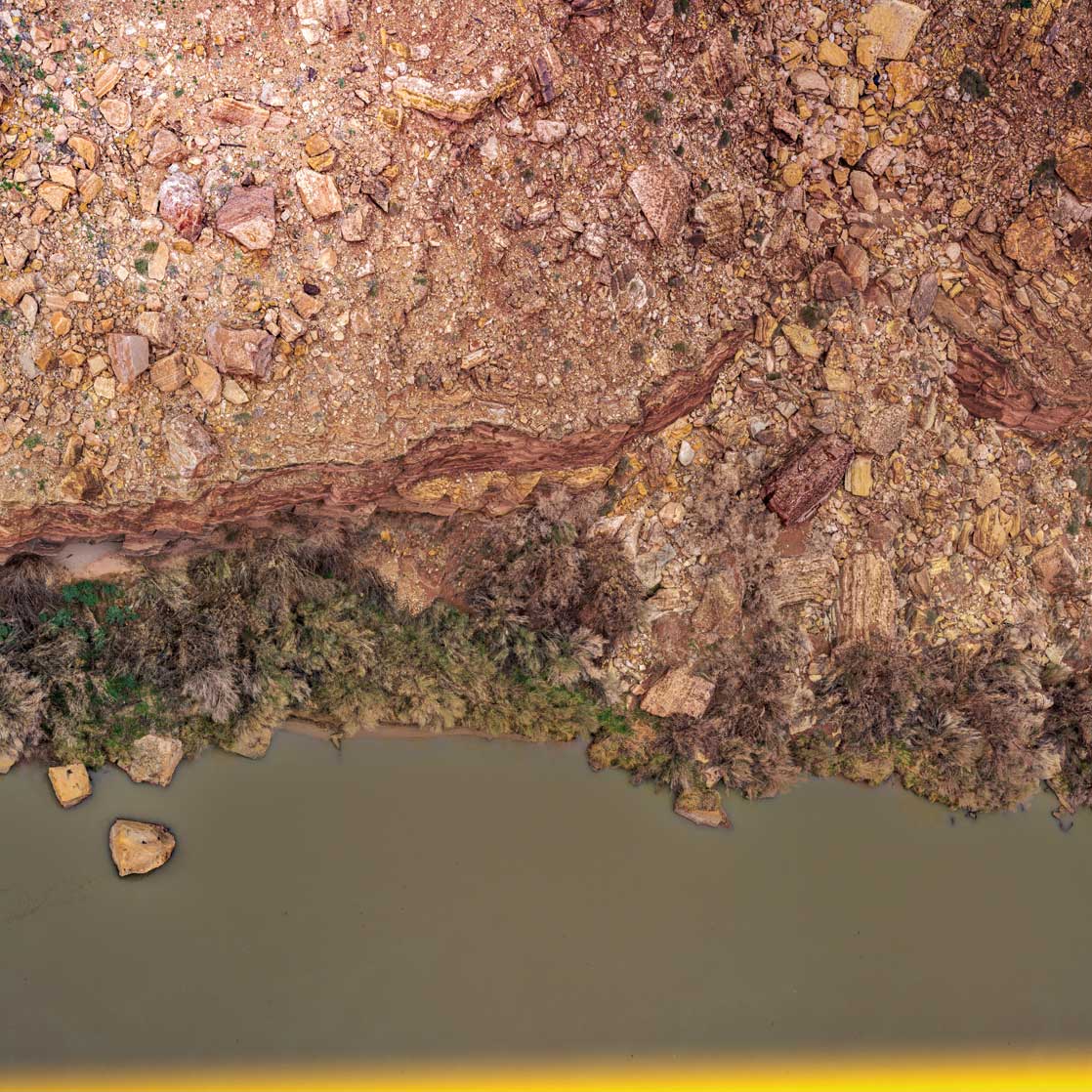
If you happened to be in Denver back in the summer of 2022, you might have seen what looked like signs from a real estate company called Gold King & Associates. If you called the phone number on the signs, however, you wouldn’t get information about a property for sale. Instead, you’d hear a poem, quote or excerpt from an article or book about the impact humans have on the land. The project was an installation by Steven Yazzie, a multidisciplinary artist whose works range from vivid abstract oil paintings to still photography to video to collaborative community installations such as the Denver venture.
While Yazzie’s medium of choice may change frequently, there is a consistent theme of exploring his—and our—connection to the land. “Much of my work is about to my relationship with the natural world,” he says. Yazzie says he finds inspiration from frequent visits to the Navajo reservation. “If people ask me what my work is about, I think that’s the wrong question,” he says. “I’m more interested in how it feels, whether it has the right emotive quality.”
Although he now lives in Denver, Yazzi’s connection to Arizona is strong. He earned his bachelor’s degree in intermedia from Arizona State University in 2014, and his work is in the collections of the Phoenix Art Museum, Tucson Museum of Art and the Heard Museum.

Cara Romero, Chemehuevi
Cara Romero’s photographs are far more than just pictures. They’re whole stories, dramas playing out in a still-life format. Perhaps it’s unsurprising, given that Romero studied cultural anthropology in college. As a member of the Chemehuevi tribe, Romero has spent much of her time on the tribe’s Lake Havasu reservation. “My culture informs my work because it’s who I am and has been my lived experience,” she says.
In her imaginative photos, Romero demonstrates what it means to be a Native American in contemporary society. One photo, “Water Memory,” depicts two people in traditional Native American dress underwater, a reference both to the notion of the biblical great flood and to the fact that the Chemehuevi people were flooded out of their ancestral home for the creation of Lake Havasu.
Romero uses digital tools to create her photographs, sometimes combining images, and frequently stages her photos like scenes in a play or movie. “The Last Indian Market,” for example, a 110-inch-long piece, is a playful version of Leonardo da Vinci’s “The Last Supper,” featuring Native American artists standing in for the Twelve Apostles.
This February, Dartmouth College’s Hood Museum of Art’s exhibition, “Cara Romero: Panûpünüwügai (Living Light),” will travel to the Phoenix Art Museum, where it will be on display through June 2026. The show features 60 large-scale images spanning two decades of Romero’s work.


Emmi Whitehorse, Navajo
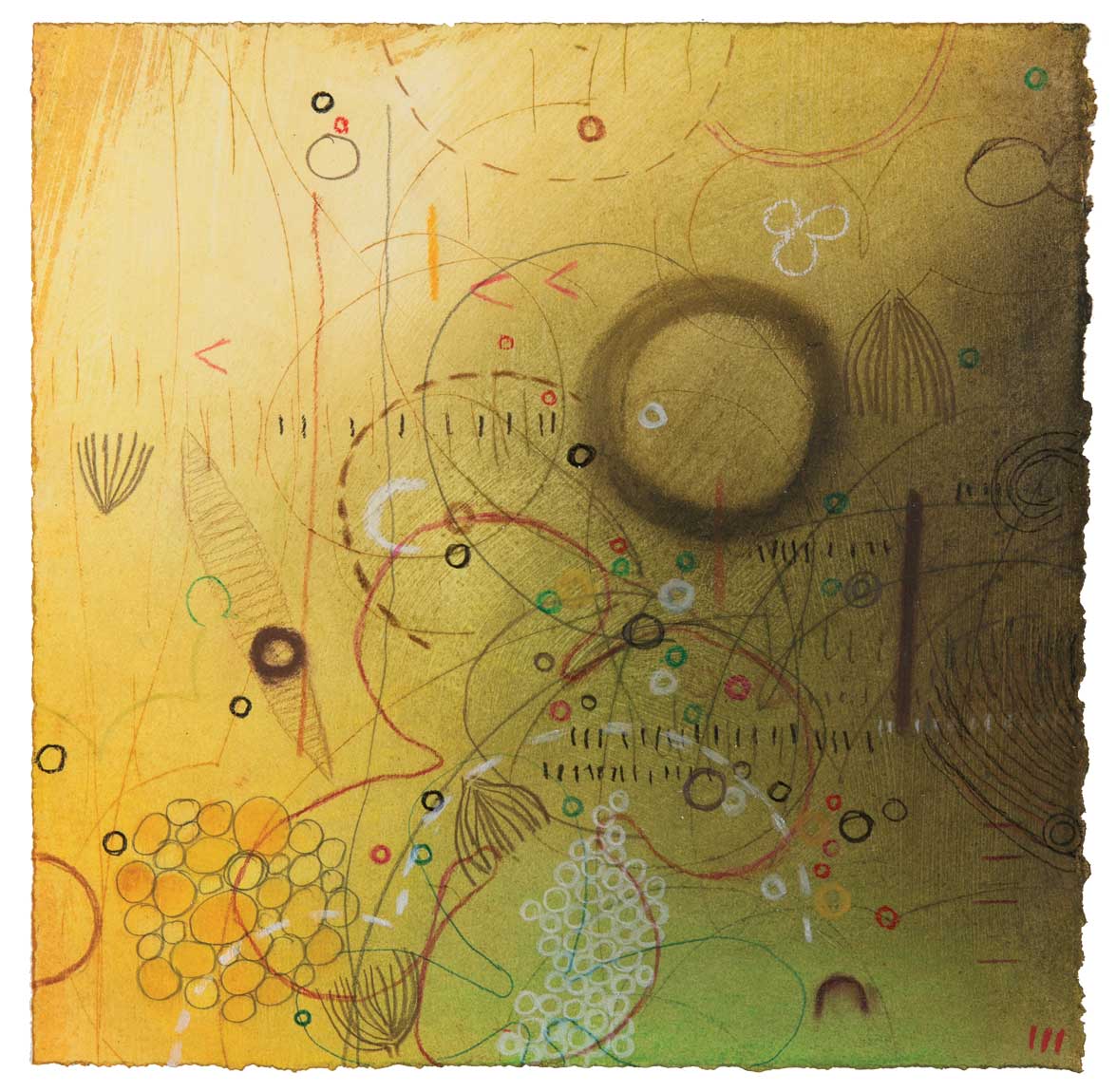
Emmi Whitehorse doesn’t necessarily see herself as a Native American artist. “I see myself as a woman artist,” she says. “But it’s great that we are finally getting attention. It’s nice to be acknowledged while we’re still living,” she adds with a laugh.
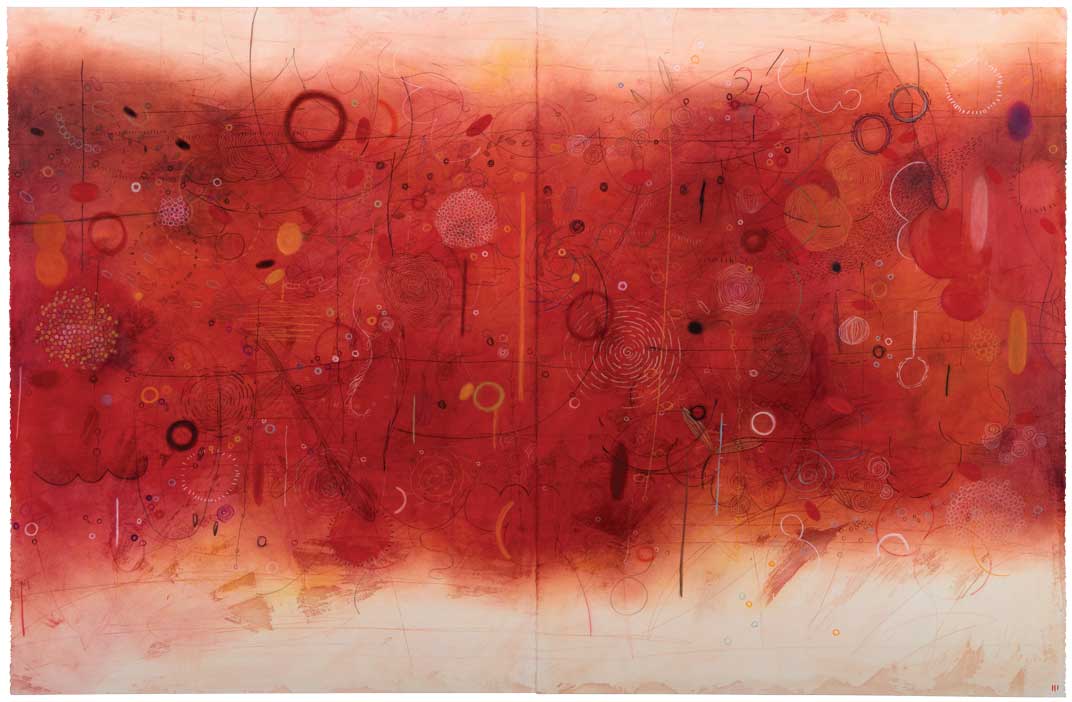
Whitehorse’s paintings home in on the details of her surroundings, viewing nature from a perspective of interconnectedness and interdependence. “There are all these little things that are moving or inching along, such as bug or bunny tracks, things you don’t notice on the ground, and things like seed pods and pollen in the air,” she says. “I’m interested in making people aware of what’s around us, underfoot or floating in the atmosphere.”
Using mixed media on canvas or paper, Whitehorse creates meditative pieces, suggestive of the Southwest landscape and sky, in rich, hazy hues suffused with light and punctuated with bold, gestural marks.
Whitehorse’s work has been exhibited in museums and galleries across the country and abroad, including in the 2024 Venice Biennale and an exhibition of Native American art at the National Gallery of Art in Washington, D.C. Closer to home, her art can be seen in the collections of the Tucson Museum of Art and the Heard Museum.

Melissa Cody, Navajo
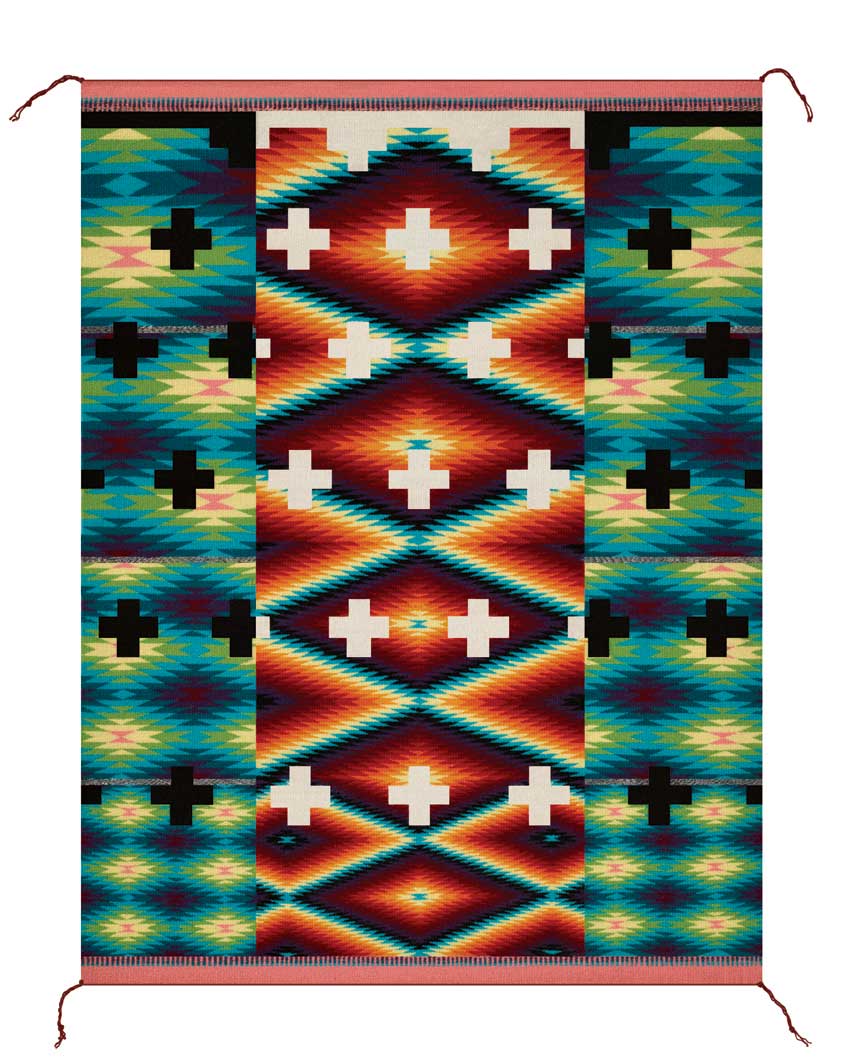
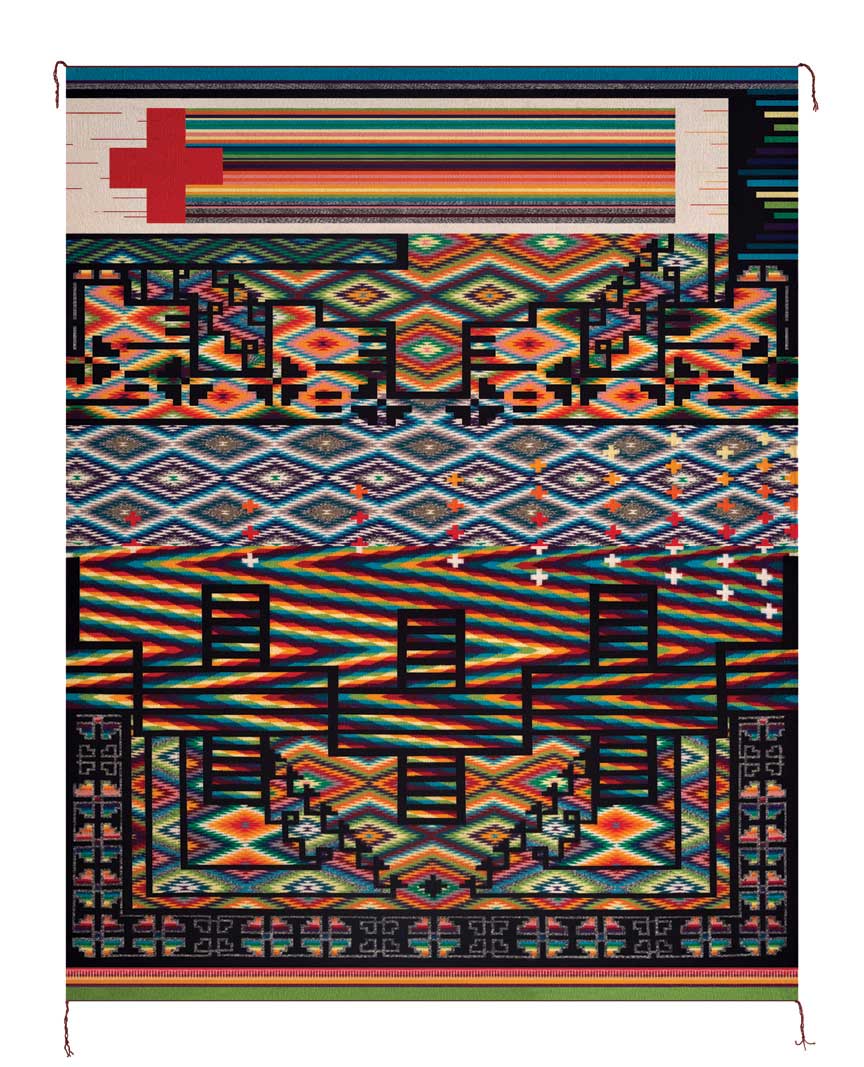
The first time John Reyes saw Melissa Cody’s bright, graphic weavings, he says his first thought was, “What is this? This isn’t how Native American tapestries are made.” On closer inspection, he realized Cody had taken the art and craft a giant step further, using a variety of tribal symbols and styles and, with digital technology, bringing them together into a cohesive whole. “It’s taking something that’s been done for literally hundreds of years and giving it a twist,” Reyes says.
Cody, a native Arizonan and a fourth-generation weaver, balances tradition and history with the present, both in her use of timeless symbols reimagined in new colors, patterns and textures, and in her employment of a traditional Navajo loom and a mechanized jacquard machine.
Her vibrant colors, known as Germantown Revival, come out of a dark era in American history when the U.S. government in the 1860s tried to annihilate the Navajo by burning villages and removing thousands from their homes. In an act of bravery, protest or sheer determination to keep their culture alive, Navajo women unraveled their Germantown, Pennsylvania-made, government-issued wool blankets and rewove them in their own designs. “Melissa has really broken out of the mold of what’s expected,” Reyes says. “And it’s really beautifully done.”

SOURCES
Steven Yazzie: yazziestudio.com.
Cara Romero: cararomero.com.
Emmi Whitehorse: chiaroscurosantafe.com/artists/whitehorse-emmi.
Melissa Cody: garthgreenan.com/artists/melissa-cody.