


2026 Masters of the Southwest: Werner Segarra
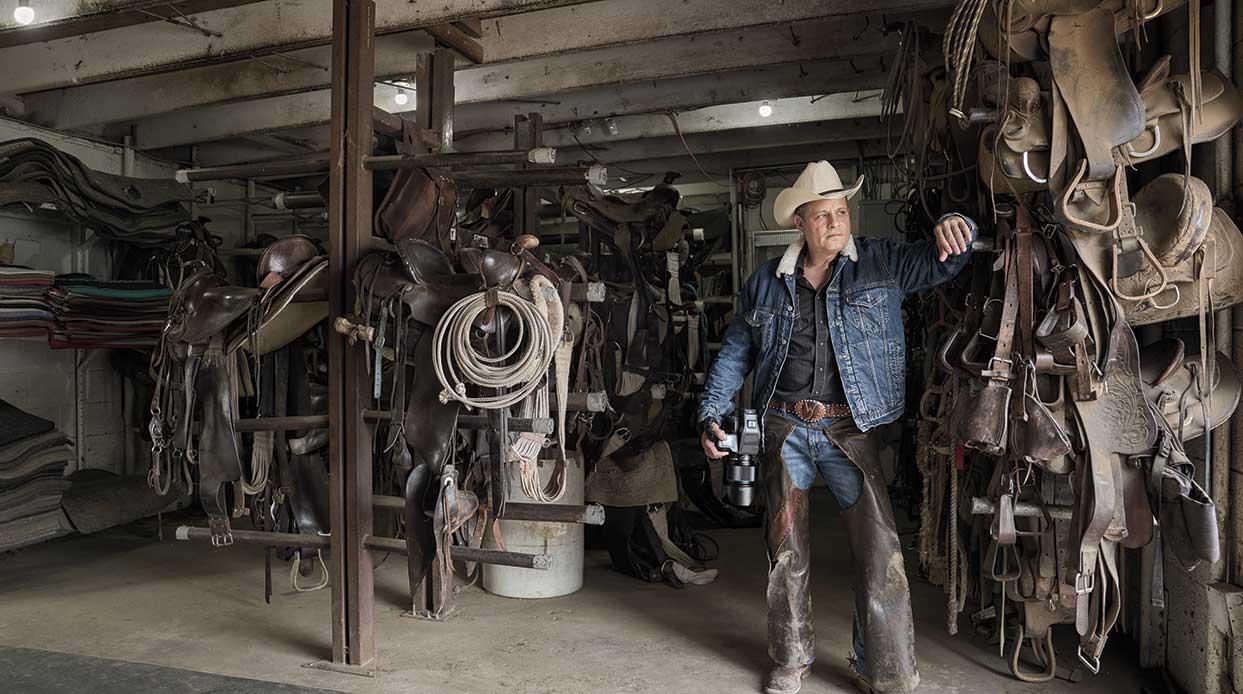
“I never wanted to just document. I wanted to live inside the story.”—Werner Segarra
By Paula M. Bodah | Portrait Photography by David Zickl
Stillness is not accidental in Werner Segarra’s photographs. It is built deliberately, through patience, trust and a way of working that resists speed. The man himself operates at the opposite tempo. Segarra talks fast. His hands move constantly as he describes light, terrain and the next trip south already taking shape in his mind. It’s a kinetic presence that counters the quiet intensity of his images.
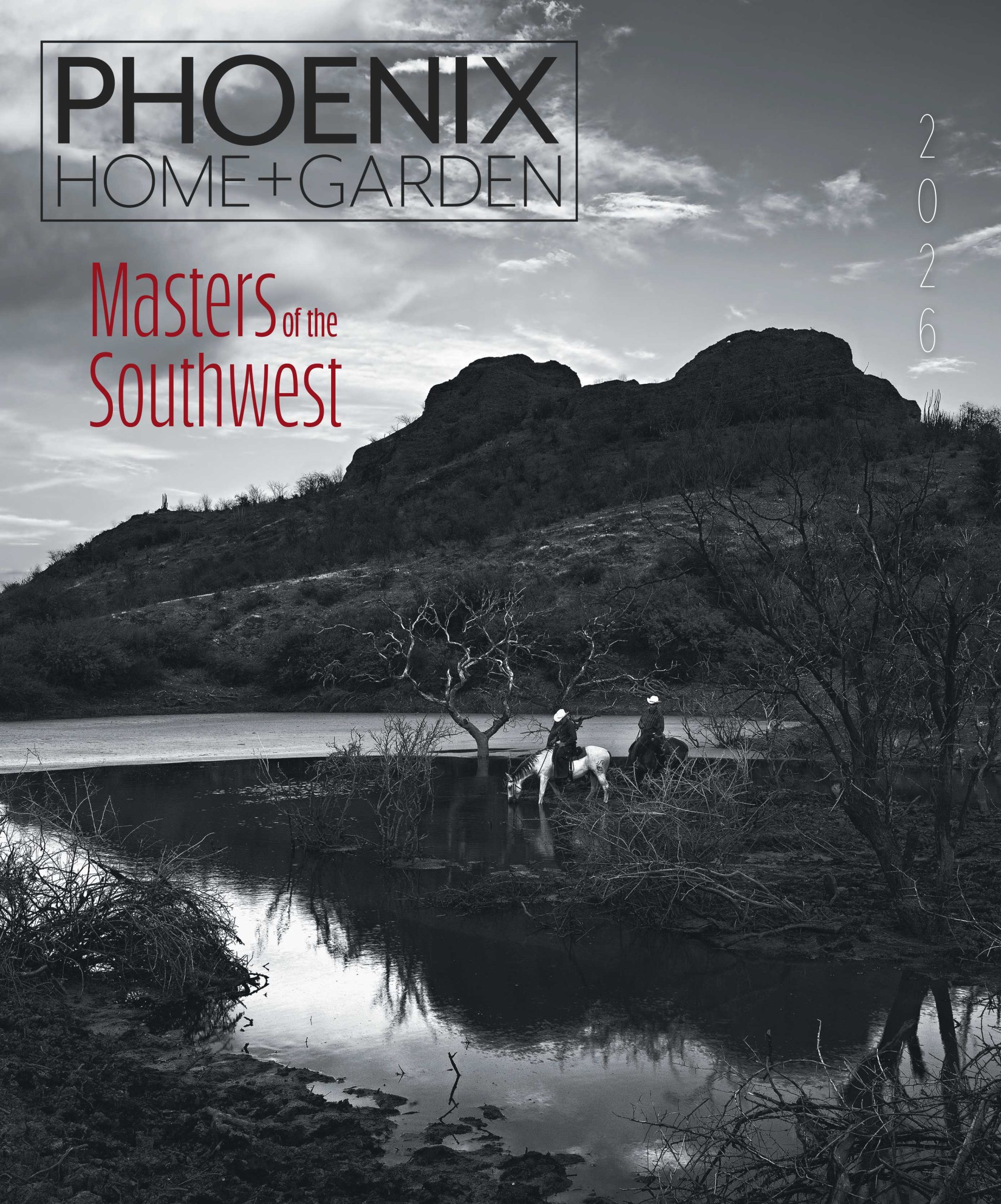
Those photographs are defined by restraint. Vaqueros stand in doorways, hands at their sides. Horses pause midstride against vast mountain backdrops. Homes—spare, worn, deeply lived-in—seem to stop time. The tension between stillness and motion lies at the heart of Segarra’s work.

For more than four decades, Segarra has returned to the mountains of Sonora, Mexico, photographing vaqueros and their families. His large-format images do more than record a way of life; they build a layered narrative about work, place and belonging, shaped by familiarity and earned trust. “I never wanted to just document,” he says. “I wanted to live inside the story.”
Segarra was born in Puerto Rico to a Puerto Rican father and a German mother who exposed her children to the arts early and encouraged their creative pursuits. He spent his earliest years on the island, then, after his parents divorced and his mother remarried, his childhood unfolded across continents. While the family lived in Saudi Arabia, his stepfather, a hobby photographer working in the oil industry, introduced him to cameras and darkrooms. Segarra also learned to ride horses there—often bareback—caring for a horse his sister owned and riding whenever he could.
He learned very early that photography demanded discipline. In order to buy his first camera, Segarra worked at a kennel, saving half the needed money himself before his stepfather, seeing the boy’s commitment, chipped in the rest.
At age 14, while attending Verde Valley School in Sedona—a choice driven largely by his desire to ride horses—Segarra found himself in a spot of trouble. He was caught with a beer, an infraction that carried an unexpected consequence. The school sent students on annual field trips, but instead of the cross-country ski expedition he was hoping for, Segarra was told he would be sent to northern Mexico for 10 days to live with a family that owned a gas station. He would work there for the duration of the stay.
It felt like punishment. But when Segarra arrived, the reality turned out to be something else entirely. The family also owned a cattle ranch, and when they saw that their young visitor could ride, they put him to work. Segarra happily spent his days on horseback in the Sierra Madre, helping with daily tasks and learning the rhythms of ranch life. The gas station was quickly forgotten.
What had begun as discipline revealed itself as a stroke of luck. Immersed in a landscape of mountains, horses and working families, Segarra felt an immediate pull. He returned that summer, then again and again over the years. The ranchers became friends, then family. Over time, Segarra says, he was no longer treated as a visitor but as someone who belonged.
Professionally, his career initially moved in another direction. After studying at the Art Institute of Philadelphia, Segarra returned to Puerto Rico and established himself as a commercial photographer, shooting fashion, architecture, advertising campaigns and film projects. “Commercial work made me very sharp,” he says. “Technically, it taught me everything.”
By the late 1990s, he was feeling burned out. During a visit to his parents’ home, Segarra opened boxes of old negatives of photographs he had taken years earlier in Sonora. Seeing them again clarified what his work was missing.
In 2002, Segarra moved to Phoenix, a strategic base that allowed him to build a thriving architectural and interior photography practice while remaining close to northern Mexico. Today, that commercial work—shooting luxury residences, hotels and hospitality projects nationwide—supports his fine-art practice.
Scottsdale interior designer David Michael Miller, a Phoenix Home & Garden Masters of the Southwest winner who has worked with Segarra for more than 15 years, says that duality defines him. “Werner has both sides of his brain fully engaged,” Miller says. “He’s highly creative, and he’s also incredibly technical.”
Miller recalls an early shoot when Segarra suggested subtly disrupting a perfectly styled room to make it feel lived-in. “He changed the way I thought about documenting spaces,” Miller says. “He brings authenticity to interiors. That’s what gives the images longevity.”
That sensibility also shapes Segarra’s Sonora work, though the process is slower and more exacting. Early influences such as Ansel Adams and Sebastião Salgado helped reinforce Segarra’s belief in patience, scale and respect for the people he photographs. Using a high-resolution medium-format camera and a large-format approach, he works exclusively with natural light. He also refrains from manipulating his images. “I don’t crop. I don’t composite,” he says. “It’s one image.”
Over time, his focus expanded beyond the vaqueros at work on the land to include them with their families at home. Segarra sees the land and its inhabitants as inseparable; the people cannot be understood apart from the land, and the land gains meaning through those who work it.
That holistic vision drew Gabriela Gámez to Segarra’s work. Gámez was a curator at the San Antonio Museum of Art when she first encountered his book, “Vaqueros de la Cruz del Diablo” (2018, Tilce Ediciones). “I’ve always thought that Werner must have been a vaquero in an earlier life,” she says. “He becomes one of them when he’s working in Sonora.”
Gámez became Segarra’s curator and advocate, helping place his photographs in major museums across the United States and Mexico. She says the work resonates because it tells a familiar story. “People stand in front of his photographs and cry,” she says. “They recognize their own memories—their childhoods, their families, their lives.”
That response has been echoed in museum settings, including Mexico City’s National Museum of Anthropology, which acquired 20 of Segarra’s photographs for its permanent collection. For the museum’s director, Dr. Antonio Saborit, the work occupies a rare space between art and anthropology. “Werner is not an anthropologist,” Saborit says, “but he works like one—observing, listening and respecting his subjects.”
Saborit is particularly struck by how Segarra portrays labor. “Through his photographs, we see work as dignity,” he says. “Not hardship.”
Now in his late 50s, Segarra continues to travel to Sonora four or five times a year. New seasons bring new faces; children he once photographed now appear as parents themselves. The work evolves, but the approach—slow, deliberate, grounded in trust—does not.
In Segarra’s Phoenix studio, the reality is less orderly. He is in the middle of a move, the space crowded with equipment and works in progress. Most days find him at a computer, refining images from a commercial shoot. On the walls, however, the only photographs are his Sonora prints, quiet reminders of a different rhythm.
He returns south as he always has, riding the same trails and visiting the same families, watching the landscape shift almost imperceptibly over time. What he is recording now is not only a way of life, but its continuity. Work is passed down, values are sustained, dignity preserved.
“I love the commercial work,” Segarra says, flipping through photographs from his last trip. “But this is my passion.”
In Sonora, that passion has become something rarer than documentation. It is a long conversation between land and people, past and present, one Segarra continues to enter not as an observer, but as someone who belongs.
“The man in charge of the camera is one of the vaqueros as well. He can ride, he can do whatever they do, he knows the language and the craft.”–Dr. Antonio Saborit, director, National Museum of Anthropology, Mexico City